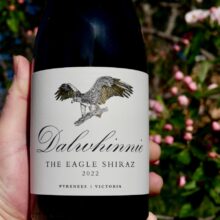
Dalwhinnie Eagle Shiraz 2022

Product information

Dalwhinnie Eagle Shiraz 2022

Shiraz/Syrah from Pyrenees, Victoria, Australia

$185

$178ea in any 3+
$171ea in any 6+
Closure: Screw Cap

Description

Since Julian Langworthy took on a leadership role at Dalwhinnie following the sale, it’s fair to say there has been a constant improvement in both vineyard and winery. The result of greater precision are showing. The wines have shifted to a more grape first style, clunky oak of yesteryear is gone. Complexity and vitality have increased. The detail shows in the glass. After not having drunk and Eagle for some time the 2022 was a revelation.

Excellent. Such seamless complexity, expressive with energy, freshness, density and power with sophistication. Great array of flavours. A creamy richness without going over the top. Full of flavour personality, spice, secondary character. It glides across your palate. A fine, detailed expression of Shiraz with great persistence. I often ask myself the what would you rather drink questions when assessing wines. The wine that came to mind here was Stephane Ogier’s Côte-Rôtie that costs around 15-20% more. In this case I’d be happy with either save a few coins with the Eagle.

Paul Kaan, Wine Decoded Sept 2026


Utterly inchoate on the nose currently, the fruit is vibrant and electric, and there are aromas of raspberry pip, white pepper, Earl Grey tea, blood orange and red licorice. What a ripping wine. The middle palate and finish are softer and quieter than the thundering display that I expected from the nose. This is a good thing. The wine is elegantly cacophonous and nuanced. I love what this is all about. You get mountain herbs, fine spice and rocks as well. 14.5% alcohol, sealed under screw cap. Tasted Feb 2024

Erin Larkin, The Wine Advocate 98 Points


Deep purple with flashes of crimson. Distinct aromas of dark ripe berries mingle with baking spices, sandalwood, pepper and bramble. Slinky and modern, medium-bodied yet rich in flavour, the palate exhibits ultra-fine tannins that unfold layer upon layer with notes of dark fruits, cedar, black plum, forest floor and truffle, leading to an exquisitely elegant and persistent finish.

Julian Langworthy, Winemaker

In stock
Check out all of the wines by Dalwhinnie

Why is this Wine so Yummy?

About Dalwhinnie

Our site was originally purchased by Ewan Jones, an architect, in 1973 and named after the Scottish Highlands town of his ancestors. Jones planted the vineyard after deep ripping (twice) the vine rows, removing trees and rock picking the site.

The first Shiraz and Cabernet Sauvignon vines were planted in 1976, with the first red vintages produced in 1980. 1984 saw the first vintage of our Moonambel Chardonnay produced. The first ever release of our icon wine The Eagle Shiraz was in 1986.

In 1983 Ewan’s eldest son, David, took over the management of the vineyard, and later owned and operated Dalwhinnie from 1994 to January 2020.

Dalwhinnie has been a part of the Fogarty Hall portfolio since 2020 and keeps good company alongside Lake’s Folly in the Hunter Valley, New South Wales; Lowestoft and Tasmanian Vintners in Tasmania; and Deep Woods Estate, Evans & Tate, Millbrook and Smithbrook in Western Australia.

Julian Langworthy took over the reins as Chief Winemaker for Dalwhinnie in 2020, and along with Viticulturalist Sam Bartlett, has taken the wines to new heights.

In the Vineyard

The Location

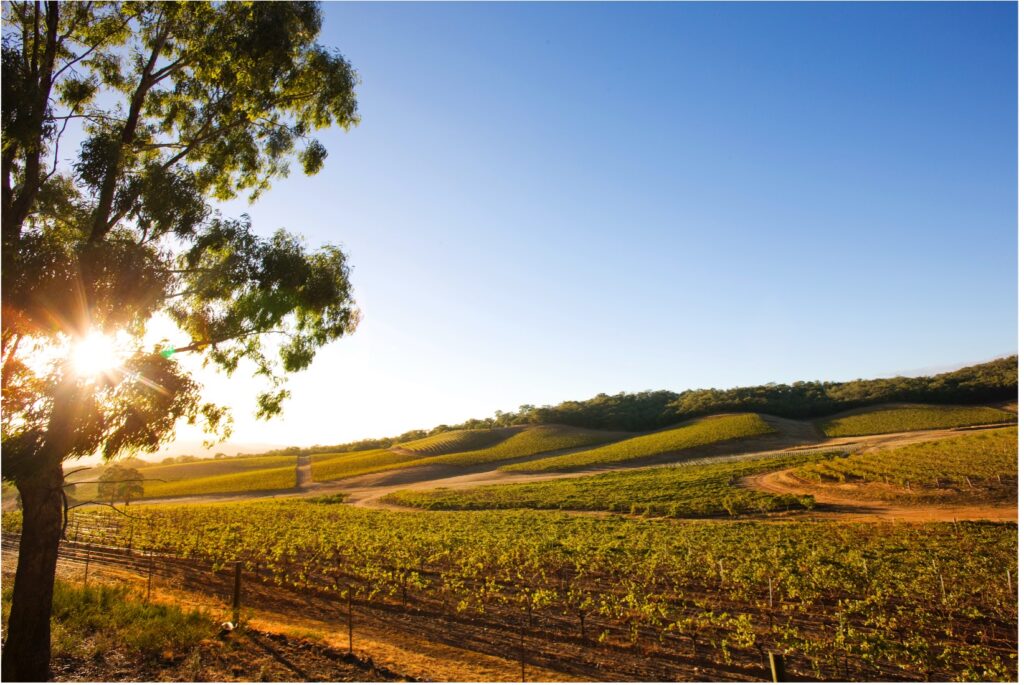
Dalwhinnie’s 16-hectare vineyard is situated on the 37th parallel, near the small village of Moonambel in the heart of the Pyrenees region of western Victoria. At 595 metres above sea level, our site is the highest and most remote vineyard in the Pyrenees. Sheltered by the highest mountain range, this unique bowl of vines is located in a naturally undulating trough which falls away from the hills, forming an amphitheatre nestled into the ranges.

The Terroir

The poor and fragile soils from left-over alluvial mining areas in the 1850s are some of the hardest and hungriest you will ever see. However, the climate and soils are well suited to the production of complex Shiraz and this is why we specialise in this great variety. The average annual rainfall is 550mm with most rain falling between July and November. The site is totally frost-free which enables the grapes to reach optimum ripeness.

The Vineyard

The vineyard is non-irrigated and operated on strong organic viticultural principles with the fruit handpicked, and the vines cane-pruned by hand. The small individual vineyards average around 1.8 hectares in size and because of the hungry sedimentary soils the cropping levels are low; only 1.5 hectares per tonne. Cover crops are sown every year between the vineyard rows to add nitrogen to the soil.

In the Winery

The growing season was ideal: warm but not hot, with ample rainfall throughout, allowing the fruit to be picked at what could be described as perfect ripeness. Seasons like this produce ripe yet exceptionally fine tannin structures, and this is the most exciting Eagle Shiraz produced to date. The Eagle Shiraz is made only in the most exceptional vintages.

Sourced solely from the 1977 Eagle Block directly in front of the winery. The fruit was handpicked and fermented in two batches: one parcel was 100% whole-bunch, and the other 100% destemmed. The combination of these parcels has created a unique and remarkably complex wine. Following a cold soak and wild fermentation, the destemmed parcel remained on skins for 10 days, while its counterpart underwent seven days of carbonic maceration before being gently foot-stomped and left on skins for a further four days. The resulting wine was pressed and transferred to French oak puncheons (500-litre), 25% new, with the balance comprising one- and two-year-old barrels, where it matured for 14 months. Careful barrel selection was then undertaken to showcase this outstanding single-vineyard icon at its best.

The 2022 Vintage at Dalwhinnie

The 2022 season saw a continuation of the La Niña weather pattern, with cooler conditions and abundant rainfall before the growing season, encouraging healthy vine growth. The cooler vintage temperatures produced fruit with vibrant natural acidity and more refined, delicate characteristics. Early-season frost reduced yields, but the resulting fruit displays impressive concentration and depth of flavour.

Where in the World is Dalwhinnie?

Dalwhinnie’s 16-hectare vineyard is situated on the 37th parallel, near the small village of Moonambel in the heart of the Pyrenees region of western Victoria, Australia.

Click to enlarge 🔎

Where in the world does the magic happen?

Dalwhinnie Wines, Taltarni Rd, Moonambel VIC, Australia

Pyrenees
Victoria
Australia