Size & Type
Other

Southern Rhône
At the time, wine-growing around the town of Avignon was anything but illustrious. While the Avignon Papacy did much to advance the reputation of Burgundy wines, they were also promoting viticulture of the surrounding area, more specifically the area 5–10 km (3–6 mi) north of Avignon close to the banks of the Rhône. Prior to the Avignon Papacy, viticulture of that area had been initiated and maintained by the Bishops of Avignon, largely for local consumption.
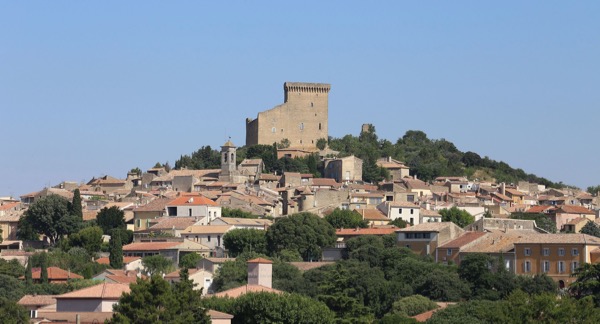
Clement V was succeeded by John XXII who, as well as Burgundy wine, regularly drank the wines from the vineyards to the north and did much to improve viticultural practices there. Under John XXII, the wines of this area came to be known as “Vin du Pape”, this term later to become Châteauneuf-du-Pape. John XXII is also responsible for erecting the famous castle which stands as a symbol for the appellation.
The Grape Varieties of Châteauneuf
Châteauneuf-du-Pape is traditionally cited as allowing thirteen grape varieties to be used, but the 2009 version of the AOC rules in fact list eighteen varieties, since blanc (white), rose (pink) and noir (black) versions of some grapes are now explicitly listed as separate varieties. Also in the previous version of the appellation rules, Grenache and Picpoul were associated with different pruning regulations in their noir and blanc versions, bringing the number of varieties previously mentioned from thirteen to fifteen.
Red varieties allowed are Cinsaut, Counoise, Grenache noir, Mourvèdre, Muscardin, Piquepoul noir, Syrah, Terret noir, and Vaccarèse (Brun Argenté). White and pink varieties are Bourboulenc, Clairette blanche, Clairette rose, Grenache blanc, Grenache gris, Picardan, Piquepoul blanc, Piquepoul gris, and Roussanne. (The varieties not specifically mentioned before 2009 are Clairette rose, Grenache gris and Piquepoul gris.)
Both red and white varieties are allowed in both red and white Châteauneuf-du-Pape. There are no restrictions as to the proportion of grape varieties to be used, and unlike the case with other appellations, the allowed grape varieties are not differentiated into principal varieties and accessory varieties.
Thus, it is theoretically possible to produce varietal Châteauneuf-du-Pape from any of the eighteen allowed varieties. In reality, most Châteauneuf-du-Pape wines are blends dominated by Grenache. Only one of every 16 bottles produced in the region is white wine.
Showing of wines
Rhône Blend from Châteauneuf du Pape, Southern Rhône
“Including more Syrah, the 2017 Châteauneuf Du Pape Prestige is 70% Grenache 20% Mourvèdre, and the rest Mourvèdre and other permitted varieties. While it’s brought up mostly in foudre, it has 10% in demi-muids and 30% in cuve tronconique. With thrilling purity of fruit, notes of black raspberries, blackberries, ground pepper, garrigue, and a distinct sense of minerality, it hits the palate with full-bodied richness, ripe, sweet tannins, a beautifully opulent texture, and a great fini
Rhône Blend from Châteauneuf du Pape, Southern Rhône
“One of the top vintages for this cuvée, the 2019 Chateauneuf du Pape Prestige features intense aromas of black cherries and purple raspberries, without the dark chocolate nuances that appear in the other 2019s at this address. It's full-bodied, dense and concentrated, big but also silky and fine, with a long, elegant finish. It's a Grenache-led assemblage of lots from the lieux-dits of les Brusquières and Cabrières. Technical director Didier Negron is refreshingly candid when speaking abou
Grenache from Châteauneuf du Pape, Southern Rhône
Half aged in new and used barriques, 25 percent in new and used demi-muids and the rest in concrete tanks. Opaque ruby. A complex, expansive bouquet evokes ripe dark berries, candied flowers, vanilla and woodsmoke, and a suave Indian spice nuance builds in the glass. Broad and seamless in the mouth, offering deeply concentrated blackberry, cherry cola and violet pastille flavors and a sweetening mocha flourish. Closes extremely long and sappy; smooth, sneaky tannins shape the lush dark fruit.
Rhône Blend from Châteauneuf du Pape, Southern Rhône
"A blend of 55% Grenache, 35% Mourvèdre and 10% Syrah and other permitted varieties, the 2020 Chateauneuf du Pape looked exceptional on this day, offering up scents of framboise and kirsch alongside dried flowers and Asian spices. Full-bodied yet weightless, silky and long, this is special stuff, complex and balanced. "The phenolic maturity is there, the sugars are there," Avril said. "No, it won't be like 2019, but I think we will come in around 14.5–15 degrees [of alcohol]. I think, I don'
Rhône Blend from Châteauneuf du Pape, Southern Rhône
“On another level, the 2017 Châteauneuf Du Pape Le Secret Des Sabon is stacked and packed and ranks with the top 2-3 wines in this great vintage. A huge nose of blackcurrants, melted licorice, graphite, garrigue and pepper gives way to an uber-full-bodied, concentrated, massively endowed wine that has an insane level of opulence and decadent, sweet tannins, and a huge finish. This is a tour de force in wine that readers need to taste to believe. Given its wealth of fruit and texture, it’s a
Rhône Blend from Châteauneuf du Pape, Southern Rhône
“The tiny production 2019 Châteauneuf Du Pape Le Secret Des Sabon is a field blend of mostly Grenache brought up all in wooden tronconique barrels. It's closest in style to the Prestige Cuvée yet brings another level of opulence and richness without losing any sense of elegance or class. Blackberries, peppery herbs, graphite, crushed violets, and a liquid rock-like minerality all define the nose, and it hits the palate with incredible depth of fruit, full-bodied richness, and ripe yet buildi
Rhône Blend from Châteauneuf du Pape, Southern Rhône
"A blend of 55% Grenache, 35% Mourvèdre and 10% Syrah and other permitted varieties, the 2020 Chateauneuf du Pape looked exceptional on this day, offering up scents of framboise and kirsch alongside dried flowers and Asian spices. Full-bodied yet weightless, silky and long, this is special stuff, complex and balanced. "The phenolic maturity is there, the sugars are there," Avril said. "No, it won't be like 2019, but I think we will come in around 14.5–15 degrees [of alcohol]. I think, I don'
No wines match your filters
Try removing a filter or broadening your selection.
We couldn't load the wines just now.
You've seen all wines
wines