Ullage


Ullage refers to the amount of airspace in any container holding wine.

« Back to Wine Words Index

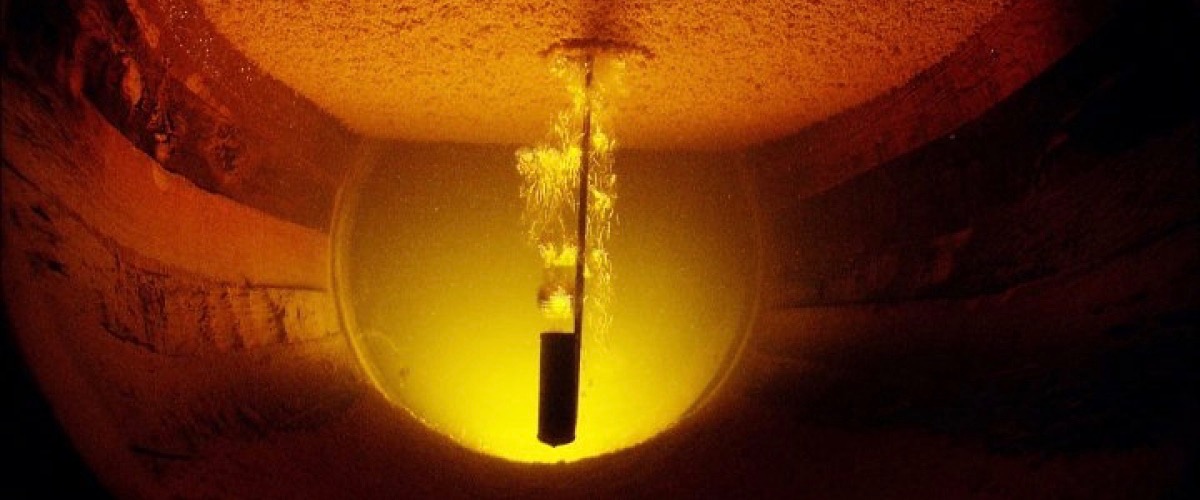
Ullage refers to the amount of airspace in any container holding wine. This applies to tanks, barrels, amphora or anything else wine is held in during the making of the wine and to wine bottles. Depending on the style being made ullage may be avoided or encouraged. In the case of Sherry, Vin Jaune or Madeira, ullage is an essential part of developing these wines unique characters. Taking Sherry as an example, the oxygen in the ullage space interacts with the flor floating on top of the wine, nourishing it and resulting in the aromas and flavours unique to Sherry.
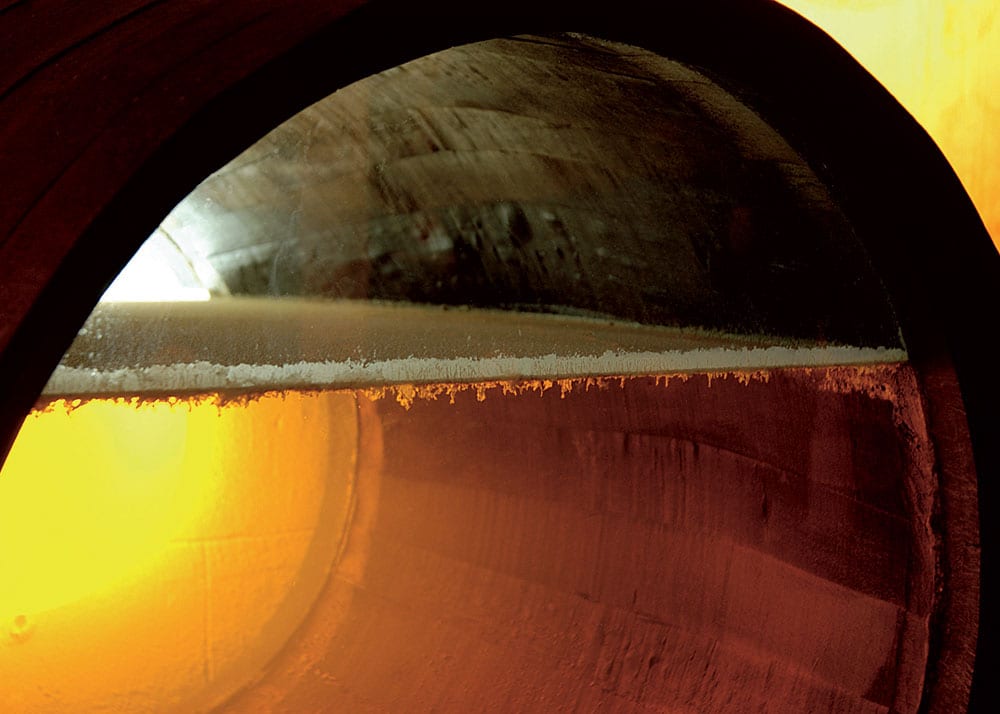
For table wines styles where extremely oxidative techniques aren’t being used ullage is avoided to stop the wine going volatile and becoming oxidised. Wine in porous vessels, like barrels, slowly evaporates during maturation creating ullage inside the barrel. They must be regularly topped up with wine to remove the ullage.

We explore Barrel Topping in the 1 minute Wine Bite – “The Angels are Stealing our Wine: Topping Barrels”

Large vessels, like tanks, potentially have 1,000’s of liters or ullage. Winemakers use inert gases, including carbon dioxide, nitrogen and argon, that don’t interact with wine to protect the wine from oxygen. Variable capacity tanks with lids that can be lowered onto the wine and then sealed are common in wineries.

Historically, some cultures would use olive oil to form a layer on top of the wine to protect it from contact with oxygen.

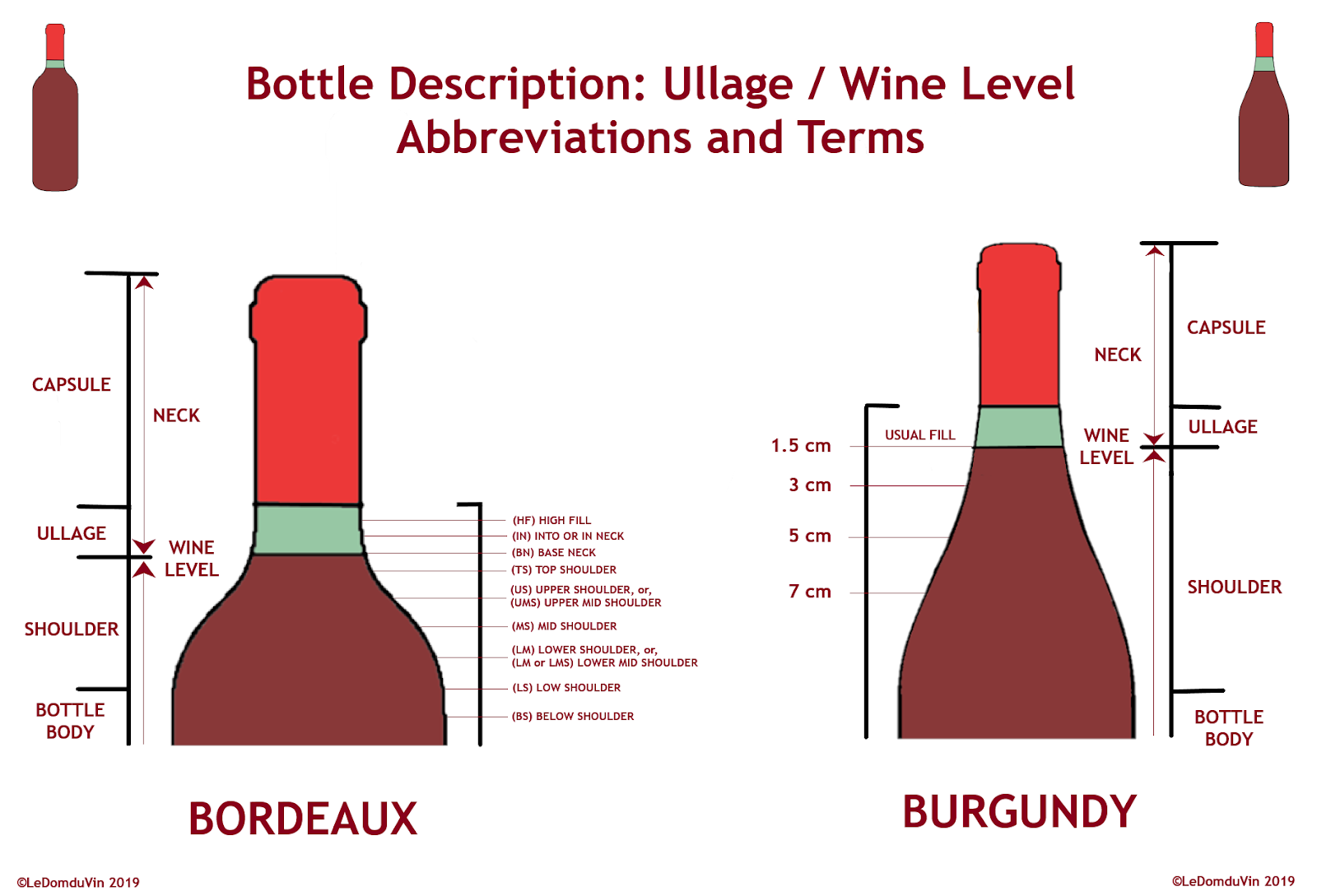
Ullage levels in bottles wine are given names or measurements depending on bottle type. The diagram below, courtesy of LeDomduVin, shows those names & measures.
Clink to Enlarge 🔎
« Back to Wine Words Index

Feeling Thirsty?

Chardonnay from Chablis, Burgundy

Domaine Thierry Laffay Chablis Grand Cru ‘Vaudesir’ 2020

The Laffay’s own 26 ares in the Grand Cru Vaudésir. Vaudésir is one of the seven Chablis Grand Cru appellations. Nestled in a natural amphitheater, it covers 15.4 hectares. It benefits from a double exposure similar to that of Valmur. The south-facing slope, which lies in a small sheltered valley, provides optimal ripening conditions. The north-facing slope, however, is cooler and the grapes often mature later. Vaudésir contains a significant amount of clay. The subsoil remains classic, how

Vintage 2020
$221
$214ea in any 3+
$207ea in any 6+

Rosé from Inferno, Valtellina

Rainoldi Nebbiolo Brut Rosé 2018

First released in 1980! Cracking 'Metodo Classico' fizz from Valtellina! I've had some solid sparkling Nebbiolo from Piedmont before. None quite like this! When this was poured for me I had no expectations and ended up having a WOW! moment.Made from Chiavennasca 92% A.K.A Nebbiolo, Pignola 4%, Rossola 4%.Excellent texture and mousse, light salmon colour with a red fruit down the raspberry line, superb acid, balancing alow dose. Very sophisticated. A play of light woody herbs, rose, fa

Vintage 2018
$114
$109ea in any 3+
$104ea in any 6+

Nebbiolo from Castiglione Falletto, Barolo

Margherita Otto ‘M8’ Barolo 2019

This one's another argument for blending sites! From a disciple of Maria Theresa Mascarello! Manly worked with Sandrone, Cavallotto and Altare before an extended stint with Maria-Therese Mascarello. When you look at these wineries the diversity of practices they employ, it makes for an exception foundation of experience to launch your own label as Alan did in 2015.  From what I've tasted thus far it's only a matter of time before these wines reach the cult status of his peers.

Vintage 2019
Original price was: $275.Current price is: $255.
$245ea in any 3+
$235ea in any 6+

Red Blend from Valpolicella, Veneto

Giuseppe Quintarelli ‘Primafiore’ 2022

Corvina , Corvinone and Cabernet , dark, meaty and ripe on the nose with cassis and earth tones . The palate is fresh with forrest berries and red plums . wonderful complete wine already .50% Corvina and Corvinone, 50% Cabernet Sauvignon and Cabernet Franc

Vintage 2022
$180
$173ea in any 3+
$166ea in any 6+