Size & Type
Other

$164
The 2024 Etna Rosso Guardiola combines spiced blood orange, sweet dusty rose, sour cherry and mint. This reveals weighty textures of pure silk alongside elegant red and blue fruits that envelop the senses. Gripping tannins saturate the palate as the 2024 tapers off long, revealing vividly fresh blackberry tones. This is a more giving vintage of Guardiola, but it’s well structured for cellaring.
Eric Guido, Vinous 94+ Points
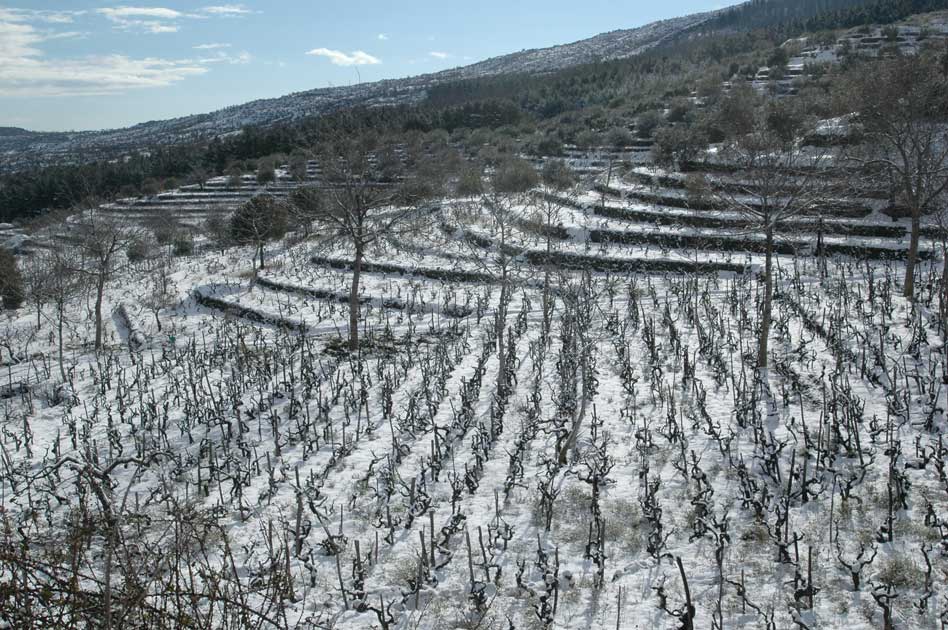
Marco describes the Guardiola vineyard as steep, bumpy and lean. Situated in Castiglione di Sicilia, on the northern slopes of Etna, Guardiola is a natural progression of Santo Spirito located just south of it.The vineyard sits at 800–900 metres and is the highest site, cool, windy and barren. The vineyard is classic albarello with single wooden stakes and terraced brick walls. The soil is made up of volcanic basalt and is hard and steep with vines that are between 90–120 years old. They have the appearance of much younger vines due to the inhospitable soils that don’t support any vigour. Soils are mixed with rocks and volcanic ash and are shallow and very free draining, creating an environment where the plants are naturally very low yielding.
Wines from Guardiola are complex but gentle with a nose of flowers and balsamic notes as well as the wild mint that grows in the area. The palate is energetic with crushed red and black cherries, spice, wet stones and other mineral hints. The palate is persistent with great fruit and is subtle and elegant with an underlying tension that suggests both energy and power.
In stock
From Marco
Of the crus in which I own vineyards, Guardiola is the highest in elevation, ranging from 800 to almost 1,000 metres altitude. And, naturally, as one climbs higher, the soil becomes poorer. Guardiola being no exception, its make up being mostly lean volcanic sand and basaltic pebbles of sorts, with a little ash thrown in. And equally naturally, the slopes become steeper, the terracings narrower in order to compensate. Vineyard management all manual and singularly difficult. The altitude drives the acidity in the wine, the lean soil accentuates the tannins. Ripening is, therefore, of the essence. Production often lower. Guardiola is somehow particularly attractive. Always the tightest wine, the most difficult and sometimes askew when young, it still remains a favourite. It may be its focused intensity, the tension of a coiled spring; or the sense of austere purity it delivers; or the uniquely high-toned, almost stony bouquet. Or probably because all of the above together make for a wine of very powerful character. Of all crus it is the one requiring more time to release and relax. The sinew releases its tension just a bit, the tannins soften, the wine’s authority remains. Pork, steak, sausages, game, braised meats.
Name: Etna Rosso D.O.C.
Area of production: Township of Castiglione di Sicilia.
Varietals: Nerello Mascalese and Nerello Cappuccio.
Vineyard extension: 1,6 hectars.
Production per hectare: Less than 5 Tons.
Soil: Grey/black volcanic sand, basaltic pebbles, a touch of ash.
Exposure: Northern.
Age of vines: da 50 a 70 anni.
Annual production: 9.000 bottles.
Apparently lightening never strikes twice. In Etna, with Passopiscaro and Terre Nere it has done so in emphatic style.
After devouring the 2015 Cru’s I’m salavating at the thought of ripping the lid of the 2016’s. These, Nerello Mascalese, dominant wines with a splash of Nerello Cappuccio exude an entrancing perfume with a delicacy, elegance, and, sophistication that carries through to the palate. With vineyards from 400-1000m in elevation the lower lying vineyards tend to yield bolder styles, while the higher sites offer greater restraint. Texturally the tannins often remind of a more supple Barolo.
Wines of Nerello Mascelese and Nerello Cappuccio have been called the Barolo of the South by some, Italy’s Burgundy by others. I prefer to call them, simply, great wines from Etna.

Whilst Nerello Mascelese’s enormous bunches, with there big berries, result in wines of a pale appearance, there is nothing insignificant about their aromas, flavours, and, textures.
Terre Nere’s wines have a balance and purity that goes head to head with and in some cases exceeds Passopisciaro. Put it this way, I was sold on the nose alone of the single vineyards.
All of the elements of success were there from the beginning, exceptional sites from 600m-1000m above sea level on the slopes of Mount Etna, vines of 50-140 years of age, a very clever conductor, ‘Barolo Boy’, Marco de Grazia, the desire to achieve excellence, and, the cash to make it happen.
More recently I tried the Pre-phylloxera wine. To taste wine from 140 year old vines that has not been influenced by growing on a rootstock is becoming a rare thing at a global level. Trying Capellano’s Barolo’s from vine grown on their own roots and American rootstocks, the ‘Pie Franco’ (French foot or rootstock) and ‘Pie Rupestris’ (Rupestris / American rootstock) is perhaps one of the better known opportunities to do so. The difference between the two is striking.
Terre Nere’s Pre-Phylloxera wine has such elegance, delicacy, yet concentration, stunning perfume and spice. The sophistication, line and length of tannin is incredible. Layered and enticing, one to age be I little more patient than I could be with it! Start trying from 2020, will drink for much longer. Heart racing stuff.

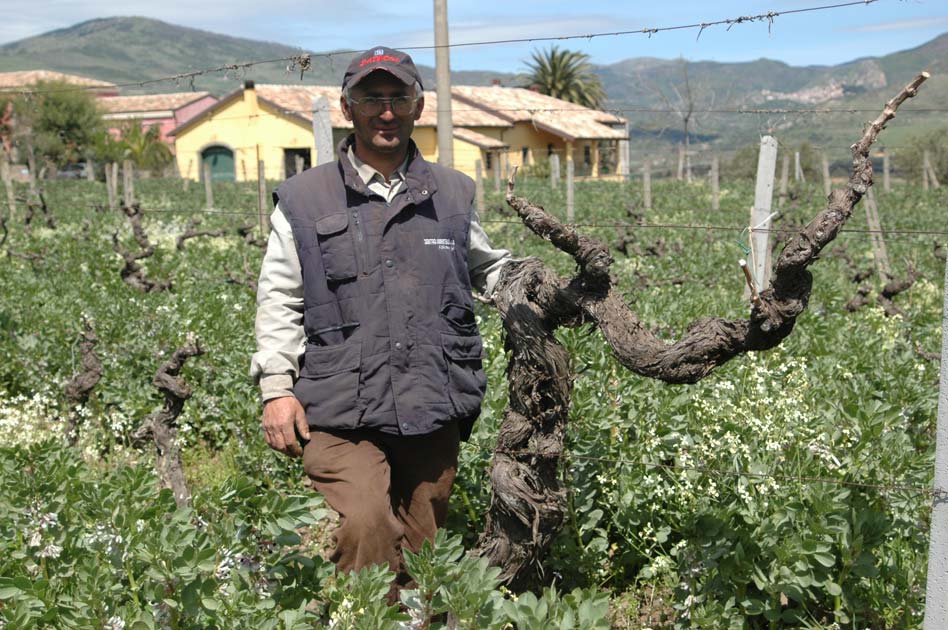
Such vineyards are a labour of love, the incredibly low yields placing them on the knife’s edge of being economically viable. Note the broad beans planted in the vineyard to introduce nitrogen and organic matter through a cycle of composting, helping to build the soil structure.
While you might think vineyard in Sicily would be hot, their elevation combined with planting on cooler North facing slopes can make it challenging to ripen fruit on the highest sites in a cool year.
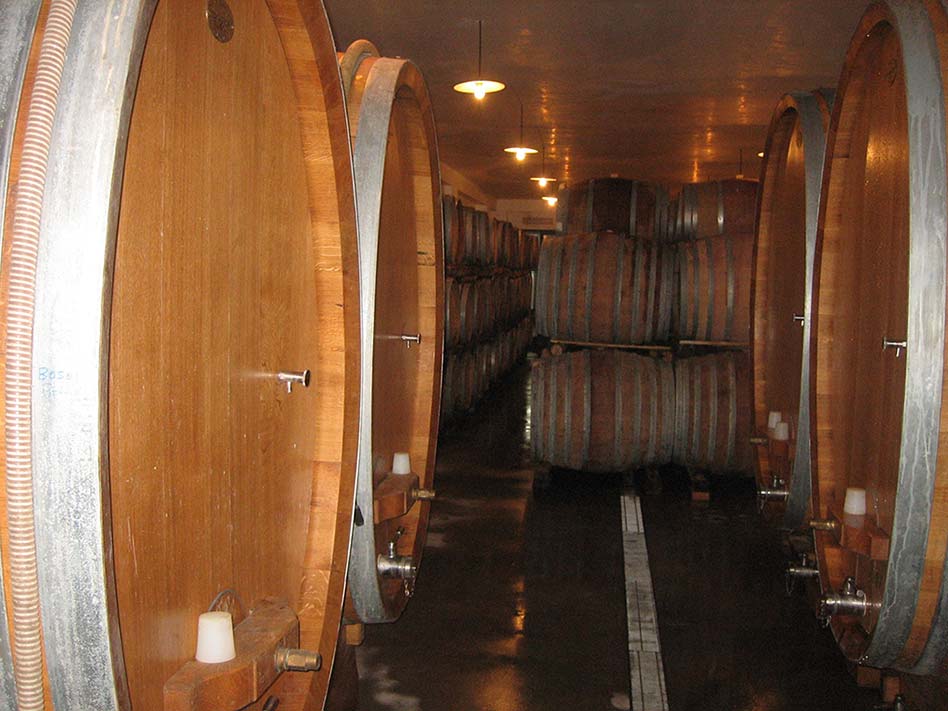
Although de Grazia was one of the architects of the modern style of Barolo, the Terre Nere wines show no signs of those modern, often over-oaked wines, lacking harmony. Poise and restraint being the norm. The larger format oak in the winery, both botte and puncheons are clear sign that sophistication is the intent.

Perfectly articulated by Marco de Grazia himself:
“Tenuta delle Terre Nere is the fruit of over 30 years of passion and work in the world of fine wine.
And an extraordinary location, as well – this “island within an island” that is the Etna – that my brother and I chose. And that, I sometimes believe, actually chose us. A place where nature is prodigal but also severe. And here I try with all my heart to express as purely as possible the refined and multifaceted microcosm of this ancient volcanic land. With respect, care and hard farm work, always in organic balance.

The estate’s philosophy is simple. Given an extreme climate, in order to obtain the best and most consistent ripening, our attention must focus on vineyard management. The finest workmanship in all aspects of viticulture is the first thing that sets us apart. And what enables us, bringing home exceptionally fine grapes, not to be invasive in our cellar work. A work best described as aimed above all at expressing the character of our varieties in their specific terroir.
A great team, a delicate hand and a heightened sensibility, as well. And our ideals, that drive us to give the best of ourselves in quest, not of perfection, but of the ideal bond between what nature gives us and that which our sensitivity, experience and imagination suggests.
All this sets us apart.”
Being one of the first on the scene in Etna imparted Marco de Grazia with insights into the region that few others possess. Because of this, he’s been able to grow the Tenuta delle Terre Nere portfolio by leaps and bounds over the last 20 years while staying ahead of the curve the entire way. Over the years, de Grazia developed an extended selection of Etna Bianco and established Premier Crus and Grand Crus within his portfolio. Aside from celebrating his accomplishments, de Grazia is always the first to be blatantly honest about his failures. I’ve heard him criticize his wines more often than anyone else—that is part of what keeps him constantly in pursuit of further improvements. This year, de Grazia has completed the construction of a new barrel-aging facility dedicated to the Etna Rosso, which now allows him to mature the wine between 14 and 16 months in barrel before release (it was just shy of 12 months in the past). The entry level Etna Rosso has slowly been improving over the years, and yet the price remains remarkably fair. It’s easily one of the best buys coming out of Etna today. Also, with the 2022 vintage, Terre Nere is releasing their Etna Rosso Bellacolonna from a “young vine” selection planted in 2006 and 2007 within the Calderara Sottana cru. It’s zesty and aromatic—also incredibly fresh, deep and refined. Think of this as a baby step above the Etna Rosso. As for 2022, an incredibly dry vintage partly saved by near-perfect conditions through October, some wines are warm-vintage in feel; they maintain fantastic acid balance and well-formed tannins. In many cases, the 2022s will drink sooner than the average vintage, but they deliver masses of pleasure in a harmonious package. There are several serious standouts in the lineup, such as the Etna Rosso Calderara Sottana, Dagala di Bocca d’Orzo and Guardiola. I made sure to add a “+” to several scores, as I can only imagine that they may be deserving of higher marks in years to come. Looking ahead to 2023, the winery lost about 25% of its production to downy mildew. The only wine I tasted from 2023 during this visit was the delicious Etna Rosato, produced in just 4,000 bottles versus the usual 40,000 produced.
Eric Guido on March 2024
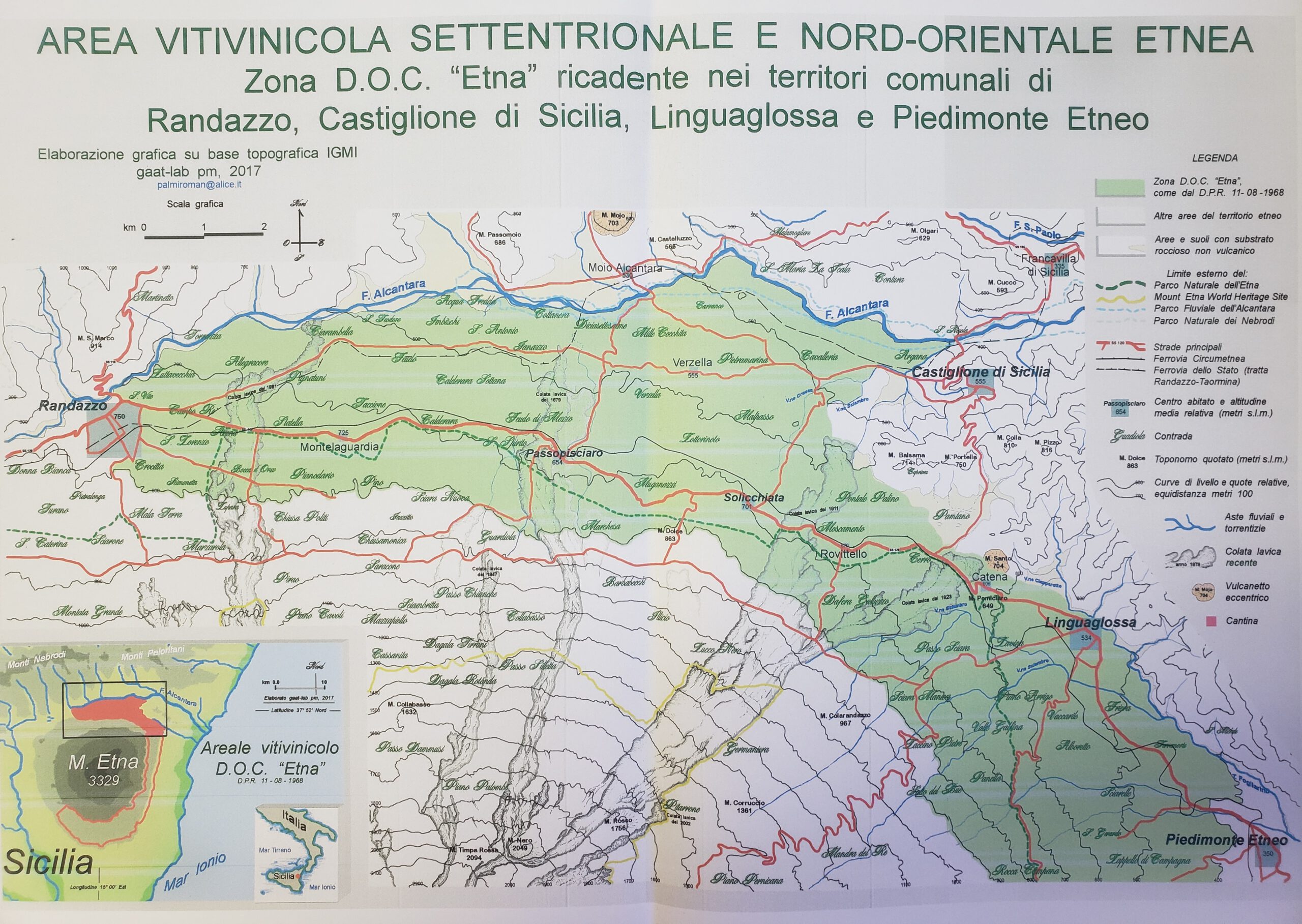
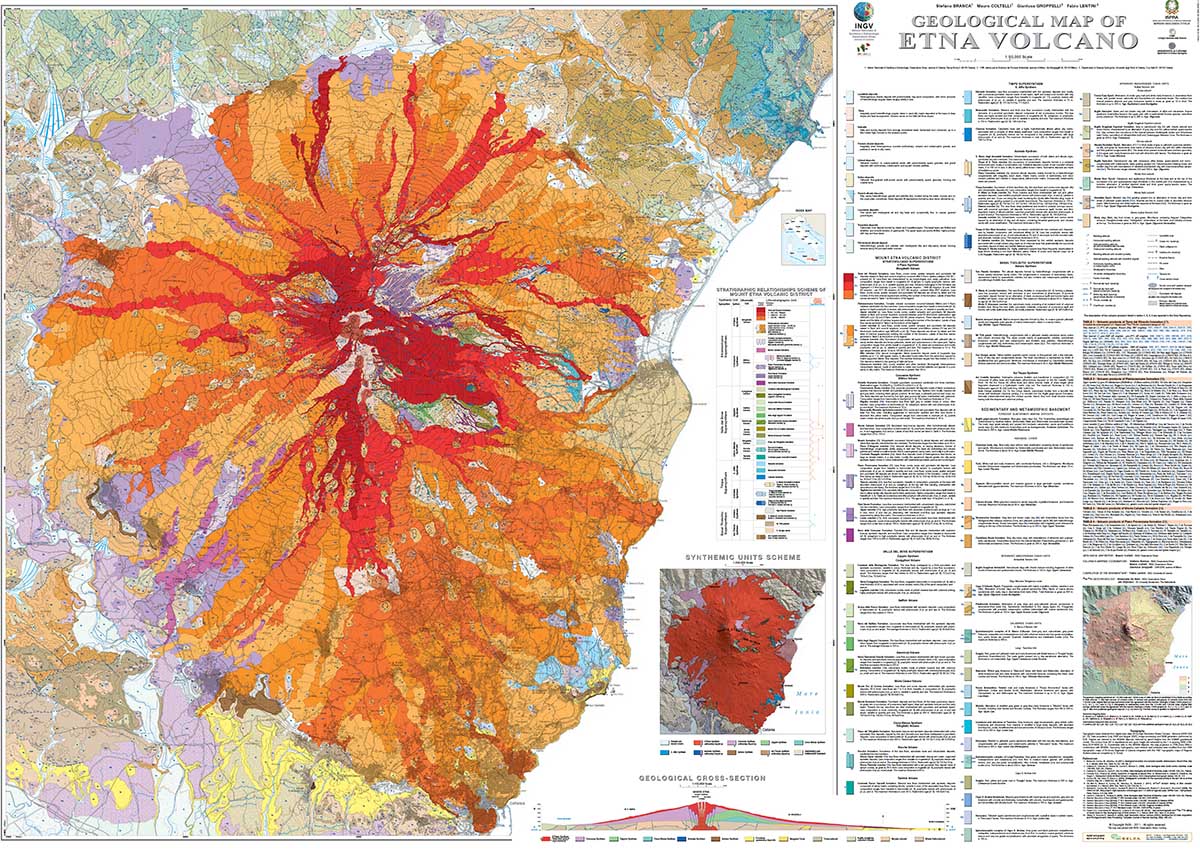
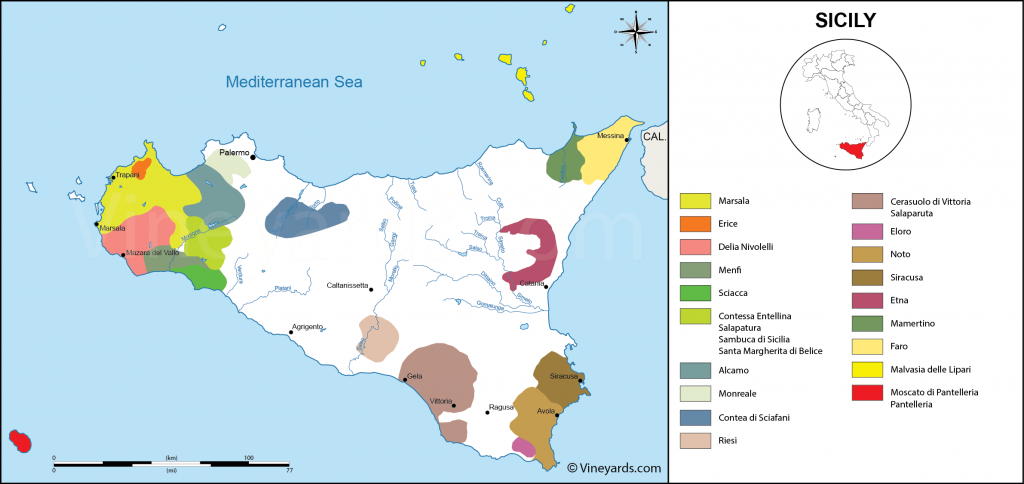
I thought I’d share these three maps to help you get your head around Etna and it’s place in Sicily. The first map gives you the big picture. The second highlights the general area planted on Etna, mostly South to South-East facing. The third shows most, but, not all of the Contrada (single vineyards) and their relative elevations.


The 2024 Etna Rosso Guardiola combines spiced blood orange, sweet dusty rose, sour cherry and mint. This reveals weighty textures of pure silk alongside elegant red and blue fruits that envelop the senses. Gripping tannins saturate the palate as the 2024 tapers off long, revealing vividly fresh blackberry tones. This is a more giving vintage of Guardiola, but it's well structured for cellaring.
Where in the world does the magic happen?
Tenuta delle Terre Nere Winery, Randazzo, Province of Catania, Italy
You must be logged in to post a comment.