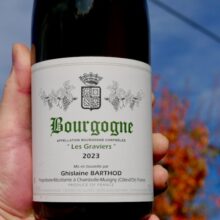
Domaine Ghislaine Barthod Bourgogne Blanc 'Les Gravières' 2024

Product information

Domaine Ghislaine Barthod Bourgogne Blanc ‘Les Gravières’ 2024

Chardonnay from France, Côte-de-Nuits, Chambolle-Musigny, Burgundy

$111

$106ea in any 3+
$101ea in any 6+
Closure: Cork

Description

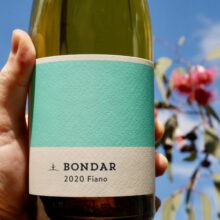
Barthod’s Bourgogne Blanc, made from Chardonnay planted in the late 2010s. It was the estate’s first commercial white wine (they previously produced only tiny, family-use whites from old Pinot Beurot and Chardonnay vines). The Les Graviers vineyard, named for its stony soils and located near Les Bon Batons, on the edge of Chambolle, saw its first release from the 2020 vintage, with élevage set at 50% used 500-litre oak and 50% terracotta amphora. The 2023 is delicious: both fleshy and racy and frankly, quite unique.

In stock

Check out all of the wines by Domaine Ghislaine Barthod

Why is this Wine so Yummy?

About Domaine Ghislaine Barthod

Ghislaine Barthod’s domaine originates back to the 1920s when it was owned by Marcel Noëllat. His daughter married Gaston Barthod, a soldier stationed in Dijon who visited the winery to buy some wine and consequently fell in love with the girl who sold it to him.

Gaston gave up military life for a new life amongst the vineyards in 1960. His daughter, Ghislaine, and her partner Louis Boillot bought their current premises overlooking Premier Cru Les Feusselottes in 1986. Though they share the team who work the vineyards for both, the vinification and commercial aspects of each business is kept completely separate. Ghislaine’s father Gaston died in 1999, yet effectively Ghislaine had been making his wine for a decade prior to his passing.

Since 1999, the high quality produced by Ghislaine Barthod has ensured a powerful following amongst Burgundy enthusiasts in the know. The style is unashamedly intense, with both the perfume and sensuality that has made Chambolle such an iconic commune but also the density and structure to age (an attribute that Ghislaine strives for).

Ghislaine Barthod’s wines balance the natural elegance of Chambolle with sensual depth, structure and longevity. Many, if not all the wines at this address manage to blur the hierarchy.

The overall effect of tasting at the domaine is to come away with a palate coated in sensual Chambolle fruit. Ghislaine Barthod’s wines are always supremely elegant and harmonious and display admirable concentration and length. The best examples can age gracefully for up to 20 years.

Anyone who doubts the reality of terroir need only taste their way through the range of Ghislaine Barthod wines each year to be converted. While the Domaine is small with just under six hectares of vineyards (one of the reasons it flies under the radar) it includes a remarkable nine Chambolle-Musigny Premier Crus. These are all made exactly the same way, and yet, they all have very different personalities from each other: personalities that express themselves year in and year out, irrespective of the climatic conditions. That said, these Burgundies are not simply subjects for terroir voyeurism—they are just far too delicious for that. To quote Terry Theise, “…that would be like ignoring the rainbow so you can balance your chequebook.”

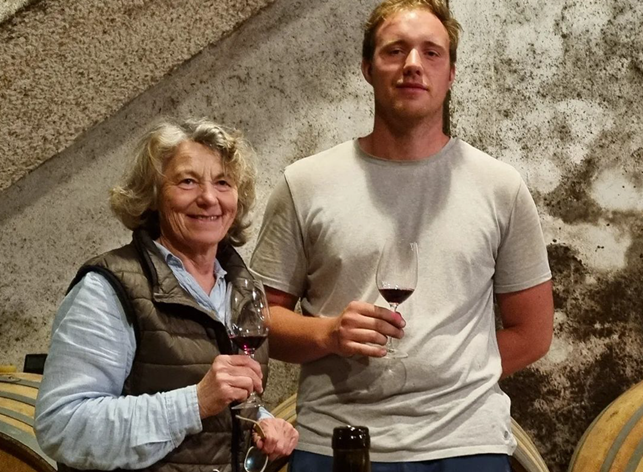
Ghislaine’s son, Clément Boillot is now heavily involved in the running of the Domaine, along with his father’s Domaine Louis Boillot and their operations in Beaujolais, Louis Boillot-Barthod. They say the apple never falls far from the tree, and from what we have seen—even by this Domaine’s lofty standards—the quality of Clément’s first releases has been astonishing. In the cellar, Clément is running trials with amphora and foudre and is in the early stages of introducing biodynamic viticulture. We know from discussions with Clément (and from what his mother has told us about him) that he is likely to be a wonderful manager of this Domaine in the future. He has the drive of the true vigneron: emphasising the vineyard over the cellar. What a legacy he is inheriting!

I have now tasted more wines from Clement, and it seems like there are two tendencies. Firstly, the style has been lightened a bit … not much … but enough to increase the delicacy and the transparency of the wines. In times of increasing global warming its always welcome to make lighter and more transparent wine.

The second tendency is that the Boillot wines are slowly but surely getting integrated into Clement’s style of wine, hence also the Ghislaine Barthod style. Actually, there is not really a big difference anymore… and I think it’s safe to say you should consider to buy some Louis Boillot wines also …

Winehog

In the Vineyard

The estate is made up of just under 6 hectares (15 acres) of vineyards. Over half of this is split between eight well-sited plots in Chambolle-Musigny premier cru vineyards, with the remaining land in Villages-level and AOC Bourgogne parcels.

In the Winery

Restricted crop and meticulous attention to élevage are the ‘simple’ keys to Ghislaine’s success. Her straightforward, no-nonsense approach helped introduce a sorting table to discard any grapes that were not up to scratch. Along with this; a gentle cool pre-maceration before fermentation is used to extract all the fruit’s freshness and flavours; only natural yeasts are used; the grapes are destemmed, allowed a brief cool soak before being fermented naturally in open-top wooden cuvees with more punching down than pumping over. The wines are then matured in barriques (roughly a quarter of which are new). The wines are usually bottled after 18 months, after one racking.

The 2024 Vintage at Domaine Ghislaine Barthod

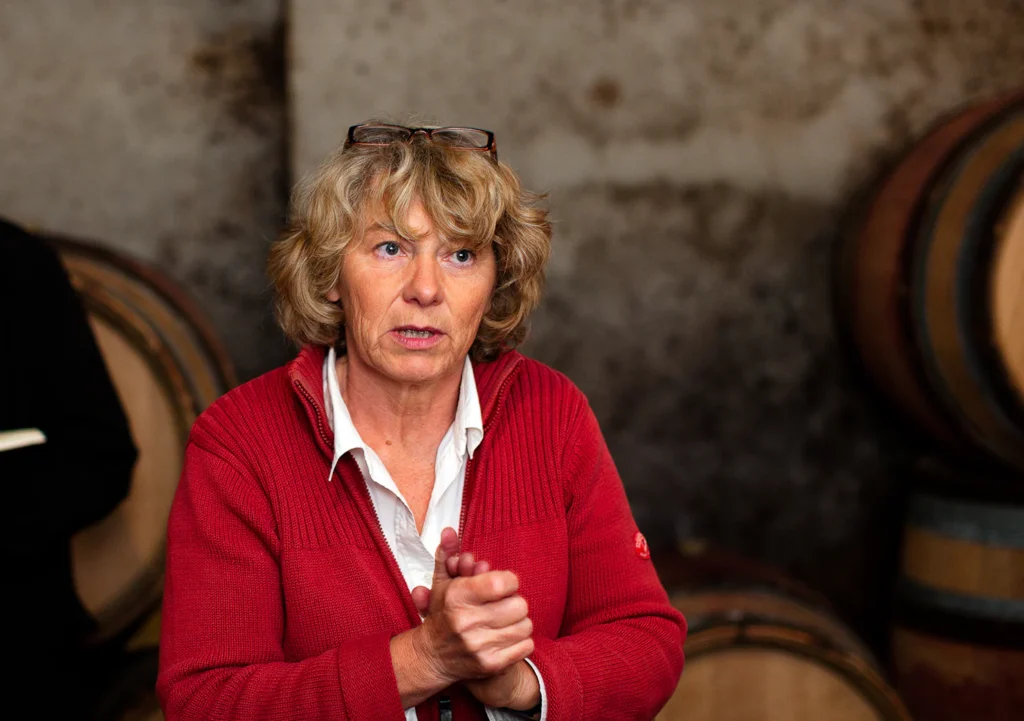
Ghislaine Barthod was clutching a bouquet of freshly picked roses when I arrived at the domaine in Chambolle-Musigny that she shares with her husband, Louis Boillot. Were they for me? Unfortunately not. But anyway, it was great to see her again as she pottered around with her dogs. Her son, Clément, who has taken over the winemaking at both domaines, guided me through a large portfolio of around 30 cuvées encompassing not just the Côte de Nuits and Côte de Beaune, but also Beaujolais.

“It was not the easiest of seasons,” Clément told me with a congregation of pre-prepared barrel samples waiting in small glass containers. “We had known since flowering that the yield would be low, as we have a lot of old vines that suffer from coulure. It was the most coulure we’ve had since 2012. We started spraying organically but had to use chemical sprays from mid-May onward. We lost a lot in Grand Poissot because we could not plough, so it was very humid. Otherwise, we lost 5% in other parcels due to mildew, but we lost a lot of volume due to coulure. We started picking on September 15 and harvested over five days instead of the normal eight or ten, trying to pick two hectares each day. Some parcels were cropped at their normal yield and others were cropped at just 6 hl/ha―for example, Gevrey Evocelles, Volnay Caillerets, Chambolle Gerbaudes and Nuits Saint-Georges Pruliers―but we still made every cuvée as we have a lot of small tanks. The hardest task was controlling the wines’ temperatures due to tiny volumes. Our average yield was 19 hl/ha with most cuvées at 11.5% and a couple at 12%, so we chaptalised by 1 to 1.5%. We rack in October, so the wines undergo one year in barrel and four or five months in vats. This changed in 2021 and 2022, but in a warmer vintage I might go back to a longer maturation in barrel, shorter in cooler vintages. I was worried about dry tannins from the pips, like there were in 2021, so I was careful with the vinification. But actually, the wines are fruitier than I thought. I think we might bottle earlier than usual, perhaps with some cuvées bottled before Christmas.”

I asked about Ghislaine-Barthod’s decision not to blend their dozen-or-so Chambolle Premier Crus together. Clément told me that he never considered it, which I respect. However, since many of these cuvées amount to two or three barrels in a normal vintage, some were reduced to not even a barrel, but just a feuillette [half-barrel], which is notoriously difficult to vinify. I could not help detecting as I tasted through the wines that cuvées of two or three barrels had more substance and complexity than those reduced to barely 150-odd bottles. As such, this is one instance where I might have done like other producers and blended cuvées together, at least for just this one vintage. The successful cuvées, such as Les Cras (five barrels) and Aux Beaux Bruns (three barrels), are cut in Ghislaine-Barthod’s signature ethereal style and will appeal to its fans, of which I remain one.

Neal Martin, Vinous

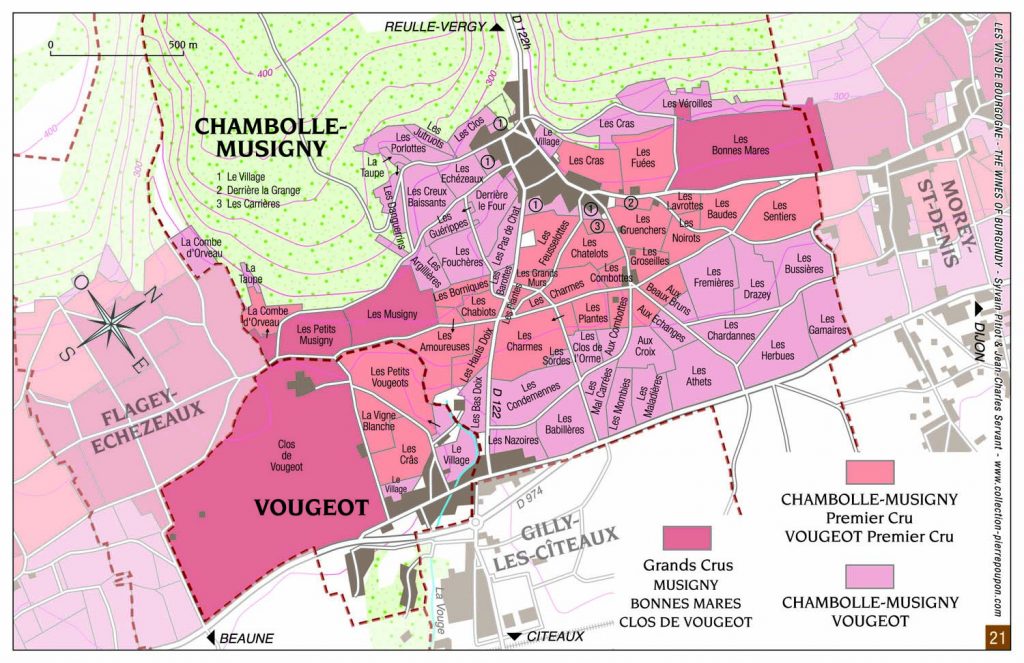
Where in the World is Domaine Ghislaine Barthod?

Domaine Ghislaine Barthod is based in Chambolle-Musigny, Côte-de-Nuits, Burgundy, France

Click to enlarge 🔎

The film below explores the geology and geography of Chambolle-Musigny

Where in the world does the magic happen?

Domaine Ghislaine Barthod, Ruelle du Lavoir, Chambolle-Musigny, France

Chambolle-Musigny
Côte-de-Nuits
Burgundy
France