Size & Type
Other

Pinot Noir from Morey-Saint-Denis, Côte-de-Nuits, Burgundy, France
$1,450
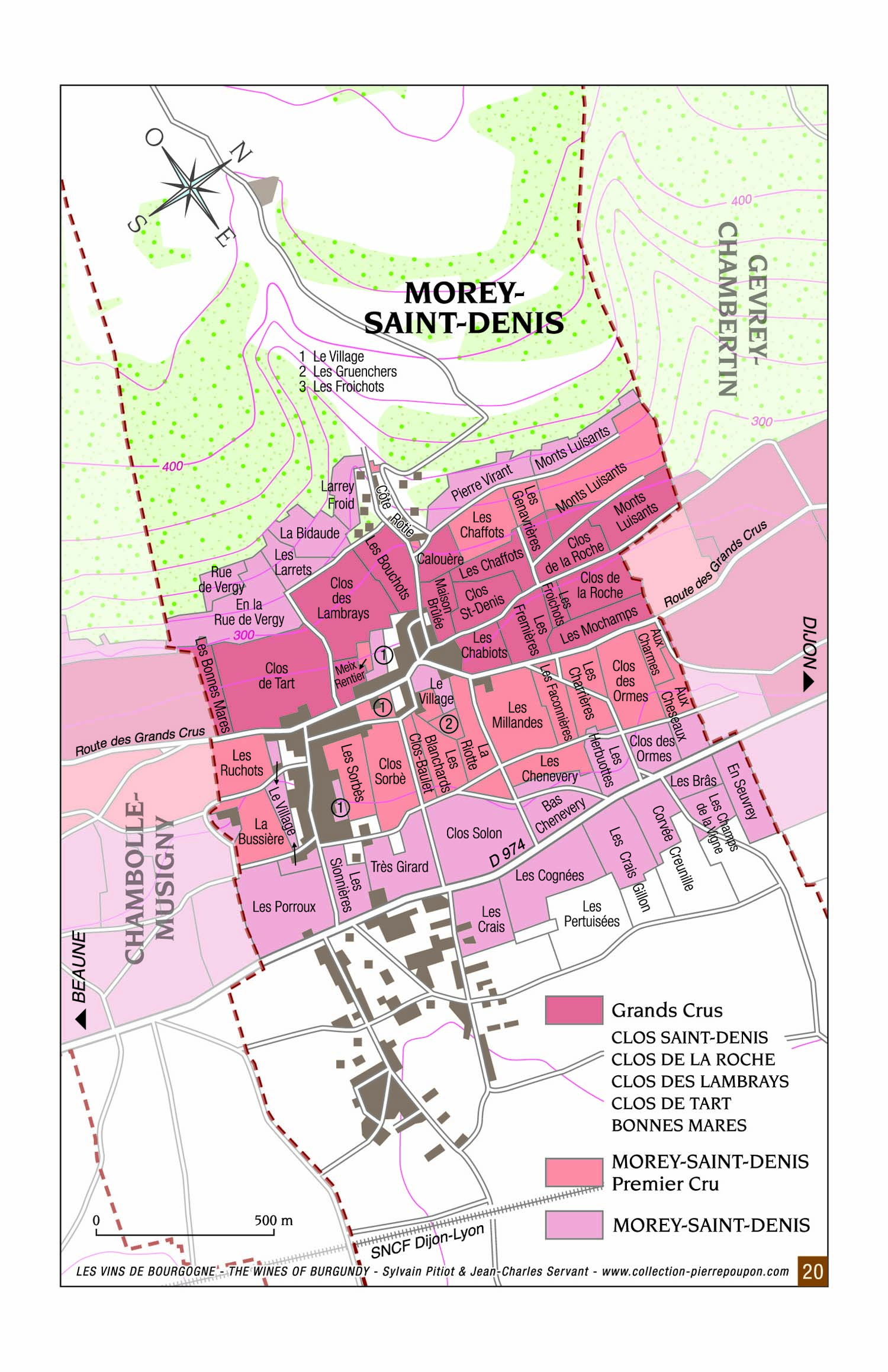
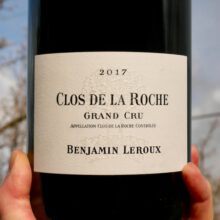
Bottled in magnum only. At its finest, (which comes down to the producer and location) Clos de la Roche can produce some of the Côte d’Or’s most profound reds. This wine is very typical of the finest makers in the appellation, offering a deep, layered, dark-fruited personality with the exotic spice of Morey’s northern slopes. The wine hails from 0.15 hectares of vines, located mid-slope on shallow, rocky soil with high limestone content. The vines here were planted in 1965. As you would expect, there is more structural muscle and minerality than the Clos Saint-Denis. In short, this is a stunning wine of great depth and elegance that clearly has enormous ageing potential, especially in magnum. Matured in one-third new oak, this cuvée was mostly destemmed.
Out of stock

“You may remember that when I asked Allen Meadows, aka Burghound, on this video who he thought might be a natural heir to the late great Henri Jayer of Burgundy, one of the two people he cited was young Benjamin Leroux of Domaine Comte Armand.” Jancis Robinson
“Leroux’s passion, ambition and sheer talent have already resulted in a number of stunning, beautiful wines, but my sense is that the best is yet to come.” Wine Advocate # 194 May 2011
“I have never heard a more articulate and insightful presentation.” James Halliday on the Leroux 2008s Masterclass with Benjamin Leroux, The Australian, 11th September 2010.
Benjamin Leroux, previously manager/winemaker of Domaine Comte Armand launched his own label with the 2007 vintage. He works from a brand new winery in the center of Beaune (just off the Boulevard) that he shares with Dominique Lafon and two other wine growers. The operation is very small and will eventually specialise, primarily, in Puligny and Volnay, but with many other appellations also covered. While there are over twenty terroirs produced, this is certainly a ‘micro negociant’ operation with only two to five barrels made of most of the cuvees. Leroux works with vineyards he manages, vineyards he owns and also buys fruit (never juice or wine) from growers with who he can work closely; growers that produce the quality of fruit to match Leroux’s exacting standards.
Leroux’s vision has always been to build an Estate and to this end he has already started buying vineyards. The first stage of his evolution however has been to establish the micro negociant business: a phase that has allowed him to establish a winery and refine his ideas and his understanding of the terroirs with which he wants to work. The way Leroux has structured this side of his business is highly innovative. His aim has been to create the same quality standards of the finest Domaines, despite not owning most of the vineyards. He has long-term relationships with the growers that he works with, some of which he pays by the area of land rather than the quantity of fruit harvested. This allows him to dictate lower yields, ripeness, date of harvest, and so on. He only works with high quality growers who plough or do not use herbicides or pesticides. Most are organic or biodynamic. For those that are not there is an understanding that they will move to organics over a five-year period. Leroux’s knowledge of the Côte is encyclopedic and he has been able to unearth some very interesting, previously hardly known sources for his portfolio. It’s important not to underestimate how close Leroux works these growers as that is one of the keys to his ability to coax the finest fruit quality from the vineyards.
A total of 120 barrels were produced in his first vintage, 2007 and some of the cuvees offered had already been produced by Leroux for a number of years at Comte Armand. These wines have now come across to the Benjamin Leroux label. Leroux is considered one of the most gifted and knowledgeable wine growers in all of the Côte d’Or.
Leroux is considered one of the most gifted and knowledgeable wine growers in all of the Côte d’Or. It only suffices to ask any other serious producer about Leroux to realize the respect he has garnered amongst his colleagues in the region. He was always considered a prodigy, studying at the Lycée Viticole in Beaune from the age of 13 and taking the reins at the esteemed Domaine Comte Armand when he was only 26. Leroux’s success with the Domaine’s wines over the last decade has well justified the decision to appoint such a young man to run the show. He continued to manage Comte Armand until 2014, despite now having his own range of wines (another sign of how well respected he is). While his range includes many famous terroirs, Leroux is determined only to work with vineyards that have been well managed and produce outstanding fruit, regardless of whether or not they have famous names. This makes sense, Leroux’s knowledge of Burgundy’s countless terroirs runs deep and producers like him are waking up the wine world to the fact that the reputation of many Côte d’Or vineyards has as much to do with the producers who work them than any intrinsic qualities of the sites themselves.
Clos de la Roche is in the Village of Morey-Saint-Denis on the border with Gevrey-Chambertin

A moderately toasty nose offers up aromas of cassis, plum and forest floor along with a hint of smoke. The wood treatment extends to the palate as well as on the velvety but muscular big-bodied flavors that terminate in a lightly stony, austere and very serious finish where a hint of bitter pit fruit surfaces. This is on the woody side today but since it will be 20 years before this reaches its full maturity, it should not be a problem for the oak to fully integrate.
Three barrels made. Full purple, there is a little more concentration of fruit here on the nose than for the Bonnes Mares, and a little more weight at the back, with an intense, deep fruit, some of the characteristic blueberries, a good fruit-oak-tannin-acid balance, complete and successful.
The 2017 Clos-de-la-Roche Grand Cru is tightly wound on the nose and nicely defined, offering blackberry, raspberry and light floral aromas; a light marine note emerges with time. The medium-bodied palate is quite saline and features sappy black fruit and a fine bead of acidity. Beautifully focused and harmonious, delivering satisfying substance on the surprisingly sensual finish. A touch of strawberry pastilles lingers on the aftertaste. Just gorgeous.
Where in the world does the magic happen?
Pommard Les Rugien Hauts
You must be logged in to post a comment.