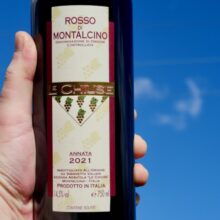
Le Chiuse Rosso di Montalcino 2024

Product information

Le Chiuse Rosso di Montalcino 2024

Sangiovese from Tuscany, Montalcino, Italy

$86

$82ea in any 3+
$78ea in any 6+
Alc: 14.5%
Closure: Cork
Le Chiuse's Rosso di Montalcino just Keeps Getting Better!

Description

There are a couple of schools of thought when it comes to Rosso di Montalcino. One, make a baby Brunello, the other, make a fresh, energetic, delight to enjoy while you wait for your Brunello to hit the drinking window. Lorenzo’s is the latter and done with style.

Good to go on release, there is no doubt Lorenzo’s Rossos will easily handle fair time in bottle. Lorenzo elicits tannins that are perfectly weighted with bright fruit to offer cleansing textural intrigue. His approach to élévage sees development matched to the style and the thirst-quenching drink in the glass. A wine that will comfortably drink over a couple of days without any need to protect against oxygen. All this is true of his 2024!

Paul Kaan, Wine Decoded June 2026
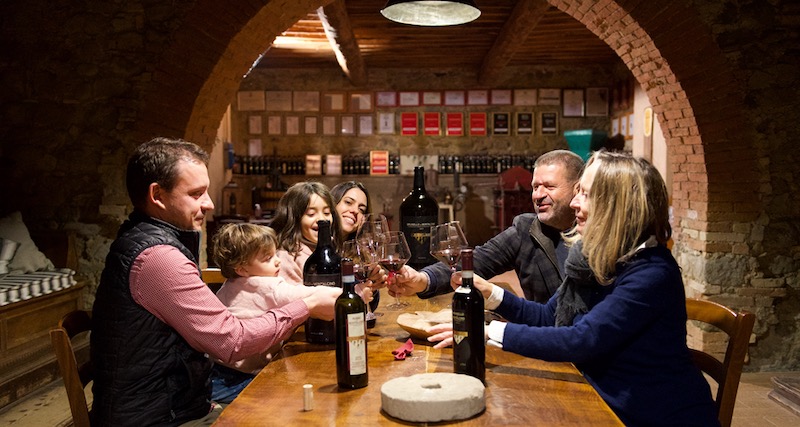
Check out all of the wines by Le Chiuse

Why is this Wine so Yummy?

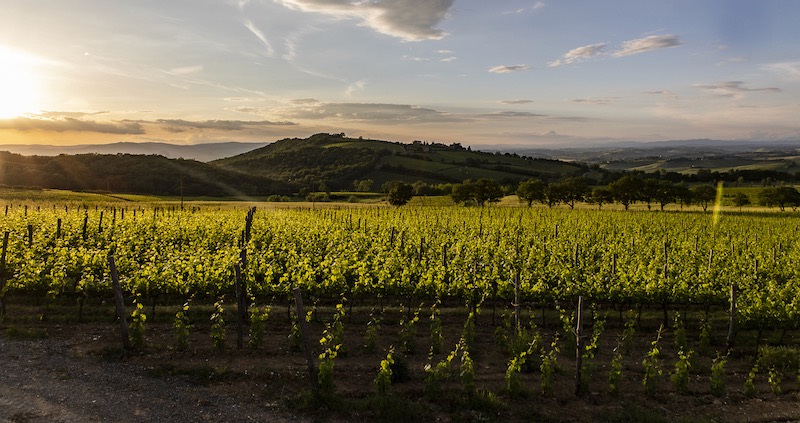
Lorenzo Magnelli of Le Chiuse continues to show the prestige of their terroir the purity and balance of his Brunellos are something to behold, yet it will take some time before these northern Montalcino beauty is ready to reveal all of its charms. The Le Chiuse vineyards are located in the north, a single block that sits between Montalcino and Montosoli. It’s a unique site with a steep, hillside exposition at 330 meters of elevation, rich in schist, stones and fossils with water-retaining clay only two meters below.

I’ve had the pleasure of devouring many vintages of Le Chiuse, the 2010, 2012, 2013, 2014, 2015. 2016, 2017, 2019, 2020, 2021. All have been delicious. The 2014 is perhaps the wine that tells us the most. A tough year, yet the likes of Le Chiuse and Soldera managed to pull the rabbit out of the hat with some mad skills in the vineyard and the winery.

WINE DECODED · Lorenzo Magnelli Le Chiuse Wine Decoded 20260603

About Le Chiuse

The Le Chiuse holdings originate through hereditary title, passed down from ancestors, Jacobo Biondi and Clementina Santi. Wine production starting toward the end of the 19th century.

For most of its life, the fruit of the vineyard was destined, through lease, for Biondi-Santi’s Brunello di Montalcino Riserva. Upon the death of a family Fiorella in 1986, the Le Chiuse holding, right in the heart of Montalcino,  passed to her daughter Simonetta Valiani.  With her grandfather love for the lands and passion for making wine, Simonetta started to produce wine “Brunello Le Chiuse”. Together with her husband Nicolo’ Magnelli she restored the farm-buildings, the chapel, built a new underground-cellar and planted new vineyards. To maintain the wine typicality the new vineyards are implanted with wild feet all grafted one by one with the old vines stocks (60/70 years old).

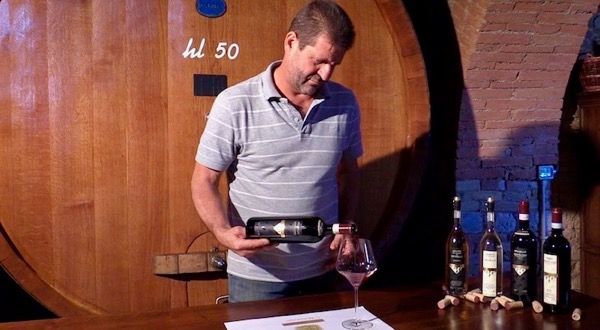
The film below is in Italian. If you turn on captions CC and then go to settings ⚙️ you can select auto-translate to choose a captions language of your choice.

Like Chianti, Sangiovese is at the core of Brunello, specifically the Sangiovese Grosso clone. Brunello has an incredible diversity of styles, the ‘modern style’ tend to be clinical, often oakey, to my mind lacking harmony. The ‘traditional’ employing old large oak show delicacy and restraint, even when blessed with some incredibly powerful fruit.

Le Chiuse is undoubtedly a traditional producer, yet they clearly understand hygiene. There’s no Brett in these babies. The Brunellos I’ve tasted from them to date have been beautiful wines.

In the Vineyards

The estate consists of 18 hectares, including vineyards, olive groves and forest.

The Le Chiuse vineyards are located in the north, a single block that sits between Montalcino and Montosoli. It’s a unique site with a steep, hillside exposition at 330 meters of elevation, rich in schist, stones and fossils with water-retaining clay only two meters below.

There are five Sangiovese Grosso vineyards on the property with respective ages of 26, 16,14,10 and 2 years old.  Together, the vineyards occupy eight hectares and have an average vine density of 4,000 vines per hectare.  The spurred cordon trained vines are, for the most part, from a Massal selection of Sangiovese Grosso from Il Greppo.

The terrain is of marine origin and, therefore, rich in fossil material.  It is also composed of clay striations, as well as, a good presence of marl and tuff.  The result of this composition is the production of a wine characterized by an exaltation of aromas, good body and an alcohol level that is never excessive.

Each year Le Chiuse produces approximately 30,000 bottles of wine between its Rosso di Montalcino, Brunello di Montalcino, Brunello di Montalcino Riserva and a classic method spumante called “Stellare”.

As the new shouts establish they are heavily thinned to control the yield and keep the canopy open.

In August, the green harvest takes place in which a selection of bunches is made.  In the course of the green harvest, almost half of the entire production of the vineyards is purged – an average of 40-45 quintals per hectare are removed.  This operation is fundamental to obtaining high quality, allowing a better maturation of the remaining bunches and giving a good concentration to the final wine.  In addition, the low yields reduce the risk of attack from disease, guaranteeing healthy grapes.

The true harvest begins in the second half of September when the largest bunches are collected by hand for the Rosso di Montalcino and “Stellare”.  After a few weeks, it is time for the smallest bunches to be harvested for the Brunello di Montalcino, and in the best years, the Brunello di Montalcino Riserva.

The grapes are selected and picked by hand.  Taking advantage of the vicinity of the winery, the grapes make it from the vineyards to the de-stemmer and crusher in less than a half hour.  Using a gravitational system, the must falls into steel vats to begin fermentation.

In the Winery

Once de-stemmed and crushed, the grapes are gravitationally fed into steel vats.  Fermentation using indigenous yeasts takes place in thermo-controlled tanks that do not exceed 29°C.  Throughout fermentation and maceration, the must undergoes remontage and delestage to obtain the best extraction from the skins.  After 18 days, the wine is separated and left to rest for approximately three months.  During this period, malolactic fermentation takes place.

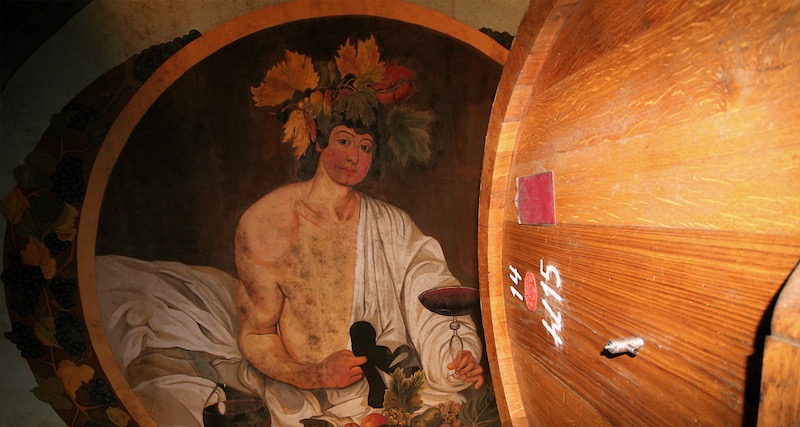
In January, the wine is racked into large Slovenian oak barrels that hold 20-30 hl.  The wine will refine here for 12 months in the case of Rosso di Montalcino, 36 months in the case of Brunello di Montalcino and 48 months in the case of Brunello di Montalcino Riserva.  During aging the wine is racked regularly.

Before bottling, the wine goes back into steel tanks while DOC and DOCG certifications are requested.

After light filtering, the wine is bottled and then refines an additional eight months before release.

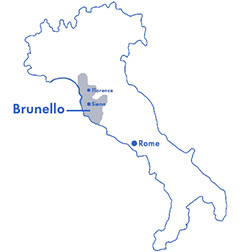
Where in the World is Le Chiuse?

Click to open large map with producer index
90 Points

Dark, animalistic and nearly feral, the 2021 Rosso di Montalcino is impossible to ignore. Crushed ashen stones, musky red currants, earth tones and grilled herbs can all be found. It's softly textured with a pretty inner sweetness and masses of mineral-drenched red fruits. Grippy tannins define the finale, yet the mouth is left watering for more as this finishes structured yet still remarkably fresh.

Eric Guido, Vinous

89 Points

The entry-level 2021 Rosso di Montalcino opens to sour cherry, dried herb, cola and licorice. This Rosso flaunts an easy-drinking and approachable attitude, yet the wine also has the substance and bright primary fruit to pair with more substantial dishes of grilled meat or ravioli filled with cheese and spinach.

Monica Larner, The Wine Advocate

Where in the world does the magic happen?

Le Chiuse di Simonetta Valiani, Montalcino, Province of Siena, Italy

Montalcino
Tuscany
Italy