Size & Type
Other

Location
One thing is certain, you’ll never run short of choice!
First Records of Wine Production – Go back millennia!
Founding Figures – The Greek colonisation marked a shift from vine grown in the wild to planned viticulture around 800 BC the Romans dramatically expanded production around 200 BC. The Italians never looked back!
Area Planted – Around 700,000 hectares making around 19% of the world’s wine!
Number of Wineries – Soave alone is made by 3,500 producers. That’s around the same number of wineries as in all of Australia! From gargistes to industrial scale conglomerates every Italian has a winemaker in the family.
Established Regions – Every region in Italy produces wine! The most prestigious region Piedmont is home to the stunning Nebbiolos of Barolo & Barbaresco. The Chianti and Brunello of Tuscany following hot on Piedmont’s heals. These are just a drop in the ocean!
In typical Italian style the classification systems of each region vary and are often skewed by influential persons with much to gain over the quality of the industry. As always we need to rely on our taste buds as the ultimate decider of quality!
Most Common Varieties – In his book ‘Native Wine Grapes of Italy’ Ian D’Agata documents around 500 Italian grape varieties, by no means the complete set! Around 350 of these have been granted authorized status. There’s plenty to try! We’ve seen a push to save some of the notable, rare varietals like the white Nascetta and Arneis from Piedmont.
Whilst we have seen an ingress of French Varietals, the most notable being the Cabernet Varietals + Syrah used to make the Super Tuscans, the Italians have, by and large stayed true to their roots.
White – Whites of note: Arneis (Piedmont), Cataratto (Sicily), Fiano (southwest coast), Friulano (Friuli), Gargenaga (Veneto – the Soave grape), Greco di Tufo (southwest coast), Malvasia Bianca (throughout Italy), Moscato Blanc (Piedmont), Pecorino (Abruzzo), Pinot Grigo (Why?), Ribolla Gialla (Friulli), Trebbiano (Abruzzo), Verdicchio (Marche) and Vermentino (Sardinia, Tuscany and Liguria).
Red – Aglianico (Campania), Barbera (Piedmont), Corvina blended with Rondinella to make Amarone, Dolcetto (Piedmont), Malvasia Nera (Puglia), Montepuliciano (Tuscany), Nebbiolo (Piedmont), Negaromaro (Puglia), Nero d’Avola (Sicily), Primitivo (Puglia), Sagrantino (Umbria) and Sangiovese (Tuscany).
Up and Coming Regions – Beyond Barolo and Barbaresco, around the world we have seen Amarone, Chianti, Soave, Prosecco, Verdicchio and the wines of Puglia gain strong recognition. In recent times the increasing cost of Barolo in particular has seen exploration of Nebbiolo from Alto Piedmonte and Valtellina. At the opposite end of the country, in part due to the investment of heavy hitters like ‘Barolo Boy’ Marco di Grazie (Terre Nere) and Andrea Franchetti (Passopisciaro) the Nerello Mascelese (red) and Carricante (white) wines of Etna, Sicily have become world recognised. Nerello Mascelese being described as some as the Barolo of the South or a cross between Nebbiolo and Pinot. I prefer to call it delicious!
Showing of wines
Sangiovese from Montalcino, Tuscany
Winemaker Francesco Mulinari makes stunning wines year in year out, and his L’Aietta 2021 Brunello entices with its beautiful fragrance of violet, ripe dark-skinned berry, new leather, eucalyptus and fine tobacco blend. Brimming with finesse, the palate offers ripe wild cherry, crushed raspberry, star anise and spiced orange peel. Taut, fine-grained tannins provide support while bright acidity keeps it vibrant and balanced. Kerrin O’Keefe, 97 PointsIn two neighbouring rudimentar
Sangiovese from Montalcino, Tuscany
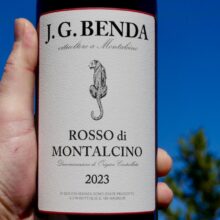
John and Zoë have crafted a Rosso that is fresh, juicy, and immediately delightful, just the way we like them. The serious caliber of the terroir shines through in this structured, yet friendly bottle of Sangiovese. Given the tiny production of this vintage, Benda bottled only a single wine, blending their precious Brunello fruit into this spectacular Rosso.
Nebbiolo from Serralunga d'Alba, Barolo
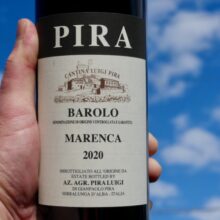
Classic south/south-west exposure. The only difference in the vinification process is the oak maturation. Around 50% goes into large-format aged botti and the remainder in tonneaux, partially new (1 year in tonneaux and 1 year in large botti). ‘Marenca’ is only offered as a cru Barolo by Pira – the other owner, Angelo Gaja, use theirs (along with their ‘Margheria’) in Barolo ‘Sperss’. The nose is fresh, with complex aromas that range from wild berries to dark chocolate and dried he
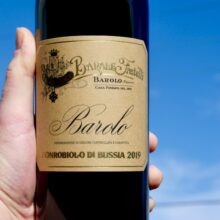
Nebbiolo from Commune di Barolo, Barolo
Wines like these are so rare that it is impossible to try them before they land in the country and they invariably sell out before you get to!
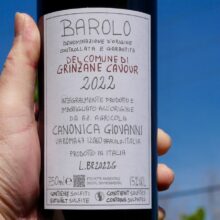
Nebbiolo from Grinzane Cavour, Barolo
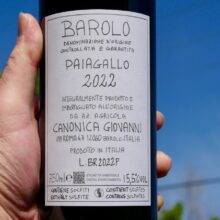
Wines like these are so rare that it is impossible to try them before they land in the country and they invariably sell out before you get to! His vineyards in Grinzane Cavour were inherited by his father in law. Adding an addition 1 hectare to the 1.5 hectares of Paiagallo. Still making for a tiny production.
Nebbiolo from Barolo, Piedmont
A component that was previously blended into the Barolo del Barolo. A beautiful perfume lifts from the glass. An extra pop of perceived acidity makes for tannins with a playful edge to the mid-palate adding pleasure. Truffles, earthiness, darkness, with energy. Of the first three Barolos this will need more time to resolve. Serious gear. Winemaker’s hat on I can see why they separated. It will clearly give so much more with a few years in bottle.A presence yet sophistication of perfume a
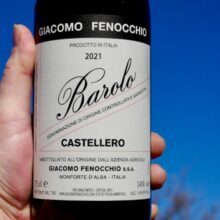
Nebbiolo from Commune di Barolo, Barolo
Fenocchio's Castellero comes from a cooler site east facing site. With similar soils to Cannubi. Darker fruited than Cannubi. Ripe, layered, nutty tannins, with an elegant, composed wine with a dark edge, lovely acidity support perfectly weighted core of fruit with a balanced richness. Claudio's preference is to harvest on the earlier side, whilst making sure the tannins are suitably ripe for the vintage. It shows here in the energey of fine texture of the wine.Tasting this alongside a 2019
Sangiovese from Montalcino, Tuscany
A selection of 100% Sangiovese, grown in the oldest vineyards surrounding the estate (400 m MSL), is used exclusively in exceptional vintages to create Riserva Pian di Conte.The 2019 Brunello di Montalcino Riserva Pian di Conte is intense, with a burst of split pine, cedar shavings, dried flowers and mentholated herbs forming its smoky bouquet. This envelops the palate with silky textures and ripe wild berry fruits, taking on a flinty-mineral concentration that adds lovely depth toward
Sangiovese from Montalcino, Tuscany
The sister to the Uccelliera brother, same winery, same maker, different fruit, and personality! Many who have tasted both the Uccelliera and Voliero Brunello over a number of years remark that they prefer the Uccelliera in the cooler years, and the Voliero in the bolder years. 2016 has somehow managed to make the choice a little harder.Give this just a little time to acclimatise to the world outside the bottle and you'll be greeted with welcoming arms. Voliero's 2016 Brunello has wonderful
Sangiovese from Montalcino, Tuscany
A Brunello in all but name ... and, a bloody good one at that! The 2022 Rosso di Montalcino is wonderfully perfumed, casting a blend of roses, violets and crushed blackberries. A stone dust hint adds lovely complexity. This is elegant in style and remarkably pure, showing depths of cherry-berry fruit guided by a wave of vibrant acidity. The 2022 leaves a salty, mineral flourish while tapering off long and gently tannic. Crisp in feel, with resonating blue and purple inner florals. This is alread
Sangiovese from Montalcino, Tuscany
A Brunello in all but name ... and, a bloody good one at that! Cerbaiona’s 2023 Rosso di Montalcino opens with bright forest berry fruit, pressed violet and a pretty spiciness that defines the vintage. The palate is vibrant and finely textured, balancing floral lift with fresh red and dark berry tones and a subtle savory edge. Aged for one year in oak with a portion of new wood before finishing its maturation in cement for improved integration, the wine shows harmony and clarity while preservi
No wines match your filters
Try removing a filter or broadening your selection.
We couldn't load the wines just now.
You've seen all wines