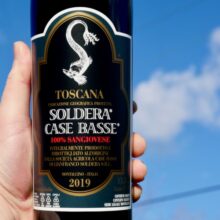
Size & Type
Other

Sangiovese from Montalcino, Tuscany, Italy
$1,695
Gianfranco Soldera’s Sangiovese is an incredible wine, you almost don’t have to drink it the aroma is that good. Incredible complexity, layering, beautifully refined, perfectly developed, yet youthful. Soldera’s wine have a level of precision that you rarely see. I can see why others have picked Grand Cru Burgundy as an option in blind tastings. Incredibly sophisticated, yet with such divine lingering flavours. Hopefully, I’ll see another bottle in the glass soon!
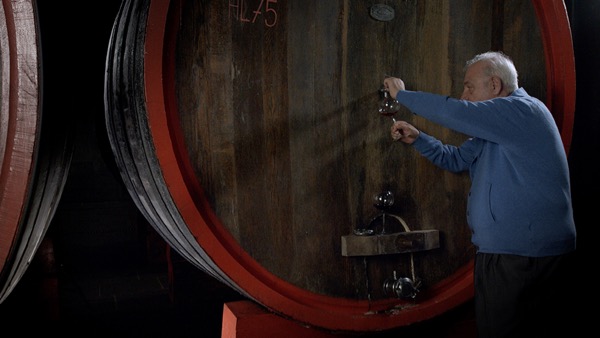
Tasted from barrel (botte number 10) at the winery, the Soldera Case Basse 2021 100% Sangiovese is shaping up to be an epic wine from an excellent vintage. It fully embraces the house style with a bright and luminous appearance that folds seamlessly into fresh berry, redcurrant, heritage rose, licorice root and an elegant note of wet slate or lingering petrichor. All of these beautiful varietal tones are wrapped tightly together and emerge with lifted intensity from the glass. I can’t wait to taste this wine from bottle, when these various elements have had more time to amalgamate and settle.
I also tasted the very punchy and fruit-forward 2022 vintage from barrel as well as the 2023 vintage that was still quite closed. The 2021 growing season saw an important frost event on April 6-7 but otherwise experienced normal spring weather and a hot summer. Harvest started on September 6th. The final blend will be assembled and the wine will go back into botte before going into glass. The actual bottling date will be decided sometime in spring 2025. The 2020s are in bottle at the winery and are expected to stay there for another six to eight months. A release date for the 2020s has not yet been announced.
Monica Larner, The Wine Advocate 97-99 Points
In stock
Our father passed away on 16th February 2019. We would like to thank everyone for their show of affection, esteem and gratitude for father and his works. Everything our father did to build up the winery, thanks to his principles and founding values, will always live on in our commitment. The excellence of the product according to nature, the valorisation of the ecosystem and garden at Case Basse, investments in research and innovation and the support given to young researchers are all part of the winery’s DNA and will be carried on in the future with a renewed passion.
Monica and Mauro with our mother Graziella, together with Paolo and Valeria.
Soldera’s 100% Sangiovese from Azienda Agricola Case Basse, had been on my wishlist for some time. A visit from a good friend became the catalyst for that wish to come true. You know who you are, thank you! Over five hours drinking a bottle of 2009 was a chameleon, changing with every sniff. One of the hallmarks of great wine is its ability to draw you into the glass, they almost speak out to you … Drink Me! Drink Me!

Gianfranco Soldera’s Sangiovese is an incredible wine, you almost don’t have to drink it. The aroma is just that good. Drinking a bottle of 2009 over 5 hours was like watching a chameleon, changing with every sniff. Incredible complexity, layering, beautifully refined, perfectly developed, yet youthful. This wine has a level of precision that you rarely see. I can see why others have picked Grand Cru Burgundy as an option in blind tastings. Incredibly sophisticated, yet with such divine lingering flavours. Hopefully, I’ll see another bottle in the glass soon!

This wine has historically been labelled Brunello di Montalcino Riserva, a difference of philosophical opinion saw Gianfranco leave the Consorzio, preferring to label his wine as Toscan Sangiovese IGT (Indicazioni Geographica Typica). The wine speaks for itself!
Gianfranco and Graziella Soldera have conceived a project based on two deep-felt beliefs:
1. Quality production needs a complex ecosystem that makes up the ideal habitat for natural cultivation,
2. Past experience must be compared with innovation born from research. The culture of the past, i.e. from insight and developed by farming experience, must be respected but also rationally included and verified with the most modern experimentation techniques.
Thus Nature and its laws can be complied with, in order to express the maximum potential and avoid exploiting the soil and crops.
An article in The World of Fine Wine “Soldera: The Great Outsider” explores the estate’s history and philosophy in great depth and is worth a read.
Soldera’s website shares great insight into Gianfranco’s deep thought, desire to back it with science, at the same time as applying a very human touch made gentle by years of experience. His column share insights of the day to day workings at Soldera is particularly illuminating.
In a nutshell, it comes down to a few simple things. Gianfranco’s vineyards are in a great spot, they are cared for with precision and the resultant fruit is of exceptional quality.
To age his wines for 5 years in a barrel is a testament to the quality of fruit. He places no limits on mentoring exceptional wine all the way to the bottle.
The wines have incredible purity and harmony.
Coming from a non-wine related background, the approach Gianfranco has taken has blended science with touch. Critical elements of the environment, vineyard, microflora, winery process literally being put under the microscope. The purpose not to make technical wine, but, to prevent issues by having an in-depth scientific understanding thereby avoiding the use of technology to fix problems.
He initiated The Soldera Award, to support young research all over the world investigating critical aspects of wine production, such is the extent to which he believes in understanding the science of grapes and wine.
You can tell a great wine by its harmony, elegance, complexity and naturalness.
This means balance and proportion, refinement and manifold sensation of aroma and taste. It means using mature, healthy grapes, transformed naturally into alcohol, following their natural process, with no chemical products or colouring added.
A great wine gives satisfaction, a sense of well-being, the desire to drink it again; it creates and increases conviviality and friendship. It is unique, rare, typical and long-lived. In it you can recognize its micro-territory, the vineyard it hails from. The wine from the Instistieti cru, for example, is different from the wine that comes from the Case Basse vineyard although no distance at all separates them.
A great wine cannot be substituted, because it has unique features, like any work of art. I sold not one bottle of 1989 vintage because I did consider it up to my usual high standards of quality.
A great wine is rare, the tip of the pyramid of around 20 billion bottles produced around the world every year. No more than 50 or 60 thousand of them will ever reach the top.
A great wine is long-lived: it must improve, at least in the first twenty years, and give different sensation as time passes. It is the only natural food product that has a longer life-span than a man’s.
All these features raise the production costs considerably – and the price – of a great wine. But any product which has similar worth is never going to come cheap. Beauty and excellence take time, experience and large investments.
I produce an average of 15 thousand bottles a year. But I drastically reduce that number if, because of bad weather condition during the season, the grape harvest is not up to scratch. Out of 30 vintages, 27 have been excellent: a record. The best of the lot, historic, is 1979’s.
Wine is however and always will be subjectivity: the same bottle can be worth 500 euros to one person and not even 1 euro to another.
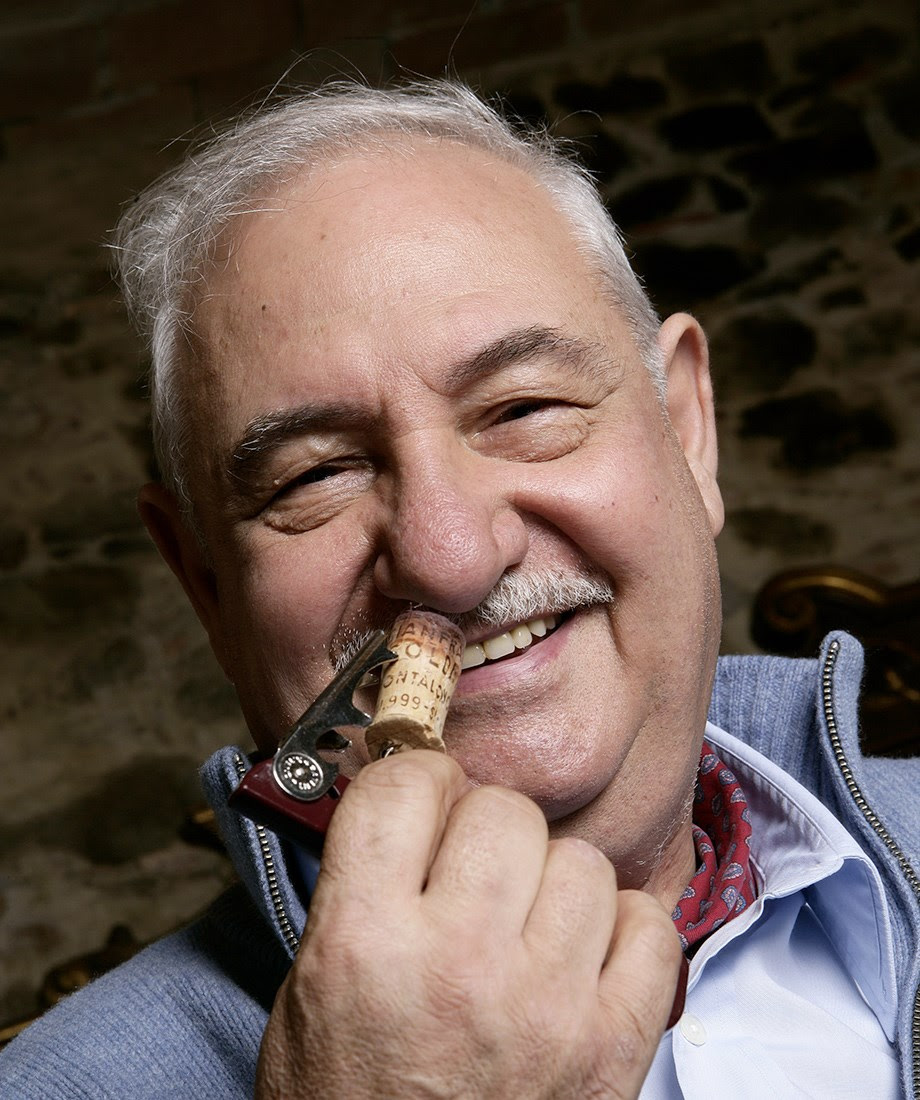
Gianfranco Soldera

Vineyard Management
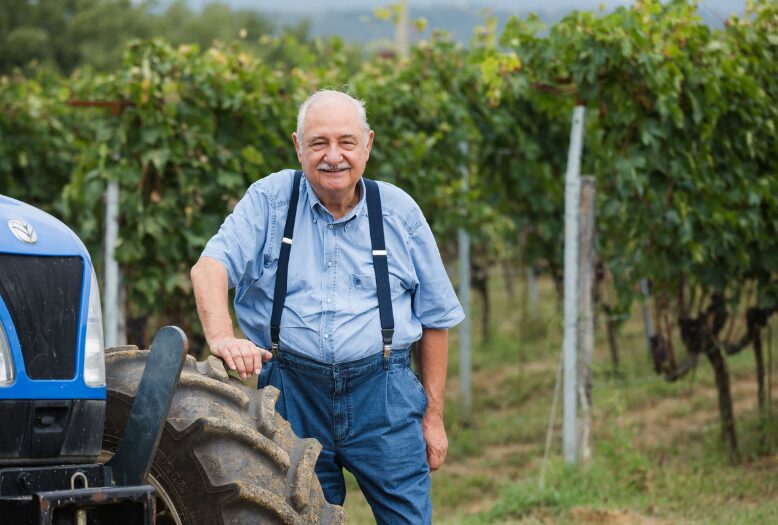
At Case Basse, the roughly 10 hectares of vineyards of exclusively Sangiovese grapes are planted in a complex ecosystem, made up of a great variety of other plants, animals and insects. Agronomic management is based on maintaining maximum biodiversity through the skilful and balanced use of science, technology, culture and tradition.
Phytosanitary management of the vineyard
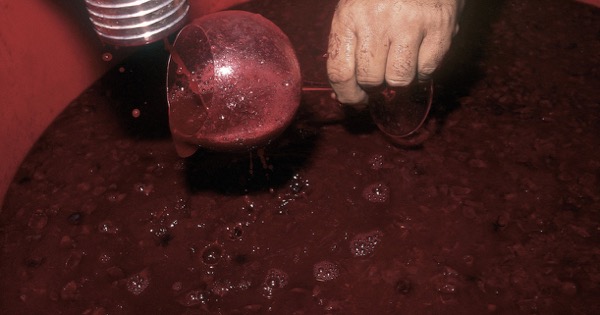
After the first buds appeared, we constantly monitored each vine in order to work out the best protection strategies, with the help of experts in the field. The only tools we decided to use were the necessary amounts of copper and sulphur (in order to respect the vinegrowing ecosystem), the cooperation of natural antagonists and extremely selective plant protection methods for the different vine diseases.
Manual canopy management
As usual, shoot thinning started early, around the beginning of May. During subsequent stages, the long canes were never cut (topped), but positioned on special frames above the plants, so as not to alter the natural vigour of the vine. Furthermore, considering the particularly wet spring, the utmost care was paid firstly to the inflorescences and then to the bunches, to try to reduce stagnation of humidity and favour air circulation during the various stages of side shoot and basal leaf removal.
Bunch selection
Looking after the perfect health of precious bunches from the earliest stages of development through to the final ripening stage, by means of constant and rational selection, is of primary importance. Manual removal of excess bunches and those not quite in perfect condition (which continues right up to the harvest), is fundamental for obtaining top-quality production.

THE HARVEST
Through frequent sampling (more than once a week), we monitored the ripening trend of our Sangiovese 2019 by carrying out sensory assessments and microbiological and chemical-physical analyses on grapes starting from the second ten days in August.
The parameters monitored
In microbiological terms: assessment of microorganism populations present on bunches. In chemical-physical terms: sugars, acidity and pH, potential and extractable anthocyanins, polyphenols, grape seed ripeness. This information, together with irreplaceable tastings, determined the ideal moment. Toscana IGP 100% Sangiovese
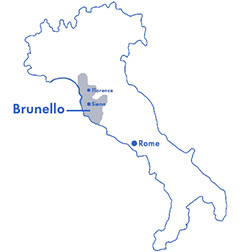
Case Basse estate, in the Brunello subzone of Tavernelle, southwest of Montalcino itself. As Kerin O’Keefe explains in her Brunello di Montalcino: Understanding and Appreciating One of Italy’s Greatest Wines (2012), this area, especially around the small church of Santa Restituta [around which Gaja’s Brunello holdings are planted], has long been recognized as a source of outstanding Sangiovese:
“Averaging between 300 and 350m (984 and 1,148ft) above sea level, fresh nocturnal breezes cool down hot daytime temperatures during the growing season, generating aromas and complexity. The vineyards are also elevated far enough above damaging spring and autumn frost and fog, but when compared to higher areas are just low enough to enjoy warmer temperatures that guarantee more consistent ripening. In fact, most producers in this area feel they have the best of everything: perfect altitude combined with complex and predominantly rocky, well-draining soils as well as warmer temperatures.”

I will simply make two points: 1. Do not drink it with too many people; 2. Make sure you reserve 8 hours to enjoy it!
Where in the world does the magic happen?
Azienda Agricola Case Basse Di Soldera Gianfranco, Montalcino, Province of Siena, Italy
You must be logged in to post a comment.