Winery
Toro Albalá
Our history begins with the story of a small wine grower José María Toro Albalá who had the great idea of keeping aged wines to create wine treasures destined for the most demanding palates and whose family values are still founded on this philosophy today. Although considered a risk in view of the economic situation at that time, his idea was a great success and Toro Albalá wines are now to be found on the best tables in the world.
“Fino” wines were the most popular wines in the 1930s amongst mainly rural Andalusian workers who frequented the local bars. The “bodega”, or winery, was situated in a former regional power plant, which gave rise to the Andalusian joke that the wine was electric or possessed electricity, hence the famous name “Eléctrico” – still used today – for its “fino” wine.
A generational change in the 1960s at the hands of enologist Antonio Sánchez was to give the brand an identity of its own. From then on, its focus was the recovery of the art of the tradition of ageing wines and adherence to the old ways of the “crianza” system. The founder’s nephew, the now well-known Antonio Sanchez, was to bring fresh ideas from his training, which he undertook primarily in France, as well as enthusiasm for a project of which he had been part since the age of six.
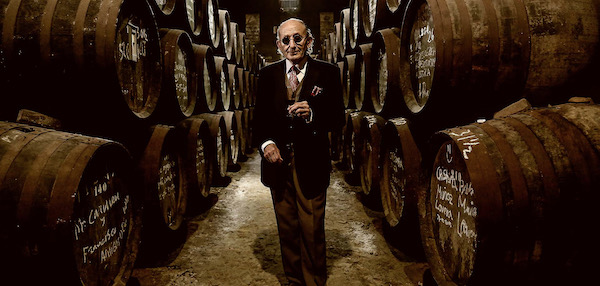
The legacy of this winemaker, never seen without his sunglasses, is not only the creation of wine masterpieces with a unique style all their own, but also an understanding of viniculture, surrounded by works of literature, archaelogy and paintings, as well as the constant aroma of amontillado casks. With consistent quality and a classic taste, his specialities are the very pungent amontillados and unsurpassed Don Pedro Ximénez wines.
In the Vineyard
Toro Albalá’s old, bush vine Pedro Ximénez is planted on the bleach-white, chalky soils of the region. This albariza soil type is not unique to Montilla-Moriles—Sherry’s other capitals of Sanlúcar de Barrameda and Jerez de la Frontera share the spoils. However, the combination of these light soils, altitude, and the hot, dry climate—that can sufficiently ripen Pedro Ximénez—set Montilla apart from its maritime-influenced sister regions.
In the Winery
The three Artisan Ranges
The Viejas Cosechas Range
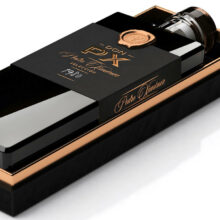
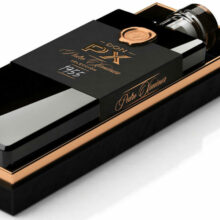
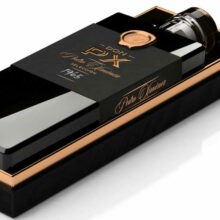
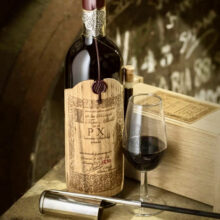
Amongst these Don PX old vintage wines are wine rarities that have been monitored throughout the ageing process and bottled at the optimum time. Carefully controlled by the vineyard manager and winemaker, the quality of these wines is assured. More accessible old wines, not as extreme as the Convento or Convento Selección ranges of extremely old wines.
The Selección range
The Selección range, known as the double label, was always designated for a long process of maturation in a static system from the time of harvest, grape desiccation and maturation. In general, the approximate number of bottles is usually around 4000- 6000, each numbered per vintage.
The Convento Selección range
Convento Selección comprises aged wines from various generations, which have been left to age in amontillado barrels for a specific ageing process, which allows wine and wood to blend, with spectacular results.
Our bottling system is called Convento Selección (convent range) after the Cistercian monks’ serialisation system. All production is carried out by hand according to the Rule of Saint Benedict, “living off the work of human hands”.
The Pedro Ximenez Wines of Toro Albalá
Toro Albalá is arguably the most important producer of Pedro Ximenez in the world today, with the finest vineyard holdings in Montilla (the region for Pedro) as well as the oldest, “legendary” stocks. Toro Albalá was the first Montilla producer to commercialize bottled, dessert-styled Pedro Ximénez in 1970, and remains the world’s only specialist in 100% vintage PX.
The key to understanding Toro Albalá’s reputation lies in their ability to balance the extraordinary sun-ripened richness and depth of old vine P.X. with a bright, savoury quality, which never allows the wines to veer into the cloying end of the spectrum. This is managed though strict quality control that few in the region can—or are willing to—match, from the old vines and great soils, through to their very long aging process. Additionally, one of the many eccentricities of this producer is their rare vintage-only P.X. wines (the overwhelming majority of P.X. bottlings are blends).
Where in the World is Toro Albalá?
Toro Albalá’s home is the D.O. Montilla-Moriles in the wine region of Analucia. Cousin of the D.O. Jerez-Xérès-Sherry. It may be lesser known by the general public, but both regions have a common tradition, they produce similar wines in the same variety of styles and they share most of the production methods. It’s impossible to avoid their resemblance, yet there are also a few interesting differences.
The wines from Montilla-Moriles cannot be called sherry (even though they can be virtually identical) simply because this name is protected by European law and can only be used for wines from the designated sherry area. Montilla-Moriles is about 150 km. away from Jerez. It lies to the south of Córdoba, with the small towns of Montilla and Moriles at its centre. The region is generally a bit drier than Jerez, with more drastic diurnal shifts, less rainfall and particularly hot summers.