Size & Type
Other

White Wine
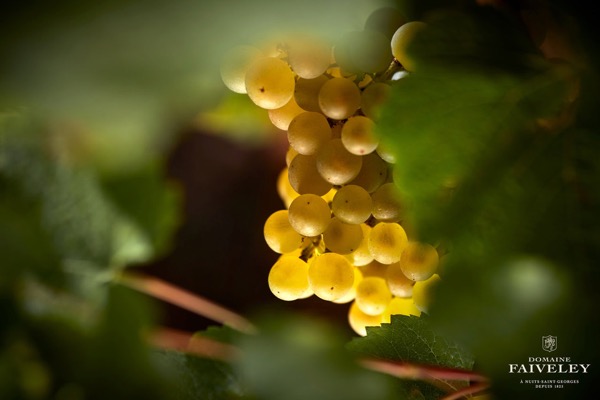
The variety takes its name from the village of Chardonnay near Uchizy in the Mâconnais, in southern Burgundy. A region gaining in reputation for the production of delicious Chardonnay. Thought to have originated from Sâone-et-Loire between Lyon and Dijon.
Burgundy is the mythical home of Chardonnay. From there it spreads far and wide across the world. One of the three main varieties of Champagne production, we also see massive plantings in Australia and North America. You’ll find it somewhere in pretty much every wine growing country.
In Australia 340,000 tonnes of Chardonnay grapes are harvested each year over four times more than the No.2 white grape in Australia, Sauvignon Blanc!
There are a vast array of flavours, aromas, and, textures that Chardonnay can offer from the fruit alone, add in use of solid, fermentation vessels like oak, eggs, and tanks, and, malolactic fermentation, the sky is the limit.
Chardonnay has incredible versatility and can be picked over quite a wide range of sugar levels and flavour ripeness. The same vineyard can be picked with enough sugar to make a wine of 10-11% alcohol for sparkling production and then 14% for table wine with anything in between possible. Picked earlier it tends to have more citrus and green apple characters. Picked ripper the natural acidity drops and the flavours progress through stone fruit, to pineapple, fig and melon.
The hand of the winemaker has been particularly evident in Australia over the last 20 years. Starting with big, broad, alcoholic full malo styles in the 1980’s and 1990’s, the pendulum swung to the lean, acid driven styles in Australia in the mid-00’s, with some down right mean wines produced in the cooler climates like the Yarra Valley, Adelaide Hills, Mornington, and, Tasmania. Currently, styles have found balance with generosity and elegance. Australian Chardonnay is the best it has ever been. Restrained oak use is thankfully the norm, and, globally we are seeing greater use of larger oak barrels, reducing the influence of any new oak.
Use of wild fermentation, malolactic fermentation and grape solids in ferments can add an array of secondary aromas and flavours, nuttiness, creaminess, bakery notes, butteriness, funk.
Some makers have played heavily with reduction in Chardonnay often resulting in flinty, burnt match characters.
In Burgundy, climate change, just as in Australia (along with mature vineyards) has seen picking times bought forward with sugar levels maintaining. The degree of chaptalisation in Burgundy is reducing and is often not required at all.
Check out all the articles in the Wine Bites Mag exploring Chardonnay.
Showing of wines
Chardonnay from Chablis, Burgundy
The hallmark citrus aromas of a fine Côte de Léchet are present on the nose of quinine, oyster shell and poached apple scents. There is fine volume to the delicious medium-bodied flavors that flash ample minerality on the saline, youthfully austere and focused finale. Lovely.Burghound ♥ Outstanding 90-93 Points🔥 HOT TIP - Drink it at 12-14ºC or even a bit warmer to get the most from it.
Chardonnay from Chablis, Burgundy
Stepping up in complexity and layering. A perfume and florals float out of the glass clearly more depth here yet with transparency and clarity that sees a unified personality, harmonious and delicious. Riper flavours than the village Chablis a little more power. Low perceived acidity, still plenty. Those hallmark Defaix savoury, creamy characters at play.“Five star wine. Mid lemon colour, the bouquet has fineness here. Wonderful vibrations, mostly white fruit, a sensation of white peb
Chardonnay from Chablis, Burgundy
Too steep for animals here and slippery too – so everything done by hand. A wide nose, half mineral and saline. Bigger – full, framed with fresh, melting acidity, insinuating delicious flavour. Very long – that’s another great 2018! Bill Nanson
Chardonnay from Chablis, Burgundy
Sitting between the Vaillons and Mont de Milieu in terms of richness and minerality Delicacy, laced and fine, perfumed, elegant and long, a little primary would be interesting to see what a little time in old wood would do for this. The salinity is back in force. Tighter it will need bottle age to show it’s best. The phenolics / acid complex will take time. Everything is there waiting to come together and give a little patience you will be in a very happy place.
Chardonnay from Puligny-Montrachet, Côte du Beaune
A slightly riper nose combines notes of just sliced pear and apple along with background nuances of floral and zest trimmed in mildly more wood influence. The rich, delicious and beautifully textured medium-bodied flavors possess just a bit better depth and persistence on the firmer finale. This too is very good, indeed it could pass for a lower-level villages wine. 2027+ ♥ Outstanding Top valueAllen Meadows, Burghound (87-89) Points
Chardonnay from Mornington, Victoria
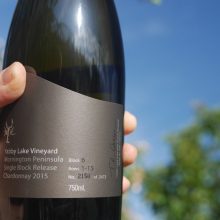
More of Everything! Depth + Length + Texture = More in Your Glass! There are 8 objective criteria I use to assess wine. This wine gets a big tick for all of them! Then there is a 9th objective criteria, Style or Overall Beauty. Think you'd be hard pressed to find a wine lover that could hold their hand on their heart and say this wasn't a beautiful wine.
Chardonnay from Chablis, Burgundy
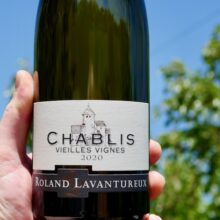
“parcels in Lignorelles – vines planted by grandfather – 50-60-year-old vines. 40% barrel – a mix of sizes but nothing new, indeed about 5-year-old barrels An extra width that’s filled with extra freshness – that’s a great nose. Direct, structured, still with purity and energy and faintly austere too – overtly great villages – what a wine – bravo!”Bill Nanson“Pale lemon, with a beautifully perfumed nose, ripe but stopping short of honeysuckle. The minerals com
Chardonnay from Chablis, Burgundy
Drawn from three hectares on the steep slopes opposite Fourchaume, Bessin’s ‘flagship’ cuvée is blended from six parcels of the domaine’s oldest village-level vines in La Chapelle-Vaupelteigne. These vines were planted between 1950 and 1974 across Kimmeridgian marl and Portlandian soils of varying exposures. The grapes were pressed as bunches and fermented with indigenous yeasts. The wine aged for 18 months in a temperature-controlled tank, with a small amount going into neutral oak. A
Chardonnay from Meursault, Côte du Beaune
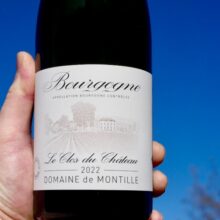
Bourgogne from Meursault Vineyards! Proving once again that you have to know the fruit source of any Bourgogne level wines. Javillier's are both from vineyards in Meursault. The Cuvée de Forgets from the Volnay side and the Cuvée Oligocène from the Puligny side.
Chardonnay from Chablis, Burgundy
Here too there is enough wood influence suffusing the aromas of mineral reduction, pretty floral wisps, spice and iodine to merit mentioning. I very much like the sophisticated texture of the acceptably concentrated middleweight flavors that deliver excellent depth and length on the firm, youthfully austere and sneaky long finale. Unlike the Fourchaume which could be reasonably approached young, this more compact effort will need at least a few years of keeping first.Burghound ♥ Sweet Spo
Chardonnay from Chablis, Burgundy
“A nose of freshness – almost cold and saline – it has my attention. Mouth-filling. Super energy to this wine – plenty of citrus bitters again that slightly modify the texture – interestingly you note the barrel more in the flavours this time than the aromas – the reverse of the last wine – but the elevage was the same. Again, a great wine but wait 2 -3 years”Bill Nanson“More lemon than lime, a little touch of coconut, the wine has the intensity to handle it, amazin
Chardonnay from Chablis, Burgundy
“Another wine which started out in wood for 50% of the volume, which may explain the light coconut touch. Great floral points alongside, such energy of fruit, primary yellow notes, clean concentrated citrus zest, long saline finish. Another beautiful wine from this site.”Jasper Morris 90-92 Points 5-Star Wine
No wines match your filters
Try removing a filter or broadening your selection.
We couldn't load the wines just now.
You've seen all wines
wines