Size & Type
Other

White Wine
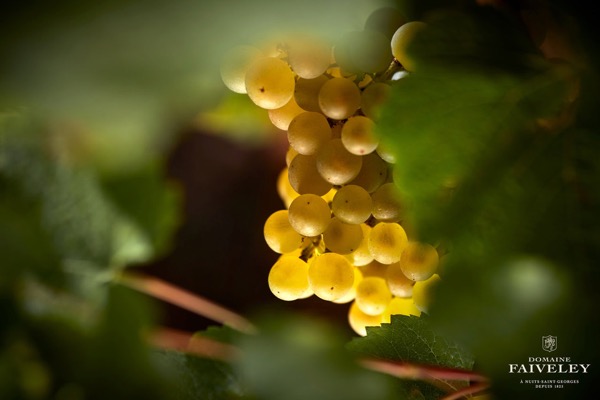
The variety takes its name from the village of Chardonnay near Uchizy in the Mâconnais, in southern Burgundy. A region gaining in reputation for the production of delicious Chardonnay. Thought to have originated from Sâone-et-Loire between Lyon and Dijon.
Burgundy is the mythical home of Chardonnay. From there it spreads far and wide across the world. One of the three main varieties of Champagne production, we also see massive plantings in Australia and North America. You’ll find it somewhere in pretty much every wine growing country.
In Australia 340,000 tonnes of Chardonnay grapes are harvested each year over four times more than the No.2 white grape in Australia, Sauvignon Blanc!
There are a vast array of flavours, aromas, and, textures that Chardonnay can offer from the fruit alone, add in use of solid, fermentation vessels like oak, eggs, and tanks, and, malolactic fermentation, the sky is the limit.
Chardonnay has incredible versatility and can be picked over quite a wide range of sugar levels and flavour ripeness. The same vineyard can be picked with enough sugar to make a wine of 10-11% alcohol for sparkling production and then 14% for table wine with anything in between possible. Picked earlier it tends to have more citrus and green apple characters. Picked ripper the natural acidity drops and the flavours progress through stone fruit, to pineapple, fig and melon.
The hand of the winemaker has been particularly evident in Australia over the last 20 years. Starting with big, broad, alcoholic full malo styles in the 1980’s and 1990’s, the pendulum swung to the lean, acid driven styles in Australia in the mid-00’s, with some down right mean wines produced in the cooler climates like the Yarra Valley, Adelaide Hills, Mornington, and, Tasmania. Currently, styles have found balance with generosity and elegance. Australian Chardonnay is the best it has ever been. Restrained oak use is thankfully the norm, and, globally we are seeing greater use of larger oak barrels, reducing the influence of any new oak.
Use of wild fermentation, malolactic fermentation and grape solids in ferments can add an array of secondary aromas and flavours, nuttiness, creaminess, bakery notes, butteriness, funk.
Some makers have played heavily with reduction in Chardonnay often resulting in flinty, burnt match characters.
In Burgundy, climate change, just as in Australia (along with mature vineyards) has seen picking times bought forward with sugar levels maintaining. The degree of chaptalisation in Burgundy is reducing and is often not required at all.
Check out all the articles in the Wine Bites Mag exploring Chardonnay.
Showing of wines
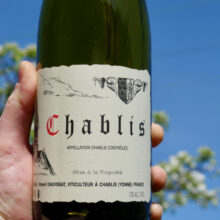
Chardonnay from Chablis, Burgundy
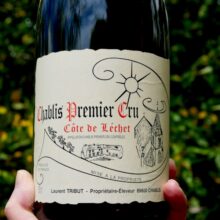
Here too there is a whiff of the exotic that includes lychee and passion fruit on the layered nose laced with iodine, seaweed, floral and lemongrass wisps. The exceptionally rich, even opulent, medium-bodied flavors manage to be at once generous yet refined, all wrapped in a clean, dry and youthfully austere finale. This is an interesting wine as the mid-palate is quite open and lush while the finish is fairly tightly wound. Worth checking out as this should drink well both young and with up to
Chardonnay from Chablis, Burgundy
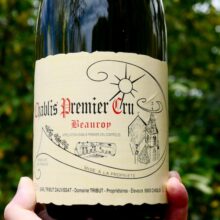
Here too there is very fine typicity with its ripe but cool nose of white peach, pear, iodine and pretty floral nuances that also include a whiff of citrus confit. There is equally fine volume to the rich yet well-detailed flavors that flash a lovely mineral streak on the refreshingly dry finale. Good stuff in a robust and powerful style that should repay mid-term aging. Drink 2025+ ♥ OutstandingAllen Meadows, Burghound
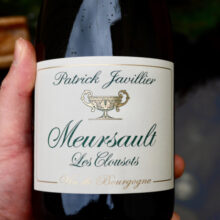
Chardonnay from Meursault, Côte du Beaune
Tasting this I reflected back on Allen Meadows note, couldn't put it better myself. Loads of fun to be had here! Now the 3rd white I've tried from Javillier the thread has been delicacy, transluscence with wonderfully weighted flavours.From Les Clous and Crotots. “Once again, the nose is cool and restrained with its aromas of green fruit, mineral reduction, citrus peel and an interesting hint of quinine. There is fine richness to the enveloping medium weight flavors that exhibit focused po
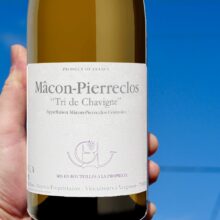
Chardonnay from Pouilly-Fuisse, Mâcon
The 2024 Mâcon-Pierreclos Tris de Chavigne blossoms in the glass with aromas of pear, white currant and freshly baked bread, mingled with a subtle exotic note of passion fruit. Medium-bodied and fleshy yet vibrant, it reveals a texture rarely encountered in this vintage, framed by structuring extract and a cool, marine profile, concluding with a long, saline finish. It incorporates some of the fruit that would typically inform his Juliette et Les Vieilles de Chavigne cuvée.Kristaps Karklin
Chardonnay from Chablis, Burgundy
The domaine holds two priceless hectares in Valmur, which makes it (we’re guessing) one of the largest holders of this Grand Cru, which sits between Grenouilles and Les Clos. With the 1934 plantings in La Pièce au Comte now replanted, Valmur houses the domaine’s oldest vines, planted in 1947, along with some vines planted between 1962 and 1974 and another parcel between 1995 and 2000. Just as significant is the exposure: Bessin’s parcel lies on the southern side of the Grand Cru, in
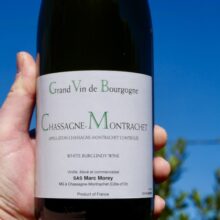
Chardonnay from Chassagne-Montrachet, Côte du Beaune
“The 2023 Chassagne-Montrachet Village comes from three lieux-dits and was bottled in August. This has a bright citrus peel-, fresh pear- and sea spray-scented nose that leans a little toward Puligny in style. The palate is well balanced with a slightly creamy texture. It's a little spicier than other Chassagne Villages, with touches of quince and white pepper on the finish. Enjoy this over the next six to eight years.” Neal Martin, Vinous 89 PointsA touch of matchstick charac
Chardonnay from Rully, Côte Chalonnaise
We really sense the aromatic freshness of the Chardonnay coming from its acidity and the minerality from its mainly mineral terroir. All nurtured by oak notes mainly from foudres in which this wine was vinified and matured. The Margoté plot is located to the South of the Rully appellation. This area is cold and windy. We can almost smell the wind while tasting this wine.The palate is powerful with a round and precise texture full of contained energy. The « mineral » finish is the terroir
Chardonnay from Rully, Côte Chalonnaise
Located to the north of the Premiers Crus de Rully hill, the vines here are cultivated on one of the warmest terroirs of Rully with a South, South-eastern exposure.This exposure translates itself with notes of white flowers, honey and fresh citrus fruits.On the palate, it is the energy coming from the alliance of the Chardonnay and the terroir of the Rabourcé which surprises, with an aromatic freshness enhanced on the finish by light bitter notes creating a beautiful expression of salin
Chardonnay from Rully, Côte Chalonnaise
The nose is refined, persistent and offering ethereal aromas of peach and mandarin, supported by an enjoyable oak presence.The palate is fresh and the definition of terroir becomes clearer as the tasting progresses. Rich flavours linked to aromas from Chardonnay, then you move to bitter skins associated with the bitterness from new barrels which render the wine very salivating. This length extends the quality of the fruit and the expression of terroir, together with almost marly notes, refre
Chardonnay from Chablis, Burgundy
Bougros sits on a very steep slope, with a gradient of more than 30%, facing due south at the foot of the hill. The shallow soil, a mixture of clay and gravel, prevents excessive yields resulting in complex, robust wines.
Chardonnay from Chablis, Burgundy
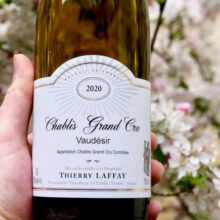
Set in the very heart of the Grand Cru area, Vaudesir has a subtle diversity in exposure. Its steep terrain contains more clay than limestone and produces wines of great finesse and elegance.
Chardonnay from Chablis, Burgundy
With its terroir split into two parts on either side of the Sainte Vaubourg fountain path, it has slightly deeper clay-limestone soils than the other Grands Crus. Its shape is reminiscent of a small valley hence the name “Valmur”.Unwinding in the glass with aromas of peach, lemon oil, freshly baked bread, oyster shell and struck match, Fèvre’s 2020 Chablis Grand Cru Valmur is full-bodied, concentrated and incisive, with a racy, electric profile and a searingly saline, intensely
No wines match your filters
Try removing a filter or broadening your selection.
We couldn't load the wines just now.
You've seen all wines
wines