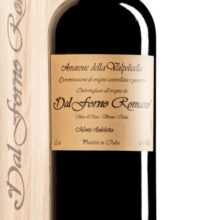
Dal Forno Romano Amarone delle Valpolicella Monte Lodoletta MAGNUM 2013

Product information

Dal Forno Romano Amarone delle Valpolicella Monte Lodoletta MAGNUM 2013

Red Blend from Veneto, Valpolicella, Italy

$2,510

$2490ea in any 3+
$2470ea in any 6+
Alc: 16.6%
Closure: Cork

Description

“The 2013 Amarone della Valpolicella Monte Lodoletta is my favorite wine in the retrospective, along with the amazing 2011, 2009 and 1996 vintages. This wine was released at the beginning of this year (2019), and because Dal Forno skipped over the 2014 vintage, this is the only Amarone we will see for a while (until the highly anticipated 2015 is released). The 2013 vintage is characterized by a slightly more streamlined mouthfeel (which isn’t saying much given the baseline enormity of these wines) with carefully etched aromas of black cherry, rum cake, dark chocolate and toasted espresso. The 2013 vintage was balanced overall without the sudden heat waves we saw in the summers of 2011 and 2012. The grapes finished a slow and steady ripening process over an extended growing season. The effect is graceful and focused. Put this bottle aside in your cellar for the decades to come.”

Monica Larner, The Wine Advocate 98 Points

EG 97

Out of stock
Check out all of the wines by Dal Forno Romano

Why is this Wine so Yummy?

Varietal Composition: 60% Corvina, 20% Rondinella, 10% Oseleta, and 10% Croatina
Alcohol: 16.63%
TA: 6.15g/L
p H: 3.53
RS: 1.7 g/L

About Dal Forno Romano

Romano Dal Forno, namesake of the estate, is the owner and winemaker along with his three sons Luca, Michele and Marco. Romano was born in 1957 and brought up in Capovilla, a small village in Val D’Illasi. He grew up in the agricultural world and as a child helped his father in the fields when extra hands were needed. It was then that he learned the basics of viticulture and winegrowing.

Romano found inspiration from renowned winemaker Giuseppe Quintarelli, a legend in Valpolicella and Italy. Under his expert guidance, Dal Forno Romano was able to shift from quantity-based production to an operation devoted entirely to quality.

Romano went on to study agriculture in the Bassa Veronese district. After his schooling, he worked on a farm but was disillusioned with the old attitudes that were prevalent—the general lack of initiative and the failure to introduce new methods, to experiment and to carry out research. He went in search of a new outlet, somewhere he could express his personality and create something new. It was at that time, in 1982, that he first encountered the world of fine wine.

Romano immediately recognized the opportunities open to him in building a winery and the potential in developing land that at first seemed arid and poor. From a wider cultural perspective, he felt that such a product would represent a healthy lifestyle to offer to a public that was eager to enjoy things that were at once simple, genuine and sophisticated.

In the early 1980s, after having worked for the renowned Giuseppe Quintarelli, Romano Dal Forno took the helm of the family estate in Cellore d’Illasi

His vision became a reality and has since taken on a personality of its own. Romano has always felt a deep need to bring out the full potential of the land. He re-introduced native vines that had fallen into almost complete disuse, as well as certain viticultural practices. Romano remains on a constant search for quality, both in the final product and in all that surrounds it.

Dal Forno produces his two wines in tiny quantities. It takes seven vines to produce a bottle of Valpolicella, and an almighty ten vines to make a single, very special bottle of Amarone. A rigorous selection process and draconian standards make these incredibly concentrated, full bodied wines very hard to come by. The 8ha estate in Illasi can produce 1,500 cases at most, although in most years far fewer are actually released.

Dal Forno’s Amarone della Valpolicella is a radical reinvention of one of Italy’s most famous wines. It is impenitent, intoxicating and a provoking wine. Dal Forno uses extremely low yields and an austere selection process admitting only the most exceptional grapes. The global wine market has an insatiable demand for the world’s greatest wines and Dal Forno’s Amarone has been called the ‘Petrus of the Veneto’. The Wine Advocate’s Monica Larner recently embarked on a retrospective tasting back to the 1990 vintage to assess ageing potential: ‘The results were nothing short of stunning… Dal Forno’s greatest wines transcend vintage to bring us an exceptional portrait of one of the world’s most ambitious wines… Michele Dal Forno, one of Romano’s three sons, tells me his family is considering releasing their Amarone ten years after the harvest in order to give the wine even more time to evolve. Indeed, many of the bottles tasted in this retrospective were opened the evening before my visit to the winery. The drinking windows for the newer vintages tasted in this report extend 30 to 50 years.’

Dal Forno’s Valpolicella Superiore is consistently one of the highest quality reds from the north of Italy, and that is true of this vintage in particular. In fact, Antonio Galloni posits that ‘Dal Forno should really change the name of his… Valpolicella Superiore. This is really an Amarone for all practical intents and purposes, since 2002 made entirely from fruit that has been dried, albeit for less time than that legally required for Amarone’. Dal Forno’s Valpolicella Superiore simply offers a chance to own a pseudo-Amarone from the King of Amarone for less than a third of the price! It is hard to express how exceptional this wine is and it should be found in any fine wine lover’s cellar. It is certainly the greatest Valpolicella that we have ever tasted.

Further Reading

Monica Larner wrote ‘Italy, Valpolicella: A Romano Dal Forno Retrospective’ for The Wine Advocate sharing insights into Dal Forno and it’s capacity to age.

An extract from the article.
Here is a passage I penned six years ago following an earlier tasting session with proprietor Romano Dal Forno: “Dal Forno’s wines throw so much at you at once, in machine-gun rapid-fire succession, you need extra time to recover from the whiplash, gather your thoughts and assess them correctly. They are nearly impossible to taste blind because the enormity of the sensorial characteristics, the stratospheric intensity and the utterly impenetrable appearance are dead giveaways. These wines shout their true identities at ear-piercing decibels. Tasted too young, they are not even likeable. The exaggerated extraction and astringency make them unapproachable for years. Amazingly, beyond the cacophony is melody. Once I ‘got’ these wines, I started to consider them like unique works of art. A painting could hold violent splashes of color but still bring peace to the viewer. A fashion design could be outrageously modeled on the runway but still bring comfort to the wearer.”
With those words still in mind, I embarked on this retrospective spanning back to the 1990 vintage to assess the Dal Forno aging trajectory. The results were nothing short of stunning, especially in terms of the consistently high quality, spanning good vintages and difficult ones alike. Dal Forno’s greatest wines transcend vintage to bring us an exceptional portrait of one of the world’s most ambitious wines.
Monica Larner

In the Vineyard

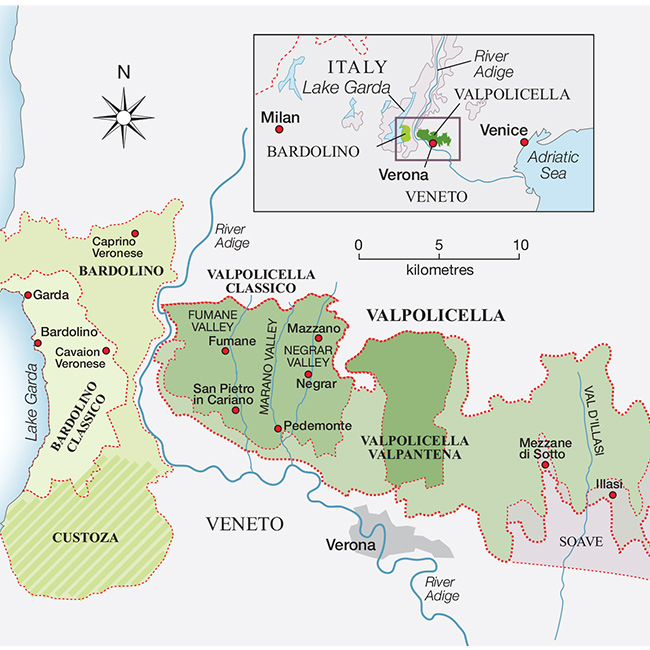
The Romano Dal Forno estate is located in Val D’Illasi, a valley to the east of Verona. The valley cuts, like numerous others, through the chain of the Lessini hills that fan out to the northern side of the city. The valley originates in the Mount Carega area at the northern end of the Lessini. The Val d’Illasi itself runs north-south to form a natural pathway to Carega in the north. The valley is a funnel—wide in the plane and rising and narrowing to become almost alpine from Selva di Progno onwards.

The farm is located about halfway up the valley where the slopes begin to rise toward the mountains. At this point, though, the valley is still wide and extremely sunny. While the areas to the south of the valley often grow cereals and forage for the dense livestock population, the farm has long produced wine and olive oil, due largely to its altitude of 290 meters (950 feet) above sea level.

The Monte Lodoletta vineyard is flat and with alluvial soils consisting of mostly gravel with smaller elements of silt and clay. It’s not a mountain or a hill as the name suggests.

The vineyards have high-density plantings with 12,800 vines per hectare.

A new 26-hectare vineyard located in the hills, at 300 meters above sea level, was purchased a few years ago. The vines are 50 years old and are planted on limestone clay soils. I’m told that the fruit from this new site will be added to Monte Lodoletta to expand that program (as opposed to becoming a new single-vineyard wine).

In the Winery

The philosophy at the Dal Forno winery is to capture that spirit of excess by drying the fruit with specially patented technology in a high-tech ventilated loft, applying vacuum conditions to winemaking after fermentation to avoid oxygen (using five times the weight of stainless steel compared to a regular winery) and then aging the wines in an ambitious regime of 100% new oak.

The winemaking process of Amarone della Valpolicella is a unique and traditional one. The grapes are carefully selected and harvested by hand, with the finest grapes being placed on special racks to dry in temperature-controlled drying rooms. The drying process, known as appassimento, allows the grapes to concentrate their flavors and aromas, resulting in a wine that is rich, complex, and full-bodied.

The appassimento, lasts about 90 days, the grapes are pressed in mid-December and fermented in stainless steel tanks at controlled temperatures. Romano Dal Forno designed his own tanks for automated hydraulic piston punch-downs lasting 15 days. Following fermentation, when CO2 production has ceased, winemaking is continued in anaerobic conditions. Abundant nitrogen is added (in conjunction with putting a vacuum at the top of the tank) in order to eliminate any possibility of further oxygen contact. They winery has its own generator to make nitrogen. The tanks at the Dal Forno winery are built with five times the stainless steel of a tank found at a normal winery because of the extreme pressure generated by the vacuum.

The wine is decanted and racked into barrique, with some remaining residual sugar. It continues a slow fermentation that lasts 18 months, and the total aging time in 100% new oak is 24 months. The wine is bottled and left to age in bottle until ready for release.

One for the Italian speakers.

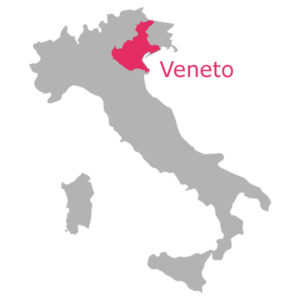
Where in the World is Dal Forno Romano?

The Romano Dal Forno estate is located in Val D’Illasi, a valley to the east of Verona.


97 Points

The 2013 Amarone della Valpolicella Monte Lodoletta needs time – and a lot of it – to show all of its charms. But worry not, because you can already find pleasure in its dramatic display of rich plums and cherries dipped in mocha-infused chocolate with a dusting of cinnamon sugar and sweet tobacco. This is black as night yet truly purple in color, with depths of concentrated wild berry fruits contrasted by zesty acids that do an amazing job of lifting the expression. Grippy tannins saturate slowly, sneaking up on you and lasting throughout the impossibly long black hole of a finish, where notes of licorice, bitters and a coating of cocoa powder linger. Wow. The 2013 is built for the cellar and with tons of upside potential. If you dare to delve into one of these while young, I’d suggest opening your bottle a number of hours prior to enjoying. That said, this will be worth the wait.

Eric Guido, Vinous

98 Points

The 2013 Amarone della Valpolicella Monte Lodoletta is my favorite wine in the retrospective, along with the amazing 2011, 2009 and 1996 vintages. This wine was released at the beginning of this year, and because Dal Forno skipped over the 2014 vintage, this is the only Amarone we will see for a while (until the highly anticipated 2015 is released). The 2013 vintage is characterized by a slightly more streamlined mouthfeel (which isn't saying much given the baseline enormity of these wines) with carefully etched aromas of black cherry, rum cake, dark chocolate and toasted espresso. The 2013 vintage was balanced overall without the sudden heat waves we saw in the summers of 2011 and 2012. The grapes finished a slow and steady ripening process over an extended growing season. The effect is graceful and focused. Put this bottle aside in your cellar for the decades to come.

Monica Larner, The Wine Advocate

Where in the world does the magic happen?

Azienda Agricola Dal Forno Romano, Cellore d'Illasi, VR, Italy

Valpolicella
Veneto
Italy