Size & Type
Other

Italy
Like many regions around the world, a warming climate has seen vignerons in Piedmont having to refine their viticulture and winemaking to produce wines with freshness and energy.
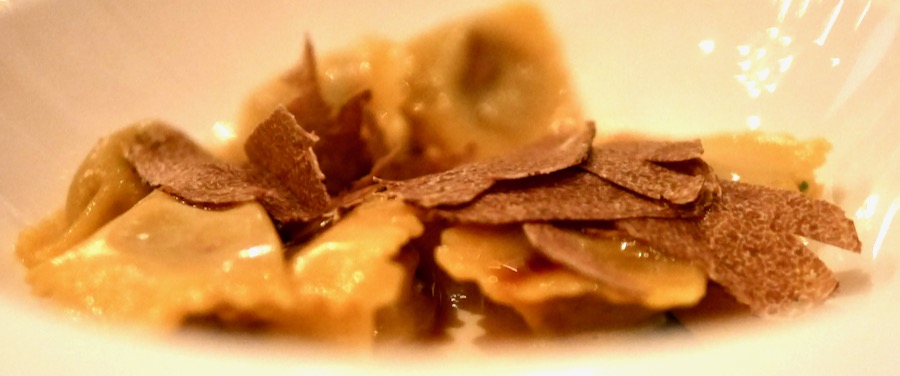
Piedmont is also home to Nutella, the hazelnuts from the region are insane, the truffles of Alba and the industry titan FIAT.
First Records of Wine Production
Early records of wine production in Piedmont date back to the 14th century. In those days the wines being produced were very different. Sweet reds were the norm. Giuseppe Rinaldi recounting the history of Barolo talks of sweet reds being produced well into the early 20th century. Very different to the great Barolo and Barbaresco wines made today!
Production
Piedmont produces somewhere between 200-300 million liters of wine each year.
Including 42 DOC’s and 17 DOCG’s, the quality classifications the Italian’s use DOCG being the best DOC the next best.
It incorporates an incredible diversity of some of the worlds most stunning vineyards, with significant differences in soil, aspect, influences from the surrounding Alps and water bodies like the Tanaro river in Barbaresco. Such diversity gives us wonderful diversity of wines to drink!
Established Regions
When we think of Piedmont our minds immediately shift to the regions in the south, Barolo and Barbaresco, home to the world’s great Nebbiolo producers. If we add the Roero and Asti into the mix. These cover the majority of the wine produced in Piedmont.
Barolo and Barbaresco are Italy’s answer to Burgundy. Over the last 50-70 years, their vineyards have been well defined and categorised, the push to single vineyard, single variety wines completed. Like Burgundy, a new generation has tried all of the new techniques and now finds comfort with making wines of purity over such as heavy handed extraction and new oak use. Their success, and, the money it has bought has allowed the investment of time into vineyards and practical technologies like sorting tables and temperature controlled fermenters in the wineries.
Up and Coming Regions
The success of Barolo and Barbaresco has seen both the price of the wines and vineyards sky rocket. Drinkers looking for value and wineries looking for affordable land have been moving further afield. It started with the Roero, now we are seeing regions in the Alto Piemonte further north on the ascension. Look out for Spanna AKA Nebbiolo wines often blended with Vespolina from Boca, Ghemme, Bramaterra, Carema, Fara, Sizzano, Gattinara and Lessona. Roberto Conterno of Giacomo Conterno recently took over Nervi in Gattinara now Nervi-Conterno giving you some idea of how the potential locals see in Alto Piemonte.
Most Common Varieties
In addition to the current crop of popular varieties, the Italians have been increasingly looking to save ancient varieties. Not long ago the white Arneis was almost non-existent. You won’t see Nascetta listed in too many wine resources, yet, there is a dedicated group of Piemontese looking to revive this delicious white grape, think Cogno & Rivetto.
Like most regions of the world, we see experimentation with non-traditional varieties too. Winemakers are playing with Riesling, Chardonnay, Viognier, Pinot Noir, Cabernet Varieties and Syrah.
White
Arneis, Moscato (22%) often as Moscato d’Asti a low alcohol moderately fizzy wine, Cortese, and, Nascetta. In the eastern reaches of Piedmont the Colli Tortonesi region is rising to fame on the back of Timorasso, fast becoming one of Italy’s most important whites.
Red
The big 3 are Barbera (31%) the most widely planted grape in the region and for good reason, Nebbiolo (10%), Dolcetto (13%). Lesser known varieties include Freisia and Pelaverga. In Alto Piemonte use the name Spanna instead of Nebbiolo and you’ll often see them blended with Vespolina. The Italian daily drink is Barbera and Dolcetto, before the more cerebral Nebbiolo.
Showing of wines
Nebbiolo from Monforte d'Alba, Barolo
This is an excellent evolution for Clerico. The Barolo di Monforte has wonderful harmony. Very expressive, where historically Monforte shows much firmer, structured tannins. Demonstrating how the hand of the maker can create a wine that is more approachable upon release.The tannins are exceptional, long, even and fine. Yes, structurally present in a very good way and with the core of fruit to hold them. This will undoubtedly deliver more in the bottle as it resolves and the secondary devel
Nebbiolo from Serralunga d'Alba, Barolo
The Luigi Baudana 2021 Barolo del Comune di Serralunga d’Alba shows rich fruit delivered as cooked cherry with background tones of cinnamon, red rose and ferrous earth. The tannins are sweet but also firm, and you get plenty of streamlined fruit on the close. The three sites used in the blend are Baudana, Costa Bella and Cerretta.Monica Larner, The Wine Advocate 94 Points AG 92
The 1st Commune di Verduno Barolo from Fratelli Alessandria! This is a hero statement for the 2017 vintage! Well played my friends, well played! The first 100% Verduno Barolo from Fratelli Alessandria and it’s a beauty. Take the Prinsiot, already excellent, add another couple of layers of development, greater depth of tannin and you’re through the first couple of chapters of this book. A lot going on here. Complex, earthy truffle pops, dark fruit, long linear palate with exceptional mid-pala
Nebbiolo from Serralunga d'Alba, Barolo
This wine is a blend of fruit from Baudana, Cerretta and Costabella. The Luigi Baudana 2019 Barolo del Comune di Serralunga d'Alba shows the firmness and structure that this village is known for with pretty perfumes of rose, rusty nail, autumnal leaf, licorice and tar. Costabella is an early-ripening site, and fruit is sourced from the youngest vines in Cerretta and Baudana (leaving a selection from the older vines for the single-vineyard wines).Monica Larner, The Wine Advocate 93 Points AG
Nebbiolo from Serralunga d'Alba, Barolo
The very definition of purity. Perfume, Line & Length, Lush Mouthfeel! Giovanni Rosso’s fabulously good value Barolo Comune di Serralunga d’Alba is made from fruit grown across 8 different estate vineyards in Serralunga d’Alba. The fruit is sourced from Crus such as Cerretta and Serra, also released as single vineyard bottlings, as well as Meriame, Sorano, Costabella, and BaudanaA divine Serralunga, it has everything, and, in all the right places.Those who have tried even the Langh
Nebbiolo from Serralunga d'Alba, Barolo
Classic south/south-west exposure. The only difference in the vinification process is the oak maturation. Around 50% goes into large-format aged botti and the remainder in tonneaux, partially new (1 year in tonneaux and 1 year in large botti). ‘Marenca’ is only offered as a cru Barolo by Pira – the other owner, Angelo Gaja, use theirs (along with their ‘Margheria’) in Barolo ‘Sperss’. The nose is fresh, with complex aromas that range from wild berries to dark chocolate and dried he
Nebbiolo from Barolo, Piedmont
From the Perfume of Barbaresco, the Barolo shifts to a savoury, earthy profile, the richness of La Morra fruit shining through! 80% La Morra. Immediate generosity has it open for action but so much more. A little chocolate and little coffee, savoury bits on dark fruit. There is a lot going on here with layers of flavours and tannins. The depth and length are impressive. Wonderful harmony and presence.Full, dense and obviously really bright. Rose, maraschino, fleshy red plum/red prune. More
Nebbiolo from Barolo, Piedmont
From the Perfume of Barbaresco, the Barolo shifts to a savoury, earthy profile, the richness of La Morra fruit shining through! 80% La Morra. Immediate generosity has it open for action but so much more. A little chocolate and little coffee, savoury bits on dark fruit. There is a lot going on here with layers of flavours and tannins. The depth and length are impressive. Wonderful harmony and presence.Full, dense and obviously really bright. Rose, maraschino, fleshy red plum/red prune. More
Well played my friends, well played! The 3rd 100% Verduno Barolo from Fratelli Alessandria and it’s a beauty. Take the Prinsiot, already excellent, add another couple of layers of development, greater depth of tannin & you’re through the first couple of chapters of this book. An entrancing perfume ... the roses, baking spices, savoury lines, over a foundation of fruit. Tannins flow long & fine, beautifully weighted against the complex, layered flavour profile & energising gracefu
Nebbiolo from Commune di Barolo, Barolo
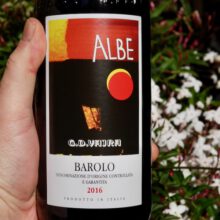
If you were to consider the entire portfolio of wines made in the Barolo appellation, this wine always stands in its own little corner. Albe is a brand on its own, and it represents one of the most versatile, accessible and well-priced Baroli to emerge from the appellation. The G.D. Vajra 2016 Barolo Albe sets off on the right foot, offering forthcoming intensity with forest fruit, wild cherry, crushed stone and blue flowers. Winemaking is straightforward in stainless steel, and the wine finishe
Nebbiolo from Barolo, Piedmont
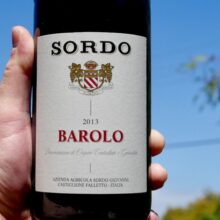
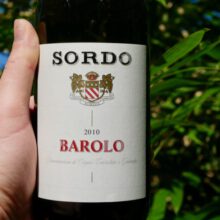
Museum release. Direct from the cellars landed end 2024.I've had the pleasure of devouring most of the 2013 Crus from Sordo, but never the Barolo Classico until now. A great summary of this vintage. This wine typically has a significant La Mora component and it shows in the pure, plush red fruits of great transparency and lick of chocolate. A wonderful perfume lifts from the glass on opening. Just shifting into a nice place, building secondary development. Layers of earthy, truffled, slatey
Nebbiolo from Barbaresco, Piedmont
“One of the highlights in this range, the 2017 Barbaresco Cottà possesses tremendous depth along with the sheer breadth that is the key signature of this Neive cru. Black cherry, plum, leather, licorice, mint and lavender soar out of the glass, all with the backing of serious tannins that are going to need time to soften. This is impressive stuff.” Antonio Galloni, Vinous
No wines match your filters
Try removing a filter or broadening your selection.
We couldn't load the wines just now.
You've seen all wines
wines