Spain

La Rioja

Rioja, in the right hands, offers us beauty that ought not exist.

Many of us were first exposed to Rioja in the form of excessively ripe, over-oaked, oxidised cumbersome ocean of swill.

Politics & corruption ruining much of the region.

Like all wine regions of the world, there have been those who have railed against this abuse, sought to be the exception. They have existed for centuries and they exist today.

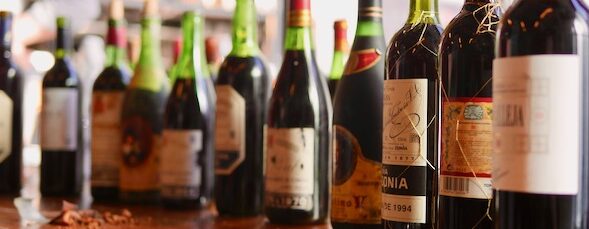
The wines they make are the stuff of legend often aged for 6-10 years in barrel prior to a further 8-10 years in bottle before release. Historically these periods were often extended by a further decade in some form of economic martyrdom.

Luis Gutiérrez & William Kelley jointly sourced the wines for and co-authored the article “Spain & France: The Judgment of Palafrugell – 1947 Rioja & Bordeaux”. 

The 1947 wines from Rioja were drinking beautifully in September 2022. The Real amongst many achieving a perfect score had been bottled after 16 years in barrel!

La Rioja’s Vineyards

Rioja and it’s three current subzones Alta, Alavesa and Baja achieve no meaningful distinction between vineyards and wines. The area is vast with over 60,000Ha of vines planted. As Scott Wasley puts it, it’s the equivalent of using South East Australia to classify the wines NSW, Victora, SA and Tasmania. In the flyover below at the 20sec mark you’ll see a high level geological map of general soil types, it’s clear they run perpendicular to the general sub-region orientation along a number of rivers, valleys and sub-plains.

The fact that I’ve mentioned both the split in soil types, and, significant geological changes if enough for any vigneron worth their salt to call for a more detailed differentiation between key viticultural areas of Rioja. Politics, corruption and a bias toward bland mass-produced wines the adversaries of progress on mapping the region. Without more appropriate classification of vineyards we have to rely on the reputation of quality producer and their track record in the glass. Perhaps not a bad thing for an individual wine. Not great for the reputation of a region as a whole.

Work is to be done here. It will likely take many lifetimes! In the meantime, we rely on dedicated wine lovers to share the best of Rioja with the world.

La Rioja’s Wines

Rioja’s reds are blends dominated by Tempranillo with portions of Garnacha, Graciano & Mazuelo (AKA Carignan or Careñina). Historically and in some wines today small portions of white varieties were included in the mix.

Resources

Yet again Scott Wasley of The Spanish Acquisition has shared deep thought on a Spanish wine region, Rioja. You can read his thoughts in this piece “Beyond Reservas and Co”.
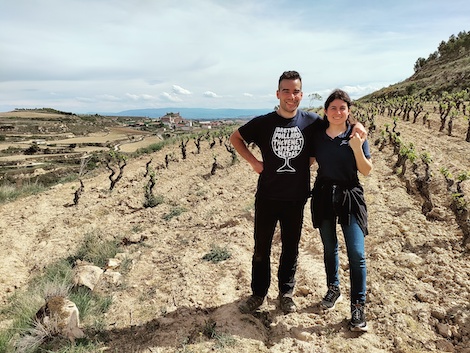
Introducing José Gil


Filters & Sorting

The single-vineyard red 2021 Camino de Ribas comes from a plot, La Cóncova, under the Toloño peak close to Rivas de Tereso, a hamlet from San Vicente de la Sonsierra, possibly the coolest zone, with a north-facing exposure, a place with shallow soils with sand, limestone and sandstone and full of aromatic herbs. It's a blend of 50% Tempranillo, 40% Garnacha and the rest Viura, Jaen, Garnacha Blanca, Palomino and other white varieties. It fermented with a long and soft vinification with some wh
$285
$275ea in any 3+
$265ea in any 6+
If 2008 felt cool and Atlantic, the 2009 Roda I could be described as Mediterranean, from a warm and healthy vintage. Here they aim for black fruit character while the regular Roda should show red fruit. The grapes are sourced from over 30-year-old vines and is mostly Tempranillo with some 5% Graciano. It matured in first and second use French oak barrels for 16 months. It's a warm vintage, without reaching the heights of 2011, but there was some stress in the peak of the summer, which in some w
$385
$365ea in any 3+
$345ea in any 6+
I tased again the stellar 2016 Gran Reserva 904, which is nothing short of being spectacular and a textbook example of the grand traditional style. It was produced with 90% Tempranillo and 10% Graciano from a selection of vineyards in search of balanced wines with silky tannins, good acidity, character, length and aging potential. The élevage is long, four years in used barrels that average 4.5 years of age, during which time the wine is manually racked every six months. It's ripe with 14.5% al
$530
$510ea in any 3+
$490ea in any 6+

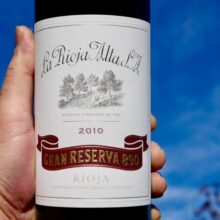
La Rioja Alta 890 Gran Reserva 2010

Red Blend | Spain, Haro

Thrilled to be able to offer my thoughts on this special wine. Lunch with the full current release set from La Rioja Alta was thrilling. The wines are a demonstration of respect for the past and judicious use of modern technology combined with an approach that offer a style reminiscent of a refreshed classic. No fads here!A seamless, harmonious delight. Superb secondary to tertiary development whilst maintaining exceptional freshness for a wine aged this long. Earthy and savoury with faint l
$575
$555ea in any 3+
$535ea in any 6+

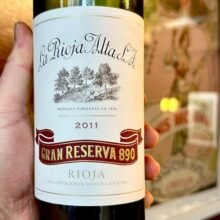
La Rioja Alta 890 Gran Reserva 2011

Red Blend | Spain, Haro

As only the second vintage of 890 I've tried I was immediately struck by the contrast the 2011 has compared with the 2010. Share a glass with the importer, he remarked that the 2011 is a more typical vintage for the 890. While 2010 presented with a richness and generosity, the 2011 has the hallmarks of a great Claret. Vibrant fruit with a subtle underlying lacing of oak, building in the glass, fruit slowly shining through. A fine line of acid adds to the impression of delicacy and restraint. Low
$575
$555ea in any 3+
$535ea in any 6+
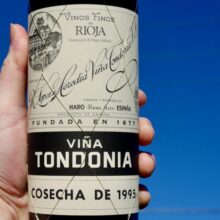
Tasting the 1994 in May 2023 I was lost in the glass with the delicacy, perfume, vibrant red fruit, perfectly poised acid tannin complex. The sophistication, elegance and intoxicating perfume of the wine, simply astonishing. All from a wine held in barrel for 8 years and further 10 in bottle before release!The only current red Gran Reserva is the 1995 Viña Tondonia Gran Reserva, the one that is produced exactly the same as before, including fining with egg whites and sealing with red wa