Size & Type
Other

Location
One thing is certain, you’ll never run short of choice!
First Records of Wine Production – Go back millennia!
Founding Figures – The Greek colonisation marked a shift from vine grown in the wild to planned viticulture around 800 BC the Romans dramatically expanded production around 200 BC. The Italians never looked back!
Area Planted – Around 700,000 hectares making around 19% of the world’s wine!
Number of Wineries – Soave alone is made by 3,500 producers. That’s around the same number of wineries as in all of Australia! From gargistes to industrial scale conglomerates every Italian has a winemaker in the family.
Established Regions – Every region in Italy produces wine! The most prestigious region Piedmont is home to the stunning Nebbiolos of Barolo & Barbaresco. The Chianti and Brunello of Tuscany following hot on Piedmont’s heals. These are just a drop in the ocean!
In typical Italian style the classification systems of each region vary and are often skewed by influential persons with much to gain over the quality of the industry. As always we need to rely on our taste buds as the ultimate decider of quality!
Most Common Varieties – In his book ‘Native Wine Grapes of Italy’ Ian D’Agata documents around 500 Italian grape varieties, by no means the complete set! Around 350 of these have been granted authorized status. There’s plenty to try! We’ve seen a push to save some of the notable, rare varietals like the white Nascetta and Arneis from Piedmont.
Whilst we have seen an ingress of French Varietals, the most notable being the Cabernet Varietals + Syrah used to make the Super Tuscans, the Italians have, by and large stayed true to their roots.
White – Whites of note: Arneis (Piedmont), Cataratto (Sicily), Fiano (southwest coast), Friulano (Friuli), Gargenaga (Veneto – the Soave grape), Greco di Tufo (southwest coast), Malvasia Bianca (throughout Italy), Moscato Blanc (Piedmont), Pecorino (Abruzzo), Pinot Grigo (Why?), Ribolla Gialla (Friulli), Trebbiano (Abruzzo), Verdicchio (Marche) and Vermentino (Sardinia, Tuscany and Liguria).
Red – Aglianico (Campania), Barbera (Piedmont), Corvina blended with Rondinella to make Amarone, Dolcetto (Piedmont), Malvasia Nera (Puglia), Montepuliciano (Tuscany), Nebbiolo (Piedmont), Negaromaro (Puglia), Nero d’Avola (Sicily), Primitivo (Puglia), Sagrantino (Umbria) and Sangiovese (Tuscany).
Up and Coming Regions – Beyond Barolo and Barbaresco, around the world we have seen Amarone, Chianti, Soave, Prosecco, Verdicchio and the wines of Puglia gain strong recognition. In recent times the increasing cost of Barolo in particular has seen exploration of Nebbiolo from Alto Piedmonte and Valtellina. At the opposite end of the country, in part due to the investment of heavy hitters like ‘Barolo Boy’ Marco di Grazie (Terre Nere) and Andrea Franchetti (Passopisciaro) the Nerello Mascelese (red) and Carricante (white) wines of Etna, Sicily have become world recognised. Nerello Mascelese being described as some as the Barolo of the South or a cross between Nebbiolo and Pinot. I prefer to call it delicious!
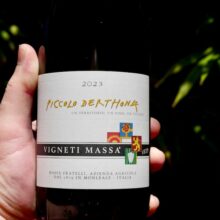
Showing of wines
Red Blend from Lessona, Alto Piemonte
Beauty and sophistication, exceptional purity, a very complete wine! Incredible complexity, perfume pops, savoury layers, orange zest, dark fruits, earth, and woody herbs are just the beginning. Line and length to the shape of the palate. Thirst quenching, yet with a density of flavour that rewards. Juicy acid with fine dusty tannins complete the picture.For anyone wanting to see what Alto Piedmont is capable of this is a great place to start!95% Spanna AKA Nebbiolo 5% Vespolina
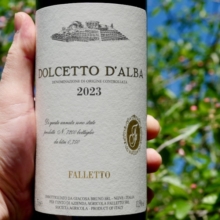
Dolcetto from Serralunga d'Alba, Barolo
Unlike the Barbera d’Alba ‘Falletto’, the Dolcetto d’Alba ‘Falletto’ does not come from the true Falletto di Serralunga d’Alba vineyard but from the North-facing vineyards surrounding it. These sites came as part of the acquisition of Falletto in the 1980’s and were already planted to Dolcetto. Being from the poor helvetian soil of Serralunga d’Alba, the Dolcetto ‘Falletto’ is an impressively structured wine with plentiful tannin and a darker fruit profile.Many of B
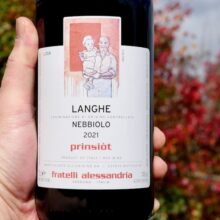
Nebbiolo from Monforte d'Alba, Barolo
Trying Langhe Neb's made with fruit from just one Commune is a great way to dial into the characteristics of that Commune The 2021 makes it 4 years in a row that this wine has performed well above its standing. The consistency Fratelli Alessandria are achieving here is impressive. All of the great Verduno makers speak of the perfume and spice that are the hallmark of the Commune. Both are here in spades. Plush, ultra-fine tannins are beautifully weighted against hyper-vital red and blue fruits a
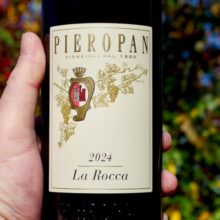
White Blend from Soave, Veneto
Full richer style with excellent freshness and acid balance. Superb development. Very different expression to Calvarino.Vinified in Tonneaux and Botte.Pieropan have made a concerted effort to elevate La Rocca to new heights. Even tighter selection in the vineyard has seen typical volumes drop by 15%. In 2024 this has been further magnified by yields 20% down. The results in the glass are a delight. 100% Garganega La Rocca gets the full beans, aged in 500L barrels on lees with
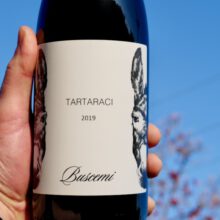
Buscemi's 'Tartaraci' is blended with a splash of Grenache Buscemi's single vineyard red from the Contrada of Tartaraci lies at an elevation of 980m above sea level expect elegances and perfume! It has a good slug of Grenache in it running at upto 30%. The Contrada Tartaraci Rosso IGP, not produced in 2018, the 2019 is a return to a Nerello dominant wine, with the earlier drinking il Rosso 2019, retaining a higher ratio of Granaccia (Grenache) in the blend. This wine always shows great touch.
Sangiovese from Montalcino, Tuscany
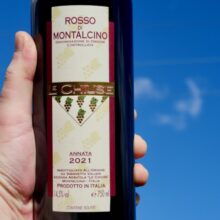
Le Chiuse's Rosso di Montalcino just Keeps Getting Better! What a Rosso. I agree with Guido, it's dark and a little broody. Yet lively at the same time. Opening in the glass, blood orange, slate and dark spices layer into woody herbs. Incredibly complex and layered for a Rosso at this price point. Fine tannins with a playful cleansing grip wrap fruit of depth and length. A very good grape first Rosso, bold yet refreshing!Dark, animalistic and nearly feral, the 2021 Rosso di Montalcino is
Red Blend from Valpolicella, Veneto
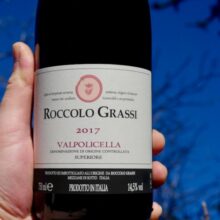
Roccolo Grassi make some of the most enjoyable Valpolicella Superiores I've consumed. They are always balanced, fresh and dry. The development, layering and epic complexity are impressive.The 2017 Valpolicella Superiore by Roccolo Grassi is a sleeping giant. It slowly awakens in the glass with a dark mix of herbal-tinged plums, cracked ashen stone, incense and dried flowers. This is silky verging on velvety, with a core of stimulating acidity that helps to enliven depths of ripe minera
Sangiovese from Montalcino, Tuscany
Le Chiuse's Rosso di Montalcino just Keeps Getting Better! There are a couple of schools of thought when it comes to Rosso di Montalcino. One, make a baby Brunello, the other, make a fresh, energetic, delight to enjoy while you wait for your Brunello to hit the drinking window. Lorenzo's is the latter and done with style.Good to go on release, there is no doubt Lorenzo's Rossos will easily handle fair time in bottle. Lorenzo elicits tannins that are perfectly weighted with bright fruit to of
Nebbiolo from Castiglione Falletto, Barolo
Serious Langhe playing at Barolo level. Poured blind I'd more than likely say it was at Barolo level. Excellent acid wonderful core of fruit, flowing with excellent shape. A vibrancy and energy with fruit weight toward La Morra sources. Outstanding aroma and flavour profile. Layered and complex earthy and truffled. Open and approachable. A serious wine & a wonderful expression of Nebbiolo. The textural elements in the Oddero wines just keep getting better and better year after year.
Dolcetto from Monforte d'Alba, Barolo
Bold primary tones of plump cherry and blackberry are delivered to the bouquet of the 2021 Dolcetto d'Alba Vigna Santo Stefano di Perno. This wine is all about freshness, fruitiness and richness. Mauro Mascarello says the 2022 vintage had less volume overall. Production is always lowered in the hottest drought years because the grapes tend to slow down. But 2021 was a quality year for Dolcetto, he says, both in terms of quality and quantity.Monica Larner, The Wine Advocate 92 PointsH
Ruché from Monforte d'Alba, Barolo
Well here's a fascinating drink! I've not had a Ruchè AKA Ruchet AKA Rouchet AKA Moscatellina before. I wonder how Rinaldi ended up with this in the mix and the history of the vineyard.The synonym Moscatellina is perhaps the one that first drew my gaze when smelling this. It does have some Muscat like aromas, I almost felt like I was smelling a pretty decent bitters. Galloni is on the mark with his discription. Before trying it myself I thought perhaps he was having a Rinaldi Fan Boy moment
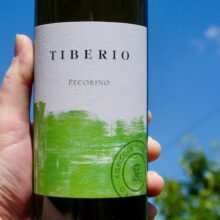
Wickedly fresh, the 2023 Pecorino opens with a pretty blending of stone dust and white smoke, giving way to young peach and sage. This splashes across the palate with soft textural waves while maintaining fantastic energy. A spicy mix of sour lime and green apples saturate the senses. The 2023 cleans up beautifully, tart and mouthwatering, with a saline feel and a sensation of liquid stone. This zesty and wiry Pecorino from Tiberio is a total pleasure to taste.Eric Guido, Vinous 92 Points
No wines match your filters
Try removing a filter or broadening your selection.
We couldn't load the wines just now.
You've seen all wines
wines