Size & Type
Other

Location
One thing is certain, you’ll never run short of choice!
First Records of Wine Production – Go back millennia!
Founding Figures – The Greek colonisation marked a shift from vine grown in the wild to planned viticulture around 800 BC the Romans dramatically expanded production around 200 BC. The Italians never looked back!
Area Planted – Around 700,000 hectares making around 19% of the world’s wine!
Number of Wineries – Soave alone is made by 3,500 producers. That’s around the same number of wineries as in all of Australia! From gargistes to industrial scale conglomerates every Italian has a winemaker in the family.
Established Regions – Every region in Italy produces wine! The most prestigious region Piedmont is home to the stunning Nebbiolos of Barolo & Barbaresco. The Chianti and Brunello of Tuscany following hot on Piedmont’s heals. These are just a drop in the ocean!
In typical Italian style the classification systems of each region vary and are often skewed by influential persons with much to gain over the quality of the industry. As always we need to rely on our taste buds as the ultimate decider of quality!
Most Common Varieties – In his book ‘Native Wine Grapes of Italy’ Ian D’Agata documents around 500 Italian grape varieties, by no means the complete set! Around 350 of these have been granted authorized status. There’s plenty to try! We’ve seen a push to save some of the notable, rare varietals like the white Nascetta and Arneis from Piedmont.
Whilst we have seen an ingress of French Varietals, the most notable being the Cabernet Varietals + Syrah used to make the Super Tuscans, the Italians have, by and large stayed true to their roots.
White – Whites of note: Arneis (Piedmont), Cataratto (Sicily), Fiano (southwest coast), Friulano (Friuli), Gargenaga (Veneto – the Soave grape), Greco di Tufo (southwest coast), Malvasia Bianca (throughout Italy), Moscato Blanc (Piedmont), Pecorino (Abruzzo), Pinot Grigo (Why?), Ribolla Gialla (Friulli), Trebbiano (Abruzzo), Verdicchio (Marche) and Vermentino (Sardinia, Tuscany and Liguria).
Red – Aglianico (Campania), Barbera (Piedmont), Corvina blended with Rondinella to make Amarone, Dolcetto (Piedmont), Malvasia Nera (Puglia), Montepuliciano (Tuscany), Nebbiolo (Piedmont), Negaromaro (Puglia), Nero d’Avola (Sicily), Primitivo (Puglia), Sagrantino (Umbria) and Sangiovese (Tuscany).
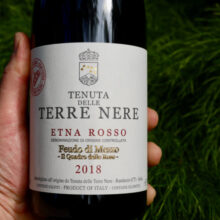
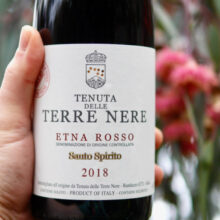
Up and Coming Regions – Beyond Barolo and Barbaresco, around the world we have seen Amarone, Chianti, Soave, Prosecco, Verdicchio and the wines of Puglia gain strong recognition. In recent times the increasing cost of Barolo in particular has seen exploration of Nebbiolo from Alto Piedmonte and Valtellina. At the opposite end of the country, in part due to the investment of heavy hitters like ‘Barolo Boy’ Marco di Grazie (Terre Nere) and Andrea Franchetti (Passopisciaro) the Nerello Mascelese (red) and Carricante (white) wines of Etna, Sicily have become world recognised. Nerello Mascelese being described as some as the Barolo of the South or a cross between Nebbiolo and Pinot. I prefer to call it delicious!
Showing of wines
Nebbiolo from Barbaresco, Piedmont
A complex, dynamic wine, the 2021 Barbaresco Montersino is redolent of sweet dried cherry, incense, blood orange, cinnamon, sage and mint. It offers striking translucence and mid-weight structure to round out a super-classic profile. Bright acids extend the clean, precise finish. What a gorgeous wine this is. Tasted Sept 2024Antonio Galloni, Vinous 94 Points
Sangiovese from Radda UGA, Chianti Classico
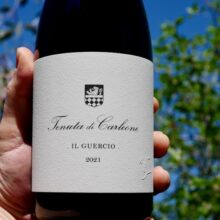
Named after a Tuscan word for "one-eyed rascal," the Tenuta di Carleone 2021 Il Guercio (in a bottle with a white wax capsule) is all Sangiovese with up to 40% whole cluster and as a much as five months of extended maceration in cement vats only.The wine delivers a very clear and variety-faithful expression with bright plum, wild cherry and iris root. You can taste the artisanal approach of this pretty wine. There are dusty limestone sensations that add to a cooling finish. Fruit comes from
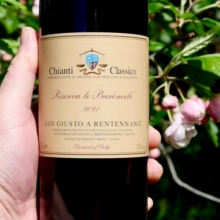
Sangiovese from Castelnuovo Berardenga UGA, Chianti Classico
A Level Up from the Incredibly Good Chianti Classico! No wonder Walter Speller has it in his Top 5 Chianti Wines! There's a big difference between the mouthfeel of Sangiovese for Montalcino and Chianti. Just like this one Sangio from Chianti tends to have line and length of tannin similar to that of varietals like Cabernet, all the way along your palate. Sangio from Montalcino tends to have broader mouther filling tannins, not necessarily bigger or more tannic, just covering the width of your to
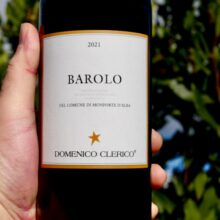
Nebbiolo from Monforte d'Alba, Barolo
This is an excellent evolution for Clerico. The Barolo di Monforte has wonderful harmony. Very expressive, where historically Monforte shows much firmer, structured tannins. Demonstrating how the hand of the maker can create a wine that is more approachable upon release.The tannins are exceptional, long, even and fine. Yes, structurally present in a very good way and with the core of fruit to hold them. This will undoubtedly deliver more in the bottle as it resolves and the secondary devel
Nebbiolo from Serralunga d'Alba, Barolo
The Luigi Baudana 2021 Barolo del Comune di Serralunga d’Alba shows rich fruit delivered as cooked cherry with background tones of cinnamon, red rose and ferrous earth. The tannins are sweet but also firm, and you get plenty of streamlined fruit on the close. The three sites used in the blend are Baudana, Costa Bella and Cerretta.Monica Larner, The Wine Advocate 94 Points AG 92
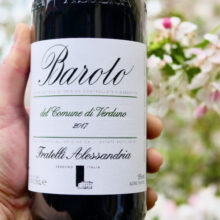
The 1st Commune di Verduno Barolo from Fratelli Alessandria! This is a hero statement for the 2017 vintage! Well played my friends, well played! The first 100% Verduno Barolo from Fratelli Alessandria and it’s a beauty. Take the Prinsiot, already excellent, add another couple of layers of development, greater depth of tannin and you’re through the first couple of chapters of this book. A lot going on here. Complex, earthy truffle pops, dark fruit, long linear palate with exceptional mid-pala
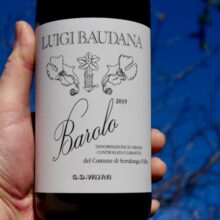
Nebbiolo from Serralunga d'Alba, Barolo
This wine is a blend of fruit from Baudana, Cerretta and Costabella. The Luigi Baudana 2019 Barolo del Comune di Serralunga d'Alba shows the firmness and structure that this village is known for with pretty perfumes of rose, rusty nail, autumnal leaf, licorice and tar. Costabella is an early-ripening site, and fruit is sourced from the youngest vines in Cerretta and Baudana (leaving a selection from the older vines for the single-vineyard wines).Monica Larner, The Wine Advocate 93 Points AG
Sangiovese from Montalcino, Tuscany
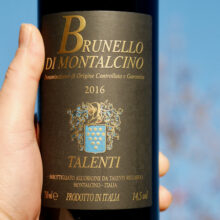
This would have to be the single best value Brunello I've tried in the last few years. I still vividly remember the first release of this wine I drank, the 2016. Straight out of the gate this is just beautiful. The harmony and complexity match a plush, fine mouthfeel of divine tannins. Generosity meets restraint in a beautiful place. Layered with red fruits, darker fruits, a little perfume over earthiness, baking spices, woody herbs, and much, much more.This would have to be the single best
Nebbiolo from Serralunga d'Alba, Barolo
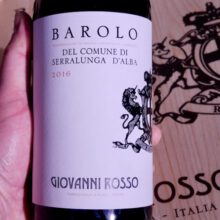
The very definition of purity. Perfume, Line & Length, Lush Mouthfeel! Giovanni Rosso’s fabulously good value Barolo Comune di Serralunga d’Alba is made from fruit grown across 8 different estate vineyards in Serralunga d’Alba. The fruit is sourced from Crus such as Cerretta and Serra, also released as single vineyard bottlings, as well as Meriame, Sorano, Costabella, and BaudanaA divine Serralunga, it has everything, and, in all the right places.Those who have tried even the Langh
Nebbiolo from Serralunga d'Alba, Barolo
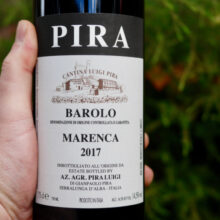
Classic south/south-west exposure. The only difference in the vinification process is the oak maturation. Around 50% goes into large-format aged botti and the remainder in tonneaux, partially new (1 year in tonneaux and 1 year in large botti). ‘Marenca’ is only offered as a cru Barolo by Pira – the other owner, Angelo Gaja, use theirs (along with their ‘Margheria’) in Barolo ‘Sperss’. The nose is fresh, with complex aromas that range from wild berries to dark chocolate and dried he
Nebbiolo from Barolo, Piedmont
From the Perfume of Barbaresco, the Barolo shifts to a savoury, earthy profile, the richness of La Morra fruit shining through! 80% La Morra. Immediate generosity has it open for action but so much more. A little chocolate and little coffee, savoury bits on dark fruit. There is a lot going on here with layers of flavours and tannins. The depth and length are impressive. Wonderful harmony and presence.Full, dense and obviously really bright. Rose, maraschino, fleshy red plum/red prune. More
Nebbiolo from Gattinara, Alto Piemonte
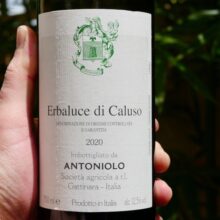
The Gattinara Riserva has an entrancing set of aromas and flavours, dark fruits, woody herbs, a little savoury and truffly with a top note perfume to round it out. Fresh yet beautifully developed, flowing with generous fruit of a weightless feel. The mouthfeel has a vitalising grip that sits beautifully with juicy, fine acid. Fantastic drinking!It feels like the 2016 with a little extra pop of energy!That my friends is the 3-peat! Antoniolo's Gattinaras from 2015, 2016 & 2017 are
No wines match your filters
Try removing a filter or broadening your selection.
We couldn't load the wines just now.
You've seen all wines