Size & Type
Other

Location
One thing is certain, you’ll never run short of choice!
First Records of Wine Production – Go back millennia!
Founding Figures – The Greek colonisation marked a shift from vine grown in the wild to planned viticulture around 800 BC the Romans dramatically expanded production around 200 BC. The Italians never looked back!
Area Planted – Around 700,000 hectares making around 19% of the world’s wine!
Number of Wineries – Soave alone is made by 3,500 producers. That’s around the same number of wineries as in all of Australia! From gargistes to industrial scale conglomerates every Italian has a winemaker in the family.
Established Regions – Every region in Italy produces wine! The most prestigious region Piedmont is home to the stunning Nebbiolos of Barolo & Barbaresco. The Chianti and Brunello of Tuscany following hot on Piedmont’s heals. These are just a drop in the ocean!
In typical Italian style the classification systems of each region vary and are often skewed by influential persons with much to gain over the quality of the industry. As always we need to rely on our taste buds as the ultimate decider of quality!
Most Common Varieties – In his book ‘Native Wine Grapes of Italy’ Ian D’Agata documents around 500 Italian grape varieties, by no means the complete set! Around 350 of these have been granted authorized status. There’s plenty to try! We’ve seen a push to save some of the notable, rare varietals like the white Nascetta and Arneis from Piedmont.
Whilst we have seen an ingress of French Varietals, the most notable being the Cabernet Varietals + Syrah used to make the Super Tuscans, the Italians have, by and large stayed true to their roots.
White – Whites of note: Arneis (Piedmont), Cataratto (Sicily), Fiano (southwest coast), Friulano (Friuli), Gargenaga (Veneto – the Soave grape), Greco di Tufo (southwest coast), Malvasia Bianca (throughout Italy), Moscato Blanc (Piedmont), Pecorino (Abruzzo), Pinot Grigo (Why?), Ribolla Gialla (Friulli), Trebbiano (Abruzzo), Verdicchio (Marche) and Vermentino (Sardinia, Tuscany and Liguria).
Red – Aglianico (Campania), Barbera (Piedmont), Corvina blended with Rondinella to make Amarone, Dolcetto (Piedmont), Malvasia Nera (Puglia), Montepuliciano (Tuscany), Nebbiolo (Piedmont), Negaromaro (Puglia), Nero d’Avola (Sicily), Primitivo (Puglia), Sagrantino (Umbria) and Sangiovese (Tuscany).
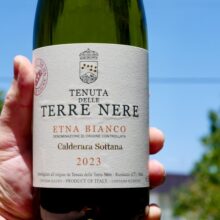
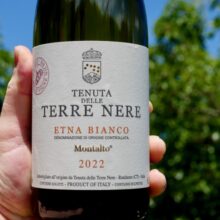
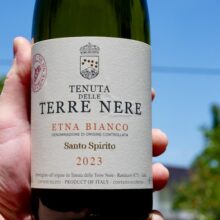
Up and Coming Regions – Beyond Barolo and Barbaresco, around the world we have seen Amarone, Chianti, Soave, Prosecco, Verdicchio and the wines of Puglia gain strong recognition. In recent times the increasing cost of Barolo in particular has seen exploration of Nebbiolo from Alto Piedmonte and Valtellina. At the opposite end of the country, in part due to the investment of heavy hitters like ‘Barolo Boy’ Marco di Grazie (Terre Nere) and Andrea Franchetti (Passopisciaro) the Nerello Mascelese (red) and Carricante (white) wines of Etna, Sicily have become world recognised. Nerello Mascelese being described as some as the Barolo of the South or a cross between Nebbiolo and Pinot. I prefer to call it delicious!
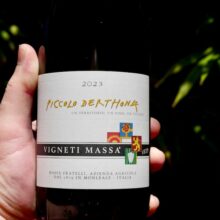
Showing of wines
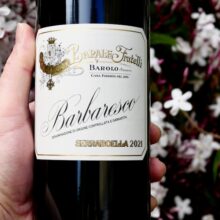
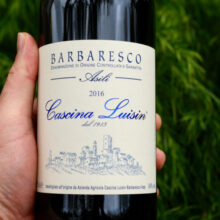
Nebbiolo from Barbaresco, Piedmont
Once again proving PdB's Barbaresco is a great benchmark!After first tasting the 2021 in Nov 2024, I've shifted into drinking mode! Every bottle has been delicious. Without question it is the best vintage since 2016.It's looking sharp straight out of the gate & will clearly offer much more with time. Fresh & energetic, light on it's feet yet of great depth & length. Elegant, & fine with excellent front mid-palate shape. The tannins are of serious quality with a playful gr
Giacosa’s Nebbiolo d’Alba uses fruit sourced solely from the Roero area, and the wine alongside both the Arneis and Nebbiolo Valmaggiore from here have a long and storied history with Bruno Giacosa. It is no coincidence that 1974 saw the first bottling of both Arneis and Nebbiolo d’Alba from Giacosa, as they were sourced from the same growers. The same is mostly true today, and where the Arneis is grown in the predominantly North-facing slopes of the vineyards in Roero, the Nebbiolo comes
Red Blend from Gaiole UGA, Chianti Classico
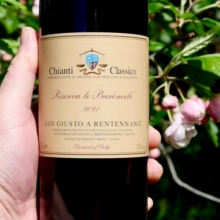
Le Baroncole is made from 97% Sangiovese and 3% Canaiolo grapes. The initial stages of its production are the same as Chianti Classico but it is then aged in barriques for between 16 to 20 months, bottled unfiltered and held for a further six months prior to release.Here's a beautiful bottle from San Giusto a Rentennano that outperforms dozens of wines from the appellation that are priced two or three times higher than this. The organic 2021 Chianti Classico Riserva Le Baròncole is incr
Sangiovese from Montalcino, Tuscany
This would have to be the single best value Brunello I've tried in the last few years. I still vividly remember the first release of this wine I drank, the 2016. Straight out of the gate this is just beautiful. The harmony and complexity match a plush, fine mouthfeel of divine tannins. Generosity meets restraint in a beautiful place. Layered with red fruits, darker fruits, a little perfume over earthiness, baking spices, woody herbs, and much, much more.This would have to be the single best
Nebbiolo from Grumello, Valtellina
Grumello is to the east of Sondrio on the opposite side to Sassella making for a fascinating comparison in site! Grumello is to the east of Sondrio on the opposite side to Sassella making for a fascinating comparison in site! This is where the largest strides have been made. We’ve seen both of the Grumello Riservas priced at the same point now. Whatever is happening in the vineyard or winery to make that happen is translating into this Superiore (ArPePe makes either Superiores or Riservas in
Nebbiolo from Sassella, Valtellina
As with the 2015 & 2017 I found myself not really wanting to write tasting notes simply wanting to devour the glass!Sassella typically produces the most elegant wines of the three communes with Inferno next and Grumello the boldest.Another superb Sassella. Smoking wine. Everything is here and in all the right places. Elegance and sophistication caressing long fine tannins. Seamless harmony. Energy and vitality in a very complete wine. Line and length with a long vertical palate. A be
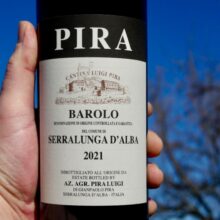
Nebbiolo from Serralunga d'Alba, Barolo
I recall being impressed by Pira's 2018 Langhe Nebbiolo a couple of years on and the Barolo 'Commune di Serralunga' is impressing too! Openning in the glass with vibrant red fruits, tea, a little earthiness, slate, licorice and more. The layered density of the fruit with zippy acid has you salivating for more. The tannins are composed and front, mid-palate dominant, that slate comes through here to. Tight at the moment with 3-5 years it should fall into place, the juicy acid marry into the wine
Nebbiolo from Commune di Barolo, Barolo
The hot tip for the Langhe Nebbiolo give it a year or two in bottle before you crack into it. It will be tightly wound when young and take that time to reveal itself. Looking forward to trying Canonica's.
White Blend from Valpolicella, Veneto
The 2023 Bianco Secco is a model of purity with its bouquet of dusty florals, cracked slate, lime zest and green melon. It opens with a balanced inner sweetness offset by a sour citrus tinge as tart green apple enhances its tension. A salty flourish punctuates the experience as hints of young kiwi mix with apricot through the long and wonderfully fresh finish. This is a refined and captivating vintage of Bianco Secco, a wine that continues to punch well above its class.Eric Guido, Vinous 9
Nebbiolo from Commune di Barolo, Barolo
The hot tip for the Langhe Nebbiolo give it a year or two in bottle before you crack into it. It will be tightly wound when young and take that time to reveal itself. Looking forward to trying Canonica's.
White Blend from Valpolicella, Veneto
NOTE FOR THE 2023:The 2023 Bianco Secco is a model of purity with its bouquet of dusty florals, cracked slate, lime zest and green melon. It opens with a balanced inner sweetness offset by a sour citrus tinge as tart green apple enhances its tension. A salty flourish punctuates the experience as hints of young kiwi mix with apricot through the long and wonderfully fresh finish. This is a refined and captivating vintage of Bianco Secco, a wine that continues to punch well above its class.
No wines match your filters
Try removing a filter or broadening your selection.
We couldn't load the wines just now.
You've seen all wines