Size & Type
Other

Location
Without doubt the two greatest drivers of the French wine industry have been the concept of Terroir and the establishment of the Appellation d’origine contrôlée.
Combined these have defined a philosophical approach to growing and making wine and enforced strict controls of grape varieties that can be planted in each region and winemaking practices that can be employed.
Frances has come through with flying colours, successive generations have been better trained, spent time in the New World exposing them to different techniques for growing vines and making wine, and, have been able to push the boundaries to achieve excellence.
First Records of Wine Production – Go back millennia to the 6th century BC. The Greeks kicked things off with the Romans ramping things up. Those Romans got around and took their vines and wines with them! Over time the wealth of the Monastries took over much of the production. Nobility took their turn until the guillotine fell!
Founding Figures – In ‘recent times’, technical advancement in the industry were driven by Minister of the Interior, Jean-Antoine Chaptal following the French revolution, work done by Louis Pasteur in the 19th century, and, the Emperor Napoleon III commissioning of the 1855 classification of Bordeaux.
Area Planted – with around 630,000 hectares of vines France produces 17% of the World’s wine
Established Regions – When we think French wine, the regions that immediately come to mind are Champagne with its fizz, Bordeaux’s Cabernet blends and Sauternes, Burgundy’s Pinot and Chardonnay, the Rhône Valley’s Shiraz, Grenache, Marsanne & Roussane, and, Alsatian Riesling.
Most Common Varieties
White – From greatest area planted down the top red varieties are Ugni Blanc, Chardonnay, Sauvignon Blanc, Melon de Bourgogne, Sémillon, Chennin Blanc, Colombard, Muscat Blanc à Petits Grains, Grenache Blanc, Viognier, and, Riesling.
Red – The list doesn’t surprise the order they come in does from greatest area planted down the top red varieties are Merlot, Grenache, Syrah, Carignan, Cabernet Sauvignon, Cabernet Franc, Gamay, Pinot Noir, Cinsaut, Pinot Meunier and Mourvèdre.
Up and Coming Regions – In recent times we’ve seen the Rosé of Provence, the hidden gems from the Languedoc, Jura and Loire Valley increasing in popularity.
Showing of wines
Pinot Noir from Gevrey-Chambertin, Côte-de-Nuits
Vines planted in 1987 on an area of 25 ares Purchase of grapes from this vineyard, planted over a gravel pit with good draining soil, since 2009. When the summer is hot and dry, the vine suffers from lack of water supply. The wines are characterized by their elegance, delicacy and the softness of their […]
Pinot Noir from Bouzy, Montagne de Reims
The release of the 2015 saw the Bouzy shift from a Pinot/Chardonnay blend to a 100% Pinot. The fruit is sourced from estate owned vines.The 2015 release was one of my favourity wines from the vintage. I'm looking forward to devouring a bottle of 2018 soon!Striking peach skin color. Wonderfully effusive nose with a wide spectrum of aromas that range from nectarine to orange blossom and wild herbs. Breathtaking interplay of delicate stone fruit character. SP 97 Points
Pinot Noir from Ambonnay, Montagne de Reims
Wonderful wine. Such incredible purity & precision! "The 2018 vintage of Benoît Marguet’s “Ambonnay” Rosé is an excellent follow-up to the dazzling 2017 version he made of this wine. The cépages for the 2018 version is eighty-two percent chardonnay and eighteen percent pinot noir. As has been the case for many vintages now, the wine is non-dosé and was aged three and a half years on its fine lees prior to disgorgement in February of 2023. The bouquet is very, very refined this year, wa
Chardonnay from Avize, Côte des Blancs
A stunning full-flavoured Blanc de Blanc. Exceptional depth and length with the hallmark mid-palate weight Benoît Marguet elicits from quality fruit with clever winemaking. Such is the quality of the fruit, everyone I drink a Marguet village wine with is in disbelief when they find out the wine is Zero does.100% Chardonnay from Vinegrower: Laurent Vauversin in Avize in the Grand Cru heart of the Côte des Blancs.
Pinot Noir from Bouzy, Montagne de Reims
“At once fragrant and flinty, this has a breathtaking vibrancy that makes you sit up and feel glad to be alive. And a large part of that energy is only released after you have swallowed this extraordinary Champagne. And yet it is also brimming with mirabelle and peach character. 100% pinot noir. From organically grown grapes. Disgorged in February 2023."SP 96 Points100% Pinot Noir from Vinegrower: Hugues Godmé. Production years: 2015, 2016, 2017, 2018, 2019
Chardonnay from Chablis, Burgundy
Bougros sits on a very steep slope, with a gradient of more than 30%, facing due south at the foot of the hill. The shallow soil, a mixture of clay and gravel, prevents excessive yields resulting in complex, robust wines.
Chardonnay from Chablis, Burgundy
Set in the very heart of the Grand Cru area, Vaudesir has a subtle diversity in exposure. Its steep terrain contains more clay than limestone and produces wines of great finesse and elegance.
Chardonnay from Chablis, Burgundy
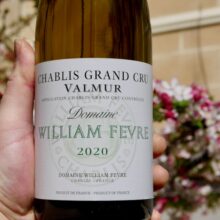
With its terroir split into two parts on either side of the Sainte Vaubourg fountain path, it has slightly deeper clay-limestone soils than the other Grands Crus. Its shape is reminiscent of a small valley hence the name “Valmur”.Unwinding in the glass with aromas of peach, lemon oil, freshly baked bread, oyster shell and struck match, Fèvre’s 2020 Chablis Grand Cru Valmur is full-bodied, concentrated and incisive, with a racy, electric profile and a searingly saline, intensely
Blend from Avize, Côte des Blancs
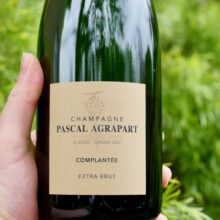
Disgorged June 2023. Complantée comes from a single parcel in Avize that Agrapart co-planted (complantée) with six varieties: Pinot Noir, Meunier, Chardonnay and the heirloom Champagne varieties of Arbane, Petit Meslier and Pinot Blanc. Chardonnay accounts for one-quarter of the blend, with the remainder split equally between the other five varieties. The vines are all in the Fosse vineyard, the same site that gives us the great Vénus cuvée (the name of the specific vineyard parcel w
Pinot Noir from Nuits-Saint-Georges, Côte-de-Nuits
This blend of Nuits-Saint-Georges climats includes the village lieu-dit Les Allots and three Premiers Crus: Les Cailles, Aux Thorey and Les Boudots. The lion’s share, however, is drawn from Aux Herbues on the Vosne border and a parcel in the northern part of Fleurières, just south of the town. This year, Les Tuyaux, a stony terroir at the very northern end of the appellation, has joined the party. The 2022 was entirely destemmed. My notes read “Very Ben Leroux” in that it’s a
Pinot Noir from Pommard, Côte du Beaune
Given his experience in Pommard, home turf, if he'll have handle on any fruit this will be it! A lovely perfume, as expected still very youthful. Building in weight with tannins and fruit beautifully balanced. This seems to be very well dialed in and just in need of time. With excellent length and flow. It's looking incredibly complete. I'd be hiding it away for at least 7 years to really show you its potential. Having been the manager of Comte Armand for 15 years, Benjamin Leroux knows a
Chardonnay from Meursault, Côte du Beaune
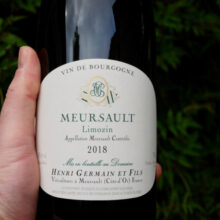
"A slightly riper nose offers up aromas of white peach, lemongrass, hazelnut and spice hints that are in keeping with the equally ripe, round and nicely rich medium-bodied flavors that aren't quite as refined, all wrapped in a delicious and more complex finish. In a word, excellent."Allen Meadows, Burghound
No wines match your filters
Try removing a filter or broadening your selection.
We couldn't load the wines just now.
You've seen all wines
wines