Size & Type
Other

Location
Without doubt the two greatest drivers of the French wine industry have been the concept of Terroir and the establishment of the Appellation d’origine contrôlée.
Combined these have defined a philosophical approach to growing and making wine and enforced strict controls of grape varieties that can be planted in each region and winemaking practices that can be employed.
Frances has come through with flying colours, successive generations have been better trained, spent time in the New World exposing them to different techniques for growing vines and making wine, and, have been able to push the boundaries to achieve excellence.
First Records of Wine Production – Go back millennia to the 6th century BC. The Greeks kicked things off with the Romans ramping things up. Those Romans got around and took their vines and wines with them! Over time the wealth of the Monastries took over much of the production. Nobility took their turn until the guillotine fell!
Founding Figures – In ‘recent times’, technical advancement in the industry were driven by Minister of the Interior, Jean-Antoine Chaptal following the French revolution, work done by Louis Pasteur in the 19th century, and, the Emperor Napoleon III commissioning of the 1855 classification of Bordeaux.
Area Planted – with around 630,000 hectares of vines France produces 17% of the World’s wine
Established Regions – When we think French wine, the regions that immediately come to mind are Champagne with its fizz, Bordeaux’s Cabernet blends and Sauternes, Burgundy’s Pinot and Chardonnay, the Rhône Valley’s Shiraz, Grenache, Marsanne & Roussane, and, Alsatian Riesling.
Most Common Varieties
White – From greatest area planted down the top red varieties are Ugni Blanc, Chardonnay, Sauvignon Blanc, Melon de Bourgogne, Sémillon, Chennin Blanc, Colombard, Muscat Blanc à Petits Grains, Grenache Blanc, Viognier, and, Riesling.
Red – The list doesn’t surprise the order they come in does from greatest area planted down the top red varieties are Merlot, Grenache, Syrah, Carignan, Cabernet Sauvignon, Cabernet Franc, Gamay, Pinot Noir, Cinsaut, Pinot Meunier and Mourvèdre.
Up and Coming Regions – In recent times we’ve seen the Rosé of Provence, the hidden gems from the Languedoc, Jura and Loire Valley increasing in popularity.
Showing of wines
Pinot Noir from Ambonnay, Montagne de Reims
Amongst an Ocean of Champagne Rosé this is one of the few that stands out! A Rosé with great poise, well balanced, with a great depth and length of fruit delicious Pinot fruit. No need to rely on excessive sugar to make up for poor fruit here! The texture and spice from the addition of a small percentage of red wine to colour the Rosé is just right adding intrigue and cleansing your palate. Rosé as it should be! Available in 750ml.
Pinot Noir from Nuits-Saint-Georges, Côte-de-Nuits
This manages to be at once ripe yet cool with its layered combination of black cherry, plum and just turned earth and humus nuances. There is notably better density and volume to the bigger-bodied flavors that coat the palate with dry extract on the firm, moderately austere and sneaky long finish. This by contrast is going to need at least a few years of keeping first. 2032+ ♥ OutstandingAllen Meadows, Burghound (90-92) Points JM 94It hard to talk about Nuits-Saint-Georges without
Pinot Noir from Pommard, Côte du Beaune
Rounder, plusher than the 2016. A lovely differentiation between vintage that still sees the qualities of clearly very fine house at play. None of the reduction Meadows noted on first release is present now. A little more time is needed for this to show it’s full colours at the moment. A little more savoury with the same fruit energy at play. As seems to be the case for the Domaine there is a harmony that you don’t always see in Burgundy. Superb drinking.
Pinot Noir from Pommard, Côte du Beaune
A mildly toasty nose is comprised by notes of red and dark cherry, raspberry and newly turned earth. The rich and caressing medium weight flavors are at once succulent but powerful while delivering fine length on the decidedly firm but not really austere finale. This too offers very fine quality in a built-to-age package.Allen Meadows, Burghound
Pinot Noir from Pommard, Côte du Beaune
Fascinating drinking here. More down the strawberry line. With excellent harmony. This is divine, violets and underlying savoury notes. Another excercise in textural difference. Arvelet so even fine and plush, derrière building in structure, Fremier super high quality tannins with a very slight mid-palate prominence and wonderful length of tannin.Drinking these wines side by side is a demonstration in the diversity of Pommard, a celebration of the differences between vineyards.
Pinot Noir from Pommard, Côte du Beaune
A cooler and quite pretty nose combines notes of plum, red and dark raspberry along with spice and floral top notes. The finer and more seductively textured medium-bodied flavors that possess a lovely sense of underlying tension, all wrapped in a bitter pit fruit-inflected finish. This firmly structured effort could use a bit more depth, but more will almost certainly develop over the course of time. Good stuff here. ♥ Sweet spot Outstanding Drink 2030+Burghound, 92 Points
Pinot Noir from Pommard, Côte du Beaune
A brooding and still very primary nose offers up liqueur-like notes of dark cherry, raspberry, anise and a hint of wood. There is excellent verve to the utterly delicious flavors that also possess excellent delineation before concluding in a mineral-laden and sneaky long finale. This is lovely and worth a look. ♥ Outstanding Drink 2028+Burghound, 91 Points
Chardonnay from Buxières-sur-Arce, Côte des Bar
Very complete, excellent vertical linear flow and shape with a generosity, love the weighting and persistance, a little chalky phenolics, and perhaps just a little oak influence. Great development pre bottling with a delicacy in the lees work and a resolved comfort.
Chardonnay from Chablis, Burgundy
The domaine holds two priceless hectares in Valmur, which makes it (we’re guessing) one of the largest holders of this Grand Cru, which sits between Grenouilles and Les Clos. With the 1934 plantings in La Pièce au Comte now replanted, Valmur houses the domaine’s oldest vines, planted in 1947, along with some vines planted between 1962 and 1974 and another parcel between 1995 and 2000. Just as significant is the exposure: Bessin’s parcel lies on the southern side of the Grand Cru, in
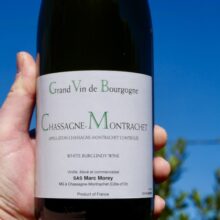
Chardonnay from Chassagne-Montrachet, Côte du Beaune
“The 2023 Chassagne-Montrachet Village comes from three lieux-dits and was bottled in August. This has a bright citrus peel-, fresh pear- and sea spray-scented nose that leans a little toward Puligny in style. The palate is well balanced with a slightly creamy texture. It's a little spicier than other Chassagne Villages, with touches of quince and white pepper on the finish. Enjoy this over the next six to eight years.” Neal Martin, Vinous 89 PointsA touch of matchstick charac
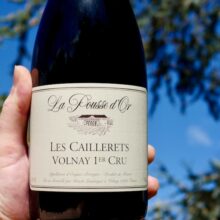
Pinot Noir from Volnay, Côte du Beaune
A wonderfully spicy nose offers up its aromas of both red and dark raspberry, violet and soft floral nuances. There is once again a lovely texture along with fine detail to the more refined middle weight flavors that deliver very good persistence on the youthfully austere and slightly grippy finale. 2030+Allen Meadows, Burghound
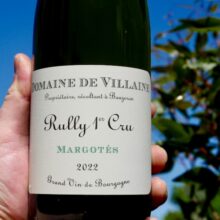
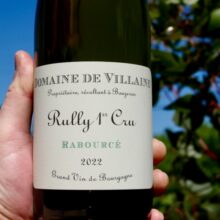
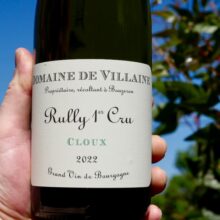
Chardonnay from Rully, Côte Chalonnaise
We really sense the aromatic freshness of the Chardonnay coming from its acidity and the minerality from its mainly mineral terroir. All nurtured by oak notes mainly from foudres in which this wine was vinified and matured. The Margoté plot is located to the South of the Rully appellation. This area is cold and windy. We can almost smell the wind while tasting this wine.The palate is powerful with a round and precise texture full of contained energy. The « mineral » finish is the terroir
No wines match your filters
Try removing a filter or broadening your selection.
We couldn't load the wines just now.
You've seen all wines
wines