Size & Type
Other

White Wine
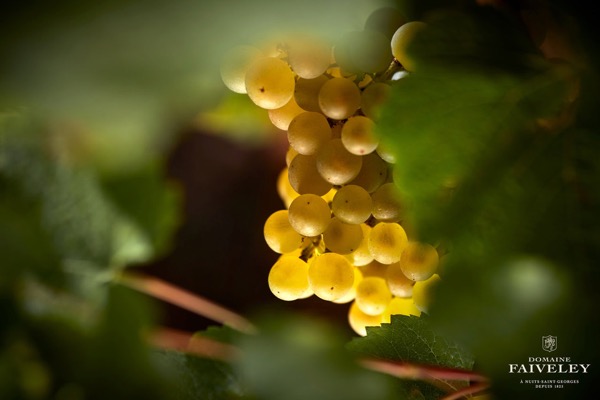
The variety takes its name from the village of Chardonnay near Uchizy in the Mâconnais, in southern Burgundy. A region gaining in reputation for the production of delicious Chardonnay. Thought to have originated from Sâone-et-Loire between Lyon and Dijon.
Burgundy is the mythical home of Chardonnay. From there it spreads far and wide across the world. One of the three main varieties of Champagne production, we also see massive plantings in Australia and North America. You’ll find it somewhere in pretty much every wine growing country.
In Australia 340,000 tonnes of Chardonnay grapes are harvested each year over four times more than the No.2 white grape in Australia, Sauvignon Blanc!
There are a vast array of flavours, aromas, and, textures that Chardonnay can offer from the fruit alone, add in use of solid, fermentation vessels like oak, eggs, and tanks, and, malolactic fermentation, the sky is the limit.
Chardonnay has incredible versatility and can be picked over quite a wide range of sugar levels and flavour ripeness. The same vineyard can be picked with enough sugar to make a wine of 10-11% alcohol for sparkling production and then 14% for table wine with anything in between possible. Picked earlier it tends to have more citrus and green apple characters. Picked ripper the natural acidity drops and the flavours progress through stone fruit, to pineapple, fig and melon.
The hand of the winemaker has been particularly evident in Australia over the last 20 years. Starting with big, broad, alcoholic full malo styles in the 1980’s and 1990’s, the pendulum swung to the lean, acid driven styles in Australia in the mid-00’s, with some down right mean wines produced in the cooler climates like the Yarra Valley, Adelaide Hills, Mornington, and, Tasmania. Currently, styles have found balance with generosity and elegance. Australian Chardonnay is the best it has ever been. Restrained oak use is thankfully the norm, and, globally we are seeing greater use of larger oak barrels, reducing the influence of any new oak.
Use of wild fermentation, malolactic fermentation and grape solids in ferments can add an array of secondary aromas and flavours, nuttiness, creaminess, bakery notes, butteriness, funk.
Some makers have played heavily with reduction in Chardonnay often resulting in flinty, burnt match characters.
In Burgundy, climate change, just as in Australia (along with mature vineyards) has seen picking times bought forward with sugar levels maintaining. The degree of chaptalisation in Burgundy is reducing and is often not required at all.
Check out all the articles in the Wine Bites Mag exploring Chardonnay.
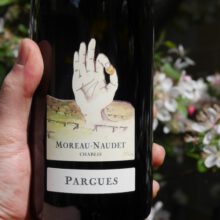
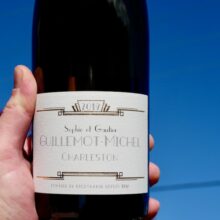
Showing of wines
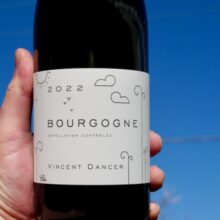
Chardonnay from Chassagne-Montrachet, Côte du Beaune
Benoît’s Bourgogne Blanc comes exclusively from three parcels, all in Chassagne-Montrachet. The vines are over 20 years old and on the lower slopes, terroirs with deeper, more clay-rich soils. Even at this level, the wine is aged for 18 months before release and is super—racy, mineral and long.Offering up aromas of pear, white flowers, hazelnuts and buttery pastry, the 2022 Bourgogne Blanc is medium-bodied, pure and precise, with a succulent core of fruit and a saline finish. It wil
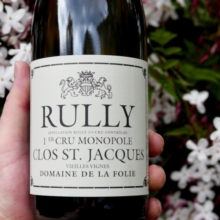
Chardonnay from Rully, Côte Chalonnaise
The 2023 Rully Clos St. Jacques ler Cru comes from a 1.69-hectare monopole and was matured in 20% new oak. It has a very aromatic bouquet with tropical fruit, passion fruit and touches of white peach. There is wonderful definition and vigor here. The palate is well balanced with a silver thread of acidity and notes of lemon thyme and orange pith, very harmonious on the finish. This is an excellent Clos Saint-Jacques (not from Gevrey!). Drink: 2026-2040Neal Martin, Vinous 92 Points
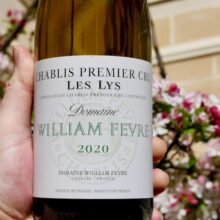
Chardonnay from Chablis, Burgundy
This Climat is almost an extension of the slopes where the Grands Crus grow, with only a small path separating them. Sitting directly alongside Les Preuses, the proximity to its illustrious neighbours results in powerful, mineral wines.This could be from nowhere else but Chablis with its equally cool, elegant and airy aromas of white-fleshed fruit, floral, iodine and subtle passion fruit-scanted nose. The super-sleek, refined and energetic medium weight flavors possess both ample mineral
Chardonnay from Viré-Clessé, Mâcon
Wow! Initially a little spritz that swirled of quickly, the protective nature of dissolved CO2 goes some way to explaining why this wine looks younger than the “2020 Retour a Terre”. Bottling with a little CO2 is a sign that they see this as a wine for the longer haul. It is obsolete to repeat many of Kelley’s remarks. It’s clear that the fruit is exceptional, the mid-palate weight, always a sign of quality Chardonnay, is impressive, along with the flow, shape and texture. Incred
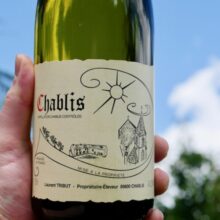
Chardonnay from Chablis, Burgundy
Gotta love the full Montée. There's a reason it comes up time and time again in discussions on Chablis! Gotta love the full Montée. There's a reason it comes up time and time again in discussions on Chablis. Check out the interactive map below. Click on the vineyard name and you'll see it's on the same side of the river as the cluster of Grand Cru's and lies right next to Blanchot and Le Clos.Every wine I've had from Testut to date has been a delicious, delicate yet flavourful rendition of
Chardonnay from Chablis, Burgundy
This is the largest and most famous Grand Cru; its fame based on its history as one of Chablis’ first vineyards. The appellation enjoys a southerly aspect with very white, dense and deep clay soil, resting on a limestone bed 80 cm below the ground, which brings to the wine those spicy notes so typical of this terroir.Note: from 4 separate parcels totaling 4.11 ha, 3 of which are all at the top of the slope. If Kimmeridgian could be distilled, it would likely smell exactly like the nos
Chardonnay from Rully, Côte Chalonnaise
Here too there is a whiff of phenolic character suffusing the equally exotic nose where the wood influence is slightly more prominent though still reasonably discreet. On the palate there is outstanding density to the rich, punchy and sappy medium weight and generously proportioned flavors that terminate in a refreshing lemon rind-inflected finish that could also use better depth. Dink 2028+Allen Meadows, Burghound 90 PointsThe 2022 Rully Meix Cadot ler Cru comes from 1.7-hectares of
Chardonnay from Etna, Sicily
Nice little bit of funk and complexity with citrus oils lifting from the glass. The step up in quality of fruit from the Passobianco is significant and justifies the step up in price. Focused and vertical with excellent mid-palate weight. Those citrus oils translate from nose to palate. The élévage here is very good with a harmony from the careful exposure to oxygen during maturation.From just a few terrraces with very deep soil. The yields here are lowered to ⅓ of capable at 5 bunc
Chardonnay from Chablis, Burgundy
Excellent drinking. Drink this while you wait for the Grenouille to build. Line, length, texture, with a sufficient generosity giving it approachability in youth without adding any of the clumsy bits. Classic, delicious, delicate. Wonderful élévage making for a complete wine.0.20 ha of 80 year-old vines, the same age as Beugnons. Only replaced with massale selections.A pure and elegant nose features notes of citrus zest, mineral reduction, iodine and hints of algae. There is again
Chardonnay from Chablis, Burgundy
Stéphane Moreau called Forêts “…one of the greatest terroirs of Chablis.” It’s a historical sub-plot within the 1er Cru Montmains, located high up the slope and facing southeast. It can certainly produce Chablis of the highest order, as both Dauvissat and Moreau have shown many times (Raveneau also has a small parcel). Moreau farms two plots of vines here, over a total of just under two hectares. The first is alongside the vineyard of Vincent Dauvissat, and the vines are the s
Chardonnay from Chablis, Burgundy
On the left bank of Le Serein and on the middle of the slope, Vaillons is a particularly well-positioned Premier Cru that enjoys an excellent reputation thanks to the work of several key growers. The domaine works with vines planted in 1974 in the lieux-dits of Les Epinottes (a cooler part of the vineyard) and Roncières (which provides more opulence). Then, a parcel of 75-year-old vines in Sécher usually accounts for 30% of the blend and provides intense mineral cut and structure. The wine wa
Chardonnay from Chablis, Burgundy
The most south-westerly of all the Chablis Premiers Crus, Les Beauregards is one of its coolest due to its altitude and location at the end of Chablis’ Left Bank. It’s also one of the steepest (meaning the clay soils are shallow, and the limestone marl is never far from the surface) and one of the highest, rising to 300 metres. While this parcel has been in the family’s hands for decades, it was replanted in 2001 with mass-selection cuttings from Stéphane Moreau’s most treasured vine
No wines match your filters
Try removing a filter or broadening your selection.
We couldn't load the wines just now.
You've seen all wines
wines