Size & Type
Other

Red Wine
The exhilarating personality of Pinot Noir has seen the wine world take up the fickle challenge to grow the ‘heartbreak grape’! Pinot is difficult to grow, demanding low yields if you want to achieve quality, with an incredibly short picking window to get it right, and, unforgiving in the winery.
You’ll find it in Germany, Austria, many other regions in France, America, Australia, South Africa and New Zealand. Plantings in the New World expanded rapidly from the 1980’s and continue to grow today.
The early plantings are now mature and we’re seeing balanced old vines produce high-quality fruit. Beyond vine maturity, winemakers have now had decades of experience making Pinot and are producing sophisticated wines of ever increase quality. Given the demand and exponential price growth of Burgundy, that’s something we’re thankful for!
In Australia, initial plantings were of two main clones MV6 and D5V12, also known as ‘Upright’ and ‘Droopy’ respectively in reference to their growing habit. MV6 has definitely been the winner of the two! In the late 1990’s, there was n influx of the ‘Dijon clones’ particularly 114, 115, 667, and, 777. You’ll often see these clonal names on wine labels. More recently the Pommard clone, and, Abel, initially smuggled into New Zealand from the vineyards of Romanée-Conti have made it to Australia.
In the early days, you’d see bottles of Pinot + Hermitage coming out of the Hunter. Now, we see the cool climate regions in Victoria: Yarra Valley; Mornington; Macedon; and; Gippsland, South Australia: Adelaide Hills, and, most regions across Tasmania making the most exciting wines.
Martinborough, Marlborough, and, Otago in New Zealand are making some wonderful wines.
Like any variety, there is an incredible diversity of flavours, aromas, and, textures to be found in Pinot.
From fresh red fruits to darker, spicier fruit. Earthy, savoury, truffley, perfumed, floral characters are all in the mix. We see aroma, flavour and texture layered in from inclusion of stalks, whole bunches, techniques like carbonic maceration, cold soaking (maceration), oak use and beyond. In their youth, good Burgundies are often tightly wound, and less giving. Plush, supple textures are the hallmark of good Burgundy, although some more robust wines are a pleasure to devour as well. As a generalisation, we’ve seen a shift to a more gentle extraction of tannins and wines that are more approachable by those who have historically made more extracted Pinot in Burgundy. Leroux’s efforts in Pommard and Faiveley’s efforts across the region are good examples.
They often go into a dip for a few years after bottling and emerge transformed. A fully mature top-end Burgundy is entrancing, intoxicating, and, has such incredible expression and personality that you can be happy just smelling it! The secondary development of these wines offers incredible harmony, they become seamless, complexity lifts to a new level, yet it is hard to pick out any individual flavours and aromas. The best manage the trick of having incredible depth of length of flavour yet a light presence, dancing across your palate!
We’re writing a series of posts exploring the villages of Burgundy that you can read in the Wine Bites Mag.
The counterpoint is that Burgundy can be a dismal experience with many wines banking on the name and classification of their vineyard to charge prices they are not worthy of. It can be a minefield if you don’t know what you’re looking for. Equally, there are still some affordable hidden gems!
For many years the new world tried to make great Burgundy instead of great Pinot. With growing experience, confidence, and, balanced, old vine fruit, new world makers are simply making the best possible expressions of Pinot they can from their sites. Broad experimentation is still ongoing as always with wine, but, has slowed a little. Focus on fruit sorting and gentle handling has allowed almost infinite control of the ‘infusion’ of tannins, colour, and, flavour from each berry, as opposed to extraction. Great experience with élévage has resulted in great clarity of how to expose the wines to oxygen and sulphur and achieve more expression from the end wines.
All in all new world wines are competing with Burgundy up to all but the highest level wines, and, with the prices of Burgundy on upward trajectory are great value drinking.
New world wines tend to be more immediately giving and opulent than their Burgundian counterparts. Not as long-lived, they still undergo a transformation as they age, although, perhaps, not to the same degree as the greatest Burgundies.
On top of all of this, climate, change is having a dramatic effect, both in the New and Old World. Vintages are more extreme in Burgundy, picking times are earlier than they were a decade ago, although partly as a result of balanced old vines in the new world.
The best wines will come from the growers and makers who are agile, react and learn from the change.

Showing of wines
Pinot Noir from Volnay, Côte du Beaune
Both Alex & Benoît made a Volnay 1er Cru Santenots in 2022.Officially located just south of the Volnay border in the commune of Meursault, the vineyard's Chardonnays must take the Meursault title. Santenots Pinot Noir reds are usually lush and rich with good structure, ripe tannins and good ageability.The large vineyard is on the steep mid-slope of the east-facing Côte d'Or hillside (although with something of a southeast aspect here) above the flatter land below. Despite being in
Pinot Noir from Nuits-Saint-Georges, Côte-de-Nuits
A distinctly earthy and sauvage-inflected nose is comprised mostly of a variety of red berry fruit aromas. There is very good energy to the intensely mineral-driven middle weight plus flavors that possess a relatively sleek mouthfeel on the structured, serious and moderately austere finale. This is clearly built-to-age and is going to need at least moderate patience. Excellent. Drink 2032+Allen Meadows, Burghound 92 Points ♥ OutstandingThe 2022 Nuits Saint-Georges Clos des Argill
Pinot Noir from Gevrey-Chambertin, Côte-de-Nuits
This is also slightly reduced and it's enough to render the nose difficult to assess. The medium-bodied flavors are both more powerful and concentrated though at the expense of less refinement and minerality on the driving and impressively persistent finish. This will need to add depth to merit the upper end of my predicted range but the underlying material appears to be present so that this can eventually happen. Patience required. ♥ OutstandingAllen Meadows
Pinot Noir from Vosne-Romanée, Côte-de-Nuits
"An exuberantly spicy and manifestly ripe nose of poached plum, exotic tea and floral nuances gives way to suave, round, dense and seductively textured large-scaled flavors that are dusty, mouth coating and powerful though the finish is again noticeably warm. Drink: 2034+"Allen Meadows, Burghound
Pinot Noir from Gevrey-Chambertin, Côte-de-Nuits
"A broad-ranging nose displays hints of the sauvage, forest floor and herbal tea to the mostly cool dark pinot fruit scents. The denser and much more muscular middle weight plus flavors flash an abundance of minerality on the powerful, focused and well-delineated finish. This youthfully austere effort is also very clearly built-to-age and a wine that's going to need it. Drink: 2034+ Outstanding ♥"Allen Meadows, Burghound
Pinot Noir from Chambolle-Musigny, Côte-de-Nuits
I had Faiveley's 2015 Latricières Chambertin recently, delicious, perfumed elegant and refined. Along with the 2015, I devoured a brace of 2016's from across the appellations. They are really stepping up their game, the investments in the vineyard and winery are a testament to this.
Pinot Noir from Chambolle-Musigny, Côte-de-Nuits
It is next to the Premier Cru "les Borniques" to the east and to the south, about fifty meters from the Grand Cru "le Musigny". Situated on reddish brown clays rich in iron oxides on about 30 cm then we find very quickly the limestones of Chambolle Musigny. Its north-east exposure and the influence of the combe mixed with its limestone soil gives a great freshness to this chambolle. The global warming in our vineyards of these last vintages are very well suited to this colder terroir of or
Pinot Noir from Chambolle-Musigny, Côte-de-Nuits
There's a great purity & vibrancy to Magnien's wines. His Sentiers is classic Chambolle! A slightly more elegant and more floral-suffused nose displays notes of violet, lavender and plum liqueur. There is fine mid-palate density to the suave and seductively textured medium-bodied flavors that coat the palate with sappy dry extract before terminating in a bitter pit fruit and nicely balanced finale. This is also quite good with an understated delivery. Drink: 2030+Allen Meadows, Burghound 90
Pinot Noir from Gevrey-Chambertin, Côte-de-Nuits
The Derée Champérier vineyard was purchased by the Trapet family in 1859. After 160 uninterrupted years of farming this terroir, current generation Pierre & Louis wanted to make a cuvée as an hommage to the many generations of Trapet vignerons that have come before them. Thanks to its purity and terroir-transparency, they felt the 2019 vintage was the perfect moment to produce the Cuvee 1859.
Pinot Noir from Volnay, Côte du Beaune
“This is perhaps even cooler and more restrained with its layered array of various dark berries, plum, freshly turned earth and a whiff of violet. The mid-palate mouthfeel of the middleweight plus flavors is quite refined yet this contrasts substantially with the moderately rustic, dusty, austere and serious finale. This very powerful and compact effort is expressly built-to-age and is one that is definitely going to need it, indeed I would be surprised if it is approachable before 10 years ha
Pinot Noir from Savigny-lès-Beaune, Côte du Beaune
Pavelot's Top wine rates as one of the few remaining bargains in Burgundy! This is at once the spiciest and the most floral-suffused nose in the range with its ripe yet ultra-fresh nose of various dark berries, anise and newly turned earth scents. The mouthfeel is also intriguing as it combines excellent density with an appealing sleekness that carries over to the mineral-driven, powerful and compact finale that is wonderfully persistent if very clearly built-to-age. This is almost always Pavel
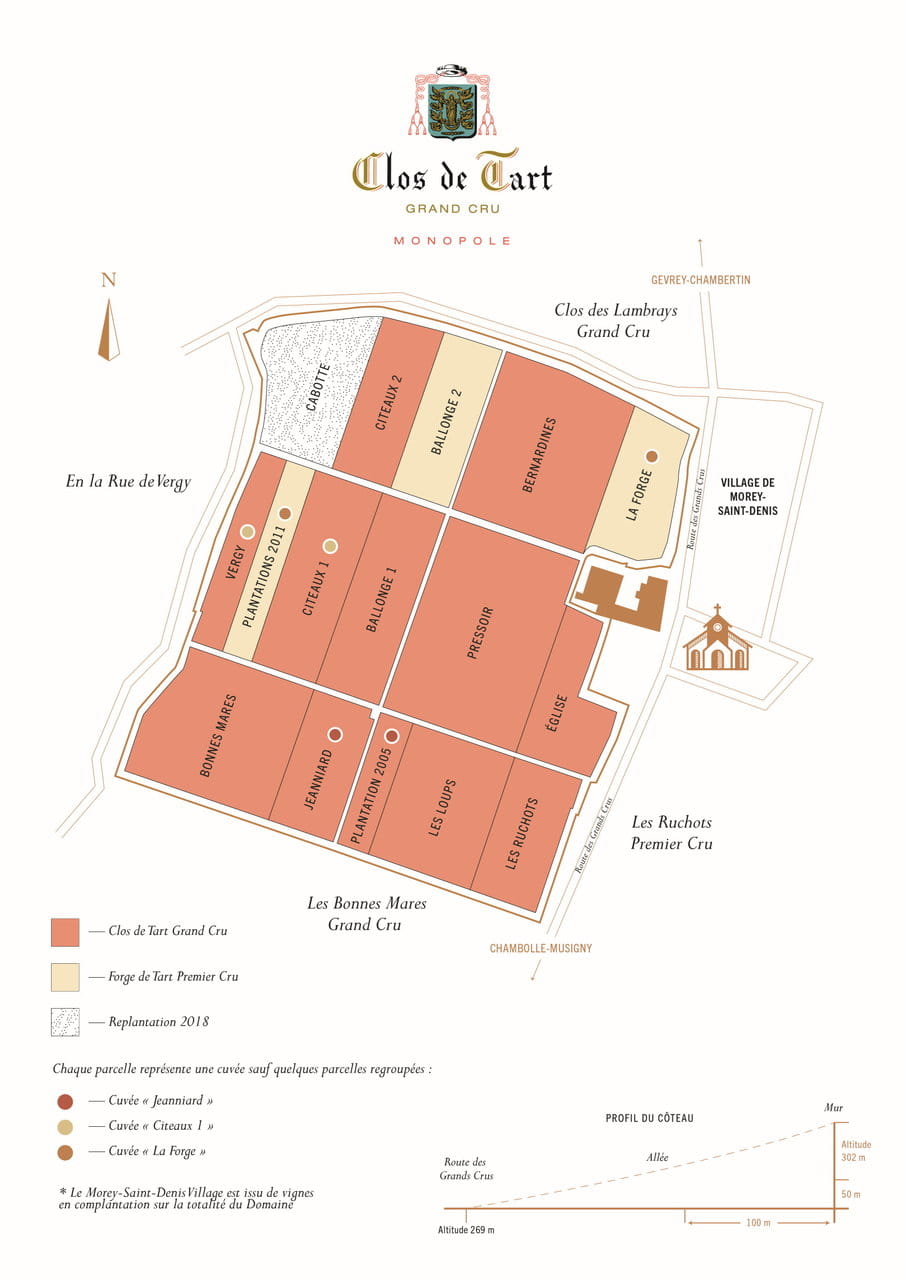
Pinot Noir from Morey-Saint-Denis, Côte-de-Nuits
Moderate reduction dominates the nose at present. There is both better complexity and mid-palate density to the still supple and delicious medium-bodied flavors that conclude in a more powerful and noticeably more structured finale. This has fine development potential and is a wine that will need at least some patience. Drink: 2030+Allen Meadows, Burghound 89-91 Points
No wines match your filters
Try removing a filter or broadening your selection.
We couldn't load the wines just now.
You've seen all wines
wines