Size & Type
Other

$267
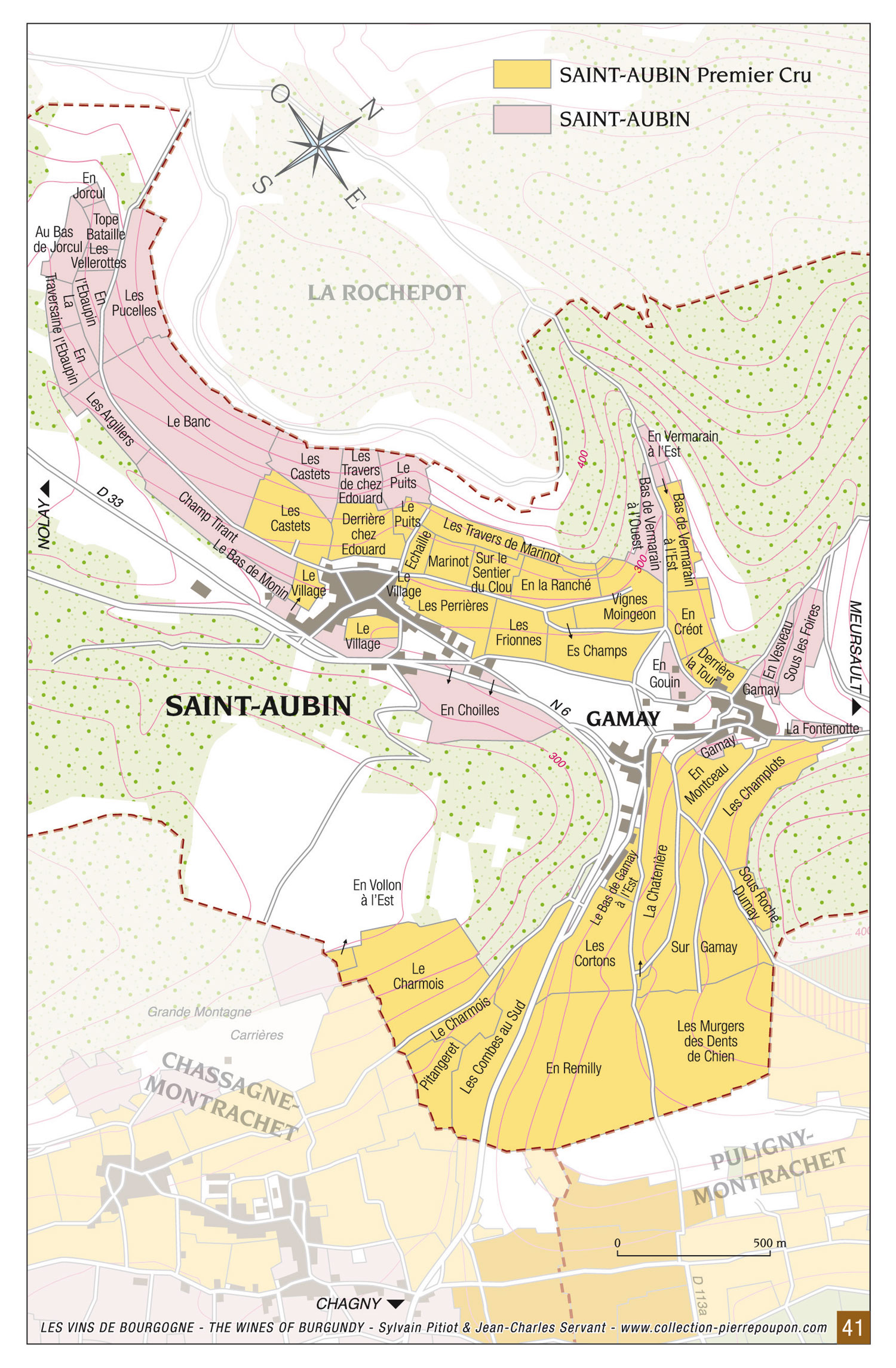
La Princée is a blend of 10 small village parcels from across just under three hectares. One-third of these vines are now over 60 years old, and the remainder were planted in 1985 and 2000. All the parcels are in the cooler, east-facing Saint-Aubin combe (valley), on chalky/mineral soils. It is therefore no surprise that this is a racy white Burgundy with great energy and a limestone-rich personality.
The 2023 Saint-Aubin La Princée comes from a vineyard suffering degeneration of vines, so one-third is younger vines. It has another vivid bouquet with yellow plum and citrus peel scents, just a touch of dewy green apple. The palate is fresh and vibrant with a keen line of acidity, open and quite forward with Cornice pear and cooking apple notes towards the finish. Delightful.”
Neal Martin, Vinous 89 Points
In stock
One of Burgundy’s best kept secrets is barely a secret any more. Olivier Lamy is making some of the purest and most mineral white Burgundies of the Côte (and some pretty damn handy reds) and demand now far exceeds supply. This will not surprise those who know how this exceptional vigneron works in the vines. Pioneer of high density and of Poussard pruning amongst other things, Lamy’s attention to detail and innovation in the vineyard is now an inspiration to knowledgeable growers across the Côte and even the world!
“I would blindly buy any of the white St-Aubin premiers crus…”
Bill Nanson, The Finest Wines of Burgundy
“These wines offer incredible quality for the price.”
Allen Meadows, Burghound.com
“Young vigneron of great quality, Olivier Lamy produces St Aubins that are worthy of comparison with the greatest wines of Burgundy…”
La Revue du Vin de France, les Meilleurs Vins de France
“Though known for his whites, Olivier Lamy has half-a-dozen reds in his range, the standout being the Santenay Clos des Gravières that exuded class and was way above its station. Overall, it was a bountiful crop of top-class wines from Olivier, continuing to reaffirm his status as one of the best winemakers in the Côte de Beaune.”
Neal Martin, The Wine Advocate
It is hard to think of a more passionate, knowledgeable and hard working wine maker as Olivier Lamy. The family and the domaine are located in the village of Saint-Aubin, within a short distance from the domaine’s extensive array of vineyards spread around the villages of Chassage-Montrachet, Puligny-Montrachet and Saint-Aubin. There are records of the Lamy family growing vines since 1640!
Olivier gained experience at Domaine Méo-Camuzet in Vosne-Romanée before taking over the family domaine from his father, Hubert.
Olivier was one of the first winemakers in Côte de Beaune to favour the use of larger size barrels, and in the cellar there are many 350 and 600 litres barrels. Yields are kept low and following intensive work in the vineyards, the harvested crop passes a selection on a sorting table before being transferred to the stainless steel fermentation tanks. The wine making is traditional, and the wines are aged in 0-15% new oak (with an average of 10%) for 18-24 months before bottling.
While the backbone of this fine domaine is the stunning wines from Saint-Aubin, the jewel in the crown is its tiny holding in Criots-Bâtard-Montrachet, located just above the vines of Leroy’s Domaine d’Auvenay.
Olivier gained tremendous experience through working in the vineyards, and adapts his own experience and believes in the way he plants, cares and treats his vines.
Among Olivier’s exciting philosophies is the planting of high density (haute densité) vineyards, which he believes allows them to capture more from their terroir. The first vineyard planted this way in 2000 was the top part of the Saint-Aubin 1er Cru “Derrière Chez Edouard”, with the planting of 28,000 and later 30,000 vines per hectare – three times the normal planting density, and effectively three times the work required to produce the same amount of wine. Not surprisingly, the result is overwhelming and this wine has an enormous depth and dimension.
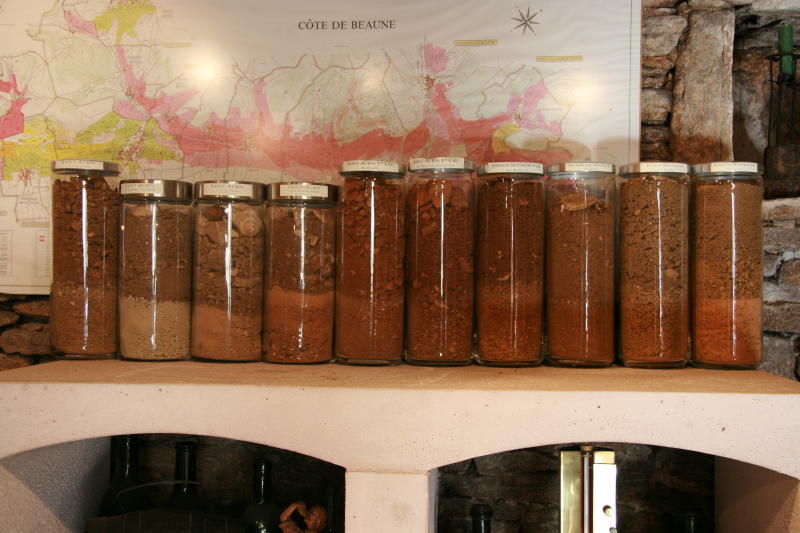
The majority of the domaine’s vineyards consist of stony, limestone-based soil, with a thin 10-30 cm of topsoil, and have a favourable southeast exposure.
Below are my translations form Lamy’s website combined with some additional info
Olivier was one of the first winemakers in Côte de Beaune to favour the use of larger size barrels, and in the cellar there are many 350 and 600 litres barrels. Yields are kept low and following intensive work in the vineyards, the harvested crop passes a selection on a sorting table before the grapes are whole bunch pressed, gently, using a pneumatic press and transferred to the stainless steel tanks. The wine making is traditional, the juice is lightly racked into 1-5 year old 300L barrels and 600L demi-muids for fermentation with temperatures controlled using a cool cellar to aid a long slow fermentation of up to 90 days, shorter in some years and longer in others. The wines are aged in 0-15% new oak (with an average of 10%) for 18-24 months before bottling.
My experience is that such long, slow fermentation results in increased mid-palate weight and long creamy mouthfeel.
The Chardonnay is stirred a little to suspend lees and malolactic fermentation takes place in barrel. In August (11month after harvest). The wines are lightly fined with cassein (a milk protein) that will clarify them and remove some phenolics. Sulphur additions are made according to analysis.
The wines are bottled after 12-18months élevage.
Fruit is 100% destemmed. Maceration lasts around 20 days with pigeage and pumping over according to the season. 1-3 year old barrels are used for maturation. Malolactic fermentation is completed in barrel. The wines are racked, fined and filtered if necessary.
The wines are bottled after 12-18months élevage.
It’s probably no surprise that 2022 is a truly great vintage for Olivier Lamy’s white wines. His classical, mineral style and cooler sites were a perfect fit for the sunny, more luminous conditions. Add to this Lamy’s renowned attention to detail in the vineyard and progress in the cellar (in particular longer aging, but many other details around pressing, aging vessels, etc.), and the extreme quality is inevitable. The wines are still classically Lamy—racy and mouthwatering—but 2022 has brought that extra dollop of generosity, extract and complexity. They also have serious depth and expansiveness but with great delicacy. Lamy is reminded of 2017, which is a great, great year here.
Harvest began early again, with Olivier picking his first Chardonnay on 25th August. Incidentally, this is the same date the domaine started harvesting in 2015 and 2017, both cracking years chez Lamy. Despite the generally dry season, Saint-Aubin got some good rain in June, enough to support the vines. In the end, the yields were back to healthy levels after the tiny 2020 and 2021 harvests, with 30-50 hl/ha for whites and 35-40 hl/ha for reds.

Saint-Aubin branches off from Chassagne-Montrachet. Containing some 20 Premier Cru’s producing 75% white and 25% red.
Produces like Lamy and Pierre-Yves-Collin-Morey are working hard to raise the perception of the village which produces fantastic wines.
In this video the villages of Puligny-Montrachet, Saint-Aubin and Chassagne-Montrachet are explored. Towards the end, you’ll note the discussion of the soils in the south part of Chassagne-Montrachet being the same as parts of the Côte de Nuits.
Oliver Lamy explore Domaine Hubert Lamy’s Saint Aubin vineyards through their geology

Where in the world does the magic happen?
Domaine Hubert Lamy, Rue des Lavières, Saint-Aubin, France
You must be logged in to post a comment.