Size & Type
Other

$380
Once again there is just enough wood present to merit mentioning as it frames the much earthier blend of both red and dark currant scents that are cut with leather and underbrush nuances. The supple medium-bodied flavors possess reasonable though not excellent mid-palate concentration before terminating in a velvety and lingering finish. The supporting tannins are sufficiently firm that this will need a decade plus of cellar time before it arrives at its full apogee. 2029+. Burghound
Out of stock
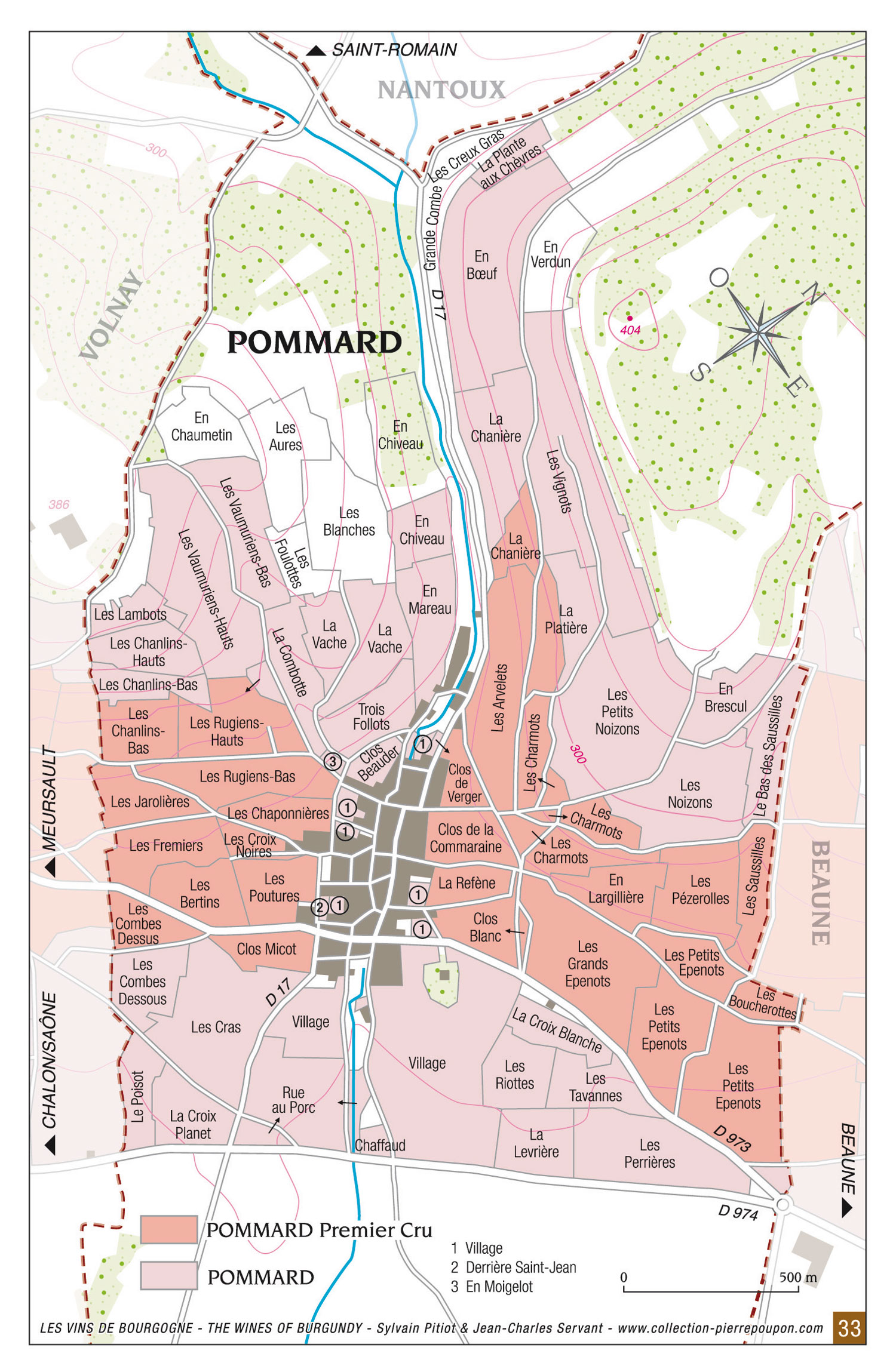
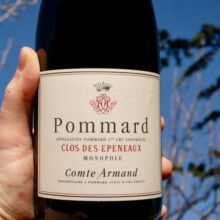
Domaine des Epeneaux owes its name to the Clos des Epeneaux, a magnificent parcel of five hectares acquired by Nicolas Marey at the end of the 18th, beginning of the 19th century.
In 1828, the Clos des Epeneaux and related buildings, known as the Fief de Rancy, situated in the centre of the village of Pommard, became part of the heritage of the family of the Count Armand.
The estate remained as such until 1994 when it annexed a vineyard plot situated in the neighbouring village of Volnay, then later parcels from the village of Auxey-Duresses.
Today, Domaine des Epeneaux constitutes a total surface area of 9 hectares, and is more committed than ever to producing wines that are true expressions of their terroir.
In 2014, Benjamin Leroux, after 15 vintages of passionate devotion and pleasure, handed the reins over to Paul Zinetti who had worked with the Domaine since 2010.

The wines of Pommard have historically been some of the most tannic Pinots on the Côte. Under Benjamin Leroux’s leadership, they soften considerably. Something the current winemaking team has continued.
Zinetti prefers to do long maceration with gentle extraction, including keeping the wines on their skins at 28 to 30 degrees C. for 10 to 14 days after the fermentations have finished. He noted that the color and structure were slow to come in 2016, in part because the warm September weather (the estate started harvesting on September 23) made it difficult to conduct more than a three-day pre-fermentation cold soak. That was in direct contrast to 2015, when it was particularly important to avoid overextraction: he only needed to do a total of four punchdowns followed by only pumpovers for the ‘15s. Incidentally, beginning in 2014, Zinetti has been able to keep more whole berries with a new destemmer. As there is now more intracellular fermentation, he told me, “vinifying with stems is now a bit less important.” In another attempt to make somewhat gentler wines here, Zinetti began using a vertical press in 2015, which he says gives a “natural filtering of the grapes and softer, rounder tannins. We can press strongly but it’s never overdone.” Stephen Tanzer
From Catherine Petrie of the Domaine, thoughts on the 2017 & 2018 Vintage.
“For both 2017 and 2018 we started on the picking 3 September and picked for seven days. On Monday 3 September we picked Volnay Frémiets and Volnay village when it was warm and sunny/cloudy – perfect weather for picking. On Tuesday 4 September we picked the young vines in Clos des Epeneaux when it was sunny and hot, the older vines under sunny and hot conditions the following day. On 6 September we picked another parcel in Clos des Epeneaux, but heavy rain fell in the early afternoon and picking was abandoned for the rest of the day. On Friday 7 September we picked a fourth parcel of Clos des Epeneaux and Chardonnay. The air felt much cooler and fresher, clear sunny skies. On Saturday 8 September we picked Auxey 1er Cru and Auxey Village, when it was sunny and warm and the following day we picked the Aligoté, vendangeurs finished at midday. We slowly sorted at the winery before passing through the destemmer, trying to keep the whole berries as intact as possible. A very small amount of whole bunch fruit is included: the best bunches where signs of lignification in the stem is evident were selected, but in reality, given the large volumes of both 2017 and 2018 we did a maximum of 10% on some tanks, and generally less on others. We did a cold soak for between four and eight days. We practiced remontage without air during this period, and with air once the must has begun to ferment. Pigéage (usually by foot: ‘à l’ancienne’) was practiced during fermentation, with most tanks being plunged between 2 and 5 times in total. We tasted the musts twice a day during fermentation, with Paul deciding on the day’s programme after having tasted in the morning. Towards the end of fermentation we did remontage with a bucket (really!), which is a very gentle way of ensuring the cap is kept wet, but does not result in too hard an extraction in the now solvent alcoholic environment. Tanks were so full in 2018 we needed to do a bit of juggling. As the volume of each tank expanded during fermentation some threatened to overflow, so we carried out a series of mini délestages (rack and return). We would draw some juice off in the morning, plunge the cap if necessary, and put the juice back over the top of the cap in the early afternoon. Pulling all the juice off and leaving the grape solids as an almost dry cake before returning the juice, these mini-délestages were used only to reduce the volume a little, quite simply so that we didn’t have fruit all over the floor. As a consequence we were doing lots of mini settlings, and leaving behind some of the heavy lees that would be deposited at the bottom of the tanks used to hold the juice. Because the caps were not left dry as in a traditional délestage, the extraction of tannins was not exaggerated in any way. However, the clarity of juice was improved, and the wines gained a creamy, silky texture that we attribute in part to this practice that the large volumes in 2018 obliged. A happy outcome from a tiny cellar and some very busy days! We used 33% new oak for the Clos des Epeneaux, 30% for the Volnay Frémiets, 20% for the Auxey 1er Cru and 15% for the Village Crus. Yields range from 31hL/ha for the Clos des Epeneaux up to 48hL/ha.” “We started the harvest on 3 September, the same as in 2017, the yields in the Clos des Epeneaux around 33-34hl/ha, slight more than the previous year. The first 2018 (the Auxey 1er Cru) was racked out of barrel on 17 and 18 October 2019, so it spends 12 months in barrel. The Auxey, Volnay, and Frémiets will be racked in the next few weeks, whereas the Clos des Epeneaux will stay in barrel for a second winter.”
Wines are the very image of the quality of fruit they derive from.
With utmost respect toward the grape, our harvest is 100% de-stemmed, keeping most of the berries whole, not crushed.
The winemaking process then goes through three distinct stages:
Pre-fermentation maceration period of 5-8 days at a temperature of 13-14°C
Spontaneous alcoholic fermentation between 5-10 days
Post-fermentation maceration of 3 to 15 days depending on the vintage
Most years, the total maceration period lasts about 4 weeks, which is relatively long for traditional winemaking in Burgundy.
We believe it is far more beneficial to give the extracted matter sufficient time to structure itself into something more stable and harmonious during vinification.
The moon, largely guiding and presiding over our rhythm of labour, has had a significant influence in both our vineyards and vat house since the 2001 vintage. For example, our 4-week maceration corresponds to a lunar cycle (that determines the fluids of the earth). The wines are produced according to a continuous 28-day period to best preserve the vibrational state of water in the grapes at the moment of the cutting.
If this notion seems far-fetched foremost amateurs, it allows us, notwithstanding the rigorous lunar calendar, to obtain more precise wines with better minerality. Never forget: wine is constituted principally of water.
Depending on the appellation and age of the vines, our wines will age18 to 24 months in barrels, with a percentage of new oak ranging from 0% for the Village appellations to 30% for the old vines of Clos des Epeneaux.

Most of our wines are neither fined nor filtered to preserve the utmost quality. However, in spite of microbiological controls throughout the ageing process, we strongly advise that they be kept around a temperature of 12°C.
Don’t hesitate to decant (in a closed decanter) young vintages at cellar temperature.
Generally speaking, we advise patience. Even though by decanting young wines will open up, they will in no way offer the richness one can expect from those that mature a minimum of 10 to 15 years.
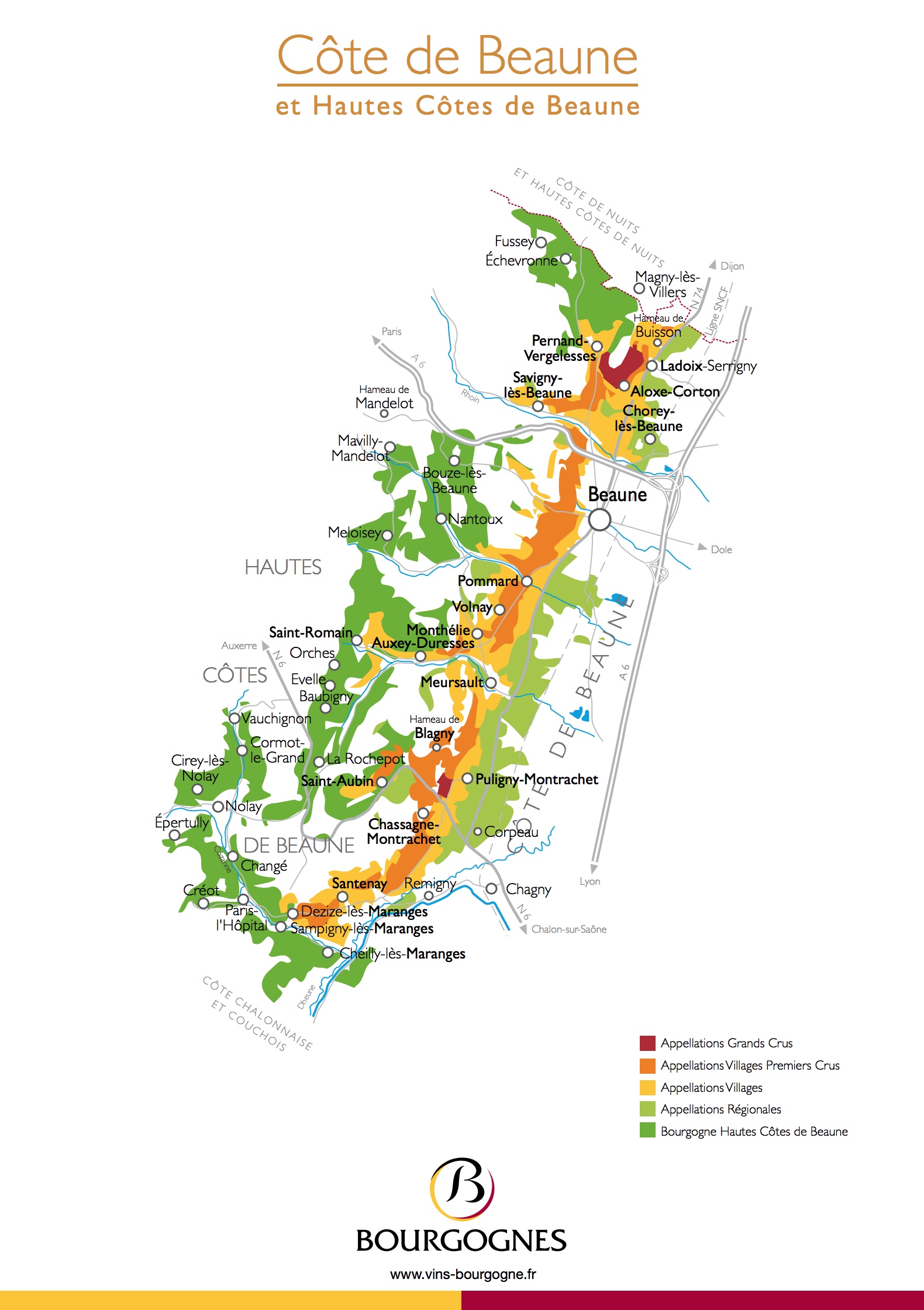
Comte Armand is in the Côte de Beaune south of Beaune right next to Volnay, the other well recognised Pinot producing village south of Beaune. Finally, the reds of Chassagne-Montrachet are also achieve recognition.

Want to know more about Burgundy check out these articles from the Wine Bites Mag:
Getting Your Head Around Burgundy Part 1 – Vineyards, Classifications & Villages
Getting Your Head Around Burgundy Part 2 – Tiny Old Vines & Heaps of them!
The 2017 Pommard Clos des Epeneaux 1er Cru has a wonderful bouquet that fulfills its potential from barrel, offering immediately seductive brambly red fruit, crushed minerals and pressed rose petals. The 25–30% new oak is so neatly folded into the fruit that it is barely noticeable. The palate is medium-bodied with fine tannin and quite citrus-driven, revealing orange peel and blood orange notes. Linear at first and then gently fans out and gains depth toward the persistent finish. Superb.
(the 5+ ha Clos is composed of approximately 80% Petits Epenots and 20% Grands Epenots; the vine ages run from 18 to 75+ years of age). Once again there is just enough wood present to merit mentioning as it frames the much earthier blend of both red and dark currant scents that are cut with leather and underbrush nuances. The supple medium-bodied flavors possess reasonable though not excellent mid-palate concentration before terminating in a velvety and lingering finish. The supporting tannins are sufficiently firm that this will need a decade plus of cellar time before it arrives at its full apogee. 2029+
Where in the world does the magic happen?
Domaine Clos des Epeneaux, Rue de la Mairie, Pommard, France
You must be logged in to post a comment.