Size & Type
Other

Italy
Like many regions around the world, a warming climate has seen vignerons in Piedmont having to refine their viticulture and winemaking to produce wines with freshness and energy.
Piedmont is also home to Nutella, the hazelnuts from the region are insane, the truffles of Alba and the industry titan FIAT.
First Records of Wine Production
Early records of wine production in Piedmont date back to the 14th century. In those days the wines being produced were very different. Sweet reds were the norm. Giuseppe Rinaldi recounting the history of Barolo talks of sweet reds being produced well into the early 20th century. Very different to the great Barolo and Barbaresco wines made today!
Production
Piedmont produces somewhere between 200-300 million liters of wine each year.
Including 42 DOC’s and 17 DOCG’s, the quality classifications the Italian’s use DOCG being the best DOC the next best.
It incorporates an incredible diversity of some of the worlds most stunning vineyards, with significant differences in soil, aspect, influences from the surrounding Alps and water bodies like the Tanaro river in Barbaresco. Such diversity gives us wonderful diversity of wines to drink!
Established Regions
When we think of Piedmont our minds immediately shift to the regions in the south, Barolo and Barbaresco, home to the world’s great Nebbiolo producers. If we add the Roero and Asti into the mix. These cover the majority of the wine produced in Piedmont.
Barolo and Barbaresco are Italy’s answer to Burgundy. Over the last 50-70 years, their vineyards have been well defined and categorised, the push to single vineyard, single variety wines completed. Like Burgundy, a new generation has tried all of the new techniques and now finds comfort with making wines of purity over such as heavy handed extraction and new oak use. Their success, and, the money it has bought has allowed the investment of time into vineyards and practical technologies like sorting tables and temperature controlled fermenters in the wineries.
Up and Coming Regions
The success of Barolo and Barbaresco has seen both the price of the wines and vineyards sky rocket. Drinkers looking for value and wineries looking for affordable land have been moving further afield. It started with the Roero, now we are seeing regions in the Alto Piemonte further north on the ascension. Look out for Spanna AKA Nebbiolo wines often blended with Vespolina from Boca, Ghemme, Bramaterra, Carema, Fara, Sizzano, Gattinara and Lessona. Roberto Conterno of Giacomo Conterno recently took over Nervi in Gattinara now Nervi-Conterno giving you some idea of how the potential locals see in Alto Piemonte.
Most Common Varieties
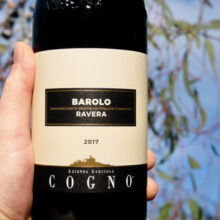
In addition to the current crop of popular varieties, the Italians have been increasingly looking to save ancient varieties. Not long ago the white Arneis was almost non-existent. You won’t see Nascetta listed in too many wine resources, yet, there is a dedicated group of Piemontese looking to revive this delicious white grape, think Cogno & Rivetto.
Like most regions of the world, we see experimentation with non-traditional varieties too. Winemakers are playing with Riesling, Chardonnay, Viognier, Pinot Noir, Cabernet Varieties and Syrah.
White
Arneis, Moscato (22%) often as Moscato d’Asti a low alcohol moderately fizzy wine, Cortese, and, Nascetta. In the eastern reaches of Piedmont the Colli Tortonesi region is rising to fame on the back of Timorasso, fast becoming one of Italy’s most important whites.
Red
The big 3 are Barbera (31%) the most widely planted grape in the region and for good reason, Nebbiolo (10%), Dolcetto (13%). Lesser known varieties include Freisia and Pelaverga. In Alto Piemonte use the name Spanna instead of Nebbiolo and you’ll often see them blended with Vespolina. The Italian daily drink is Barbera and Dolcetto, before the more cerebral Nebbiolo.
Showing of wines
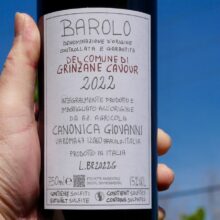
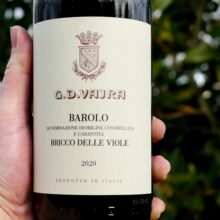
Nebbiolo from Grinzane Cavour, Barolo
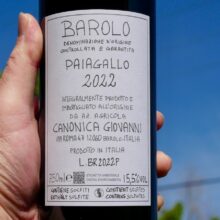
Wines like these are so rare that it is impossible to try them before they land in the country and they invariably sell out before you get to! His vineyards in Grinzane Cavour were inherited by his father in law. Adding an addition 1 hectare to the 1.5 hectares of Paiagallo. Still making for a tiny production.
Nebbiolo from Neive, Barbaresco
Olek has incredible touch. The man understands textures and tannins, creates wines with insane perfumes and layer after layer of diving flavours. I can't wait to hook one of these when it hits the warehouse!Starderi is in the center north in the commune of Nieve. Check it out in the map below.
"These vineyards represent the classic side of our production. They make elegant, smooth, and fresh wines with a fine aroma." Valter Fissore "This beautiful, luminously hued Barolo opens with enticing scents of perfumed berry, dark spice, eucalyptus, violet and forest floor. The savory palate combines elegance and structure, delivering juicy red cherry, raspberry compote, star anise and wild mint framed in taut, refined tannins that give it a smooth but firm texture. Bright acidity keeps energiz
Nebbiolo from Commune di Barolo, Barolo
Loaded with finesse, this wine has enticing aromas of rose, woodland berry, pine forest and herbs. Elegantly structured, the delicious palate delivers juicy Marasca cherry, raspberry compote, star anise and wild mint framed in tightly knit, polished tannins. Fresh acidity keeps it well-balanced. Drink 2022–2036.Kerin O'Keefe
Nebbiolo from Commune di Barolo, Barolo
Underbrush, wild berry, rose and camphor aromas form the enticing nose along with a whiff of forest floor. The youthfully austere, savory palate delivers ripe red cherry, raspberry compote, star anise and botanical herb framed in firm, refined tannins. Bright acidity keeps it balanced. This stunner is definitely one for the cellar. Drink 2026–2041.Kerin O’Keefe, The Wine Enthusiast
Nebbiolo from Bussia, Monforte d'Alba
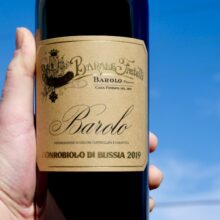
Bussia is huge MGA. Giacomo Fenocchio's parcel comes from a peninsular at the top of the Commune sitting between Barolo & Castiglione Falletto. It's large enough to be split into 5-6 different fermentations. All very different from each other in personality. Fenocchio's beautiful Bussia a demonstration of the massive differences in style across Monforte. Often very structured, demanding patiences, Claudio's sites and wine making offer an elegant wine. It has some a degree of immediate genero
Nebbiolo from Neive, Barbaresco
Pair this up with the Currá and have a little Neb-Festa! Having two wines side by side from adjacent vineyards is always fun. Inevitably it's a demonstration in just how much varriation there is between vineyards with very short distances between them. They house style is evident. Basarin has a more elegant feel to it over the richer Currá, though it is still has a bit of weight to it. Normally, I am not an advocate of new oak in Barolo or Barbaresco. Here there is just a lick here from 10% ne
Nebbiolo from Castiglione Falletto, Barolo
Focused, pure, without interference of oak, complex, considered élévage. Wine of great expression and vibrancy. “The 2017 Barolo Bricco Boschis is superb. A rush of crushed raspberry, rose petals, mint, sweet spice and blood orange gives the 2017 its effusive, sexy personality. Medium in body and exceptionally polished, the 2017 is an absolute jewel of a wine. Many 2017s are nervy and in need of time to soften, but not the Bricco Boschis. All the elements are so well-balanced. If I was going
Nebbiolo from Serralunga d'Alba, Barolo
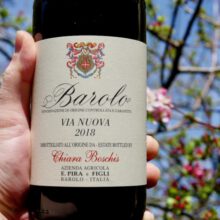
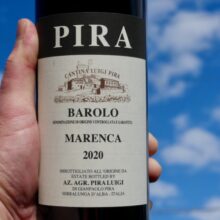
Classic south/south-west exposure. The only difference in the vinification process is the oak maturation. Around 50% goes into large-format aged botti and the remainder in tonneaux, partially new (1 year in tonneaux and 1 year in large botti). ‘Marenca’ is only offered as a cru Barolo by Pira – the other owner, Angelo Gaja, use theirs (along with their ‘Margheria’) in Barolo ‘Sperss’. The nose is fresh, with complex aromas that range from wild berries to dark chocolate and dried he
Nebbiolo from Commune di Barolo, Barolo
The 2021 Barolo Paiagallo is a sensual beauty. Silky, aromatic and impeccably polished, the 2021 is a total knockout. It's a great example of what Barolo is today, a wine that can be enjoyed on release and not a tannic behemoth, like those of the past. Floral and spice overtones meld into a core of red and purplish-hued fruits. Elegant and light on its feet, the 2021 is a total delight.Antonio Galloni, Vinous 96 PointsWines like these are so rare that it is impossible to try them bef
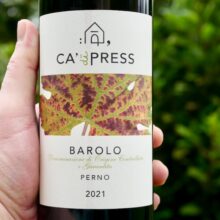
Nebbiolo from Barolo, Piedmont
A component that was previously blended into the Barolo del Barolo. A beautiful perfume lifts from the glass. An extra pop of perceived acidity makes for tannins with a playful edge to the mid-palate adding pleasure. Truffles, earthiness, darkness, with energy. Of the first three Barolos this will need more time to resolve. Serious gear. Winemaker’s hat on I can see why they separated. It will clearly give so much more with a few years in bottle.A presence yet sophistication of perfume a
Nebbiolo from Commune di Barolo, Barolo
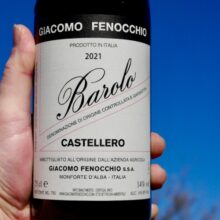
Fenocchio's Castellero comes from a cooler site east facing site. With similar soils to Cannubi. Darker fruited than Cannubi. Ripe, layered, nutty tannins, with an elegant, composed wine with a dark edge, lovely acidity support perfectly weighted core of fruit with a balanced richness. Claudio's preference is to harvest on the earlier side, whilst making sure the tannins are suitably ripe for the vintage. It shows here in the energey of fine texture of the wine.Tasting this alongside a 2019
No wines match your filters
Try removing a filter or broadening your selection.
We couldn't load the wines just now.
You've seen all wines
wines