Size & Type
Other

Location
One thing is certain, you’ll never run short of choice!
First Records of Wine Production – Go back millennia!
Founding Figures – The Greek colonisation marked a shift from vine grown in the wild to planned viticulture around 800 BC the Romans dramatically expanded production around 200 BC. The Italians never looked back!
Area Planted – Around 700,000 hectares making around 19% of the world’s wine!
Number of Wineries – Soave alone is made by 3,500 producers. That’s around the same number of wineries as in all of Australia! From gargistes to industrial scale conglomerates every Italian has a winemaker in the family.
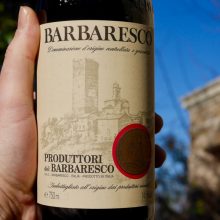
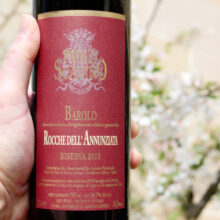
Established Regions – Every region in Italy produces wine! The most prestigious region Piedmont is home to the stunning Nebbiolos of Barolo & Barbaresco. The Chianti and Brunello of Tuscany following hot on Piedmont’s heals. These are just a drop in the ocean!
In typical Italian style the classification systems of each region vary and are often skewed by influential persons with much to gain over the quality of the industry. As always we need to rely on our taste buds as the ultimate decider of quality!
Most Common Varieties – In his book ‘Native Wine Grapes of Italy’ Ian D’Agata documents around 500 Italian grape varieties, by no means the complete set! Around 350 of these have been granted authorized status. There’s plenty to try! We’ve seen a push to save some of the notable, rare varietals like the white Nascetta and Arneis from Piedmont.
Whilst we have seen an ingress of French Varietals, the most notable being the Cabernet Varietals + Syrah used to make the Super Tuscans, the Italians have, by and large stayed true to their roots.
White – Whites of note: Arneis (Piedmont), Cataratto (Sicily), Fiano (southwest coast), Friulano (Friuli), Gargenaga (Veneto – the Soave grape), Greco di Tufo (southwest coast), Malvasia Bianca (throughout Italy), Moscato Blanc (Piedmont), Pecorino (Abruzzo), Pinot Grigo (Why?), Ribolla Gialla (Friulli), Trebbiano (Abruzzo), Verdicchio (Marche) and Vermentino (Sardinia, Tuscany and Liguria).
Red – Aglianico (Campania), Barbera (Piedmont), Corvina blended with Rondinella to make Amarone, Dolcetto (Piedmont), Malvasia Nera (Puglia), Montepuliciano (Tuscany), Nebbiolo (Piedmont), Negaromaro (Puglia), Nero d’Avola (Sicily), Primitivo (Puglia), Sagrantino (Umbria) and Sangiovese (Tuscany).
Up and Coming Regions – Beyond Barolo and Barbaresco, around the world we have seen Amarone, Chianti, Soave, Prosecco, Verdicchio and the wines of Puglia gain strong recognition. In recent times the increasing cost of Barolo in particular has seen exploration of Nebbiolo from Alto Piedmonte and Valtellina. At the opposite end of the country, in part due to the investment of heavy hitters like ‘Barolo Boy’ Marco di Grazie (Terre Nere) and Andrea Franchetti (Passopisciaro) the Nerello Mascelese (red) and Carricante (white) wines of Etna, Sicily have become world recognised. Nerello Mascelese being described as some as the Barolo of the South or a cross between Nebbiolo and Pinot. I prefer to call it delicious!
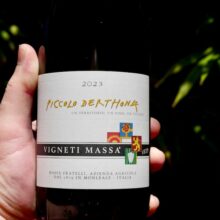
Showing of wines
Sangiovese from Montalcino, Tuscany
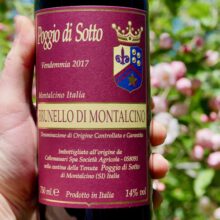
There is something here that takes Sangiovese to a special place, the perfume, the lovely linear shape of fruit, that deceptive depth and length that builds! A captivating mix of ripe plums, strawberries, cloves, violet pastille, balsam herbs and white smoke emanates from the 2017 Brunello di Montalcino. This is undeniably elegant in feel, showing a weight unexpected from a young Poggio di Sotto, yet working in perfect harmony, with tart cherries and wild berries drenching the palate in primary
Sangiovese from Montalcino, Tuscany
There is something here that takes Sangiovese to a special place, the perfume, the lovely linear shape of fruit, that deceptive depth and length that builds! Poggio di Sotto hits it out the ballpark once again with an extremely elegant interpretation that shows the incredible depth and nuance Sangiovese can achieve, even in an uneven vintage such as this. The certified organic 2018 Brunello di Montalcino reveals a dark ruby hue and mid-weight concentration. Indeed, the wine is lighter and bright
Nebbiolo from Barbaresco, Piedmont
Once again proving PdB's Barbaresco is a great benchmark!After first tasting the 2021 in Nov 2024, I've shifted into drinking mode! Every bottle has been delicious. Without question it is the best vintage since 2016.It's looking sharp straight out of the gate & will clearly offer much more with time. Fresh & energetic, light on it's feet yet of great depth & length. Elegant, & fine with excellent front mid-palate shape. The tannins are of serious quality with a playful gr
Nebbiolo from Serralunga d'Alba, Barolo
All of Giacosa’s Barolo wines are single vineyard offerings, and the same is true for the Classico where all of the fruit in the years it is produced comes from Falletto in Serralunga d’Alba. The most recent vintage of Barolo ‘Classico’ is 2020. In the years where a Barolo ‘Classico’ a Barolo ‘Falletto’ and a Barolo ‘Falletto Vigna Le Rocche’ are all produced concurrently (such as 2016), the fruit for the Barolo ‘Classico’ will usually come from the lower and less expose
Nebbiolo from Castiglione Falletto, Barolo
The Giuseppe Mascarello 2018 Barolo Monprivato reveals an open and accessible personality. This wine is an immediate charmer. I tasted these wines with the Mascarello family seated across the table from me, and during our chat, they explained that this was a gratifying vintage in terms of farming and winemaking. The growing season was not too hot, and high alcohol levels were not an issue, they say. In the case of this wine, we are greeted to mild tannins and a pretty bouquet with delicate flora
Nebbiolo from Barbaresco, Piedmont
The 2015 Barbaresco Pajè Vecchie Viti captures everything that makes Nebbiolo so seductive. The 2015 Barbaresco Pajè Vecchie Viti is beautifully perfumed and lifted from the very first taste. There is an element of translucence to the 2015 that is utterly beguiling. Rose petal, mint, sweet red cherry, spice and new leather all grace this understated, alluring Barbaresco. All the elements fall into place effortlessly.Galloni
Nebbiolo from Barbaresco, Piedmont
The 2015 Barbaresco Montefico Vecchie Viti is a great example of this site. Iron, smoke, crushed rocks, sage, mint and licorice bring out the wilder, savory side of this Barbaresco vineyard. Firm and muscular in the glass, with striking depth, the 2015 has so much to offer. It does need at least a few years in bottle to be at its best.Galloni
Nebbiolo from Barbaresco, Piedmont
The 2015 Barbaresco Asili Vecchie Viti lifts from the glass with striking aromatics. Then again, that's Asili. Sweet red berry fruit, mint, blood orange, cinnamon and star anise form a gorgeous latticework of aromas and flavors. The 2015 is gracious, light on its feet and full of Asili seduction, but with that extra kick if tannic bite that is such a Roagna signature. It will be even better once those tannins soften a bit further.Galloni
Nebbiolo from Serralunga d'Alba, Barolo
All of Giacosa’s Barolo wines are single vineyard offerings, and the same is true for the Classico where all of the fruit in the years it is produced comes from Falletto in Serralunga d’Alba. The most recent vintage of Barolo ‘Classico’ is 2020. In the years where a Barolo ‘Classico’ a Barolo ‘Falletto’ and a Barolo ‘Falletto Vigna Le Rocche’ are all produced concurrently (such as 2016), the fruit for the Barolo ‘Classico’ will usually come from the lower and less expose
Nebbiolo from Serralunga d'Alba, Barolo
The Bruno Giacosa 2022 Barbaresco Asili is hitting the market now. It was bottled on the 15th of July, 2024. This elegant wine shows the finely tuned and nuanced essence of Asili with its fine soils. It opens to a bright ruby color and delivers chalky tannins that retain their tension and grippy feel. On the close, you get hints of violets and blue flower. This is a very terroir-driven wine, but it needs more time in bottle to fully express itself. There will be a red label, or Riserva, made in
Nebbiolo from Castiglione Falletto, Barolo
On openning the Pira was all beefstock, savoury with a hint of reduction. Revisited with 15 hours in the glass. There you have it DJ Luca has been at it again. The fruit has come to the fore. The faded flowers so common with great wines from Castiglione Falleto are shining along with red fruit, orange and a hint of baking spice. It’s the shape, focus, mouthfeel and exceptional interplay between fruit of depth and length weighted beautifully against long even tannin matched to vibrant acid that
No wines match your filters
Try removing a filter or broadening your selection.
We couldn't load the wines just now.
You've seen all wines