Size & Type
Other

Location
One thing is certain, you’ll never run short of choice!
First Records of Wine Production – Go back millennia!
Founding Figures – The Greek colonisation marked a shift from vine grown in the wild to planned viticulture around 800 BC the Romans dramatically expanded production around 200 BC. The Italians never looked back!
Area Planted – Around 700,000 hectares making around 19% of the world’s wine!
Number of Wineries – Soave alone is made by 3,500 producers. That’s around the same number of wineries as in all of Australia! From gargistes to industrial scale conglomerates every Italian has a winemaker in the family.
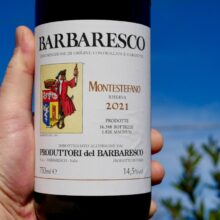
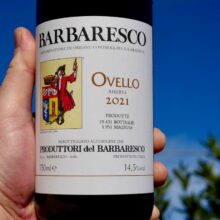
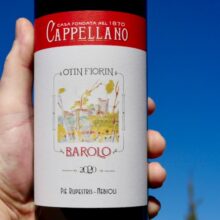
Established Regions – Every region in Italy produces wine! The most prestigious region Piedmont is home to the stunning Nebbiolos of Barolo & Barbaresco. The Chianti and Brunello of Tuscany following hot on Piedmont’s heals. These are just a drop in the ocean!
In typical Italian style the classification systems of each region vary and are often skewed by influential persons with much to gain over the quality of the industry. As always we need to rely on our taste buds as the ultimate decider of quality!
Most Common Varieties – In his book ‘Native Wine Grapes of Italy’ Ian D’Agata documents around 500 Italian grape varieties, by no means the complete set! Around 350 of these have been granted authorized status. There’s plenty to try! We’ve seen a push to save some of the notable, rare varietals like the white Nascetta and Arneis from Piedmont.
Whilst we have seen an ingress of French Varietals, the most notable being the Cabernet Varietals + Syrah used to make the Super Tuscans, the Italians have, by and large stayed true to their roots.
White – Whites of note: Arneis (Piedmont), Cataratto (Sicily), Fiano (southwest coast), Friulano (Friuli), Gargenaga (Veneto – the Soave grape), Greco di Tufo (southwest coast), Malvasia Bianca (throughout Italy), Moscato Blanc (Piedmont), Pecorino (Abruzzo), Pinot Grigo (Why?), Ribolla Gialla (Friulli), Trebbiano (Abruzzo), Verdicchio (Marche) and Vermentino (Sardinia, Tuscany and Liguria).
Red – Aglianico (Campania), Barbera (Piedmont), Corvina blended with Rondinella to make Amarone, Dolcetto (Piedmont), Malvasia Nera (Puglia), Montepuliciano (Tuscany), Nebbiolo (Piedmont), Negaromaro (Puglia), Nero d’Avola (Sicily), Primitivo (Puglia), Sagrantino (Umbria) and Sangiovese (Tuscany).
Up and Coming Regions – Beyond Barolo and Barbaresco, around the world we have seen Amarone, Chianti, Soave, Prosecco, Verdicchio and the wines of Puglia gain strong recognition. In recent times the increasing cost of Barolo in particular has seen exploration of Nebbiolo from Alto Piedmonte and Valtellina. At the opposite end of the country, in part due to the investment of heavy hitters like ‘Barolo Boy’ Marco di Grazie (Terre Nere) and Andrea Franchetti (Passopisciaro) the Nerello Mascelese (red) and Carricante (white) wines of Etna, Sicily have become world recognised. Nerello Mascelese being described as some as the Barolo of the South or a cross between Nebbiolo and Pinot. I prefer to call it delicious!
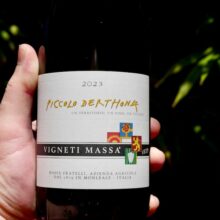
Showing of wines
Nebbiolo from Commune di Barolo, Barolo
This one’s an argument for blending sites! The Barolo Via Nuova is an organic blend of fruit from six MGA sites: Terlo and Liste (in Barolo), Ravera di Monforte and Mosconi (in Monforte d’Alba) and Gabutti and Baudana (in Serralunga d’Alba).The E. Pira e Figli - Chiara Boschis 2020 Barolo Via Nuova opens to a little more dark fruit and ripe berry in this vintage. The wine is buttoned up from all sides into a tight little package of aromas. You get orange peel, bright cherry and a f
Nebbiolo from Serralunga d'Alba, Barolo
With fruit from Serralunga d'Alba, the Vietti 2019 Barolo Lazzarito is a historic cornerstone wine of this mighty portfolio. It is also one of the Vietti Barolos that consistently delivers extreme quality and pleasure with each new release. Like the other wines presented here, winemaking is straightforward, with submerged cap fermentations lasting 30 to 35 days (although those times were reduced in 2019 because this vintage was not suited to long maceration times). Serralunga d'Alba always deliv
Nebbiolo from Serralunga d'Alba, Barolo
Lazzarito stands out as one of the strongest wines in this portfolio of new releases from Vietti. With fruit from Serralunga d'Alba, the 2020 Barolo Lazzarito comes in at a very high threshold in terms of complexity, offering dark cherry, crème de cassis, violet macaron, dried herb and lavender. The wine's perfumes remind me of the south of France in summer. It shows elegant tannins, streamlined intensity and good acidity. Monica Larner, The Wine Advocate 96+ PointsThe 2020 Barolo La
Picked on October 9 and 10, the 2020 Barolo Ravera has plenty of Ravera classicism and tension, but also feels a bit light in the mid-palate. Ravera is never a huge wine in body, but the depth is often there, even if expressed in an understated and more linear manner. The 2020 lacks that depth. Red-toned fruit, blood orange, mint, spice and white pepper lend brilliance throughout.Antonio Galloni, Vinous 94 PointsThe Vietti 2020 Barolo Ravera offers dark fruit, cherry and blackcurrant
Nebbiolo from Castiglione Falletto, Barolo
While Vietti's Villero is their Top Wine. This is my favorite! The 2020 Barolo Rocche di Castiglione is a magical wine from a magical site. It marries finesse and volume to a degree that is not found in most of the other wines in this range. Castiglione Falletto is the center of the Barolo production zone, literally and figuratively, the place where many different soil types meet. As a result, the wines often possess mind-blowing balance, which is very much the case here.Antonio Galloni, Vin
Nebbiolo from Serralunga d'Alba, Barolo
Gentle extraction, shorter maceration, looking to maintain freshness. 36 months in oak. Bottled in summer 2019. Rich long and bold dense tannins that need time to quality tannins with excellent acidity. Great depth and layering of flavour and tannins. Incredibly complex wine. So much going on delicious. All of the classic hallmarks of a superb Vigna Rionda. Stunning.Also available as a Magnum!
Sangiovese from Montalcino, Tuscany
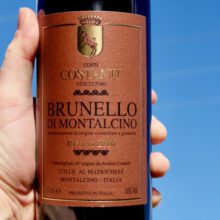
I’d love to compare it directly to the 2021 Soldera and Poggio di Sotto. A wine from a maker with intent. It’s clear there is quality fruit here.Researching the Brunello, I came across Galloni's notes on the 2010 Brunello. "In all of my years tasting the wines of Montalcino, I have only come across two wines with this level of textural unctuosity and sweetness; Gianfranco Soldera's 1983 Brunello and 1990 Riserva."There is not a more emphatic statement that could be made about the cap
Bordeaux Blend from Bolgheri, Tuscany
Ornellaia is undoubtedly the refined lady of the estate. The reviews for the 2019 are full of superlatives. Hope to get a little of this in a glass soon.For a long time I was unconvinced wines made from French varieties made in Italy. One wine stands out as changing my mind, 1990 Ornellaia, thanks Lou!Beautifully balanced and poised it was poured at an open wine night where the only criterion was that it had to be bloody good!62% Cabernet Sauvignon, 31% Merlot, 4% Petit Verdot, 3% C
No wines match your filters
Try removing a filter or broadening your selection.
We couldn't load the wines just now.
You've seen all wines
wines