Size & Type
Other

Location
One thing is certain, you’ll never run short of choice!
First Records of Wine Production – Go back millennia!
Founding Figures – The Greek colonisation marked a shift from vine grown in the wild to planned viticulture around 800 BC the Romans dramatically expanded production around 200 BC. The Italians never looked back!
Area Planted – Around 700,000 hectares making around 19% of the world’s wine!
Number of Wineries – Soave alone is made by 3,500 producers. That’s around the same number of wineries as in all of Australia! From gargistes to industrial scale conglomerates every Italian has a winemaker in the family.
Established Regions – Every region in Italy produces wine! The most prestigious region Piedmont is home to the stunning Nebbiolos of Barolo & Barbaresco. The Chianti and Brunello of Tuscany following hot on Piedmont’s heals. These are just a drop in the ocean!
In typical Italian style the classification systems of each region vary and are often skewed by influential persons with much to gain over the quality of the industry. As always we need to rely on our taste buds as the ultimate decider of quality!
Most Common Varieties – In his book ‘Native Wine Grapes of Italy’ Ian D’Agata documents around 500 Italian grape varieties, by no means the complete set! Around 350 of these have been granted authorized status. There’s plenty to try! We’ve seen a push to save some of the notable, rare varietals like the white Nascetta and Arneis from Piedmont.
Whilst we have seen an ingress of French Varietals, the most notable being the Cabernet Varietals + Syrah used to make the Super Tuscans, the Italians have, by and large stayed true to their roots.
White – Whites of note: Arneis (Piedmont), Cataratto (Sicily), Fiano (southwest coast), Friulano (Friuli), Gargenaga (Veneto – the Soave grape), Greco di Tufo (southwest coast), Malvasia Bianca (throughout Italy), Moscato Blanc (Piedmont), Pecorino (Abruzzo), Pinot Grigo (Why?), Ribolla Gialla (Friulli), Trebbiano (Abruzzo), Verdicchio (Marche) and Vermentino (Sardinia, Tuscany and Liguria).
Red – Aglianico (Campania), Barbera (Piedmont), Corvina blended with Rondinella to make Amarone, Dolcetto (Piedmont), Malvasia Nera (Puglia), Montepuliciano (Tuscany), Nebbiolo (Piedmont), Negaromaro (Puglia), Nero d’Avola (Sicily), Primitivo (Puglia), Sagrantino (Umbria) and Sangiovese (Tuscany).
Up and Coming Regions – Beyond Barolo and Barbaresco, around the world we have seen Amarone, Chianti, Soave, Prosecco, Verdicchio and the wines of Puglia gain strong recognition. In recent times the increasing cost of Barolo in particular has seen exploration of Nebbiolo from Alto Piedmonte and Valtellina. At the opposite end of the country, in part due to the investment of heavy hitters like ‘Barolo Boy’ Marco di Grazie (Terre Nere) and Andrea Franchetti (Passopisciaro) the Nerello Mascelese (red) and Carricante (white) wines of Etna, Sicily have become world recognised. Nerello Mascelese being described as some as the Barolo of the South or a cross between Nebbiolo and Pinot. I prefer to call it delicious!
Showing of wines
This entire Contrada, Bocca d’Orzo, was buried in the lava flow of 1981, bar this tiny ‘dagala’ or island of intact 70-year-old vines. Marco negotiated and purchased this tiny 0.75 hectare plot and produced his first vintage from it in 2019. Only 800 bottles are produced each year. The dagala sits at 800 metres with soils of deep volcanic ash and pebbles.This wine is intensely floral with hints not only of red flowers but violets and wild herbs, too. It is very structured, almost li
Nebbiolo from Barbaresco, Piedmont
🍇RABAJÀ RABAJÀ RABAJÀ 🇮🇹 The 2016 Rabajà Riserva has that spark taking it from good to great. Engaging from the outset, take your time, enjoy this over hours even days in its youth.Cortese have always marched to their own tune, making grape first wines that have a finesse and sophistication about them. Balancing freshness and energy with development. They often appear a little out of sorts when young, particularly at the entry level. Those with patience are rewarded as they shap
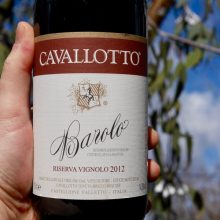
Nebbiolo from Castiglione Falletto, Barolo
Cavallotto's Riserva 'Vignolo' is such a delicious wine, poised, fragrant, such incredible layers of flavour & the rare seamless harmony only the greats seem to manage. Cavallotto are making beautiful wines of great presence, harmony and detail. The Riserva Vignolo is always a little bolder than the Riserva Vigna San Guiseppe. They both have that hallmark Castiglione tannin layered, supple and of line and length. Grab a bottle of Cavallotto's 2012 Barolo Riserva 'Vigna San Guiseppe' for comparis
Nebbiolo from Castiglione Falletto, Barolo
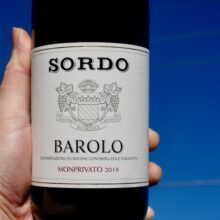
This is the best Monprivato Sordo has made. So I need to go and pop the cork on a 2016 and 2015 ... just to make sure! Sordo's Monprivato has moved up the ladder a couple of rungs this year.The pedigree of this vineyard sees it sitting alongside Villero as one of the finest Barolo vineyards. At ½ the price of Giuseppe Mascarello’s this is exceptional value. An elegance yet intensity, the delicacy that is the hallmark of Monprivato when on song is here. Some would use the term Burgundian,
Nebbiolo from Barbaresco, Piedmont
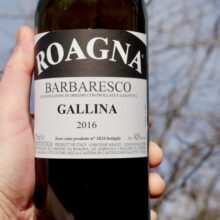
The flowers, roses, are showing, the red fruits shining, exceptional harmony, the wine has freshened beautifully in the glass over the course of 15 hours. The earthy and savoury notes fallen into the background. Wonderfully fine, long, slatey tanin, so even, the hallmark of extend maceration grace your tongue making for an entrancing dance with devine acid. Tranparent, and, elegant, the fruit weight here is deceptive, much more depth and length than might initially be percieved. Graceful Gallina
Nebbiolo from Barbaresco, Piedmont
The 2016 Barbaresco Pajè is one of the highlights in this range, as it offers gorgeous mid-palate depth with super-classic structure. Dark cherry, tobacco, licorice, leather and deeply-pitched spice accents infuse the 2016 with captivating nuance. The Pajè represents a bridge to the higher-end wines in this range. All of these wines have become pricey, but the Pajè is one of the larger-production wines and consistently delivers superb quality at a more approachable price than many of the othe
Nebbiolo from Castiglione Falletto, Barolo
On openning the Pira was all beefstock, savoury with a hint of reduction. Revisited with 15 hours in the glass. There you have it DJ Luca has been at it again. The fruit has come to the fore. The faded flowers so common with great wines from Castiglione Falleto are shining along with red fruit, orange and a hint of baking spice. It’s the shape, focus, mouthfeel and exceptional interplay between fruit of depth and length weighted beautifully against long even tannin matched to vibrant acid that
Montepuliciano from Abruzzo, Italy
The 2019 Montepulciano d'Abruzzo Colle Vota is intense, trading grace for power in this vintage, with a burst of dried black cherries, dusty sage, roses and Indian spice forming its bouquet. This splashes across the palate, spicy with ultra-ripe wild berry fruits that saturate, expertly balanced by a core of zesty acidity. The 2019 leaves a staining of primary concentration and grippy tannins, puckering the cheeks with youthful tension as salted licorice and balsamic spice notes fade. The 2019 C
Montepuliciano from Abruzzo, Italy
“The 2020 Montepulciano d'Abruzzo Colle Volta is a spice box on the nose, with wilted violets and hints of spiced-orange, white smoke, clove and dried black cherries. It's pleasantly sweet upon entry, with a cool toned feel and lavender-laced wild berry fruits that gain in tension and complexity as a flinty-mineral concentration forms toward the close. This resonates like liquid velvet, leaving sweet tannins offset by hints of sour citrus, finishing long and potent. The balance within is other
No wines match your filters
Try removing a filter or broadening your selection.
We couldn't load the wines just now.
You've seen all wines
wines