Size & Type
Other

Location
One thing is certain, you’ll never run short of choice!
First Records of Wine Production – Go back millennia!
Founding Figures – The Greek colonisation marked a shift from vine grown in the wild to planned viticulture around 800 BC the Romans dramatically expanded production around 200 BC. The Italians never looked back!
Area Planted – Around 700,000 hectares making around 19% of the world’s wine!
Number of Wineries – Soave alone is made by 3,500 producers. That’s around the same number of wineries as in all of Australia! From gargistes to industrial scale conglomerates every Italian has a winemaker in the family.
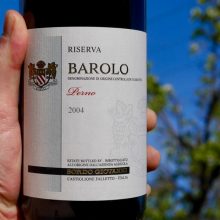
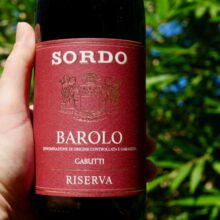
Established Regions – Every region in Italy produces wine! The most prestigious region Piedmont is home to the stunning Nebbiolos of Barolo & Barbaresco. The Chianti and Brunello of Tuscany following hot on Piedmont’s heals. These are just a drop in the ocean!
In typical Italian style the classification systems of each region vary and are often skewed by influential persons with much to gain over the quality of the industry. As always we need to rely on our taste buds as the ultimate decider of quality!
Most Common Varieties – In his book ‘Native Wine Grapes of Italy’ Ian D’Agata documents around 500 Italian grape varieties, by no means the complete set! Around 350 of these have been granted authorized status. There’s plenty to try! We’ve seen a push to save some of the notable, rare varietals like the white Nascetta and Arneis from Piedmont.
Whilst we have seen an ingress of French Varietals, the most notable being the Cabernet Varietals + Syrah used to make the Super Tuscans, the Italians have, by and large stayed true to their roots.
White – Whites of note: Arneis (Piedmont), Cataratto (Sicily), Fiano (southwest coast), Friulano (Friuli), Gargenaga (Veneto – the Soave grape), Greco di Tufo (southwest coast), Malvasia Bianca (throughout Italy), Moscato Blanc (Piedmont), Pecorino (Abruzzo), Pinot Grigo (Why?), Ribolla Gialla (Friulli), Trebbiano (Abruzzo), Verdicchio (Marche) and Vermentino (Sardinia, Tuscany and Liguria).
Red – Aglianico (Campania), Barbera (Piedmont), Corvina blended with Rondinella to make Amarone, Dolcetto (Piedmont), Malvasia Nera (Puglia), Montepuliciano (Tuscany), Nebbiolo (Piedmont), Negaromaro (Puglia), Nero d’Avola (Sicily), Primitivo (Puglia), Sagrantino (Umbria) and Sangiovese (Tuscany).
Up and Coming Regions – Beyond Barolo and Barbaresco, around the world we have seen Amarone, Chianti, Soave, Prosecco, Verdicchio and the wines of Puglia gain strong recognition. In recent times the increasing cost of Barolo in particular has seen exploration of Nebbiolo from Alto Piedmonte and Valtellina. At the opposite end of the country, in part due to the investment of heavy hitters like ‘Barolo Boy’ Marco di Grazie (Terre Nere) and Andrea Franchetti (Passopisciaro) the Nerello Mascelese (red) and Carricante (white) wines of Etna, Sicily have become world recognised. Nerello Mascelese being described as some as the Barolo of the South or a cross between Nebbiolo and Pinot. I prefer to call it delicious!
Showing of wines
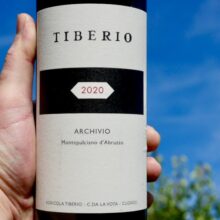
Montepuliciano from Abruzzo, Italy
“Intense, the 2020 Montepulciano d'Abruzzo Archivio seduces with its pungent aromatic display, blending cedar shavings with balsamic spices, cooling smoke, plum sauce and grilled herbs. Soothingly round and supple, this floods the palate with ripe wild berry fruits and hints of blood orange. A web of fine-grained tannins mounts toward the close. It finishes with staining length and structure, leaving sour cherry and inner sage to linger on and on. Patience will be required yet also rewarded.�
Nebbiolo from Grumello, Valtellina
Isabella Pelizzatti Perego from ArPePe in Valtellina, Lombardy, Italy is back in Australia! It's been far too long between visits. ArPePe's wines are things of beauty! Made from Chiavennasca AKA Nebbiolo they are very different from the wines of Barolo & Barbaresco. Perfumed ~ elegant ~ poised ~ balanced ~ complex. GRAPE FIRST You'll be transfixed from first pour. They sit in a state of pure grace! Extraordinary Wines x Extraordinary FoodArPePe x Al Dente 10 Wines + 4 Courses
Sangiovese from Montalcino, Tuscany
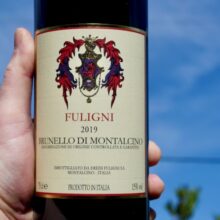
Dusty and floral, the 2019 Brunello di Montalcino opens with a perfumed blend of dried roses, cherries, mint and lavender candies. It’s elegant and seamlessly silky on the palate, enveloping the senses with ripe red berry fruits contrasted by a bitter clove tinge. A core of brisk acidity maintains a lovely balance as a web of fine tannins saturates the palate, and a pleasantly chewy sensation remains. The 2019 is classic to the core.Eric Guido, Vinous 96 PointsML 96 KO 97
Sangiovese from Montalcino, Tuscany
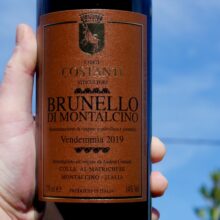
The 2021 Brunello di Montalcino is darkly inward in its youthful state, brooding and tense with tobacco, minty herbs, cedary spice, plum and nuances of black cherry. Soft textures wash across the energetic palate as mineral- inflected red berry fruits saturate. Structured and incredibly long, the 2021 leaves the cheeks puckering amidst fine-grained tannins and a contrasting accent of sour citrus.Eric Guido, Vinous 95 PointsThe Conti Costanti 2021 Brunello di Montalcino shows fine
Sangiovese from Montalcino, Tuscany
The Fuligni 2021 Brunello di Montalcino is an elegant expression with layers of dark fruit and blackcurrant that give way to pressed rose, grilled herb and petrichor, recalling rocks bathed in hot sunlight. The wine is chiseled and refined, owing to the classic nature of the vintage and the restrained, non-extractive house style that distinguishes Fuligni, a historic estate based just outside the village of Montalcino on higher-elevation sites. The wine shows precision with fine tannic tension a
Sangiovese from Montalcino, Tuscany
Brunello di Montalcino comes in a vast array of guises from the super bold structured ones with oak (not my cuppa), the dark rich yet mid-weight with a line of substantial yet refined tannins, & the perfumed, poised, delicate Brunellos with plush fine tannins. At this, Burgundian end, we see Poggio di Sotto and Soldera. Today we add one more to that list Gorelli. It's not yet in the league of it's two peers. Thankfully, neither is it's price. It's heading in the right direction, definitely o
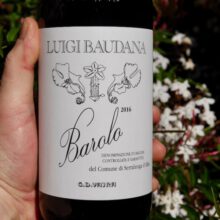
Nebbiolo from Castiglione Falletto, Barolo
This one's another argument for blending sites! From a disciple of Maria Theresa Mascarello. The 2016 M8 is a blend of Castiglione Falletto, Monforte & Serralunga fruit! I rarely buy wine site unseen. In this case I couldn't resist! The story and experience behind Allan Manley's launch of his own venture has him working with a veritable who's who of Barolo ending with Maria Theresa Mascarello where he still works. As you might expect he's a proponent of blended Barolo vs single cru. I can't wait
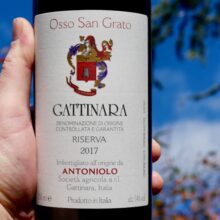
Nebbiolo from Gattinara, Alto Piemonte
Jesus wept on the Bones of Saint Gratto! The very blood of Christ! Stunning. If I ever made a wine of this caliber I'd retire on the high. Galloni's note is bang on! The acid-tannin complex steps up again from the 'standard' Riserva. The tannins are layered, of depth, fine and long. You can ever so easily lose yourself in the glass! Mind-boggling!"The 2016 Gattinara Riserva Osso San Grato is magnificent. Elegant and weightless, with tremendous precision, the 2016 is all class. Rose petal
Nebbiolo from Gattinara, Alto Piemonte
Jesus wept on the Bones of Saint Gratto! The very blood of Christ!Stunning. If I ever made a wine of this caliber I’d retire on the high.Galloni’s note is bang on! The acid-tannin complex steps up again from the ‘standard’ Riserva. The tannins are layered, of depth, fine and long. You can ever so easily lose yourself in the glass! Mind-boggling complexity!"The 2015 Gattinara Riserva Osso San Grato marries finesse with power in grand style. Rose petal, sage, mint, sweet pi
No wines match your filters
Try removing a filter or broadening your selection.
We couldn't load the wines just now.
You've seen all wines
wines