Size & Type
Other

Location
One thing is certain, you’ll never run short of choice!
First Records of Wine Production – Go back millennia!
Founding Figures – The Greek colonisation marked a shift from vine grown in the wild to planned viticulture around 800 BC the Romans dramatically expanded production around 200 BC. The Italians never looked back!
Area Planted – Around 700,000 hectares making around 19% of the world’s wine!
Number of Wineries – Soave alone is made by 3,500 producers. That’s around the same number of wineries as in all of Australia! From gargistes to industrial scale conglomerates every Italian has a winemaker in the family.
Established Regions – Every region in Italy produces wine! The most prestigious region Piedmont is home to the stunning Nebbiolos of Barolo & Barbaresco. The Chianti and Brunello of Tuscany following hot on Piedmont’s heals. These are just a drop in the ocean!
In typical Italian style the classification systems of each region vary and are often skewed by influential persons with much to gain over the quality of the industry. As always we need to rely on our taste buds as the ultimate decider of quality!
Most Common Varieties – In his book ‘Native Wine Grapes of Italy’ Ian D’Agata documents around 500 Italian grape varieties, by no means the complete set! Around 350 of these have been granted authorized status. There’s plenty to try! We’ve seen a push to save some of the notable, rare varietals like the white Nascetta and Arneis from Piedmont.
Whilst we have seen an ingress of French Varietals, the most notable being the Cabernet Varietals + Syrah used to make the Super Tuscans, the Italians have, by and large stayed true to their roots.
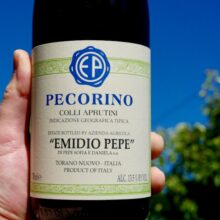
White – Whites of note: Arneis (Piedmont), Cataratto (Sicily), Fiano (southwest coast), Friulano (Friuli), Gargenaga (Veneto – the Soave grape), Greco di Tufo (southwest coast), Malvasia Bianca (throughout Italy), Moscato Blanc (Piedmont), Pecorino (Abruzzo), Pinot Grigo (Why?), Ribolla Gialla (Friulli), Trebbiano (Abruzzo), Verdicchio (Marche) and Vermentino (Sardinia, Tuscany and Liguria).
Red – Aglianico (Campania), Barbera (Piedmont), Corvina blended with Rondinella to make Amarone, Dolcetto (Piedmont), Malvasia Nera (Puglia), Montepuliciano (Tuscany), Nebbiolo (Piedmont), Negaromaro (Puglia), Nero d’Avola (Sicily), Primitivo (Puglia), Sagrantino (Umbria) and Sangiovese (Tuscany).
Up and Coming Regions – Beyond Barolo and Barbaresco, around the world we have seen Amarone, Chianti, Soave, Prosecco, Verdicchio and the wines of Puglia gain strong recognition. In recent times the increasing cost of Barolo in particular has seen exploration of Nebbiolo from Alto Piedmonte and Valtellina. At the opposite end of the country, in part due to the investment of heavy hitters like ‘Barolo Boy’ Marco di Grazie (Terre Nere) and Andrea Franchetti (Passopisciaro) the Nerello Mascelese (red) and Carricante (white) wines of Etna, Sicily have become world recognised. Nerello Mascelese being described as some as the Barolo of the South or a cross between Nebbiolo and Pinot. I prefer to call it delicious!
Showing of wines
Nebbiolo from Barbaresco, Piedmont
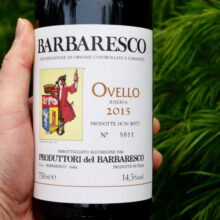
One of the many highlights in this range, the Barbaresco Riserva Montestefano is superb. A big enrobing wine, the Montestefano wraps around the palate with stunning depth. Today, the Montestefano is utterly embryonic, and yet it exudes depth, resonance and pure class. The Montestefano is one of the more complete wines in the range because of the way it deftly balances fruit intensity and structure. Readers will have to be patient, though.Galloni
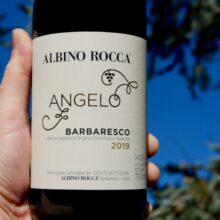
Nebbiolo from Barbaresco, Piedmont
In hommage to Angelo this goes back to his father’s days when blending was the norm. A truly beautiful blend. The gentle fruit handling and longer maceration or lunga macerazione (55 days here) has yielded a lovely perfume, a savoury core of fruit with delicacy and persistence. The tannins are wonderful. There’s a little truffle, a little liquorice, a little of lots of things coming to play. This is a wine worthy of being a hommage! Each parcel is picked separately, 3-4 days apart, and added
Nebbiolo from Castiglione Falletto, Barolo
This one's another argument for blending sites! From a disciple of Maria Theresa Mascarello. The 2017 M8 is a blend of Castiglione Falletto, Monforte & Serralunga fruit! I rarely buy wine site unseen. I did so with the 2016 M8. I couldn’t resist! The story and experience behind Allan Manley’s launch of his own venture has seen him work with a veritable who’s who of Barolo ending with Maria Theresa Mascarello where he still works. As you might expect he’s a proponent of blended Barolo vs
Nebbiolo from Castiglione Falletto, Barolo
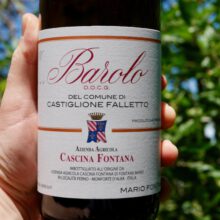
Grace under pressure! Castiglione Falletto shining through with those faded flower. Excellent long tannins of substance and sophistication. A beguiling core of fruit, brooding, yet, you can see what is to come. Flow and shape. It feels very complete. Fine and long. It has that intrigue that steps it up another notch. Very good. Earthy and truffled, serious stuff. Persistence has you taking note as it dances along.Rocche di Castiglione and Villero in Castiglione Falletto consistentlly sit amo
Sangiovese from Gaiole UGA, Chianti Classico
One of the most celebrated expressions of Sangiovese on the market today is the San Giusto a Rentennano 2019 Percarlo. This organic wine has a hint of extra ripeness or richness that transcends the bouquet. You feel as if you can bite into the fruit, and indeed the 2019 vintage is recognized by its unique power and density (with a 15% alcohol content). It's a lot to take in, and there is enough lasting fiber and fruit power to fuel a long drinking window. This is one of the bigger and more opule
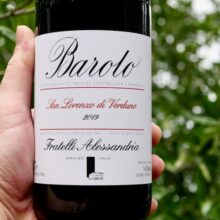
The second of Fratelli Alessandria’s Crus from Verduno that sits immediately next to Monvigliero.This wine was introduced in 1997 and was the first single-vineyard expression from this MGA site. The Fratelli Alessandria 2021 Barolo San Lorenzo di Verduno (with 5,000 bottles created) has a sweet side with nutmeg and tobacco, but it also presents a solid core of cherry fruit and blackcurrant. This nicely balanced expression has more accessible tannins for medium-term drinking. Drink 2026
Nebbiolo from Monforte d'Alba, Barolo
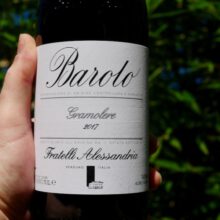
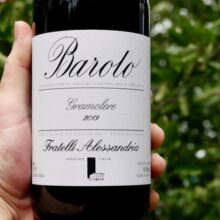
From a vineyard site in Monforte d'Alba, the Fratelli Alessandria 2021 Barolo Gramolere (with 7,000 bottles produced) shows a little more structure and power with tightly knit fruit, dark plum, ferrous earth and licorice. This vineyard comes to family ownership via the matriarch, Flavia Manzone, who was born in this village. Polished tannins push a smooth-sailing mouthfeel. Drink 2026-2040 Tasted June 2025.Monica Larner, The Wine Advocate 96 PointsNOTE: Galloni tasted the wines just
Nebbiolo from Commune di Barolo, Barolo
"The 2016 Barolo Cannubi is the first Borgogno Barolo made from organically farmed vineyards, which represents a pretty significant shift here. Bright and beautifully lifted in the glass, the Cannubi is so expressive today. Succulent red berry fruit, spice, blood orange, rose petal and star anise build as this sensual, open-knit Barolo shows off its allure, which is considerable."Galloni, Vinous
No wines match your filters
Try removing a filter or broadening your selection.
We couldn't load the wines just now.
You've seen all wines
wines