Size & Type
Other

Location
One thing is certain, you’ll never run short of choice!
First Records of Wine Production – Go back millennia!
Founding Figures – The Greek colonisation marked a shift from vine grown in the wild to planned viticulture around 800 BC the Romans dramatically expanded production around 200 BC. The Italians never looked back!
Area Planted – Around 700,000 hectares making around 19% of the world’s wine!
Number of Wineries – Soave alone is made by 3,500 producers. That’s around the same number of wineries as in all of Australia! From gargistes to industrial scale conglomerates every Italian has a winemaker in the family.
Established Regions – Every region in Italy produces wine! The most prestigious region Piedmont is home to the stunning Nebbiolos of Barolo & Barbaresco. The Chianti and Brunello of Tuscany following hot on Piedmont’s heals. These are just a drop in the ocean!
In typical Italian style the classification systems of each region vary and are often skewed by influential persons with much to gain over the quality of the industry. As always we need to rely on our taste buds as the ultimate decider of quality!
Most Common Varieties – In his book ‘Native Wine Grapes of Italy’ Ian D’Agata documents around 500 Italian grape varieties, by no means the complete set! Around 350 of these have been granted authorized status. There’s plenty to try! We’ve seen a push to save some of the notable, rare varietals like the white Nascetta and Arneis from Piedmont.
Whilst we have seen an ingress of French Varietals, the most notable being the Cabernet Varietals + Syrah used to make the Super Tuscans, the Italians have, by and large stayed true to their roots.
White – Whites of note: Arneis (Piedmont), Cataratto (Sicily), Fiano (southwest coast), Friulano (Friuli), Gargenaga (Veneto – the Soave grape), Greco di Tufo (southwest coast), Malvasia Bianca (throughout Italy), Moscato Blanc (Piedmont), Pecorino (Abruzzo), Pinot Grigo (Why?), Ribolla Gialla (Friulli), Trebbiano (Abruzzo), Verdicchio (Marche) and Vermentino (Sardinia, Tuscany and Liguria).
Red – Aglianico (Campania), Barbera (Piedmont), Corvina blended with Rondinella to make Amarone, Dolcetto (Piedmont), Malvasia Nera (Puglia), Montepuliciano (Tuscany), Nebbiolo (Piedmont), Negaromaro (Puglia), Nero d’Avola (Sicily), Primitivo (Puglia), Sagrantino (Umbria) and Sangiovese (Tuscany).
Up and Coming Regions – Beyond Barolo and Barbaresco, around the world we have seen Amarone, Chianti, Soave, Prosecco, Verdicchio and the wines of Puglia gain strong recognition. In recent times the increasing cost of Barolo in particular has seen exploration of Nebbiolo from Alto Piedmonte and Valtellina. At the opposite end of the country, in part due to the investment of heavy hitters like ‘Barolo Boy’ Marco di Grazie (Terre Nere) and Andrea Franchetti (Passopisciaro) the Nerello Mascelese (red) and Carricante (white) wines of Etna, Sicily have become world recognised. Nerello Mascelese being described as some as the Barolo of the South or a cross between Nebbiolo and Pinot. I prefer to call it delicious!
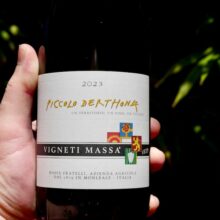
Showing of wines
Wonderfully floral and complex, the 2021 Trebbiano d'Abruzzo continues to improve in bottle with a perfumed bouquet that mixes apricot with crushed almond, yellow flowers and white smoke. This soothes the palate with its enveloping textures as a tinge of candied citrus enlivens ripe green apple and melon tones. It leaves the palate completely refreshed with a spike of acidity and mineral concentration, adding a crisp feel. Although enjoyable today, the 2021 is positioned for greatness over time
Nebbiolo from Gattinara, Alto Piemonte
The first time we’ve managed to squeeze out an allocation of ‘San Francesco’ Saint Francesco. We are very happy!Stepping up to the two single vineyards the depth and length build. Darker and brooding, a slight reductive note washes away to reveal a savoury, truffled layer over those woody herbs. Slatey with mineral acids, sitting marginally prouder than in the other 2 Riservas and tannins of balanced grip. Finishing with lingering fruit.Given a decade the acid resolves this will
Sangiovese from Barberino Val d'Elsa, Chianti Classico
Isole e Olena's top wine. Always a pleasure. Year after year they seem to be drawing even more delicious expressions of Sangiovese from this special parcel of fruit! 'Cepparello' is named after the valley where the vineyard is planted. The last bottle I had of this was a 2006 a month ago, thanks Chris. It was superb, great harmony poise and balance. A real generosity to the wine. Beautiful secondary characters. Looking forward to trying the 2019."One of the icon wines of Tuscany, the Iso
Nebbiolo from Commune di Barolo, Barolo
What a wine! So complete, incredible, layered complex, beautifully perfumed with the earth, slate and undergrowth to balance it. The very definition of a complete Barolo. The acid tannin complex is impeccable. The core and length of fruit is divine. Simply so much going on. Savoury, dark, brooding this will be a special wine with time in bottle. A lacing of the finest black tea supporting exceptional tannins. There are not enough superlatives.Paul Kaan, Wine DecodedThe organic G.D. V
UPDATE: Here's the double cross ... This is Ravera di Novello. I interviewed Eugene Qiao of Vajra and we laughed about the same thing. I forgot to amend the note. The triple cross is that Eugene informed me that the particular part of Ravera in Novella where their holding are has different soils that are much closer to the Ravera in Monforte than in Novello. I was making my note based on the structure looking a little more like Monforte!On the back of drinking all the 2021 Clerico's from
Nebbiolo from Serralunga d'Alba, Barolo
Nebbiolo, Barolo, Serralunga, Baudana = Enough Said! The 2021 Barolo Baudana is another super-sensual wine from the estate. Silky tannins wrap around a core of red cherry/red plum fruit, blood orange, cinnamon and flowers. A wine with striking inner perfume, the 2021 is captivating from start to finish.Antonio Galloni, Vinous 95 Points 95 ML
Nebbiolo from Serralunga d'Alba, Barolo
Nebbiolo, Barolo, Serralunga, Cerretta = Enough Said! Starting off a bit slower than the other wines in this flight, the Luigi Baudana 2021 Barolo Cerretta is quite nervous and tightly wound at this point. Cerretta in Serralunga d’Alba is known for its powerful, age-worthy wines. Despite that initial shyness, this bottle does reveal layers of sweet fruit, grenadine and tart cherry. The wine is nicely balanced with chalky, elegant tannins. Monica Larner, The Wine Advocate 95+ Points AG 95
Nebbiolo from Serralunga d'Alba, Barolo
In recent times, Vigna Rionda gets spoken about as the grand cru of the Langhe – altitude, exposure and soil profile play an integral part. As expected, this is Giampaolo’s flagship wine. The oak regime is similar to the ‘Marenca’ but with a larger portion of newer oak – around 30%. Ultra-powerful and layered in fragrances, flavours and textures. Smoke, graphite, incense, stock/porcini, sweet tobacco, violets. All this character is underpinned by a fierce, tingling acid line and a comp
Sangiovese from Montalcino, Tuscany
When you hear of the estates Andrea has helped establish it makes sense that his own vineyards should kick out some tasty vino! When you hear of the estates Andrea has helped establish it makes sense that his own vineyards should kick out some tasty vino. The list: Poggio di Sotto, there’s La Torre, Poggio degli Ulivi, Mastrojanni, Tenuta di Sesta and Collosorbo, Sesta di Sopra, Podere Salicutti, and of course Ciacci Piccolomini d’Aragona.Tasting Andrea's Brunello for the first time saw
Nebbiolo from Barbaresco, Piedmont
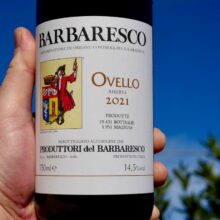
The Produttori del Barbaresco 2017 Barbaresco Riserva Asili is distinguished by its extremely linear and direct approach with wild rose, cassis and lots of mineral or crushed stone. The wine is taut and fresh on the palate with a medium-lean texture and lots of depth and persistence. I love those bright rose petal-like nuances on the close of this wine, and the tannins are firm and silky. This bottle boasts a unique identity in this group of Riservas.Monica Larner, The Wine Advocate
Nebbiolo from Barbaresco, Piedmont
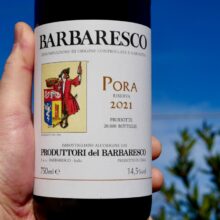
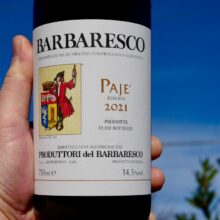
The 2017 Barbaresco Riserva Pora (with 13,333 bottles released) is usually the first wine I taste each year when I review this set of Riservas from Produttori del Barbaresco. That's because it usually appears as the most delicate, and the intensity of each successive bottle increases after this one. But these schematics are a bit more difficult to align in a hot and dry vintage such as this that produced richer and more succulent fruit across the board. The Pora is redolent of red and purple fru
Nebbiolo from Barbaresco, Piedmont
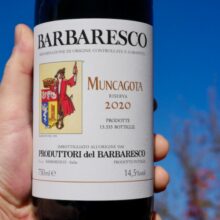
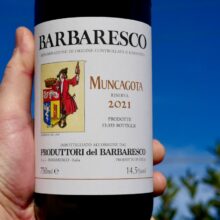
The 2017 Barbaresco Riserva Muncagota plays some of its best cards in terms of texture, offering silky tannins, firmness and a long-lasting veil of fruit flavors. Cassis, wild cherry, camphor ash, spice and iron ore are aromatic protagonists. This wine is lean and compact but very linear and focused. Like the other Riservas in this group of new releases, the wine is fermented in steel and aged in large oak casks for 32 months.Monica Larner, The Wine Advocate
No wines match your filters
Try removing a filter or broadening your selection.
We couldn't load the wines just now.
You've seen all wines
wines