Size & Type
Other

Location
One thing is certain, you’ll never run short of choice!
First Records of Wine Production – Go back millennia!
Founding Figures – The Greek colonisation marked a shift from vine grown in the wild to planned viticulture around 800 BC the Romans dramatically expanded production around 200 BC. The Italians never looked back!
Area Planted – Around 700,000 hectares making around 19% of the world’s wine!
Number of Wineries – Soave alone is made by 3,500 producers. That’s around the same number of wineries as in all of Australia! From gargistes to industrial scale conglomerates every Italian has a winemaker in the family.
Established Regions – Every region in Italy produces wine! The most prestigious region Piedmont is home to the stunning Nebbiolos of Barolo & Barbaresco. The Chianti and Brunello of Tuscany following hot on Piedmont’s heals. These are just a drop in the ocean!
In typical Italian style the classification systems of each region vary and are often skewed by influential persons with much to gain over the quality of the industry. As always we need to rely on our taste buds as the ultimate decider of quality!
Most Common Varieties – In his book ‘Native Wine Grapes of Italy’ Ian D’Agata documents around 500 Italian grape varieties, by no means the complete set! Around 350 of these have been granted authorized status. There’s plenty to try! We’ve seen a push to save some of the notable, rare varietals like the white Nascetta and Arneis from Piedmont.
Whilst we have seen an ingress of French Varietals, the most notable being the Cabernet Varietals + Syrah used to make the Super Tuscans, the Italians have, by and large stayed true to their roots.
White – Whites of note: Arneis (Piedmont), Cataratto (Sicily), Fiano (southwest coast), Friulano (Friuli), Gargenaga (Veneto – the Soave grape), Greco di Tufo (southwest coast), Malvasia Bianca (throughout Italy), Moscato Blanc (Piedmont), Pecorino (Abruzzo), Pinot Grigo (Why?), Ribolla Gialla (Friulli), Trebbiano (Abruzzo), Verdicchio (Marche) and Vermentino (Sardinia, Tuscany and Liguria).
Red – Aglianico (Campania), Barbera (Piedmont), Corvina blended with Rondinella to make Amarone, Dolcetto (Piedmont), Malvasia Nera (Puglia), Montepuliciano (Tuscany), Nebbiolo (Piedmont), Negaromaro (Puglia), Nero d’Avola (Sicily), Primitivo (Puglia), Sagrantino (Umbria) and Sangiovese (Tuscany).
Up and Coming Regions – Beyond Barolo and Barbaresco, around the world we have seen Amarone, Chianti, Soave, Prosecco, Verdicchio and the wines of Puglia gain strong recognition. In recent times the increasing cost of Barolo in particular has seen exploration of Nebbiolo from Alto Piedmonte and Valtellina. At the opposite end of the country, in part due to the investment of heavy hitters like ‘Barolo Boy’ Marco di Grazie (Terre Nere) and Andrea Franchetti (Passopisciaro) the Nerello Mascelese (red) and Carricante (white) wines of Etna, Sicily have become world recognised. Nerello Mascelese being described as some as the Barolo of the South or a cross between Nebbiolo and Pinot. I prefer to call it delicious!
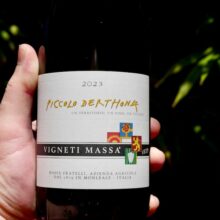
Showing of wines
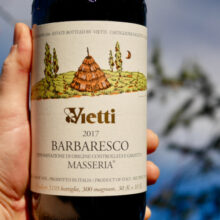
Nebbiolo from Barbaresco, Piedmont
We've seen a lot more 2017 Barbaresco than Barolo, given they can be released 12 months earlier. I've been loving what I've seen thus far. They've been dynamic and full of energy.From Vietti: Ruby-red colour, with light garnet hues. Rich, powerful concentrated nose with hints of ripe fruit. Fresh and bodied on the palate. Notes of red and black fruits (strawberry, blueberry and blackberry). Well-integrated ripe soft and silky tannins. Particular almond note on the finish. It shows an overal
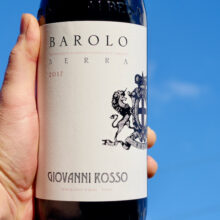
Nebbiolo from Serralunga d'Alba, Barolo
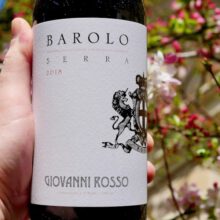
Owned by the Rosso family since 1946, it was replanted in three phases: 1984, 1996 and 2003. La Serra is located about 1km south of the village of Serralunga in the upper part of the Serralunga commune.Those who have tried even the Langhe Neb will have quickly seen a wine from a maker with an understanding of harmony, restraint and purity.
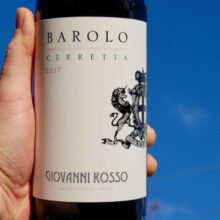
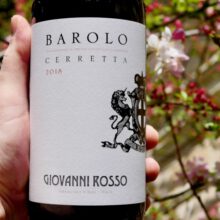
Nebbiolo from Serralunga d'Alba, Barolo
Owned by the Rosso family since 1920, the plot was partly replanted in 1984 and 2000. Situated about 2 miles (3km) to the north of Serralunga village, Cerretta lies close to the hamlet of Baudana and envelops that of Cerretta.The fruit for this Cru wine comes from the best parcel which is shaped like an amphitheatre facing south-east. This part of the vineyard provides a particularly good micro-climate for Nebbiolo since it is protected from stronger winds by the copse at the bottom of the s
Nebbiolo from Serralunga d'Alba, Barolo
Owned by the Rosso family since 1920, the plot was partly replanted in 1984 and 2000. Situated about 2 miles (3km) to the north of Serralunga village, Cerretta lies close to the hamlet of Baudana and envelops that of Cerretta.The fruit for this Cru wine comes from the best parcel which is shaped like an amphitheatre facing south-east. This part of the vineyard provides a particularly good micro-climate for Nebbiolo since it is protected from stronger winds by the copse at the bottom of the s
Nebbiolo from Serralunga d'Alba, Barolo
Owned by the Rosso family since 1946, it was replanted in three phases: 1984, 1996 and 2003. La Serra is located about 1km south of the village of Serralunga in the upper part of the Serralunga commune.Those who have tried even the Langhe Neb will have quickly seen a wine from a maker with an understanding of harmony, restraint and purity.Aromas of red berry, blue flower and whiffs of oak-driven spice take shape in the glass. The palate is almost ethereally elegant, featuring crushed
Nebbiolo from Commune di Barolo, Barolo
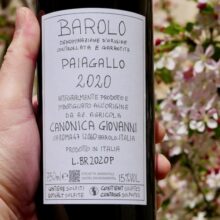
2020 Barolos have been showing very tightly coiled in their youth across the vintage. There have been notable exceptions. Canonica's Paiagallo and Magheritta Otto's Barolo both have a core of fruit that is shining, expressive and inviting.Canonica's 2020 Paiagallo will still need a few years to reveal its considerable potential. I suspect we will look back on 2020 as an underrated vintage in time. Although 15% on the label, there is no imbalance or over-ripeness here. Fully flavoured, savour
Nebbiolo from Grinzane Cavour, Barolo
Wines like these are so rare that it is impossible to try them before they land in the country and they invariably sell out before you get to! His vineyards in Grinzane Cavour were inherited by his father in law. Adding an addition 1 hectare to the 1.5 hectares of Paiagallo. Still making for a tiny production.
Nebbiolo from Neive, Barbaresco
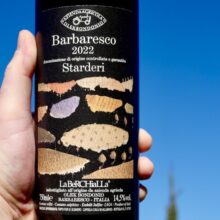
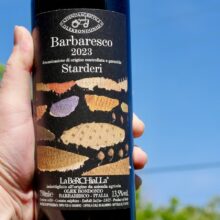
Olek has incredible touch. The man understands textures and tannins, creates wines with insane perfumes and layer after layer of diving flavours. I can't wait to hook one of these when it hits the warehouse!Starderi is in the center north in the commune of Nieve. Check it out in the map below.
"These vineyards represent the classic side of our production. They make elegant, smooth, and fresh wines with a fine aroma." Valter Fissore "This beautiful, luminously hued Barolo opens with enticing scents of perfumed berry, dark spice, eucalyptus, violet and forest floor. The savory palate combines elegance and structure, delivering juicy red cherry, raspberry compote, star anise and wild mint framed in taut, refined tannins that give it a smooth but firm texture. Bright acidity keeps energiz
Sangiovese from Montalcino, Tuscany
The 2018 Rosso di Montalcino is a perfumed and feminine effort, blossoming in the glass to show dusty roses and violets with bright cherry and strawberry fruits. Hints of cedar and flowery undergrowth come forward over time to complete the expression. It’s silky in feel and energetic with mineral-laced, ripe red berries, spice and inner florals motivated by juicy acids. Licorice and a sweet and sour twang of wild berries linger, along with a gentle coating of fine tannin that is only felt towa
Nebbiolo from Commune di Barolo, Barolo
Loaded with finesse, this wine has enticing aromas of rose, woodland berry, pine forest and herbs. Elegantly structured, the delicious palate delivers juicy Marasca cherry, raspberry compote, star anise and wild mint framed in tightly knit, polished tannins. Fresh acidity keeps it well-balanced. Drink 2022–2036.Kerin O'Keefe
Nebbiolo from Commune di Barolo, Barolo
Underbrush, wild berry, rose and camphor aromas form the enticing nose along with a whiff of forest floor. The youthfully austere, savory palate delivers ripe red cherry, raspberry compote, star anise and botanical herb framed in firm, refined tannins. Bright acidity keeps it balanced. This stunner is definitely one for the cellar. Drink 2026–2041.Kerin O’Keefe, The Wine Enthusiast
No wines match your filters
Try removing a filter or broadening your selection.
We couldn't load the wines just now.
You've seen all wines
wines