Size & Type
Other

Location
One thing is certain, you’ll never run short of choice!
First Records of Wine Production – Go back millennia!
Founding Figures – The Greek colonisation marked a shift from vine grown in the wild to planned viticulture around 800 BC the Romans dramatically expanded production around 200 BC. The Italians never looked back!
Area Planted – Around 700,000 hectares making around 19% of the world’s wine!
Number of Wineries – Soave alone is made by 3,500 producers. That’s around the same number of wineries as in all of Australia! From gargistes to industrial scale conglomerates every Italian has a winemaker in the family.
Established Regions – Every region in Italy produces wine! The most prestigious region Piedmont is home to the stunning Nebbiolos of Barolo & Barbaresco. The Chianti and Brunello of Tuscany following hot on Piedmont’s heals. These are just a drop in the ocean!
In typical Italian style the classification systems of each region vary and are often skewed by influential persons with much to gain over the quality of the industry. As always we need to rely on our taste buds as the ultimate decider of quality!
Most Common Varieties – In his book ‘Native Wine Grapes of Italy’ Ian D’Agata documents around 500 Italian grape varieties, by no means the complete set! Around 350 of these have been granted authorized status. There’s plenty to try! We’ve seen a push to save some of the notable, rare varietals like the white Nascetta and Arneis from Piedmont.
Whilst we have seen an ingress of French Varietals, the most notable being the Cabernet Varietals + Syrah used to make the Super Tuscans, the Italians have, by and large stayed true to their roots.
White – Whites of note: Arneis (Piedmont), Cataratto (Sicily), Fiano (southwest coast), Friulano (Friuli), Gargenaga (Veneto – the Soave grape), Greco di Tufo (southwest coast), Malvasia Bianca (throughout Italy), Moscato Blanc (Piedmont), Pecorino (Abruzzo), Pinot Grigo (Why?), Ribolla Gialla (Friulli), Trebbiano (Abruzzo), Verdicchio (Marche) and Vermentino (Sardinia, Tuscany and Liguria).
Red – Aglianico (Campania), Barbera (Piedmont), Corvina blended with Rondinella to make Amarone, Dolcetto (Piedmont), Malvasia Nera (Puglia), Montepuliciano (Tuscany), Nebbiolo (Piedmont), Negaromaro (Puglia), Nero d’Avola (Sicily), Primitivo (Puglia), Sagrantino (Umbria) and Sangiovese (Tuscany).
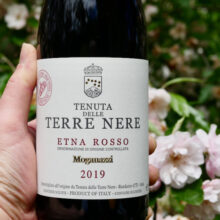
Up and Coming Regions – Beyond Barolo and Barbaresco, around the world we have seen Amarone, Chianti, Soave, Prosecco, Verdicchio and the wines of Puglia gain strong recognition. In recent times the increasing cost of Barolo in particular has seen exploration of Nebbiolo from Alto Piedmonte and Valtellina. At the opposite end of the country, in part due to the investment of heavy hitters like ‘Barolo Boy’ Marco di Grazie (Terre Nere) and Andrea Franchetti (Passopisciaro) the Nerello Mascelese (red) and Carricante (white) wines of Etna, Sicily have become world recognised. Nerello Mascelese being described as some as the Barolo of the South or a cross between Nebbiolo and Pinot. I prefer to call it delicious!
Showing of wines
Carricante from Etna, Sicily
The graceful white shows precision balance and a sense of finesse. Long and satiny on the palate, with vibrant, fine china like acidity acting as a springboard for layered flavours of nectarine, yellow plum and persimmon fruit, plus lemon oil, minerally salt and stone notes. Offers hints of mountain herbs and white pepper. Though hard to swap sipping today, this should also be a showstopper with cellaring.Wine Spectator 95 points
Nebbiolo from Valgella, Valtellina
Grace under pressure. The purity, line & length, and, expression of this wine is exceptional. Where the 2016 Costa Bassa drinks so beautifully out of the gate. 2016 Carteria steps up the depth, length and layering, this will be superb. Brooding and a little darker than the Costa Bassa, it's not just depth of flavour, but depth of tannin that shine. A little patience will yiled a treasure! The textures, harmony and pleasure Sandro Fay are dishing up is exceptional. This will undoubtedly hit the
Nebbiolo from Barbaresco, Piedmont
A Langhe Nebb made from young vine Rabajà .. Yes it's true! Always a fun wine. Elegant and juicy fruited, with solid core of fruit wrapped in chewy tannins. It’s a playful Langhe. Typically perfumed with a savoury twang, a little orange. Loads of fun to be had here. Always better after an extra year in bottle & a good decant. Will reward 2-5 years patience.Even his Langhe Neb is young vine Rabajà!
Nebbiolo from Neive, Barbaresco
Super vibrant and energetic with long even fruit of class and a little perfume Feels like a little more precision here in the 2021. Savoury with a lick of blood. Classy fruit an excellent wine. Refined tannins. Opens and settles beautifully in the glass. Very, very good.Tasted from cask, Barale's 2021 Barbaresco Serraboella is bold, juicy and quite expressive. I imagine more nuance will develop in time. At this early stage, the 2021 possesses notable depth and plenty of textural intensit
Blend from Inferno, Valtellina
First released in 1980! Rainoldi's top sparkling 'Cuvée Maria Vittoria' is a 0 dose blend of Chiavennasca 92% A.K.A Nebbiolo, Pignola 4%, Rossola 4%.The base sparkling wine rests in steel tanks until the spring following the harvest. After the tirage or second fermentation, the wine is aged in bottle for at least 60 months.Vineyards in the municipalities of Ponte in Valtellina and Teglio at 500-730m above sea levelNOTE on the 2018 Brut Rosé Cracking 'Metodo Classico' fizz from V
Nebbiolo from Barbaresco, Piedmont
The fruit for this wine comes from the mostly south-facing aspect of the Asili cru, with an average vine age of 55 years. The winemaking is similar to the other Barbarescos. This is perhaps the most compelling of the Luisin Barbarescos, with a textbook Nebbiolo red colour and an intriguing bouquet of so many elements that all come together in harmony. Classic varietal characters of liquorice root, rose petal and anise, alongside brighter fruit aromas of pomegranate, cherry and raspberry, with
Nebbiolo from Barbaresco, Piedmont
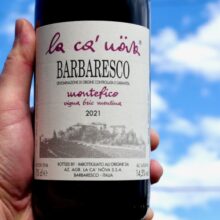
Just bottled, the 2022 Barbaresco Montefico Vigna Bric Mentina melds together the energy and freshness typical of this site with an extra kick of fruit from the warm, dry year. Bright acids and persistent tannins call for cellaring.Antonio Galloni, Vinous 93 Points
Nebbiolo from Barbaresco, Piedmont
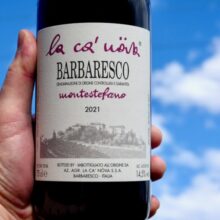
The 2022 Barbaresco Montestefano is superb. A dark, mysterious wine, the 2022 presents an exotic mélange of dark blue/purplish fruit, lavender, mint, spice, licorice, leather and graphite. More than anything else, I am impressed by how much site character is present.Antonio Galloni, Vinous 94 Points
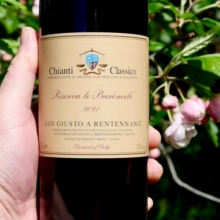
Sangiovese from Castelnuovo Berardenga UGA, Chianti Classico
The 2017 Chianti Classico Riserva Rancia is incredibly polished and sophisticated. Silky tannins give the 2017 its racy, sleek personality. Over the last year, the 2017 has really settled into a gorgeous place. There is plenty of vintage 2017 intensity, but Rancia is distinctly medium in body and restrained. The wilder side of Sangiovese, one of the signatures of Rancia and Fèlsina more broadly, tastes a bit baked out. I can't wait to see how the 2017 develops over the coming years and decades.
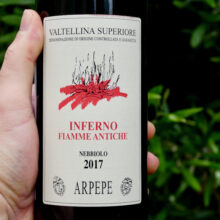
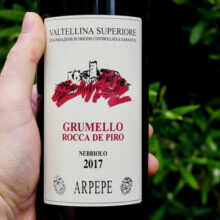
Nebbiolo from Inferno, Valtellina
Crystal clear with a more savoury flavour profile. As it opens in the glass it comes together beautifully! This too is very good. Crystal clear with a more savoury flavour profile. Took a bit longer for this to open up. As it did it came together beautifully, the tannins have a little more presence here. The flowers are at play around the edges. The rounder mid-palate differentiates Sassella from Inferno. It’s a little about celebrating the differences once again. As always ArPePe offer up e
No wines match your filters
Try removing a filter or broadening your selection.
We couldn't load the wines just now.
You've seen all wines
wines