Size & Type
Other

Location
One thing is certain, you’ll never run short of choice!
First Records of Wine Production – Go back millennia!
Founding Figures – The Greek colonisation marked a shift from vine grown in the wild to planned viticulture around 800 BC the Romans dramatically expanded production around 200 BC. The Italians never looked back!
Area Planted – Around 700,000 hectares making around 19% of the world’s wine!
Number of Wineries – Soave alone is made by 3,500 producers. That’s around the same number of wineries as in all of Australia! From gargistes to industrial scale conglomerates every Italian has a winemaker in the family.
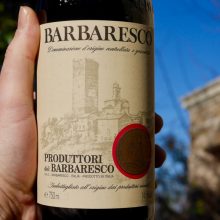
Established Regions – Every region in Italy produces wine! The most prestigious region Piedmont is home to the stunning Nebbiolos of Barolo & Barbaresco. The Chianti and Brunello of Tuscany following hot on Piedmont’s heals. These are just a drop in the ocean!
In typical Italian style the classification systems of each region vary and are often skewed by influential persons with much to gain over the quality of the industry. As always we need to rely on our taste buds as the ultimate decider of quality!
Most Common Varieties – In his book ‘Native Wine Grapes of Italy’ Ian D’Agata documents around 500 Italian grape varieties, by no means the complete set! Around 350 of these have been granted authorized status. There’s plenty to try! We’ve seen a push to save some of the notable, rare varietals like the white Nascetta and Arneis from Piedmont.
Whilst we have seen an ingress of French Varietals, the most notable being the Cabernet Varietals + Syrah used to make the Super Tuscans, the Italians have, by and large stayed true to their roots.
White – Whites of note: Arneis (Piedmont), Cataratto (Sicily), Fiano (southwest coast), Friulano (Friuli), Gargenaga (Veneto – the Soave grape), Greco di Tufo (southwest coast), Malvasia Bianca (throughout Italy), Moscato Blanc (Piedmont), Pecorino (Abruzzo), Pinot Grigo (Why?), Ribolla Gialla (Friulli), Trebbiano (Abruzzo), Verdicchio (Marche) and Vermentino (Sardinia, Tuscany and Liguria).
Red – Aglianico (Campania), Barbera (Piedmont), Corvina blended with Rondinella to make Amarone, Dolcetto (Piedmont), Malvasia Nera (Puglia), Montepuliciano (Tuscany), Nebbiolo (Piedmont), Negaromaro (Puglia), Nero d’Avola (Sicily), Primitivo (Puglia), Sagrantino (Umbria) and Sangiovese (Tuscany).
Up and Coming Regions – Beyond Barolo and Barbaresco, around the world we have seen Amarone, Chianti, Soave, Prosecco, Verdicchio and the wines of Puglia gain strong recognition. In recent times the increasing cost of Barolo in particular has seen exploration of Nebbiolo from Alto Piedmonte and Valtellina. At the opposite end of the country, in part due to the investment of heavy hitters like ‘Barolo Boy’ Marco di Grazie (Terre Nere) and Andrea Franchetti (Passopisciaro) the Nerello Mascelese (red) and Carricante (white) wines of Etna, Sicily have become world recognised. Nerello Mascelese being described as some as the Barolo of the South or a cross between Nebbiolo and Pinot. I prefer to call it delicious!
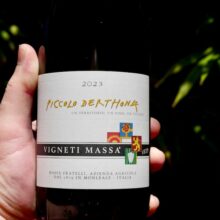
Showing of wines
Nebbiolo from Neive, Barbaresco
They understand the rule book so have thrown it away only to be used when they know they need to. I guess that's what 150 years of making wine can give you! The 2016 of this was a cracker. True to the vintage & site with bold yet refined structure. The 2019 is again a cracker and true to vintage. This time all grace and elegance from what is proving a classic year.Beautifully weighted, the body of this slightly warmer vineyard with the clarity and sophistication of 2019 Barbaresco. Rich
Nebbiolo from Serralunga d'Alba, Barolo
Excellent. flowing, beautifully weighted with a density of elegant fruit. Super refined long tannin. So seamless, harmonious and delicious. Complex with a tea line combined with layered tannins. Gorgeous fruit, superb drinking.Fabulously good value. Made from fruit grown across 8 different estate vineyards in Serralunga d’Alba. The fruit is sourced from Crus such as Cerretta and Serra, Meriame, Sorano, Costabella, and Baudana.Paul Kaan, WINE DECODED Aug 2023Cask sample of the
Red Blend from Gaiole UGA, Chianti Classico
Le Baroncole is made from 97% Sangiovese and 3% Canaiolo grapes. The initial stages of its production are the same as Chianti Classico but it is then aged in barriques for between 16 to 20 months, bottled unfiltered and held for a further six months prior to release.The 2022 Chianti Classico Riserva Le Baroncole is packed with dark red cherry/plum fruit, new leather, cedar, blood orange and spice. Dense and layered, with superb depth, the 2022 is endowed with real structure. The oak, so
Nebbiolo from Serralunga d'Alba, Barolo
Excellent. flowing, beautifully weighted with a density of elegant fruit. Super refined long tannin. So seamless, harmonious and delicious. Complex with a tea line combined with layered tannins. Gorgeous fruit, superb drinking.Fabulously good value. Made from fruit grown across 8 different estate vineyards in Serralunga d’Alba. The fruit is sourced from Crus such as Cerretta and Serra, Meriame, Sorano, Costabella, and Baudana.The 2021 Barolo del Comune di Serralunga d'Alba is a bl
Nebbiolo from Commune di Barolo, Barolo
Excellent, Perfume, energy, lovely core of fruit, long & fine, dark & savoury with red fruit too. Layered with an excellent tannin profile, flow and shape. Delicious. Will undoubtedly build with age. Acid tannin complex is very good. Length of tannins is excellent. Firm in a good way and of quality, a little nutty. Exceptional value to be had here!Paul Kaan, Wine DecodedDo you have a favourite pair of jeans or a favourite dress that you keep in your closet for all occasions?
Carricante from Etna, Sicily
A tightly meshed white with structured acidity creating a mouthwatering frame for notes of yellow apple, pear, grapefruit pith, blanched almond, rosemary and spring blossoms. Long and salty, with mineral drive on the racy finish.Wine Spectator 93 Points
Carricante from Etna, Sicily
Creamy and layered with a clean sweep of salinity framing flavours of golden apple, yellow plum, green almond and preserved lemon, plus fragrant hints of broom and wild thyme. Expands nicely on the palate but shows good tension and zesty drive through the racy finish.Wine Spectator 94 Points
The Feudo di Mezzo from Terre Nere has more immediate generosity. Showing more of itself earlier than higher vineyards of Santo Spirito and Guardiola The purity of fruit and brightness is very impressive with blackberry, cherry and walnut undertones. It’s full, very tight and complete with really fine, polished tannins and a beautiful, long finish. Really balanced. Drink or hold.SucklingFeudo di Mezzo is a larger Contrada, sub-plots within it are important to recognise. One day I'll ge
Sophistication, perfectly ripe yet not over ripe fruit. Very much in the mould of the Guardiola and Rampante Contrada! A tight, linear red, showing cherry, watermelon and orange-peel aromas with hints of violets. It’s medium-bodied with a solid center palate and a racy finish. Drink or hold.Suckling
Nebbiolo from Monforte d'Alba, Barolo
A massive surprise, the oak is no longer the dominant feature of the Clerico wines. Hoo fucken’ ray! We have balance! I can see fruit, I can see the Commune and I can happily swallow the beverage and want to go back for another sniff. I couldn’t even say that about the 2016’s. So what’s going on? Domenico did so much to help revitalise Barolo, it would however be fair to say that after the early revolution, evolution was very slow. The wines often dominated by overt oak and tough tannins
The latest Contrada from Terre Nere! No reviews available. I had a chance to suck on a 2017, a tasty beverage, clear the vineyard has strong potential.
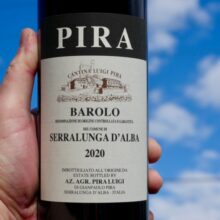
Nebbiolo from Serralunga d'Alba, Barolo
I recall being impressed by Pira's 2018 Langhe Nebbiolo a couple of years on and the Barolo 'Commune di Serralunga' is impressing too! Openning in the glass with vibrant red fruits, tea, a little earthiness, slate, licorice and more. The layered density of the fruit with zippy acid has you salivating for more. The tannins are composed and front, mid-palate dominant, that slate comes through here to. Tight at the moment with 3-5 years it should fall into place, the juicy acid marry into the wine
No wines match your filters
Try removing a filter or broadening your selection.
We couldn't load the wines just now.
You've seen all wines
wines