Size & Type
Other

Location
One thing is certain, you’ll never run short of choice!
First Records of Wine Production – Go back millennia!
Founding Figures – The Greek colonisation marked a shift from vine grown in the wild to planned viticulture around 800 BC the Romans dramatically expanded production around 200 BC. The Italians never looked back!
Area Planted – Around 700,000 hectares making around 19% of the world’s wine!
Number of Wineries – Soave alone is made by 3,500 producers. That’s around the same number of wineries as in all of Australia! From gargistes to industrial scale conglomerates every Italian has a winemaker in the family.
Established Regions – Every region in Italy produces wine! The most prestigious region Piedmont is home to the stunning Nebbiolos of Barolo & Barbaresco. The Chianti and Brunello of Tuscany following hot on Piedmont’s heals. These are just a drop in the ocean!
In typical Italian style the classification systems of each region vary and are often skewed by influential persons with much to gain over the quality of the industry. As always we need to rely on our taste buds as the ultimate decider of quality!
Most Common Varieties – In his book ‘Native Wine Grapes of Italy’ Ian D’Agata documents around 500 Italian grape varieties, by no means the complete set! Around 350 of these have been granted authorized status. There’s plenty to try! We’ve seen a push to save some of the notable, rare varietals like the white Nascetta and Arneis from Piedmont.
Whilst we have seen an ingress of French Varietals, the most notable being the Cabernet Varietals + Syrah used to make the Super Tuscans, the Italians have, by and large stayed true to their roots.
White – Whites of note: Arneis (Piedmont), Cataratto (Sicily), Fiano (southwest coast), Friulano (Friuli), Gargenaga (Veneto – the Soave grape), Greco di Tufo (southwest coast), Malvasia Bianca (throughout Italy), Moscato Blanc (Piedmont), Pecorino (Abruzzo), Pinot Grigo (Why?), Ribolla Gialla (Friulli), Trebbiano (Abruzzo), Verdicchio (Marche) and Vermentino (Sardinia, Tuscany and Liguria).
Red – Aglianico (Campania), Barbera (Piedmont), Corvina blended with Rondinella to make Amarone, Dolcetto (Piedmont), Malvasia Nera (Puglia), Montepuliciano (Tuscany), Nebbiolo (Piedmont), Negaromaro (Puglia), Nero d’Avola (Sicily), Primitivo (Puglia), Sagrantino (Umbria) and Sangiovese (Tuscany).
Up and Coming Regions – Beyond Barolo and Barbaresco, around the world we have seen Amarone, Chianti, Soave, Prosecco, Verdicchio and the wines of Puglia gain strong recognition. In recent times the increasing cost of Barolo in particular has seen exploration of Nebbiolo from Alto Piedmonte and Valtellina. At the opposite end of the country, in part due to the investment of heavy hitters like ‘Barolo Boy’ Marco di Grazie (Terre Nere) and Andrea Franchetti (Passopisciaro) the Nerello Mascelese (red) and Carricante (white) wines of Etna, Sicily have become world recognised. Nerello Mascelese being described as some as the Barolo of the South or a cross between Nebbiolo and Pinot. I prefer to call it delicious!
Showing of wines
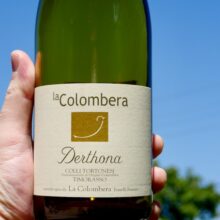
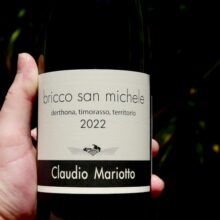
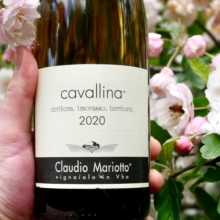
Timorasso from Colli Tortonesi, Piedmont
The 2020 Cavallina is a fascinating iteration. Epic tension and minerality see it super tightly wound and taking time to resolve and build generosity. I initially tasted this over a year ago and saw the epic potential waiting for us. 6 months later it was only just starting to settle. It's one to be patient with. While the 2021 is a delicious drink straight out of the gate the 2020 is going to need time. It has a wonderful funk that I associate with low pH wines that have seen time on lees. All
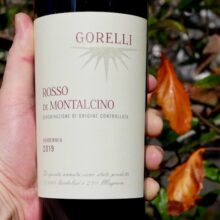
Sangiovese from Montalcino, Tuscany
Speller is on the money, this is still closed (April 2023). Builds with time in the glass, the fruit leans toward the fine Burgundian style. The tannins are just a little edgy, as with the Brunello, as the new Botti season future vintages should see further refinement to the texture. This clearly sits in between the Rosso & Brunello level. I like the cranberry descriptor and would add a musk and rose top note. A few years in bottle should see the tannins resolve fully and mid-palate weight
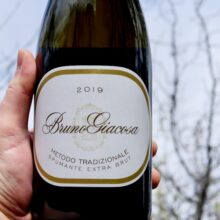
Pinot Noir from Lombardy, Italy
Bruna Giacosa persists with her father’s interest in producing a very small batch sparkling wine in most good vintages, a Blanc de Noirs made in methode Champenois and aged on lees for between 2-3 years. Though a curio even in the storied history of Giacosa, it is a wine steeped in historical significance for the winery. An avid lover of the great house Champagnes, Giacosa sought to create his own ‘metodo classico’ that was distinctly Italian stylistically. In the early 1980s, the modern
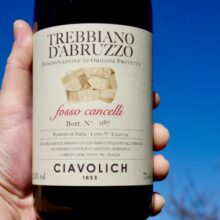
What a wonderful exploration of Trebbiano the wines of Ciavolich, Tiberio and Emidio Pepe. On the continuum Tiberio is the freshest with least oxidative handling, Ciavolich is in the middle and Emidio Pepe has the full beans! All are delightful expression and all that is left for us to do is enjoy and celebrate the difference.The 2024 is just the second vintage of Ciavolich's Trebbiano 'Fosso Cancelli' I've seen. Bought it on spec after devouring a bottle of the 2021. The 2024 is serious
Sangiovese from Montalcino, Tuscany
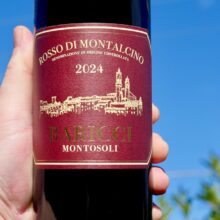
Zippy fresh line of acid with vibrant red fruits, a fine line of more linear long tannin. Lacing of slatey, darkness. Tight and of tension that will reward a couple of years in bottle to resolve and for the mid-palate to build. All is in the right place and ready to come together and deliver. The harmony.Tasted again from the open bottle 4 days on and the transformation was well underway. DJ 02xTIME dialed the Rosso in. Whilst not a replica for time in bottle, a bloody good insight!�
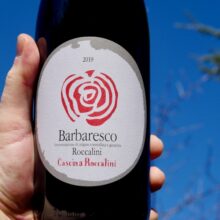
Nebbiolo from Barbaresco, Piedmont
When a young winery pop's up a little leg work is required to suss them out. Obviously, the most important thing is what's in the glass. Let's add the other bits of the equation though. The vineyards are right next to Olek Bondonio's joint, they used to supply their Neb to Dante Scaglione at Bruno Giacosa for ten years, and Dante helped them start their own venture. BOOM!The 2019 Barbaresco is playful expression, strawberries and cream lift from the glass. The label is a visual descriptor of
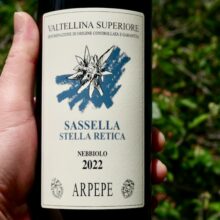
Nebbiolo from Sassella, Valtellina
As with the 2015, 2017 & 2019 I found myself not really wanting to write tasting notes simply wanting to devour the glass!Sassella typically produces the most elegant wines of the three communes with Inferno next and Grumello the boldest.Sassella has done it again! Perfume and intensity on the nose lovely flowers. Refined and more linear with an additional layer of tannins and textural intrigue. Super fine acid. It’ll be lovely to see this with a couple more years as it will relax
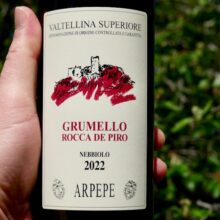
Nebbiolo from Grumello, Valtellina
Grumello is to the east of Sondrio on the opposite side to Sassella making for a fascinating comparison in site! Grumello is to the east of Sondrio on the opposite side to Sassella making for a fascinating comparison in site! This is where the largest strides have been made. We’ve seen both of the Grumello Riservas priced at the same point now. Whatever is happening in the vineyard or winery to make that happen is translating into this Superiore (ArPePe makes either Superiores or Riservas in
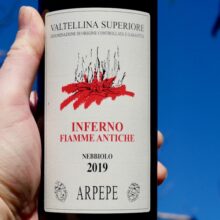
Nebbiolo from Inferno, Valtellina
The 2022 Valtellina Superiore Inferno Fiamme Antiche is bright and nicely sculpted. Orange peel, mint and white pepper give this vibrant Valtellina Superiore tons of sizzle. High-toned aromatics, deep mineral inflections and a long, sustained finish round out this mid-weight, drop-dead gorgeous Inferno. Antonio Galloni, Vinous 92 Points
"Floral aromas of rose and iris mingle with red berry and tilled earth on this perfumed red. Elegantly structured, the vibrant palate offers juicy red cherry, crushed raspberry and star anise before a savory, almost salty finish. Taut, refined tannins and bright acidity keep it balanced. Drink through 2030."Kerin O'Keefe
Nebbiolo from Monforte d'Alba, Barolo
From Ravera in Monforte. As the vines age they will make Barolo! From Ravera in Monforte, this is made from the youngest vines (that will eventually be made as Barolo) and is made the same way as her three Barolos and then aged in barriques for twelve months. As a baby Barolo, this has some serious pedigree with rich, plush fruit of red berries with crushed flowers. Hard to beat for the money and an ‘affordable’ cellaring option.**Due Sept 2025**
No wines match your filters
Try removing a filter or broadening your selection.
We couldn't load the wines just now.
You've seen all wines