Size & Type
Other

Location
Without doubt the two greatest drivers of the French wine industry have been the concept of Terroir and the establishment of the Appellation d’origine contrôlée.
Combined these have defined a philosophical approach to growing and making wine and enforced strict controls of grape varieties that can be planted in each region and winemaking practices that can be employed.
Frances has come through with flying colours, successive generations have been better trained, spent time in the New World exposing them to different techniques for growing vines and making wine, and, have been able to push the boundaries to achieve excellence.
First Records of Wine Production – Go back millennia to the 6th century BC. The Greeks kicked things off with the Romans ramping things up. Those Romans got around and took their vines and wines with them! Over time the wealth of the Monastries took over much of the production. Nobility took their turn until the guillotine fell!
Founding Figures – In ‘recent times’, technical advancement in the industry were driven by Minister of the Interior, Jean-Antoine Chaptal following the French revolution, work done by Louis Pasteur in the 19th century, and, the Emperor Napoleon III commissioning of the 1855 classification of Bordeaux.
Area Planted – with around 630,000 hectares of vines France produces 17% of the World’s wine
Established Regions – When we think French wine, the regions that immediately come to mind are Champagne with its fizz, Bordeaux’s Cabernet blends and Sauternes, Burgundy’s Pinot and Chardonnay, the Rhône Valley’s Shiraz, Grenache, Marsanne & Roussane, and, Alsatian Riesling.
Most Common Varieties
White – From greatest area planted down the top red varieties are Ugni Blanc, Chardonnay, Sauvignon Blanc, Melon de Bourgogne, Sémillon, Chennin Blanc, Colombard, Muscat Blanc à Petits Grains, Grenache Blanc, Viognier, and, Riesling.
Red – The list doesn’t surprise the order they come in does from greatest area planted down the top red varieties are Merlot, Grenache, Syrah, Carignan, Cabernet Sauvignon, Cabernet Franc, Gamay, Pinot Noir, Cinsaut, Pinot Meunier and Mourvèdre.
Up and Coming Regions – In recent times we’ve seen the Rosé of Provence, the hidden gems from the Languedoc, Jura and Loire Valley increasing in popularity.
Showing of wines
Sauvignon Blanc from Pouilly-Fumé, Centre Loire
Rarely exported as there is so little made, we only get a few bottles even at the best of times. Didier Dagueneau always dreamed of making a great Sancerre from the chalky slopes of Chavignol. It was only in the late ‘90s that he was able to acquire half a hectare of Les Monts Damnés, near Gérard Boulay’s Comtesse parcel, and soon planted it to his own exacting standards. The south-facing, steep site has white soil packed with chalk. The historic name of the parcel or climat (within Le
Sauvignon Blanc from Pouilly-Fumé, Centre Loire
“The 2022 Silex is not a lot of fun upon release; dry and tense, it really needs time to mellow. There's flesh from the clay element of its clay-flint soils, which is felt on entry but tightens up as it moves through the mouth. This remains a wine of drive, firmness and upright structure; it speaks of the place it comes from rather than its variety. Aromatics are almost a forgotten element; this is a wine about structure and texture. There is a lemony, wild goat cheese-like note and a distinct
Sauvignon Blanc from Pouilly-Fumé, Centre Loire
Silex is the ultimate Dagueneau wine in many ways: super-mineral, pure, crystalline and typically very long-lived. Silex means flint, and this wine is produced only from the flint-rich soils on the north-facing slopes of the hill of Saint-Andelain. The vines mostly range between 35 and 65 years old, and yields are kept lower than in most other vineyards. Silex ferments and ages in Dagueneau’s famed cigar-shaped barrels and other casks, and a portion now matures in 220-litre Wineglobe�
Pinot Noir from Chambolle-Musigny, Côte-de-Nuits
A more deeply pitched nose combines notes of poached plum and exotic tea with those of violet, lilac and a suggestion of wood. The richer and more voluminous flavors possess more evident power if not the same refinement on the more structured finale. This is also nicely balanced but in contrast to the Groseilles, it’s not likely to drink especially well before 8 to 10 years have passed. (from a .19 ha parcel) 2031+ ♥ OutstandingAllen Meadows, Burghound (91-93) Points
Blend from Aÿ, Vallée de la Marne
Excellent development, the time on lees shows. Generous and developed with super zippy acid, delicious drinking now. Pinot shining with chardonnay linearity and chalkiness adding backbone. Super creamy lees action. A powerful core of fruit yet with a restraint. Chalky and saline. Layered and complex. This is very good. Gentle aldehyde offering nuttiness and intrigue.“The 2014 Extra-Brut Ay Grand Cru bristles with tension. It’s a great choice for readers who enjoy focused Champagnes.
Pinot Noir from Gevrey-Chambertin, Côte-de-Nuits
"Discreet but perceptible wood frames the ripe essence of plum, red and dark cherry, violet and a touch of violet. There is equally good energy to the suave, round and richer medium-bodied flavors that possess a sophisticated mouthfeel thanks to the relatively fine-grained tannins shaping the serious, firm, and firmly austere, finale. Patience advised. ♥ Drink: 2031+"Allen Meadows, Burghound
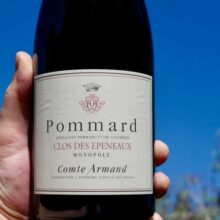
Pinot Noir from Pommard, Côte du Beaune
Background hints of wood can be found on the ripe and nicely fresh aromas of poached plum, black cherry and violet. The round, velvety and rich medium weight plus flavors possess fine mid-palate concentration before culminating in a youthfully austere, serious, compact and sneaky long finale. This potentially outstanding effort could use better depth so at least some patience should prove beneficial and 12 to 15 years would be better still. (the 5+ ha Clos is composed of approximately 80% Peti
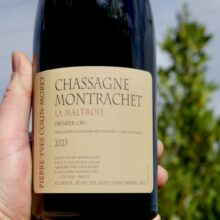
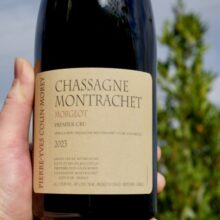
Chardonnay from Chassagne-Montrachet, Côte du Beaune
Offering aromas of white flowers, crisp green orchard fruit and toasted nuts, the 2023 Chassagne-Montrachet 1er Cru La Maltroie is medium to full-bodied, satiny and incisive, with tangy acids and a long, saline finish.William Kelley, The Wine Advocate 90-92 PointsHere too there is a very much suggestion of the exotic with its aromas of pear and white peach along with a much broader array of floral elements. The succulent, seductive and suave medium weight flavors flash evident power
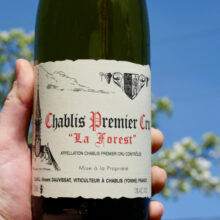
Chardonnay from Chablis, Burgundy
A striking young wine, Dauvissat's brilliant 2020 Chablis 1er Cru La Forest unfurls in the glass with aromas of crisp orchard fruit, orange oil, pear, oyster shell, freshly baked bread and smoke, framed by a deft touch of reduction. Medium to full-bodied, deep and multidimensional, it's taut and concentrated, with racy acids, chalky structuring and a long, searingly mineral finish. Recent years have delivered so many brilliant renditions of La Forest that it's hard to pick a favorite between the
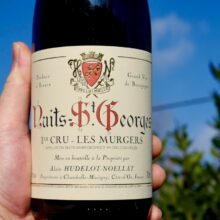
Pinot Noir from Vosne-Romanée, Côte-de-Nuits
A more deeply pitched nose freely offers up its aromas of plum, earth and a whiff of the sauvage. The delicious and vibrant, if not especially dense, medium weight flavors possess good punch and focused power on the mildly austere, compact and built-to-age finale. This should age gracefully over a 12 to 15 year window and hold for another decade thereafter.Allen Meadows, Burghound 91-93 PointsThe 2022 Nuits-Saint-Georges 1er Cru Les Murgers unfurls in the glass with aromas of plums,
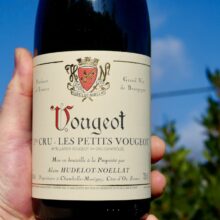
Pinot Noir from Vougeot, Côte-de-Nuits
This too is cool, airy and spicy with its essence of red currant, cherry and crushed fennel aromas. The notably finer texture of the middleweight flavors is immediately evident as there is a lilting but punchy mouthfeel, all wrapped in a dusty, silky and refined yet firm, serious and youthfully austere finish. I very much like the balance and this too should be more than capable of rewarding a decade plus of keeping.Allen Meadows, Burghound 91-93 PointsThe 2022 Vougeot 1er Cru Les Pe
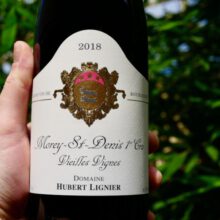
Pinot Noir from Morey-Saint-Denis, Côte-de-Nuits
The 2019 Morey-Saint-Denis 1er Cru Vieilles Vignes is shaping up beautifully, mingling aromas of dark berry fruit, orange rind, espresso roast, forest floor and warm spices in an incipiently complex bouquet. Medium to full-bodied, layered and concentrated, it's deep and complete, its serious long-haul structure largely concealed by a lively core of fruit. As usual, this "baby Clos de la Roche" derives from a parcel planted in the 1930s and 1940s that straddles the climats Faconnières and Chenev
No wines match your filters
Try removing a filter or broadening your selection.
We couldn't load the wines just now.
You've seen all wines