
Why so many wines in one go?
The importer of these wines offers large numbers of wines in one hit. They are often limited in availability with a short timeline to request wines. To give you the best opportunity to grab what you want we are offering them all at once.
Why an Expression of Interest?
Given the limited nature of these wines we often have to share them around. The expression of interest allows us to work hard for you to secure the number of bottles you desire of your chosen tipple.
**Pricing is best net for 1 bottle or 1 million**
How does it work?
Fill it out the order form:
or
Just email a list of what you’d like [email protected]
**If you have substitutes or specific requests please let us know when you email.**
As volumes are locked in we confirm secured allocations we can offer you.
We invoice for payment at that time.
ETA and Delivery
The wines will be arriving by refrigerated container , first shipment in March/April 2026 & 2nd shipment in June 2026.
Given the warmer weather at this time of the year, our heat policy will apply to all shipping.
Wine will be held at our climate-controlled storage facility with a backup power supply until such time as it is safe to ship.
Got any questions?
Call us on 1300 811 066 or Contact Us here.
The Domaines
Domaine de la Pousse d’Or
Domaine de la Vougeraie
Domaine Comte Armand
Domaine Henri Gouges
Domaine de Montille
The 2023 Vintage
William Kelley on the 2023 Vintage
Revisited from bottle at several estates, the 2023s are generally showing well, and sometimes exceptionally so. The white wines, generously endowed with puppy fat from barrel, reveal more terroir differentiation than expected, and more precision too. Already expressive, they will offer broad drinking windows. The reds, given the abundance of the Pinot Noir crop, are naturally more variable. Most are charming and open, with a succulent but sun-kissed profile, and will make friends young. At their best, however, where producers were able to achieve more density and texture—obtained the hard way, in the vineyard—to match with the inherent sensuality of the vintage, the 2023 reds hit higher-than-anticipated highs.
Burghound on the 2023 Vintage
On the Whites
The key things to know about the 2023 whites: at their best, they rival, though do not surpass, the best wines of the last decade. The yields though do sometimes show and even though this is less of a concern with whites than it is with reds, that doesn’t mean that it is of no concern as some wines are indeed dilute. High yields also seriously complicate picking date decisions and whenever there is uncertainty, not everyone is going to make the optimum choice for any given vineyard. This of course contributes to variability and sometimes even within the same range of wines. So, the reality of the ’23 whites is that quality, at its best, is excellent but more often, it’s variable. On the plus side, very good to excellent wines were made up and down the hierarchy so it won’t be necessary to buy the more expensive 1ers and grand crus to obtain fine quality.
I believe that once you taste a few [whites] of the 2023s, you will see how refreshing and inviting they are. It’s a vintage to buy and in reasonable quantity as the wines should drink reasonably well young but amply reward mid-term keeping, and in some cases, even longer-term cellaring.
First, one of the great positives of the 2023 vintage is that, despite the blazing hot harvest conditions, the average wine is fresh and bright with fine terroir transparency. The vivacity is aided considerably by the fact that alcohols are, mostly anyway, very reasonable with adequate, though by no means high, acidities. In short, the wines are, for lack of a better term, just fun to drink. I want to take proper pains though to underscore that fun in this case does not mean simple or banal, just that they have sufficient underlying tension such that the first glass practically invites the second. Expressed differently, the 2023s have that lovely ‘drinkability’ factor that distinguishes them from such vintages as 2003, 2005, 2009, 2015 and 2018.
The second, and perhaps most important, virtue of the 2023 whites is how well-balanced they are, at least when they are not dilute, which can happen. This is a critical component of the drinkability factor that I cite above as they have enough of everything but not too much of anything. Readers might well wonder how a vintage with at best average acidities, and often noticeably lower than that, could produce so many well-balanced wines? It’s a fair question and one that the Burgundians themselves are not entirely sure about. Some, perhaps attracted by the convenience of the potential explanation, aver that it is the pronounced citric character that many hot vintages seem to routinely produce which is serving as a sort of substitute acidity. Perhaps, and this is not entirely implausible. After all, balance is a theoretical construct based on all the elements in a given wine, not simply acidity, even if it is thought by most to be the most critical. So if some other component, this citric character for instance, is possibly compensating in a fashion, who’s to say that such wines are not balanced just because the acid levels, and associated pHs, are not exactly textbook? Whatever the explanation, the average 2023 white is indeed wellbalanced and this obviously contributes enormously to their overall appeal.
So, if the 2023 whites are fresh, vibrant, possess good terroir transparency and lovely balance, what’s not to like? Well, for one thing, not all of the wines are nearly so blessed with this ideal combination of elements and second, relatively few of them are going to be described as dense or concentrated. Indeed, if the vintage has an Achilles heel, the bounteous yields are undoubtedly where we would place the blame. In the most egregious cases, the wines can be downright dilute and without much flavor interest or authority. About the best that can be said for them is that they’re wet with only slightly more appeal than water. Happily, such examples are very much in the minority. However, there are enough others that lack real density such that they negatively weigh on the overall quality of the vintage.
It’s important to point out that the better wines, and the wines that will interest you, and that you will find recommended, are not dilute. Granted, they may not be monsters of concentration but again, they have the element of balance that will enable them to be attractive dining companions and, for those who enjoy aging their whites, to do so successfully. Speaking of aging the 2023 whites, most should be reasonably approachable young though the better examples should have no trouble repaying short to mid-term keeping. I would add however that the best 1ers and grand crus should have no trouble repaying a decade or more of cellaring and be the better for it.
On the Reds
There’s no other way to put it: the 2023 Côte de Nuits reds are really variable, from occasionally great to downright disappointing and every permutation in between. Unfortunately, there are more wines in the latter category than excellent to great, but in fairness, that’s often the case. As will be discussed in much greater detail, if there is one key driver of quality in 2023, it was yield management. Of course there are plenty of nuances to that statement that I will also elucidate but it’s important to point out that while chardonnay can be cropped at relatively high levels and still make good to great whites, it’s much more difficult, and thus much rarer, for pinot cropped at higher levels to do so in red.
Before dismissing the potential for quality wine from such abundant yields, it’s worth noting that many aromatically elegant, charming, and seductive wines were produced in 2023. In fact – spoiler alert – I quite enjoy the style of the 2023 reds, which showcase pliant tannins, good terroir transparency, and genuine depth of character.
From the standpoint of wine quality, 2023 produced good quantities of really lovely wines that should provide for delicious drinking early on yet be capable of amply rewarding mid-term cellaring. Stated differently, when the 2023s are good, they’re genuinely wonderful for their sheer exuberance but there are plenty of disappointments.
I used the word ‘fun’ with respect to the 2022 vintage and I think it also reasonably applies to the 2023 vintage in that the style really is charming. Couple that with really beautiful aromatics, supple and relatively fine tannins that contribute to a refined mouthfeel and it’s a lovely combination for enjoyable reds. There’s an old saying that wine only comes in two bottle sizes: those that are too big and those that are too small, meaning that there’s never enough of delicious and satisfying wines and always too much of hard, tannic and grumpy wines. In my view, the better 2023s will come in bottles that are too small.
Another key point is that in reading the above paragraph, one might be tempted to think that the 2023s are unduly fruit-forward but that, again among the better wines, is not true. They are a pleasure to drink as there’s nothing not to like without descending into banality. The discerning Burgundy lover wants pleasure of course but with substance, complexity and intellectual titillation. And this is where the ‘23s have much to offer because even though even the best are not going to wow you with their power and density, they already offer harmonious drinking.
The other aspect of many, though certainly not all, of the 2023 reds is how approachable they are likely to be young. Yes, I understand that winemakers everywhere, and not just in Burgundy, have a strong tendency to tout the virtues of their wines being sufficiently accessible to make for good early drinking yet have the wherewithal to withstand the rigors of long-aging such that they will make for magnificent old bones. While ‘old bones’ is probably not in the cards for the vast majority of ‘23s, good mid-term bones is certainly possible and even likely.
A word about the quality of the tannins in the 2023s is in order because they’re ripe and pliant and, at least for those growers who vinified with sensitivity, match what the mid-palate densities can buffer. This is important because it makes for both balanced wines, but also contributes to their early accessibility. Rarely are they coarse, even in terroirs known for producing rustic wines. I would also point out that while the acidities are, from an analytic point of view, modest, they are sufficient to maintain the balance and vibrancy.
To be sure though, not all the 2023s are cut from this ‘early drinkability’ cloth and many should age successfully over the mid-term and a small minority should repay 15+ years of cellaring. And because there is such good balance, as I mentioned above, 2023 is very much in the modern style that allows for early drinking but moderate aging as well.
Domaine de la Pousse d’Or ☝︎ Index
Check out or existing Pousse d’Or holdings + Explore the Domaine in Full Detail
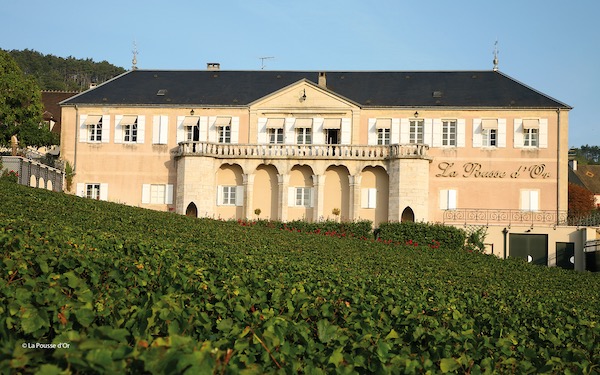
Since the end of the last century, Patrick Landanger has been the owner of the Domaine. He made significant investments in the vineyards as well as in the winemaking facilities and cellars.
He has been joined by his son, Benoit, who has been helping him with the winemaking as from 2013. Their ambitions on quality are reflected in the deep respect of the terroirs they run. The biodynamic certification will complete this choice.
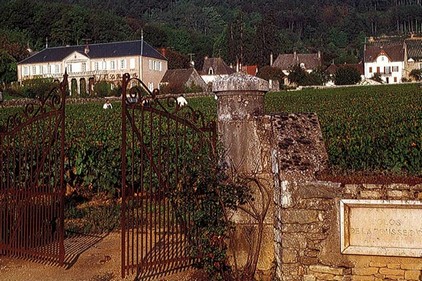 Meet Benoit Landanger and learn about the history of Domaine de la Pousse d’Or in the video below:
The 2023 Vintage at Domaine de la Pousse d’Or
From Burghound
Benoît Landanger, who directs this 17.4 ha domaine, told me that 2023 was “quite frankly super-stressful. Despite all our efforts to control them, the yields were high and maturities just weren’t budging. I remember wondering over and over exactly what I was going to do with a bunch of fruit that wasn’t adequately ripe? And then, hope against hope, a heat wave arrived and finally maturities began to rise and I began to regain confidence that perhaps we could make something interesting after all. Ultimately, I chose to begin picking our whites on the 7th of September and the reds on the 14th. It was necessary to pick extremely fast because once the maturities arrived, they did so with almost alarming speed. So, not only was it necessary to pick fast but the fruit had to be processed fast as well. To this end, I installed huge coolers in the cuverie so we could immediately reduce the temperatures of the fruit as we couldn’t very well have the fermentations beginning before the fruit was transferred to the fermenters!
The chardonnay was essentially spotless but the pinot was, in all honesty, spotty and required a very thorough sorting. To provide an idea of the sheer scope of the challenge, I estimate that we rejected fully 25% of the crop for one reason or another and given that yields were high to begin with, it would be fair to describe it as an immense job. In the end we wound up with yields that averaged right at 40 hl/ha with potential alcohols of between 13.2 and 13.7%. Thankfully we had no problems with the fermentations and I’m happy to report that they wines are coming along nicely. I’m not sure how they’re going to turn out but for the moment, I remain optimistic.” I would point out that not all of the wines in the range were presented, and those include the Corton-Clos du Roi, the Echézeaux, the Gevrey 1er La Perrière and the three wines that were raised in amphora, which is to say the Volnay 1ers of En Caillerets, Clos de la Bousse d’Or and the Clos des 60 Ouvrées.


WHITE
PULIGNY-MONTRACHET “Clos le Cailleret” Premier Cru $362 MAGNUM $729
CHEVALIER-MONTRACHET Grand Cru $1,727
RED
SANTENAY “Clos Tavannes” $169 Half $97
VOLNAY “En Caillerets” Premier Cru $233
VOLNAY “Clos d’Audignac” (Monopole) Premier Cru $264
VOLNAY “Clos de la Bousse d’Or” (Monopole) Premier Cru $273 MAGNUM $600
VOLNAY “Clos des 60 Ouvrées” (Monopole) Premier Cru $289 MAGNUM $631
CORTON “Les Bressandes” Grand Cru $314
CORTON “Clos du Roi” Grand Cru $329
CHAMBOLLE-MUSIGNY $241 Half $126
CHAMBOLLE-MUSIGNY “Les Grosseilles” Premier Cru $358
CHAMBOLLE-MUSIGNY “Les Charmes” Premier Cru $481
CHAMBOLLE-MUSIGNY “Les Amoureuses” Premier Cru $1,156
CHARMES-CHAMBERTIN Grand Cru $1,146
ECHEZEAUX Grand Cru $1,200
BONNES-MARES Grand Cru $1,248
CLOS DE LA ROCHE Grand Cru $1,248
WHITE REVIEWS
Issue 99 – Allen Meadows’ Burghound – Domaine de la Pousse d’Or (Volnay)
PULIGNY-MONTRACHET “Clos le Cailleret”: (from a .70 ha parcel; raised in 350-liter barrels). Agreeably fresh and bright aromas include those of Granny Smith apples, lemon-lime, spice and wet stone. The sleek, intense and beautifully textured middle weight flavors flash evident minerality on the youthfully austere, lemony and sneaky long finish. This balanced effort is built to repay mid-term keeping out to perhaps a decade. 91-93/2031+ ♥ Outstanding
CHEVALIER-MONTRACHET: (from a .125 ha parcel). A deft application of wood can be found on the slightly riper nose of citrus confit, pear and apple compote, and a plenitude of floral elements. There is excellent detail and punch to the acceptably concentrated and overtly stony flavors that display excellent length on the powerful, balanced and chiseled finale. This is really quite classy and a wine that should also amply repay a decade plus of keeping. 91-94/2033+
RED REVIEWS
Issue 98 – Allen Meadows’ Burghound – Domaine de la Pousse d’Or (Volnay)
SANTENAY “Clos Tavannes”: Notably ripe yet fresh aromas include those of poached plum, newly turned earth and a whiff of dark currant. The sleek, delicious and nicely vibrant flavors possess both good detail and evident minerality on the balanced and solidly persistent finish. Better depth would be desirable so a few years of keeping would help. 89-91/2029+
VOLNAY “En Caillerets”: A much spicier, and less earthy, nose freely offer up its ripe, fresh and airy aromas of red cherry, dark raspberry and violet nuances. The elegant, pure and wonderfully textured flavors are silky though solidly punchy, all wrapped in a youthfully austere and firm finale that is akin to rolling a small pebble around the mouth. Excellent. 90-93/2031+ ♥ Outstanding
VOLNAY “Clos d’Audignac” (Monopole): (a northeast facing vineyard that rarely gets the same degree of sunlight as the other Volnay 1ers in the portfolio and thus it can often be more Pommard-like than Volnay in character). As is usually the case, the brooding nose is earthier and more deeply pitched with its array of humus, dark berry and discreet spice wisps. There is fine energy, if not the same mid-palate density, to the lightly stony flavors that are more refined than usual on the solidly powerful, firm and built-to-age finale. Clos l’Audignac is always better in warmer vintages and such is the case in 2023. 89-92/2033+
VOLNAY “Clos de la Bousse d’Or” (Monopole): A perfumed and elegant nose freely reveals its aromas of mostly red berry, anise and exotic tea. The caressing and punchy middle weight flavors possess a highly refined mid-palate texture that contrasts moderately with the raspy and borderline chewy finish that comes up a bit short. As the description makes clear, this is presently awkward and while it may well better harmonize before it’s bottled, that is an open question. 88-91/2031
VOLNAY “Clos des 60 Ouvrées” (Monopole): An exuberantly spicy nose combines notes of exotic jasmine tea, anise, violet, acacia, essence of red cherry and the barest hint of wood. The super-sleek middle weight flavors possess a really lovely underlying tension that adds a sense presence to the overtly stony, youthfully austere and strikingly long finale. This is terrific with the potential to match. 91-94/2033+ ♥ Sweet spot Outstanding
CORTON “Les Bressandes”: (from a .5 ha parcel). An earthy and moderately sauvage-inflected nose blends notes of both red and dark currant with newly turned earth and a pretty floral top note. I like the texture of the sleek, but not dense, flavors that culminate in a firm, dusty and compact finale. This is on the lighter side for a Corton but the supporting tannins make clear that it will still be capable of extending aging. 89-92/2033+
CHAMBOLLE-MUSIGNY: (from parcels totaling 1.41 ha). A perfumed and elegant nose is comprised by aromas of the essence of various red berries plus an array of subtle spice nuances. The lacy and fine, but not particularly dense, flavors exude evident minerality on the vibrant, inviting and sneaky long finish. Lovely and while this could use better depth, a few years of cellaring should certainly help. 88-91/2028+
CHAMBOLLE-MUSIGNY “Les Amoureuses”: (from a .20 ha parcel). This is aromatically similar to the Chambolle villages but with appreciably more spice and floral elements. The beautifully detailed, if again not especially dense, flavors display excellent vibrancy that carries over to the youthfully austere and overtly pit cherry pit-inflected finish that, somewhat surprisingly, is quite short. It’s not clear whether time will help as the finish is balanced. 89-92/2031+
CHARMES-CHAMBERTIN: (from a .26 ha parcel in Mazoyères). A more elegant and very pretty nose is composed of red cherry, earth and a hint of the sauvage. The lighter weight but agreeably textured and punchy flavors possess surprisingly good power on the firm, dusty, youthfully austere and better-balanced finale. 90-93/2033+
BONNES-MARES: (from a .17 ha parcel). A slightly riper nose of both red and dark pinot fruit is laced with plenty of floral nuances, especially violet. The delicious and vibrant, though not especially dense, flavors are supported by relatively finegrained tannins before terminate in a compact, dusty and powerful finish that isn’t chewy but it is raspy. 89-92/2033+
CLOS DE LA ROCHE: (from a .32 ha parcel). A well-layered nose speaks of purple fruit, particularly plum, spice, earth and a hint of game. There is good focus and verve to the delicious, if again not especially dense, flavors that conclude in a compact, dusty and mildly attenuated finish that is borderline drying. The supporting tannins seem ripe so it’s not clear if this will better harmonize in time but my projected range confers the benefit of the doubt. 89-92/2033+
Domaine de la Vourgeraie ☝︎ Index
Check out or existing Vougeriae holdings + Explore the Domaine in Full Detail
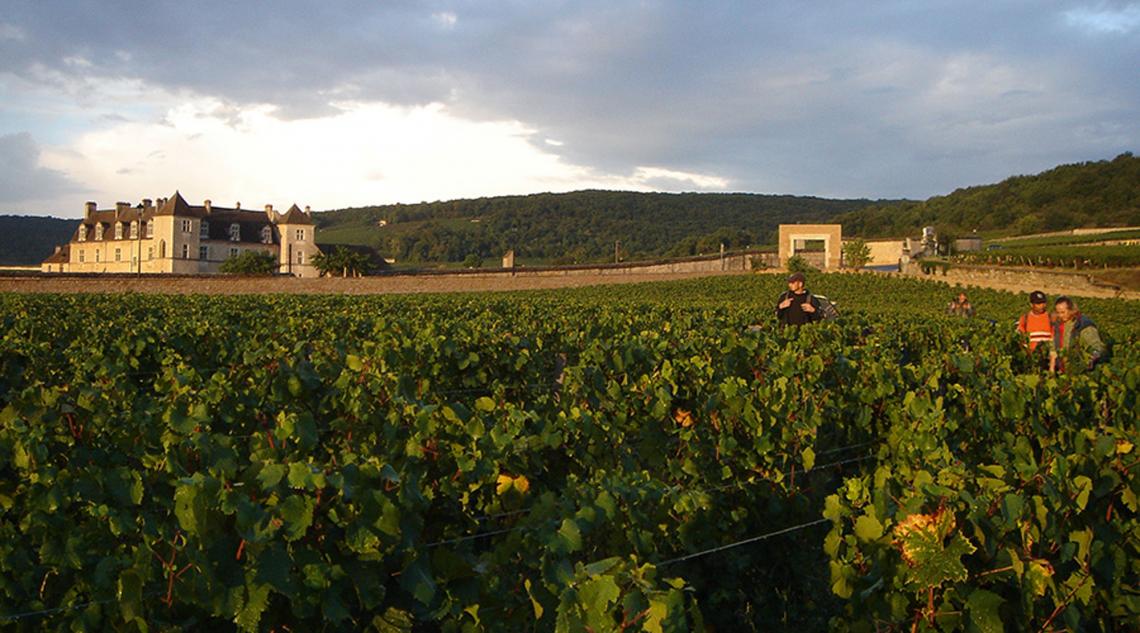
The Domaine de la Vougeraie was created by bringing together the Boisset family’s vineyards and other wine estates acquired over the years. The first of these goes back to 1964 with the first plot, Les Evocelles, in the village of Gevrey-Chambertin, which was bought by our father when he started out.
More than 20 years later came a second phase, with the addition of more vineyards including our first foothold on the Côte de Beaune. In 1996, the vineyards which today make up the third of our estate on the Côte de Beaune were acquired. This was followed by the acquisition of Le Clos Blanc, the famous monopole which produces its renowned golden nectar. These vines in our family village were the natural inspiration for the Domaine de la Vougeraie, like a return to our childhood roots.
Nathalie & Jean-Charles Boisset
A patchwork of 74 plots covering 42 hectares make up the estate, two-thirds on the Côte de Nuits, one-third on the Côte de Beaune, together producing 36 appellations. At the heart is the diamond set among rubies, the legendary monopole of Vougeot Premier Cru Le Clos Blanc de Vougeot.
Lovingly tended soils, low yields for concentrated fruit, which is then handled with extreme care throughout growing cycle, followed by hand-stitched vinification and ageing for each plot: All of this contributes to a style that is all about elegance and the continual quest for a precise expression of terroir.
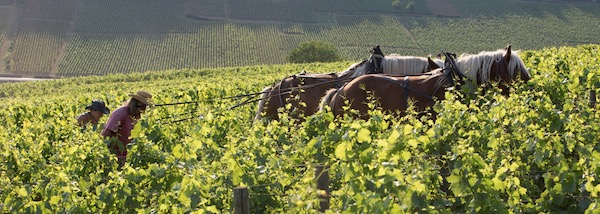
The 2023 Vintage at Domaine de la Vougeraie
From Burghound
Sylvie Poillot, who is the general manager of this now 52 ha domaine of which 70% of the production is in red, told me that the 2023 growing season was “basically hot and dry but not extreme in the fashion of 2020 or 2022. The fruit set was huge so it was imperative to drop fruit so that we could obtain reasonable maturities. There wasn’t much disease pressure so while I wouldn’t call the growing season simple, it was definitely easier than normal. We began the harvest with the whites on the 30th of August and then attacked the entry level reds on the 3rd of September and finally the grand cru reds on the 8th. The picking was long though and we didn’t finish until the 29th and there was a significant difference in maturities between the reds and the whites. With vineyards in as many communes as we have, and with 170 different parcels no less, the sorting required was quite variable as some had almost none and others were more involved. Yields were generous without being excessive as they averaged around 43 hl/ha for the reds and about 53 hl/ha for the whites.
Potential alcohols were moderate at between 12.5 and 13% and we had no difficulties with the fermentations. As was the case last year, I chose to vinify lightly, preferring to emphasize elegance and refinement rather than extraction. As to the wines, I like this vintage a lot. I wasn’t sure what to expect given the yields but there is excellent terroir transparency and the quality seems to be improving month-by-month. Moreover, there is a certain charm and tenderness to the wines, especially the reds, which should allow them to be enjoyed young if desired.” There are a number of quality efforts up and down the appellation hierarchy but the Bonnes Mares and Musigny really stood out.


WHITE
CHARDONNAY “Terre de Famille” $80
PULIGNY-MONTRACHET $202
PULIGNY-MONTRACHET “Champ Gain” Premier Cru $331
CHASSAGNE-MONTRACHET Morgeot “Clos de la Chapelle” (Monopole) Premier Cru $331
VOUGEOT “Le Clos Blanc de Vougeot” (Monopole) Premier Cru $410
CORTON-CHARLEMAGNE “Le Charlemagne” Grand Cru $596
BATARD-MONTRACHET Grand Cru $1,234
BIENVENUES-BATARD-MONTRACHET Grand Cru $1.288
CHEVALIER-MONTRACHET Grand Cru $1,661
RED
PINOT NOIR “Terre de Famille” $85
CHAMBOLLE-MUSIGNY $277
GEVREY-CHAMBERTIN $198
GEVREY-CHAMBERTIN “Les Evocelles” $235
GEVREY-CHAMBERTIN “Bel Air” Premier Cru $358
VOUGEOT “Les Cras” Premier Cru $289
CHASSAGNE-MONTRACHET Morgeot “Clos de la Chapelle” (Monopole) Premier Cru $331
CORTON “Clos du Roi” Grand Cru $410
CHARMES-CHAMBERTIN “Les Mazoyeres” Grand Cru $969
CLOS de VOUGEOT Grand Cru 750ml $729 Magnum $1,523
BONNES MARES Grand Cru $1,234
MUSIGNY Grand Cru $2,513
WHITE REVIEWS
Issue 99 – Allen Meadows’ Burghound – Domaine de la Vougeraie (Prémeaux-Prissey)
CHARDONNAY “Terre de Famille”: (from vines in the Hautes Côte de Nuits and young vine fruit in Bienvenues and Clos Blanc). Ample amounts of petrol character are present on the nose of straw, white flower, pear and apple aromas. The succulent, round and easy-going flavors possess acceptable verve that carries over to the lingering if mildly sweet finish. To enjoy young. 86/now+
PULIGNY-MONTRACHET: (from Noyer Bret, Au Paupillot and La Rue aux Vaches). A more floral suffused nose speaks of ripe yet cool notes of apple, pear and crushed anise. The delicious and vibrant, if not especially dense, flavors display a lovely texture on the moderately dry and balanced finale that would benefit from developing more depth. 87-90/2027+
PULIGNY-MONTRACHET “Champ Gain”: Secondary fermentation aromas dominate the nose at present. On the palate, the medium weight flavors are again fleshy and generously proportioned while possessing a more sophisticated texture though the finish also displays the secondary fermentation character. While this will lmost certainly properly clean up, its difficult to read today so my projected range should be taken as a general approximation. 89-91/2029+
CHASSAGNE-MONTRACHET Morgeot “Clos de la Chapelle” (Monopole): (a new 4.48 ha monopole, of which 3.5 ha is planted to chardonnay; 2021 was the first vintage). A broad-ranging nose presents aromas of tangerine peel, petrol, poached pear and a whiff of petrol character. The caressing and rich yet solidly powerful larger-bodied flavors display fine length on the robust, long and agreeably dry finale. This isn’t refined but then again, one doesn’t buy Morgeot for refinement. 90-92/2028+
VOUGEOT “Le Clos Blanc de Vougeot” (Monopole): (a monopole of de la Vougeraie). Ripe yet cool and attractively layered aromas are composed by notes of petrol, lemon-lime and a variety of white orchard fruit scents are trimmed in just enough wood to notice. There is both fine volume and richness to the caressing and succulent medium-bodied flavors that exude a prominent minerality on the youthfully austere, balanced and impressively long finale. This is quite good and well-worth checking out plus it should amply repay mid-term keeping. 90-93/2031+ ♥ Outstanding
CORTON-CHARLEMAGNE “Le Charlemagne”: (from parcels of .28 ha in En Charlemagne and .22 ha in Le Charlemagne; note that this could also be declared as Corton-Charlemagne). A whiff of phenolic character (olive oil nuances) can be found on the aromas of ripe and fresh green apple, spice, wet stone and a hint of tangerine peel. The rich, concentrated, powerful and mouth coating large-bodied flavors possess outstanding length on the balanced and youthfully austerefinale. This bold and robust effort doesn’t offer much refinement but if your taste runs to a ‘take no prisoners’ style of white, this is for you. 91-94/2031+
BATARD-MONTRACHET: (from a .38 ha holding divided into 3 parcels, two of which are on the Chassagne side and the remainder on the Puligny side of the divide). A more floral-infused nose somewhat reticently displays its aromas of ripe white orchard fruit, spice and a similar phenolic hint. The superbly rich, even opulent, and exceptionally concentrated big-bodied flavors are almost thick with evident power that suffuses the long if not especially complex finale that isn’t quite as vibrant. This is clearly good but it’s not at the same level as the best in the range. 91-93/2030+
BIENVENUES-BATARD-MONTRACHET: (from a .46 ha holding). Elegant and perfumed aromas include those of honeysuckle, Asian style tea, the essence of spiced pear and a lovely combination of floral wisps, especially carnation and acacia. There is an abundance of sappy dry extract on the gorgeously textured medium-bodied flavors that possess superb length on the impeccably well-balanced finale. This stunningly good effort isn’t as concentrated as the Bâtard or as mineral-driven as the Chevalier but in 2023, it appears that the BBM takes best in the Vougeraie show, at least at this early juncture. 92-95/2031+
CHEVALIER-MONTRACHET: (from a .15 ha holding). A beautifully layered, cool and pure nose reluctantly reveals its aromas of Granny Smith apple, acacia, crushed fennel, spice and a wide range of citrus elements. The racy and super-sleek largescaled flavors possess both a gorgeous texture and fine delineation on the impressively powerful, focused, balanced and admirably long finish where a touch of wood slowly appears. This needs to develop more depth but as always with Chevalier, patience is your friend. 92-94/2031+
RED REVIEWS
Issue 97 – Allen Meadows’ Burghound – Domaine de la Vougeraie (Prémeaux-Prissey)
PINOT NOIR “Terre de Famille”: (this is now 100% from the Hautes Côtes de Nuits and young vines everywhere in the Côte). An exuberantly pinot-like nose of various red berries, spice and soft earth leads to suave, round and punchy middle weight flavors that conclude in a refreshing finish that offers better than average depth and persistence. To enjoy young. 87/Now+ ♥ Outstanding Top value
GEVREY-CHAMBERTIN “Les Evocelles”: (from a huge holding of 3.15 ha of vines on the Brochon side). Firm reduction overshadows everything save for a touch of floral character. There is notably better volume and a denser mouthfeel to the more mineral-driven flavors that also possess good detail on the balanced, long and more complex finale. This is lovely and worth checking out. 89-92/2031+ ♥ Outstanding Top value
GEVREY-CHAMBERTIN “Bel Air”: (from vines that sit above Clos de Bèze). An expressive and very pretty nose freely offers up its aromas of black pinot fruit that are also nuances by hints of violet and kirsch. The much finer but not denser medium weight flavors possess a super-sleek mouthfeel along with evident minerality on the balanced, lingering and youthfully austere finale that would benefit from developing more depth. 91-92/2031+ ♥ Outstanding
CHAMBOLLE-MUSIGNY: (a blend of Argillières, Veroilles, Condemennes, Derrière le Four and Les Fremiers where ~20% of the blend is from the 1ers Les Baudes and Les Gruenchers). A perfumed and exceptionally floral-suffused nose speaks mostly of red cherry and kirsch nuances. The refined if not especially dense middle weight flavors also exude a subtle minerality that adds a sense of lift to the beautifully textured, lingering and energetic finish. One to check out. 89-91/2030+ ♥ Outstanding
VOUGEOT “Les Cras”: Moderate wood influence can be found on the ripe and equally well-layered nose of black pinot fruit, earth, violet and a top note of kirsch. The more powerful and more intense middle weight flavors exude a bracing minerality that adds lift to the lingering finish where the texture contrasts noticeably as it’s borderline rustic. This is a lso quite firm and a wine that should repay extended keeping. 90-92/2033+
CHASSAGNE-MONTRACHET Morgeot “Clos de la Chapelle” (Monopole): (2021 was the first vintage; from a holding of .98 ha). Enough wood to merit mentioning is present on the earthier aromas of cool raspberry and cherry. The sleek though not dense medium weight flavors do possess good richness before firming up on the sneaky long and balanced finish where a touch of Chassagne rusticity creeps in. 88-91/2030+
CORTON “Clos du Roi”: (from a .50 ha holding; 20% whole clusters). Firm reduction overshadows the fruit at present. Once again the mouthfeel of the suave and caressing medium-bodied flavors is quite sleek as the supporting tannins are dense but fine on the lingering and balanced if youthfully austere and compact finish. At least some patience strongly advised. 91-94/2035+
CHARMES-CHAMBERTIN “Les Mazoyeres”: (from a .74 ha holding; 100% whole clusters). Discreet if easily discernible wood influence sets off the ripe and beautifully layered aromas of blue and black pinot fruit, earth, forest floor and soft spice nuance. The moderately dense and intense broad-shouldered flavors coat the palate with sappy dry extract that also buffers the firm tannic spine shaping the impressively long and well-balanced finale. This too is going to need extended keeping and is not likely to be a wine that will drink especially well before 10 years have passed. 92-95/2038+
CLOS de VOUGEOT: (from an exceptionally well positioned 1 ha parcel situated directly beneath Les Petits Musigny that is combined with another less well located .35 ha parcel close to the main road; 80% whole clusters). This is also very firmly reduced and revealing nothing aromatically. There is fine volume to the delicious and suave but nicely detailed medium weight plus flavors that conclude in a classically austere, powerful, compact and serious finish. This is very firm and also a wine that is definitely going to need extended keeping. 91-94/2038+
BONNES MARES: (from a .70 ha parcel of vines near the Morey border, 50% of which were planted in 1902; 100% whole clusters). A positively gorgeous nose is comprised by a broad range of floral elements that include violet, lilac and rose petal, along with red and dark currant, crushed anise and a whiff of exotic tea. On the palate there is an equally gorgeous texture to the seductive yet powerful medium weight plus flavors that display outstanding length on the equally built-to-age finale. This tautly muscular effort is certainly no shrinking violet but in the context of what is typical for Bonnes Mares, it is a wine of finesse. 93-95)/2038+
MUSIGNY: (from two parcels totaling .21 ha; 100% whole clusters). Restrained, elegant and ultra-pure aromas are equally floral-infused but even spicier with a blend of black cherry, jasmine tea, cinnamon and orange peel scents. The mouthfeel of the intense and solidly concentrated flavors matches the nose for refinement while exuding evident minerality on the stunningly long, balanced and very classy finale. This is superb and one to look for. 93-96/2038+
Domaine Comte Armand ☝︎ Index
Check out or existing Comte Armand holdings + Explore the Domaine in Full Detail
Domaine des Epeneaux owes its name to the Clos des Epeneaux, a magnificent parcel of five hectares acquired by Nicolas Marey at the end of the 18th, beginning of the 19th century.
In 1828, the Clos des Epeneaux and related buildings, known as the Fief de Rancy, situated in the centre of the village of Pommard, became part of the heritage of the family of the Count Armand.
The estate remained as such until 1994 when it annexed a vineyard plot situated in the neighbouring village of Volnay, then later parcels from the village of Auxey-Duresses.
Today, Domaine des Epeneaux constitutes a total surface area of 9 hectares, and is more committed than ever to producing wines that are true expressions of their terroir.
In 2014, Benjamin Leroux, after 15 vintages of passionate devotion and pleasure, handed the reins over to Paul Zinetti who had worked with the Domaine since 2010.

The Style
The wines of Pommard have historically been some of the most tannic Pinots on the Côte. Under Benjamin Leroux’s leadership, they soften considerably. Something the current winemaking team has continued.
Zinetti prefers to do long maceration with gentle extraction, including keeping the wines on their skins at 28 to 30 degrees C. for 10 to 14 days after the fermentations have finished. He noted that the color and structure were slow to come in 2016, in part because the warm September weather (the estate started harvesting on September 23) made it difficult to conduct more than a three-day pre-fermentation cold soak. That was in direct contrast to 2015, when it was particularly important to avoid overextraction: he only needed to do a total of four punchdowns followed by only pumpovers for the ‘15s. Incidentally, beginning in 2014, Zinetti has been able to keep more whole berries with a new destemmer. As there is now more intracellular fermentation, he told me, “vinifying with stems is now a bit less important.” In another attempt to make somewhat gentler wines here, Zinetti began using a vertical press in 2015, which he says gives a “natural filtering of the grapes and softer, rounder tannins. We can press strongly but it’s never overdone.” Stephen Tanzer
The 2023 Vintage at Comte Armand
From Burghound
Régisseur Paul Zinetti commented that the 2023 growing season “was not especially challenging though this isn’t to say that it wasn’t necessary to be constantly vigilant as it seemed like mildew was constantly lurking in the background. We picked from the 6th of September and there was quite frankly a huge amount of sorting required for just about everything. This is to say fruit that was either not sufficiently ripe, too ripe, or damaged in some fashion. I would estimate that we threw out the rough equivalent of 6 hl/ha and wound up with a net yield of 34 hl/ha in the Clos. For the rest, we were more in the 40 to 42 hl/ha range with potential alcohols of between 13 and 13.5%. The vinifications were straightforward in both colors and overall, I quite like the style of the ’23s as they are super fresh and vibrant, indeed they already make you feel like drinking them. As such, they should make for attractive early drinking but I see no reason why they shouldn’t age well over the medium-term.” I would point out that Zinetti used no whole clusters for the vinifications except for the straight Bourgogne, which saw 40%.


Winemaking, from the Winery
Wines are the very image of the quality of fruit they derive from.
With utmost respect toward the grape, our harvest is 100% de-stemmed, keeping most of the berries whole, not crushed.
The winemaking process then goes through three distinct stages:
Pre-fermentation maceration period of 5-8 days at a temperature of 13-14°C
Spontaneous alcoholic fermentation between 5-10 days
Post-fermentation maceration of 3 to 15 days depending on the vintage
Most years, the total maceration period lasts about 4 weeks, which is relatively long for traditional winemaking in Burgundy.
We believe it is far more beneficial to give the extracted matter sufficient time to structure itself into something more stable and harmonious during vinification.
The moon, largely guiding and presiding over our rhythm of labour, has had a significant influence in both our vineyards and vat house since the 2001 vintage. For example, our 4-week maceration corresponds to a lunar cycle (that determines the fluids of the earth). The wines are produced according to a continuous 28-day period to best preserve the vibrational state of water in the grapes at the moment of the cutting.
If this notion seems far-fetched foremost amateurs, it allows us, notwithstanding the rigorous lunar calendar, to obtain more precise wines with better minerality. Never forget: wine is constituted principally of water.
Depending on the appellation and age of the vines, our wines will age18 to 24 months in barrels, with a percentage of new oak ranging from 0% for the Village appellations to 30% for the old vines of Clos des Epeneaux.

Drinking Comte Armand Wines, from the Winery
Most of our wines are neither fined nor filtered to preserve the utmost quality. However, in spite of microbiological controls throughout the ageing process, we strongly advise that they be kept around a temperature of 12°C.
Don’t hesitate to decant (in a closed decanter) young vintages at cellar temperature.
Generally speaking, we advise patience. Even though by decanting young wines will open up, they will in no way offer the richness one can expect from those that mature a minimum of 10 to 15 years.
WHITE
BOURGOGNE Aligoté $83
RED
BOURGOGNE Rouge $93
VOLNAY $163
AUXEY-DURESSES Rouge Premier Cru $190
VOLNAY “Les Fremiets” Premier Cru $343
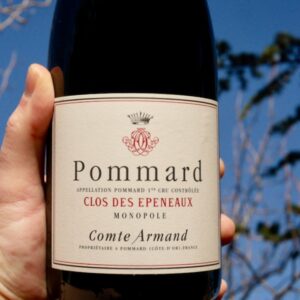
POMMARD “Clos Epeneaux” Premier Cru $475
WHITE REVIEWS
Issue 99 – Allen Meadows’ Burghound – Domaine Comte Armand/Clos des Epeneaux (Pommard)
BOURGOGNE Aligoté: A very aligoté-like nose features notes of spicy green apple and citrus nuances where the latter can also be found on the vibrant, delicious and nicely detailed flavors that flash evident minerality on the clean, dry and refreshing finale. One to two years of keeping should see this well-made effort drinking perfectly. 87/2026+ ♥ Outstanding Top value
RED REVIEWS
Issue 98 – Allen Meadows’ Burghound – Domaine Comte Armand/Clos des Epeneaux (Pommard)
BOURGOGNE Rouge: Here the expressive nose is completely different from the Hautes Côtes with a much more floral emphasis on the cool red berry aromas. In the same fashion, the delicious and vibrant flavors are on the lighter side but equally inviting on the dusty and lingering bitter pit fruit-inflected finale. To enjoy young for its fruit. 86/2026+
AUXEY-DURESSES Rouge Premier Cru: A distinctly earthy nose is laced with humus nuances on the ripe and fresh black cherry and dark currant scents. Once again the barely middle weight flavors are lighter than usual though I do like the sense of underlying tension suffusing the dusty and youthfully austere finale that is firm enough to repay a few years of keeping. 88-90/2028+
VOLNAY “Les Fremiets” Premier Cru: (from Les Grands Champs and Les Famines). A discreetly floral-suffused nose is comprised mostly of various ripe dark berries and a hint of anise. The vibrant if distinctly austere medium weight flavors possess better volume though the more firmly structured finale needs to develop better depth. I would add that at least a few years of keeping are in order as this is quite compact today. 88-91/2030+
POMMARD “Clos Epeneaux”: (the 5+ ha Clos is composed of approximately 80% Petits Epenots and 20% Grands Epenots; the vine ages run from 18 to 80+ years of age and the wine is raised in ~30% new wood). A ripe, very fresh and agreeably spicy nose reflects notes of dark cherry, cassis and plenty of warm earth character. The sleek, delicious and vibrant middle weight flavors are not particularly dense, at least not in the context of their usual concentration, all wrapped in a beautifully textured, balanced and impressively long finish that also displays a touch of bitter pit fruit. While certainly a nice wine, this is not destined to be one of the all-time great Clos des Epeneaux, at least not from the perspective of longer-term aging, in fact it should drink reasonably well early on. 90-93/2031+ ♥ Outstanding
Domaine Henri Gouges ☝︎ Index
Check out or existing Henri Gouges holdings + Explore the Domaine in Full Detail
Henri Gouges has a long continuous history in Nuits-Saint-Georges. Nuit-Saint-Georges rests on the Southern border of Vosne-Romanée.
The creation of Domaine Henri Gouges was the culmination of four hundred years of family grape farmers. Henri formed the Domaine in 1920, but was soon discouraged with the idea of selling the fruit to négociants. He envisioned a better quality wine from his new Domaine, and by 1933 was producing, bottling and selling directly. It has remained an undivided family property as the transition continued from Henri to his sons Marcel and Michel, to the next generation of Pierre and Christian who have recently turned it over to Gregory and Antoine Gouges.


Located in the heart of the “Cote d’Or” in the village of Nuits Saint Georges, they have grown to thirty-six acres of vineyards and a modern gravity flow winemaking facility where they produce Bourgogne, Village and Premier Cru wines.
Henri’s philosophy from the old maxim, “It is on the vines that great wines are made” has endured through each subsequent generation. Respecting the land, the environment, and the traditions of the region have been at the heart of their winemaking. Great care to nurture the soil and vines has lead to the highest quality fruit while controlling yields for optimum results.
The Style
The wines of Nuits tend not be as masculine as the wine of Gevrey-Chambertin or have the immediate opulence of Vosne.
In the 1990’s Gouges used to make quite chewy reds with whole-bunch and cold soak influence. Over time they have been looking to evolve their style, making finer wines. The videos in the offer show the rebuilt winery, the exceptionally gentle fruit handling, and, berry by berry sorting, with gravity used to move fruit.


The 2023 Vintage at Henri Gouges
From Burghound
The big news here is that the domaine has essentially committed to a joint venture/lease arrangement with Domaine Stéphane Aladame, which is based in Montagny and located in the far southern reaches of the Côte Chalonnaise. As I wrote in Issue 95 explaining the deal: “…Aladame has decided to lease his vineyards to Domaine Henri Gouges in Nuits St. Georges. The arrangement is complicated and involves several different companies but a simple description would be that a new operating entity by the name of “Domaine Cavea – Famille Gouges” will be created. Complicating matters though is that Aladame will keep about one-third of the production, though not necessarily one-third of each vineyard, to continue selling under his name; for example, he will keep all of the fruit from Les Platières but won’t keep any of it from certain others. In concept, though Aladame was not 100% certain, the wines sold under the Domaine Cavea label and his own will be identical. It was also unclear as to whether either entity would continue to produce Crémant de Bourgogne.
Technically all of these changes will result in Domaine Aladame transforming into Maison Aladame. For the moment, the wines will continue to be made in Montagny though that could change over time.” In discussing the deal, Grégory Gouges basically explained that the rationale was that “it’s virtually impossible to expand our production in the Côte d’Or and even with our small négociant activities, consistently sourcing topflight fruit isn’t easy. So, we thought it would be better to try to control quality via a lease arrangement where value can still be found. Stéphane has a reputation as a first-rate vigneron and his vineyards are impeccable so it was a good match for us.”
With respect to the 2023 growing season, Gouges described it as one with “largely very warm and dry conditions with some oidium and mildew pressure but neither were really what I would call problems. However, one of the really interesting aspects of climate change is that Vaucrains and Les Perrières used to be really prone to attacks from both maladies but now it’s Pruliers that seems to be more affected. Otherwise, the only real problem that did cause some concern was a Suzukii fly attack that for some reason hit two of our vineyards so those were subjected to extra sorting care at the harvest, which we chose to begin on the 11th of September. While there was some sorting, especially for the vineyards where we found evidence of the Suzukii flies, the fruit was pretty clean so we were able to pick quickly. Yields were much higher than normal without being excessive at around 42 hl/ha, which is certainly much better than the roughly 28 hl/ha were realized in 2022 as our vineyards were hit by hail.
Potential alcohols were perfect for our preferred style of wine, which is to say between 12.5 and 13.2% so nothing was chaptalized. The vinifications were straightforward and the colors came quickly. We no longer do a cool maceration so the fermentations are more organic and quicker as well though with no loss of extractability. From the standpoint of the style of 2023, it’s perhaps not quite as ripe as 2022 but shares some of its qualities in terms of freshness and generosity though it’s less tannic and should probably drink well a bit earlier.” I was impressed by the quality and several of the wines are warmly recommended. As they have done since 2019, the domaine is now buying in mostly fruit to augment their volume though Gouges noted that they again bought nothing in the Hospices de Nuits auction in 2023 as the prices were, in his opinion, simply too high.
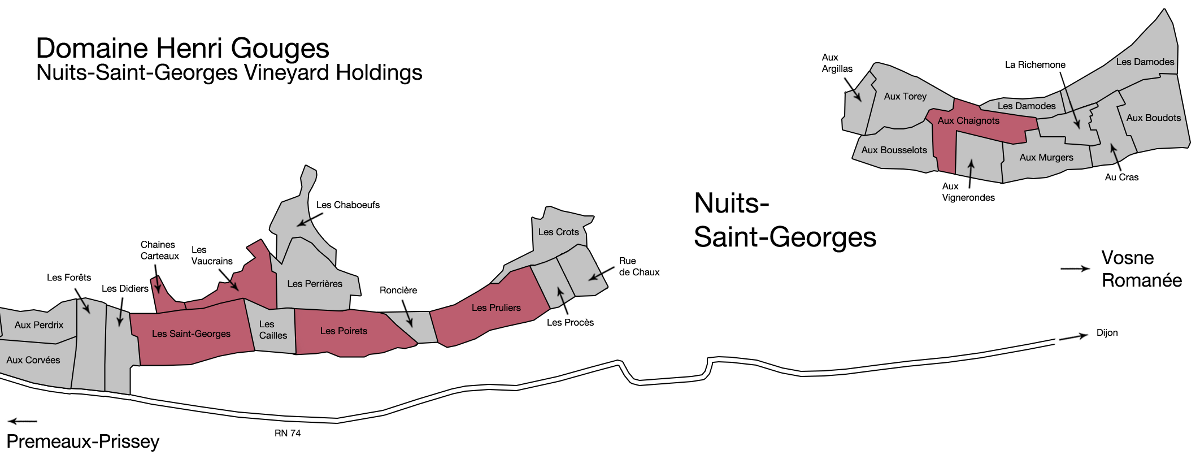
Where are Henri Gouges Vineyards?



WHITE
NUITS-ST.-GEORGES “La Perriere” Premier Cru $320
Domaine CAVEA – Famille GOUGES MONTAGNY Premiere Cru $98
RED
COTE de NUITS Village (Maison) $108
NUITS-ST.-GEORGES $175
NUITS-ST.-GEORGES “Les Chaignots” Premier Cru $237
NUITS-ST.-GEORGES “Clos des Porrets St Georges” Premier Cru $212 MAGNUM $443
NUITS-ST.-GEORGES “Les Pruliers” Premier Cru $320 MAGNUM $658
NUITS-ST.-GEORGES “Les Vaucrains” Premier Cru $421 MAGNUM $894
NUITS-ST.-GEORGES “Les Saint-Georges” Premier Cru $1,252 Magnum $2,313
WHITE REVIEWS
Issue 99 – Allen Meadows’ Burghound – Domaine Henri Gouges (Nuits St. Georges)
NUITS-ST.-GEORGES “La Perriere”: (from white pinot noir, which is better known as Pinot Gouges; the vines were planted in 1947 – the annual production is between 2000 and 2500 bottles). Smoky aromas include those of citrus confit, white orchard fruit, especially pear, and a whiff of fennel. The rich, generously proportioned and supple flavors conclude in a clean and dry though not austere finale. This is already quite forward and could easily be enjoyed basically upon release. 88/2026+
Domaine CAVEA – Famille GOUGES MONTAGNY Premiere Cru: There is a touch of petrol character to the smoky aromas of citrus, apple and a floral top note. The succulent, delicious and forward middle weight flavors display reasonably good persistence, if only average depth, on the clean and dry bitter lemon-inflected finale. To enjoy young though a year or two of bottle aging should help to add complexity. 88/2026+
The new project covers 6.5ha of Montagny 1er cru from six different crus. In 2023 they have been blended into a single wine but in future Coères, Vignes Derrières, Maroques will certainly be bottled apart, smaller vineyards may be assembled. The 2023 was made 40% in wood, and bottled in June. Pale lemon with a fresh energy. Fine tension. Lemon and stone fruit, a leaner style yet with some riper tendrils. Drink from 2026-2028. Tasted Nov 2024. 89 Jasper Morris
RED REVIEWS
Issue 97 – Allen Meadows’ Burghound – Domaine Henri Gouges (Nuits St. Georges)
NUITS-ST.-GEORGES: (from Les Plateaux, Belle Croix, Les Fleurières, Les Crots and Les Chaillots). A riper yet still fresh nose reflected notes of various dark berries, poached plum and more prominent earth influence. As one would reasonably expect, there is notably more volume, if less minerality to the succulent and quite rich medium weight flavors that conclude in a mildly rustic and austere finale. This is a quality Nuits villages and worth considering. 89/2029+
NUITS-ST.-GEORGES “Les Chaignots”: (from ~.50 ha parcel of 30+ year old vines). A more elegant and definitely spicier nose freely offers up ripe and fresh aromas of raspberry, black cherry and exotic tea. There is a lovely sense of volume and punch to the sleek, plump, round and delicious medium-bodied flavors that possess a velvety texture that contrasts mildly with the firm and youthfully austere finale. This is pretty much textbook Chaignots that should repay mid-term keeping. 91/2031+ ♥ Outstanding
NUITS-ST.-GEORGES “Clos des Porrets St Georges”: (a 3.57 ha monopole with 30+ year old vines). This is also moderately reduced and revealing nothing but earth influences. The super-sleek if not especially dense medium weight flavors possess both good energy and precision as well as a subtle bead of minerality that adds interest to the youthfully austere but not really rustic finale. 89-92/2031+ ♥ Outstanding
NUITS-ST.-GEORGES “Les Pruliers”: (from a 1.3 ha parcel with a mix of 80% 75+ year old vines and the remainder of 15 to 20-year-old vines). Liqueur-like aromas of plum, menthol, dark pinot fruit and a whiff of the sauvage give way to generous and attractively textured, if not especially concentrated, middle weight flavors that are at once seductive yet mildly rustic on the sneaky long and nicely balanced finish. This too should age well yet drink reasonably well young. 90-92/2033+
NUITS-ST.-GEORGES “Les Vaucrains”: (from a 1.08 ha mix of younger and older vines that average about 50+ years of age). Here too there is a whiff of menthol lurking in the background of the red and black cherry liqueur aromas that display additional hints of earth, kirsch and the sauvage. The exceptionally round and borderline soft medium-bodied flavors also possess a velvety mid-palate texture that contrasts with the firm but not especially rustic or austere finale. This is certainly very good but perhaps not at its usual level of excellence. 90-93/2033+ ♥ Outstanding
NUITS-ST.-GEORGES “Les Saint-Georges”: (from a 1.1 ha parcel of 55+ year old vines). This is aromatically similar to the Vaucrains but with even better layering and perhaps a touch more elegance as well. The super-sleek, intense and detailed mineral-driven and muscular medium weight flavors exhibit excellent length and better depth on the balanced, youthfully austere and very firmly structured finale. This is excellent and well-worth considering. 91-94/2035+ ♥ Outstanding
Domaine + Maison de Montille ☝︎ Index
Check out or existing Montille holdings + Explore the Domaine in Full Detail
Domaine de Montille is renowned as one of the finest domains in Burgundy. While the origin of the Domaine goes back to 1730 about, the modern history of the domaine started in 1947, when Hubert de Montille started to make the domaine’s wines at the age of 17, due to the death of his father. Four years later he took entire responsibility of the domaine.
As the domaine consisted of only 2.5 hectares at that time, he trained as a lawyer, and continued until his retirement to work both as a lawyer in Dijon and making the wines at the domaine. Hubert’s children, Etienne and Alix (was married to Jean-Marc Roulot) started helping in the domaine at young age, and Etienne had a second job (as an investment banker). But since 1990 Etienne started to take more responsibilities, and in 1995 became a co-manager of the domaine (although he continued working simultaneously in the bank until 2001). Under his lead the domaine’s reputation soared. Over the years by means of careful acquisitions, the domaine acquired more and more prime vineyards across the Côte d’Or, with the highlights being the acquisition of a fine parcel of Puligny Cailleret in 1993, of Corton Charlemange in 2004 and parts of the Thomas-Moillard estate in 2005 – including parcels in Vosne-Romanee Les Malconsorts, Clos de Vougeot and more.
In 2012, Etienne acquired the Chateau de Puligny-Montrachet, adding another 14 ha of prime vineyards (Chevalier Montrachet, Puligny Folatières, Meursault Poruzots, Saint Aubin “en Remilly”, Clos du Chateau de Puligny Montrachet, etc…) Today Domaine de Montille consists of 37 ha of vineyards, with respectively 23 ha under Domaine de Montille and 14 under Chateau de Puligny-Montrachet labels.
In 2003 Etienne started a negociant business with Alix nameds “les Deux Montilles” which specialize in white wines.
The biggest change applied by Etienne in the vineyards was the decision in 1995 to become organic, and in 2005 to entirely switch to biodynamic. While Hubert’s wines were famous to their ability to age gracefully but show austerity when young, Etienne’s approach is to make more accessible wines through a philosophy of better vineyards’ management, reduced yields, elimination of chemical fertilizers, careful attention to phenolic ripeness and picking date, and fine tuned extraction and wine making technics (Hubert was known to make piegeage 6 to eight times per day during fermentation, and consistently used 25-50% whole cluster berries for making the wines – Etienne reduced it to 2 times per day and uses stems between non to 100% depending to the vintage).
What remained unchanged over the years is the restrained use of new oak. The wines remain in barrels for 14-18 months and normally bottled without fining or filtration.
Etienne and Alix fine-tuned this historical great domaine and set it up as one of the finest domains of Burgundy.
The 2023 Vintage at Domaine + Maison de Montille
From Burghound
Etienne de Montille, owner of this large 37 ha domaine, and his chef de cave Brian Sieve, announced big changes in the holdings of the domaine with a head spinning series of vineyard swaps. As they described it, “Bouchard Père & Fils was looking for space to create a new cuverie to focus on their whites so we sold them the Château de Puligny-Montrachet. In exchange, there were quite a number of players involved, either with us directly or with us and Bouchard indirectly. These included Domaines Dujac, Alex Moreau, Roulot and of course ourselves.” I will have more details as not everything was completely finalized at the time of my February visit but at this point it appears that the de Montille holdings in Nuits St. Georges of Aux St. Juliens and the 1er Aux Thorey have been traded to Dujac. Alex Moreau took over parcels in the 1er Volnay Carelles and in Monthélie. Roulot took ownership of almost 1 ha in Meursault Les Clous Dessous, a similar amount in the Beaune 1er Les Teurons (planted to pinot), some Meursault Les Casses Têtes, and .40 ha in the 1er Genevrières. Finally, de Montille received 1.5 ha in Meursault Les Clous Dessous and .25 in Casse Têtes, .45 ha in the 1er of Genevrières Dessus and .4 ha in the 1er Caillerets and fully 1 ha in the Beaune 1er Sur les Grèves. Finally, Bouchard assumed control of 2 ha of Bourgogne planted to pinot. Depending on the domaine in question and the specifics of the exchange contracts, the losses and/or additions will be effective for either the 2023 or 2024 harvests. Note that for the wines made in 2023 from these specific vineyards will probably be on a négociant basis in 2023 but on a domaine basis in 2024. I will of course update the details when they become available.
With respect to the 2023 vintage, Sieve briefly noted that “we picked from the 1st of September and in all candor brought in huge yields, at least for us, as it was our biggest ever in pinot though slightly less than what we realized in 2018 for the chardonnay. This is to say between 45 to 50 hl/ha for the reds and around 55 hl/ha for the whites. What is incredible is that we dropped massive quantities of fruit everywhere during the growing season yet to no apparent avail. Equally amazing is that despite the very generous yields the vines were able to pack the bunches with sufficient sugar that we came in right at 13% potential alcohol for both colors. We used a bit less whole cluster than usual but not drastically so. Overall, 2023 produced fresh, crisp and crunchy wines that should drink well both young and with age.” Lastly, all the whites will be bottled using the Diam brand composite cork.
WHITE
BOURGOGNE Blanc $83
BOURGOGNE “Le Clos du Chateau de Pulginy-Montrachet” Blanc $91
MEURSAULT “St Christophe” $231
PULIGNY-MONTRACHET du Chateau de Puligny-Montrachet $231
SAINT AUBIN “Les Remilly” Premier Cru $175
MEURSAULT “Les Poruzots” Premier Cru $320
MEURSAULT “Les Perrieres” Premier Cru $550
PULIGNY-MONTRACHET “Les Folatieres” Premier Cru $448
PULIGNY-MONTRACHET “Le Cailleret” Premier Cru $550 MAGNUM $1,135
CORTON-CHARLEMAGNE Grand Cru $781 MAGNUM $1,611
CHEVALIER-MONTRACHET Grand Cru $2,194 MAGNUM $4,437
RED
BOURGOGNE Rouge $89
BEAUNE “Les Perrieres” Premier Cru $176
BEAUNE “Les Greves” Premier Cru $244 MAGNUM $506
POMMARD “Les Pezerolles” Premier Cru $416
POMMARD “Les Rugiens-Bas” Premier Cru $519
VOLNAY “En Champans” Premier Cru $418
VOLNAY “Taillepieds” Premier Cru $448 MAGNUM $927
NUITS-ST-GEORGES “Aux Thorey” Premier Cru $304
CORTON CLOS du ROI Grand Cru $602 MAGNUM $1,236
CLOS VOUGEOT Grand Cru $781
VOSNE-ROMANEE “Aux Malconsorts” Premier Cru $1,192 MAGNUM $2,431
VOSNE-ROMANEE “Aux Malconsorts-Christiane” Premier Cru $1,938 MAGNUM $3,922
WHITE REVIEWS
Issue 99 – Allen Meadows’ Burghound – Domaine de Montille (Volnay)
BOURGOGNE Blanc: Smoky white orchard fruit and floral-suffused aromas lead to appealingly textured middle weight flavors that possess good vibrancy and reasonable volume on the persistent and balanced finale. This offers solid quality for its level and is worth considering. 86-89/2026+ ♥ Outstanding
BOURGOGNE “Le Clos du Chateau de Pulginy-Montrachet” Blanc: A more floral-infused nose speaks mostly of various white orchard fruit aromas that are trimmed in barely noticeable wood. The succulent, round and delicious flavors also deliver good length on the equally well-balanced finale. This too is good for its level and worth a look.. 86-89/2027+ ♥ Outstanding Top value
MEURSAULT “St Christophe”: (from Les Narvaux, Casse Têtes and Petits Charrons). Firm reduction dominates the nose today. More interesting are the delicious and punchy middle weight flavors that display evident minerality on the clean, nicely dry and youthfully austere finale that is distinctly lemony in character. Once again, I would advise at least a few years of cellaring first as this is sufficiently compact to need unwinding. 89-91/2029+
PULIGNY-MONTRACHET du Chateau de Puligny-Montrachet: (this is 80% from declassified Les Chalumeaux with the remainder from Les Levrons and Boudrières). An exuberantly floral-suffused nose displays additional breadth in the form of pear, apple and lemon rind scents. The round, caressing and delicious yet punchy medium weight flavors also conclude in a clean, dry and solidly complex and persistent finale. While this should easily reward 5 to 8 years of keeping, it could also be approached young. 89-91/2029+ ♥ Outstanding
SAINT AUBIN “Les Remilly”: (from a 1.8 ha holding of 60+ year old vines). A discreet if still easily perceptible dollop of oak can be found on the lightly exotic aromas of citrus confit and white peach. There is both good precision and underlying tension to the acceptably concentrated flavors that exude a subtle minerality on the agreeably dry, clean and persistent finish. This easy-to-like effort could use better depth so a few years of bottle aging should help. 89-91/2028+
MEURSAULT “Les Poruzots”: Smoky notes of mineral reduction add breadth to the cool and airy aromas of spiced green fruit, citrus rind and floral wisps. The dense yet reasonably refined medium weight flavors possess a gorgeous texture that is borderline suave, all wrapped in a powerful bitter lemon-zest-suffused bone-dry finale. This balanced effort is also going to need at least a few years of keeping as it too is presently pretty tightly wound. 90-93/2030+ ♥ Outstanding
MEURSAULT “Les Perrieres”: (from a .45 ha parcel). PMore elegant aromas of mineral reduction, Granny Smith apple, acacia blossom and jasmine tea are also trimmed in just enough wood to notice. The racy and beautifully detailed middle weight flavors are also precise while flashing focused power on the moderately austere, compact and balanced finale. This is lovely and a wine that should repay up to a decade of keeping. 91-93/2032+ ♥ Outstanding
PULIGNY-MONTRACHET “Les Folatieres”: (from Ez Folatières). Firm reduction dominates the nose. More interesting are the succulent, seductive and attractively textured are quite rich, even suave, while exuding a subtle minerality on the lingering, sappy and balanced finale. This too could be successfully aged or enjoyed after only a few years of keeping. 90-93/2030+ ♥ Outstanding
PULIGNY-MONTRACHET “Le Cailleret”: (from a .85 ha parcel purchased in late 1992). Here too firm reduction and a trace of wood are all that can be discerned. Once again the mouthfeel of the medium-bodied flavors is rich to the point of opulence with reasonably good vibrancy that carries over to the refreshingly dry and, like the Folatières, subtly mineral-inflected finish. This too could use more depth so again, at least some patience should prove to be beneficial. 90-93/2032+ ♥ Outstanding
CORTON-CHARLEMAGNE: (from a 1.1ha holding in Pougets). Cool, fresh and pure aromas are composed by notes of Granny Smith apple, spice, lemon rind, quinine and a hint of wet stone character. There is solid density to the powerful large-bodied flavors that also exude evident minerality on the wonderfully persistent, balanced, youthfully austere and lemony finish where the quinine element expressed by the nose reappears. 92-94/2031+
CHEVALIER-MONTRACHET: Firm reduction again dominates the nose. There is better volume still to the large-bodied and moderately concentrated flavors that also exude evident minerality that imparts a certain sense of lift to the more complex and lingering finish. what this isn’t is particularly precise though that may well devlop with time in bottle. 91-93/2031+
RED REVIEWS
Issue 98 – Allen Meadows’ Burghound – Domaine de Montille (Volnay)
BOURGOGNE Rouge: (33% whole clusters). Fresher and brighter aromas of both red and dark berries are laced with earth and soft spice wisps. There is also better punch and detail on the palate of the acceptably dense flavors that deliver good length on the lightly austere finale. Note that this promising effort is firm enough to repay a few years of keeping. 86-89/2027+ ♥ Outstanding Top value
BEAUNE “Les Greves”: (from a 1.26 ha holding; 50% whole clusters). Firm reduction overshadows the fruit at present. On the palate however there is fine verve and freshness to the acceptably dense flavors that are supported by moderately firm tannins on the dusty, sappy and balanced finale that could use more depth. 89-92/2031+
POMMARD “Les Pezerolles”: (from a 1.36 ha holding; ~35% whole clusters). Riper and more deeply pitched aromas are composed by poached plum and black raspberry liqueur scents and, once again, a violet top note. The super-sleek, intense and beautifully delineated medium weight flavors also coat the mouth with sappy dry extract on the dusty, chalky, stony and youthfully austere finale. Like the Taillepieds in its fashion, this is pretty much textbook Pézerolles. 90-93/2030+ ♥ Outstanding
POMMARD “Les Rugiens-Bas”: (from a 1.02 ha holding; 100% whole clusters). Firm reduction dominates the nose today. More interesting are the equally sleek if bigger-bodied and more muscular if not necessarily denser, flavors that also flash an abundance of minerality on the overtly austere, compact and very much built-to-age finale. A buy and forget you own it wine. 91-94/2035+ ♥ Sweet spot Outstanding
VOLNAY “En Champans”: (from a .97 ha holding; 35% whole clusters). An appealingly layered mix of poached plum, red currant and violet is complemented by the super-sleek, refined and lightly stony flavors that also possess acceptable density while displaying solid length on the moderately austere finale. This cool and restrained effort could also use more depth so a few years of keeping are recommended. 89-92/2031+
VOLNAY “Taillepieds”: (from a 1.51 ha holding of ~80-year-old vines). This is perhaps the most floral-suffused wine in the range with its cool, pure and stylish nose of ripe red and dark cherry, anise and spice. Much like the Mitans, the middle weight flavors aren’t particularly concentrated, yet they flash fine richness and even more minerality on the compact, serious and decidedly built-to-age finale. This overtly austere effort is pretty much textbook Taillepieds. 91-93/2035+ ♥ Outstanding
NUITS-ST-GEORGES “Aux Thorey”: (from a .73 ha holding; 50% whole clusters). An exuberantly floral-suffused nose speaks of spicy red berry aromas that exhibit a herbal tea top note. The refined and vibrant, if not especially dense, flavors possess a really lovely, even sophisticated mouthfeel thanks to the fine-grained tannins supporting the sneaky long, balanced and lightly stony finale. Lovely. 91-93/2031+ ♥ Outstanding
CORTON CLOS du ROI: (from .84 ha holding of ~75+ year old vines; 40% whole clusters). A riper nose of exceptionally spicy aromas of plum, dark wild currant, the sauvage and an abundance of earth influence gives way to suave, round and solidly concentrated larger-bodied flavors that possess evident power on the moderately austere, compact and built-to-age finale. In the same vein as the Aux Saints Juliens, this excellent effort is much more classic Corton in style than it usually is. 92-94/2035+
CLOS VOUGEOT: (from a .29 ha holding in Les Dix Journaux and Montiotes Basses; 35% whole clusters). Sieve explained that the malo was extremely late for this wine and it shows as the nose is completely reduced. Not surprisingly, there is a lot of gas on the palate of the not especially dense flavors where the gas hardens the impression of the tannins and supporting acidity. This is frankly tough to judge though my projected range will probably be close enough in the end. 91-93/2035+
VOSNE-ROMANEE “Aux Malconsorts”: (from a .97 ha holding; 80% whole clusters). This is also quite firmly reduced and revealing nothing of interest at present. On the palate though there is excellent verve and delineation to the definitely lighter weight flavors that possess a refined texture and good power before culminating in an impressively long finish. This has the class of a fine Malconsorts but my projected range implicitly assumes that it will put on weight and flesh with age. 91-93/2033+ ♥ Outstanding
VOSNE-ROMANEE “Aux Malconsorts-Christiane”: (from a .48 ha parcel; 90% whole clusters). This is also firmly reduced and offering nothing of import on the nose. The palate impression of the lighter weight flavors is similar to that of the regular cuvée with the same fine detail and minerality adding interest to the classy, balanced and slightly firmer finale. Here too my predicted range assumes that more richness and fleshiness will eventually develop. 91-93/2035+ ♥ Outstanding
Place Your Order
Expression of Interest Offer
You must be logged in to post a comment.