Domaine Hubert Lamy Puligny Montrachet Les Tremblots Haute Densité 2023

Product information

Domaine Hubert Lamy Puligny Montrachet Les Tremblots Haute Densité 2023

Chardonnay from Puligny-Montrachet, France, Côte du Beaune, Burgundy

$1,780

Closure: Diam

Description

Lamy already makes a terrific, old-vine cuvée from just under a hectare in Les Tremblots, planted between 1946 and 1970. The HD portion of the parcel has massale selection vines interplanted between a few of these rows, bringing the density up to 22,000 vines per hectare. Although Lamy admits he has created a rod for his own back—his high-density parcels require more than twice the work of his regular parcels—he is obviously thrilled by the class of wine he is achieving. The ripeness, acidity and mineral intensity equates to something special.


The 2023 Puligny-Montrachet Les Tremblots Haut Densité has that tang of oyster shell on the nose, evoking images of a dark roiling sea. The palate is very well defined with real drive and intensity on the entry, sapid and focused, gaining weight towards the finish with a light prickle of pepper lingering on the aftertaste. Excellent.

Neal Martin, Vinous 93 Points

In stock

Check out all of the wines by Domaine Hubert Lamy

Why is this Wine so Yummy?

About Domaine Hubert Lamy

One of Burgundy’s best kept secrets is barely a secret any more. Olivier Lamy is making some of the purest and most mineral white Burgundies of the Côte (and some pretty damn handy reds) and demand now far exceeds supply. This will not surprise those who know how this exceptional vigneron works in the vines. Pioneer of high density and of Poussard pruning amongst other things, Lamy’s attention to detail and innovation in the vineyard is now an inspiration to knowledgeable growers across the Côte and even the world!

“I would blindly buy any of the white St-Aubin premiers crus…”

Bill Nanson, The Finest Wines of Burgundy

“These wines offer incredible quality for the price.”

Allen Meadows, Burghound.com

“Young vigneron of great quality, Olivier Lamy produces St Aubins that are worthy of comparison with the greatest wines of Burgundy…”

La Revue du Vin de France, les Meilleurs Vins de France

“Though known for his whites, Olivier Lamy has half-a-dozen reds in his range, the standout being the Santenay Clos des Gravières that exuded class and was way above its station. Overall, it was a bountiful crop of top-class wines from Olivier, continuing to reaffirm his status as one of the best winemakers in the Côte de Beaune.” 

Neal Martin, The Wine Advocate

It is hard to think of a more passionate, knowledgeable and hard working wine maker as Olivier Lamy. The family and the domaine are located in the village of Saint-Aubin, within a short distance from the domaine’s extensive array of vineyards spread around the villages of Chassage-Montrachet, Puligny-Montrachet and Saint-Aubin. There are records of the Lamy family growing vines since 1640!

Olivier gained experience at Domaine Méo-Camuzet in Vosne-Romanée before taking over the family domaine from his father, Hubert.

Olivier was one of the first winemakers in Côte de Beaune to favour the use of larger size barrels, and in the cellar there are many 350 and 600 litres barrels. Yields are kept low and following intensive work in the vineyards, the harvested crop passes a selection on a sorting table before being transferred to the stainless steel fermentation tanks. The wine making is traditional, and the wines are aged in 0-15% new oak (with an average of 10%) for 18-24 months before bottling.

While the backbone of this fine domaine is the stunning wines from Saint-Aubin, the jewel in the crown is its tiny holding in Criots-Bâtard-Montrachet, located just above the vines of Leroy’s Domaine d’Auvenay.

In the Vineyard

Olivier gained tremendous experience through working in the vineyards, and adapts his own experience and believes in the way he plants, cares and treats his vines.

Among Olivier’s exciting philosophies is the planting of high density (haute densité) vineyards, which he believes allows them to capture more from their terroir. The first vineyard planted this way in 2000 was the top part of the Saint-Aubin 1er Cru “Derrière Chez Edouard”, with the planting of 28,000 and later 30,000 vines per hectare – three times the normal planting density, and effectively three times the work required to produce the same amount of wine. Not surprisingly, the result is overwhelming and this wine has an enormous depth and dimension.

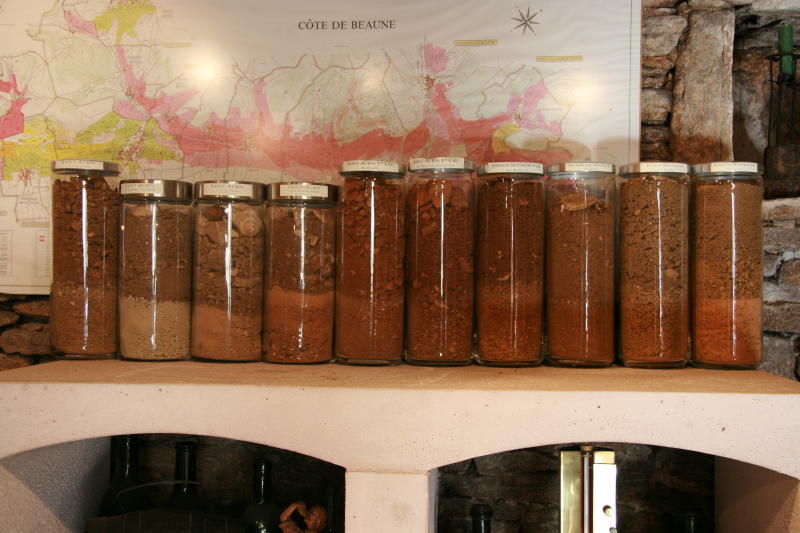
The majority of the domaine’s vineyards consist of stony, limestone-based soil, with a thin 10-30 cm of topsoil, and have a favourable southeast exposure.

Winemaking

Below are my translations form Lamy’s website combined with some additional info

Chardonnay

Olivier was one of the first winemakers in Côte de Beaune to favour the use of larger size barrels, and in the cellar there are many 350 and 600 litres barrels. Yields are kept low and following intensive work in the vineyards, the harvested crop passes a selection on a sorting table before the grapes are whole bunch pressed, gently, using a pneumatic press and transferred to the stainless steel tanks. The wine making is traditional,  the juice is lightly racked into 1-5 year old 300L barrels and 600L demi-muids for fermentation with temperatures controlled using a cool cellar to aid a long slow fermentation of up to 90 days, shorter in some years and longer in others. The wines are aged in 0-15% new oak (with an average of 10%) for 18-24 months before bottling.

My experience is that such long, slow fermentation results in increased mid-palate weight and long creamy mouthfeel.

The Chardonnay is stirred a little to suspend lees and malolactic fermentation takes place in barrel. In August (11month after harvest). The wines are lightly fined with cassein (a milk protein) that will clarify them and remove some phenolics. Sulphur additions are made according to analysis.

The wines are bottled after 12-18months élevage.

Pinot Noir

Fruit is 100% destemmed. Maceration lasts around 20 days with pigeage and pumping over according to the season. 1-3 year old barrels are used for maturation. Malolactic fermentation is completed in barrel. The wines are racked, fined and filtered if necessary.

The wines are bottled after 12-18months élevage.

The 2023 Vintage at Domaine Lamy

Olivier Lamy took me through his bottled 2023s. He is one of a handful of growers who no longer show their wines in bottle, opting to show the finished wines instead, which is no problem because their release is delayed by 12 months. This year, Lamy offered one-on-one tastings, which I personally prefer to the group tastings he’s organised in the last three or four years.

“We picked the majority from September 2 to 12 and a small parcel on September 13 when the fruit had ripened,” said Lamy. “There was some hail at the end of June with stones as big as tennis balls. The hailstones broke some of our branches, so I did a bit of green harvest. The crop was a bit larger than usual, around 45 hl/ha for the reds, 30 hl/ha for the old-vine whites and 60 hl/ha for whites from younger vines. We did a little more crushing to increase phenolics and used more lees to enhance aging. I used no new oak except for a couple of barrels. All of the 2023s have been bottled since the end of July via a special machine that bottles by gravity. I have done some testing and it works much better, even compared to machines that use nitrogen [to protect the wines]. This seems to preserve their brightness.”

What can I say…there is a reason why Lamy’s wines are so revered, why his tenets have become so influential in the Côte de Beaune. That reason is there in the bottles. The only downside is that the secondary market has latched onto what I remember being a very affordable producer, though doubtless his ex-Domaine prices remain reasonable. After he poured a 2018 Criots-Bâtard-Montrachet from magnum that is earmarked for a Cellar Favorite, I checked the price and nearly choked on my Chardonnay.

Neal Martin, Vinous


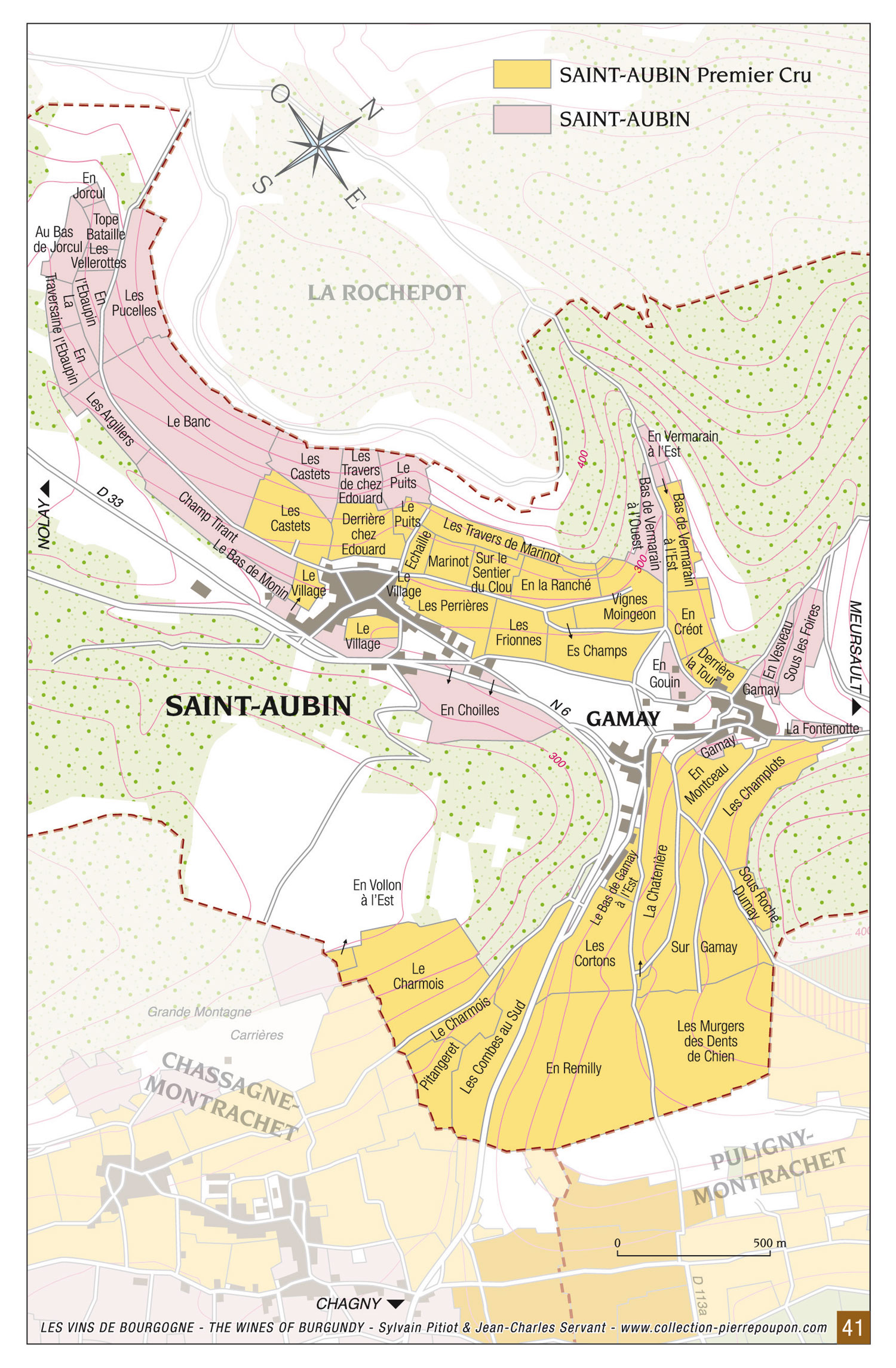
Where in the World is Saint-Aubin

Click to view detailed map

Saint-Aubin branches off from Chassagne-Montrachet. Containing some 20 Premier Cru’s producing 75% white and 25% red.

Produces like Lamy and Pierre-Yves-Collin-Morey are working hard to raise the perception of the village which produces fantastic wines.


Exploring the Geology & Geography of the Villages

In this video the villages of Puligny-Montrachet, Saint-Aubin and Chassagne-Montrachet are explored. Towards the end, you’ll note the discussion of the soils in the south part of Chassagne-Montrachet being the same as parts of the Côte de Nuits.

Oliver Lamy explore Domaine Hubert Lamy’s Saint Aubin vineyards through their geology

Where in the world does the magic happen?

Domaine Hubert Lamy, Rue des Lavières, Saint-Aubin, France

Puligny-Montrachet
Côte du Beaune
Burgundy
France