Château Latour 1er Cru Classe 2009
Pre-Arrival Due March 2025

Product information

Château Latour 1er Cru Classe 2009

Bordeaux Blend

$3,150

Closure: Cork

Description

Pre-Arrival offer Ex-Château ETA March 2025

The 2009 Latour is endowed with a simply magnificent nose with intense blackberry and cassis fruit laced with minerals and graphite, extremely focused to the point of overwhelming the sense. Wow. The palate is medium-bodied with filigree tannin, multilayered black fruit infused with crushed stone and a hint of white pepper, though it clams up towards the finish as if to say, not yet. Outstanding. This is Latour firing on all cylinders. Tasted blind at Farr Vintners’ 2009 Bordeaux tasting. 3/2019

Neal Martin, Vinous 99

RP 100, JA 100, JM 99, JR 19.25


Out of stock

Check out all of the wines by Château Latour

Why is this Wine so Yummy?

About Latour

The Origins

Château Latour has played an important role in the region’s history. Knowledge of the past is valuable in helping us to understand the property’s current reputation. Fortunately, numerous archives have been preserved over the centuries enabling us to establish an accurate picture of the past. This unique heritage shows us an extraordinary stability and continuity in the life of the property and those who have worked there during its long history, which has no doubt been an important factor in the exceptional regularity and quality of the wines.

The oldest document mentioning Latour dates from 1331 and is an authorization granted to Gaucelme de Castillon by Lord Pons to build a fortified tower in the parish of Saint Maubert. Château Latour then appears in the Jean Froissart’s « Chronicles » in 1378. This was the time of the Hundred Years War and the « Tour de Saint Maubert » was a fortress to guard the estuary, manned by Breton soldiers for the King of France. After a three-day siege, the Anglo-Gascon army seized the fortress and installed a garrison.

The Foundations

Latour was a jointly held lord’s domain until the end of the 16th century, whose co-owners received rents from the farmers who cultivated the land. At that time, the property was not entirely covered by vines and yet production largely exceeded requirements. There was no proper storage for the wine and it had to be drunk within the year. The estate remained in the hands of the Mullet family until the late 17th century, and while direct use of the land gradually replaced the leasing system, the wine-making situation changed very little.
As a result of successive marriages and inheritances, Château Latour became the property of Alexandre de Ségur, who quickly acquired a considerable collection of properties in the Médoc. The château’s real wine history began with the arrival of this family. Just before his death in 1716, Alexandre de Ségur acquired Château Lafite. His son, Nicolas-Alexandre, was dubbed the « Prince of the Vines » by Louis XV. President of the Parliament of Bordeaux, he further enlarged the family’s estates in 1718 with the acquisition of plots from Mouton and Calon.

Golden Age

In the early 18th century, England’s aristocracy and wealthy middle classes developed refined tastes, particularly for wine, from Bordeaux, Oporto, Jerez and other southern vineyards. Wine exports had been restricted by various blockades imposed by the wars, but now enjoyed a period of relative freedom and trade with Bordeaux grew rapidly. This new economic environment also changed the structure of the Médoc estates which expanded and became of increasing interest to the local bourgeoisie and the parliamentary nobility. Very quickly, the wines of the best estates, including Château Latour, stood out in terms of quality and price. In 1714, a barrel of Latour was worth four to five times more than a barrel of typical Bordeaux wine. By 1729, the ratio had risen to thirteen and by 1767 to twenty. Recognition of Château Latour was already very well-established.

As a result of this flourishing trade, the estate gradually came to specialise in wine production, with 38 hectares of vines in 1759 and then 47 hectares by 1794. Remarkably detailed records of this period are available, kept by the estate’s stewards, who regularly corresponded with the owners; there is also a wealth of often highly entertaining anecdotes about life at Château Latour.

During the revolution the estate was prevented, with some difficulty, from being broken up, and, most importantly, stayed in the same family. By 1842, successive inheritances had increased the number of co-owners, who formed a Société Civile (a non-trading company), which, until 1962, was made up exclusively of descendants of the Ségur family. The property thus benefited from a quite exceptional location and the unique terroir was given « first growth » or « premier cru » ranking in the official 1855 classification, alongside Lafite-Rothschild, Margaux, Haut-Brion and, since 1973, Mouton-Rothschild. However, over time, the large number of heirs resulted in the sale of most of the shares: the English financial group Pearson became the majority shareholder with 53% and Harveys of Bristol, which was subsequently bought by the Allied Lyons group, acquired a 25% stake. In 1989, Allied Lyons bought out Pearson to hold 93% of the shares, with the other 7% remaining in the Ségur family. In June 1993, Mr François Pinault bought the Allied Lyons’ stake via his holding company Artémis.

A New Era

In the years since 1993, under the leadership of François Pinault, significant changes have been made with a view to upholding Château Latour’s pursuit of excellence in the wines that it produces.
In 1998, Frédéric Engerer, who joined the estate early in 1995, was appointed Manager. Major works started in November 1999 and continued until September 2003. A total renovation of the winery, vat room, wine making facilities and storage areas enabled even greater precision in the production of the wines. A new technical team was also created. In 2012, we undertook further work to enlarge the workspace and create a new ageing cellar, following the decision to no longer sell the Château’s wines en primeur.

Under the chairmanship of Frédéric Engerer, Hélène Génin is the property’s Technical Director, joining the Cellar Master, Pierre-Henri Chabot, and Vineyard Manager, Domingo Sanchez, in an ongoing quest for perfection. This quest is upheld by the efforts of everyone in the seventy-strong team working at Château Latour, in the vineyard and the winery. A wide variety of experiments is constantly being carried out in order to judge the suitability of new procedures. This might for example involve biodynamic methods or new traceability systems, the quest is always for precision, quality, respect of the environment, and awareness of new issues.

In the Vineyard

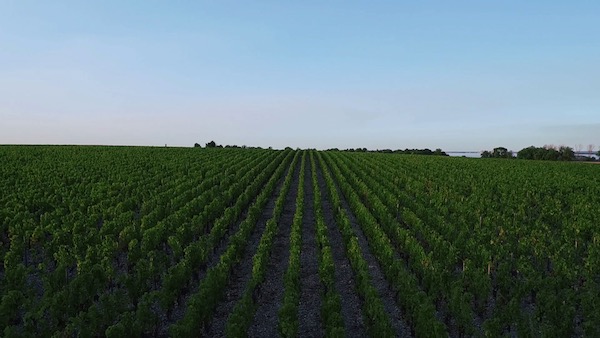
Most of Château Latour’s vines are planted on gravelly hilltops that stand 12 to 16 metres above the Gironde estuary. The fortunate combination of the Gironde, with layers of gravel on the surface and a clay subsoil, gives Château Latour’s terroir advantages that few other vineyards can claim. This exceptional heritage inspires us every day with a passion and a willingness to make the best possible use of this magical complexity.

The historic terroir of the Enclos can be divided into two main types of soil:

  • Clayey gravel, in the heart of the Enclos
  • Gravelly sand, around the edge of the Enclos

The geological characteristics of the soil result in the vines, especially the older ones, developing particularly deep root systems (up to three metres). The presence of lower layers of marly clay that capture water in the subsoil provide the vines with a minimum of water, enabling them to remain « active » even in years of drought and severe water stress, such as 2003 or in 2010, and for longer, optimal ripening to be achieved.

Furthermore, a drainage system for the entire Enclos was created in the 19th century, enabling any water that could compromise the quality of the grapes as the harvest approaches to be quickly removed.

Château Latour’s vineyard is a magnificent mosaic of vines, some of which are a hundred-years-old: each one contributes its share of magic to the wines every year. It is also a constantly evolving organism that requires patience, attention to detail and a great deal of care, to enable the young vines that will succeed their elders to grow.

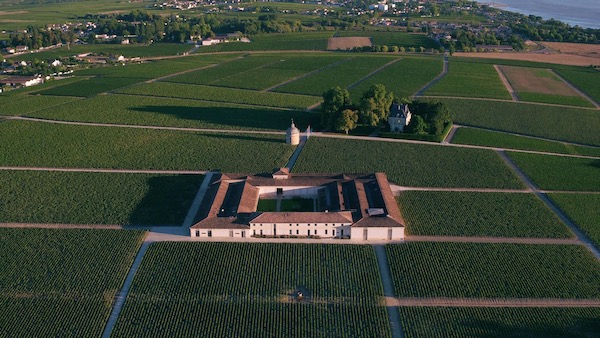
The vineyard currently consists of 92 hectares of vines, including the 47 that surround the Château, known as the « Enclos », that are potentially used in the production of the Grand Vin. The Enclos consists of a hilltop that rises 16 metres above the level of the Gironde, encircled to the north and south by two streams and to the east by the « Palus » (marshland) on the edge of the Gironde. The forty hectares outside of the Enclos consist of several very handsome plots (« Petit Batailley » and « Pinada » among others) that have been acquired over the Château’s long history. These grapes are used in the Forts de Latour blend and the youngest vines for the Pauillac.

GRAPE VARIETIES
The property is planted with about 76% Cabernet Sauvignon, 22% Merlot, and 2% Cabernet Franc and Petit Verdot.

CABERNET SAUVIGNON
Cabernet Sauvignon is the best grape variety for this terroir; it is perfectly at home in the very poor, gravelly soil, which requires deep roots to find vital nutrients and water in the clay subsoil. These selective supply conditions give the wine concentration, colour and tannic structure.

MERLOT
Merlot plays a regulating role, tempering the strength of the largely dominant Cabernet Sauvignon. It is planted mainly on the lower parts of the gentle hills in the Enclos, where the cooler terroir is well-suited to this early ripening variety. The layers of gravel are also slightly shallower, enabling the Merlot to draw its characteristic body, roundness and power from the clay-limestone layers.

THE OTHER TWO VARIETIES

Petit Verdot and Cabernet Franc, are used in much smaller proportions in the final blend. Over time, the second has tended to disappear from the blends, with preference being given to the first. Petit Verdot is characterized by its more exotic aromatic profile, its tannic structure and freshness. It provides a subtle but essential nuance to Château Latour’s wines.

In the Winery

Château Latour’s Grand Vin is made exclusively from “vieilles vignes”, an average of 60 years-old, in the Enclos. Gravettes, Sarmentier, Pièce de Château… these are the names of some of the finest plots that express the character of the terroir and forge the wine’s identity every year.

The heart of the Enclos is the only terroir that, every year, can produce the depth, elegance and concentration that we expect of the Grand Vin. It is here that the Cabernet Sauvignon (accounting for more than 90% of the blend) can achieve optimal expression in terms of colour, richness and freshness. These wines need time – often a decade- before they begin to be ready for drinking.

In great vintages, the power and energy of Château Latour’s wines enables them to continue to develop for several decades with ease. The bouquet and impressions on tasting gradually evolve, becoming increasingly complex, ultimately reaching a peak, after which the tannins soften and then the wine slowly declines. Beyond the pleasure of drinking them, these wines can produce powerful feelings and unforgettable moments.

Château Latour is also known for having the ability to produce fine wines even in difficult years.

Winemaking

The harvests usually start in the second half of September and often last beyond mid-October. We harvest each plot at optimal ripeness, taking into account all the relevant parameters at our disposal (analyses, tastings of the berries, weather forecast, etc.). During this period, the estate employs about a hundred temporary pickers, mainly from the Bordeaux region.

The bunches are cut off the vines and sorted by hand, then placed in small crates with a maximum capacity of 8 kg, in order to avoid the grapes being crushed under their own weight.The reception of the harvest takes place on the first floor of the winery. On the way to the vats, the grapes are meticulously sorted in two stages:

  • removal of vegetation (leaves, stalks etc.) and any grapes that are not perfectly healthy;
  • after the destemmer, a second sorting belt eliminates any grape stalks and undersized berries that could compromise quality.

The grapes are then gently pressed and transferred to the vats by gravity. Alcoholic fermentation can then start.

The young wine remains in temperature-controlled vats for about three weeks: enough time to extract all the flavours and potential treasures contained in the grapes.

After running-off, in which the wine is separated from the solids or marc (essentially all the grape skins and seeds) and transferred into clean vats or barrels, a second fermentation – known as malolactic fermentation – takes place during the following month. During this stage, the wine softens, developing roundness and precision. Meanwhile, the marc is pressed and the resulting press wine is matured separately in barrels, pending the blending stage.

Once malolactic fermentation has been completed (between the end of November and January), the wine can then be transferred to barrels to start the maturing process. This is the time when the fascinating and crucial stage of the pre-blending tastings begins.

The art of blending is a thrilling phase in the production of the wines, consisting of separating, testing, comparing, and, finally, combining the wines. The senses, memory, rigour and imagination must all be used in perfect harmony to create a style, an impression, while remaining faithful to a personality. The structure, energy and complexity of the wines develops and settles during maturing.

Frédéric Engerer and the technical team, assisted by Eric Boissenot meet regularly from mid-January to taste all the batches of the wines that have been produced. A wide range of wines is analysed to determine the best blend that will be used to make Château Latour’s Grand Vin. The blend is then decided for Les Forts de Latour and finally for the Pauillac. It is also at this point that some of the « press wines » are reincorporated, depending on their quality and the vintage’s overall balance.

The wine is matured uniquely in French oak barrels from the forests of central France. The barrels are renewed every year for the Grand Vin.

The wine stays in the barrel cellar for the first year until the beginning of the summer following the harvest. During the early months, rather than being hermetically sealed, the barrels are loosely stopped with a glass bung to facilitate a very slow exchange of gases between the wine and the atmosphere.. The level of the wine in the barrel gradually goes down due to absorption by the wood and evaporation; the barrels are topped up twice a week in an operation called ouillage.

Before the arrival of the summer heat, the barrels are taken down to the second-year cellar for a further maturing period of ten to thirteen months. There the wine can continue to age in hermetically sealed barrels (placed with the bungs on the side) protected from any variations in temperature.

A year after it has been put in barrels, the wine is clarified using egg white, with one to six egg whites per barrel, depending on the wine and the vintage. This very old technique enables any particles still in suspension in the wine to be drawn down to the bottom of the barrel and removed. A final racking about 45 days after this fining separates the bright, clear wine from the lees.

The wine is tasted to determine when it should be bottled: it has to have lost the generous vigour of its early youth while retaining its finesse and substance, but should not have begun to « dry out » (a deterioration in the wine which is caused by too much time in the barrel).

The 2009 Vintage at Château Latour

After a relatively wet start to spring, 2009 will be remembered for its exceptionally hot, dry summer that was even sunnier than 2005. The coolness at the start of spring resulted in slow growth. From May onwards, the year was marked by monthly temperatures that were well above seasonal norms, enabling the vines to catch up. Beautiful summer weather arrived and was only interrupted by a few stormy periods in July, which did not enable the soil to replenish its reserves. This deficit increased in August and September. Shortly after veraison began, the vines suffered significant levels of stress. Very dry conditions in the first half of September resulted in the concentration of the already small berries. Rain on 19-20 September was very beneficial in refining the tannins. The harvests began on Wednesday, 23 September, and continued until 10 October in splendid sunshine and perfect healthy conditions.

Great concentration and a previously unseen quantity of tannins characterized the wines, which possessed extraordinary aromatic intensity, freshness and precision. Rich, ripe and mineral, with a very long, lingering finish. An exceptional year which will improve for many years to come

Where in the World is Latour?

Château Latour is located in the heart of the Médoc wine region, about 50 km north-west of Bordeaux, where the legend of the vineyards of Bordeaux began. The château’s prime terroir, l’Enclos, overlooks the Gironde estuary: it is the river and the ocean that, over the centuries, have given the vineyard its geological complexity and, on a daily basis, ensure a mild climate.

Château Latour’s superb location, just 300 metres from the estuary, gives it its special character and tempers any extreme weather conditions, especially spells of severe cold or frost, as for example in 1991. There are two factors that have a benign influence:

  • The proximity of the Atlantic, bringing the generosity of an ocean climate;
  • The immediate proximity of a large mass of water in the form of the estuary, protecting against possible cold spells early in the growth cycle and also enabling earlier ripening of the grapes, which can be an important factor as the harvests approach.

Left Bank

On the left bank of the Gironde River, you’ll find the main regions of the Medoc, and, Pesssac-Léognan & Graves. Sauternes

The Medoc

The Medoc sits to the north of the city of Bordeaux. Note how flat it is and how it is surrounded by two massive bodies of water with the Atlantic Ocean to the west and the Gironde River to the east of the Medoc wine regions.

The flyover below covers the Médoc from the north, running through the main appellations of Saint-Estephe, Pauillac, Saint-Julien and Margaux with all of the intermediate appellations.

100 Points

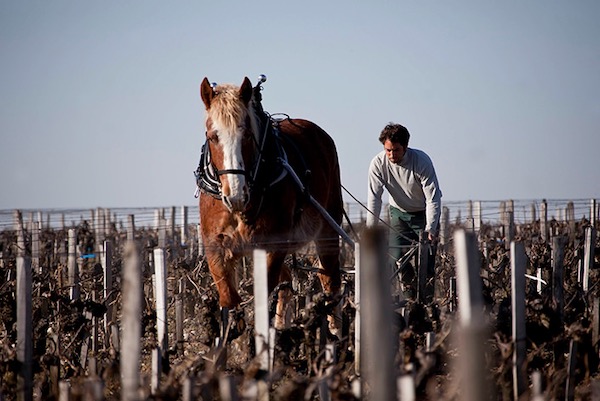
Classic Pauillac power and finesse, packed with brambled fruits, hedgerow earthiness, exuberant while being controlled and carefully delivered. This has shoulders and backbone, and is impossible to ignore. Still in its primary phase so zero need to rush, but you are going to get more joy from this 2009 than you will with the 2010 vintage for at least the next five years. Penelope Godefroy vineyard director at the time, 100% new oak. Although they had not begun conversion at this point, things were moving in that direction - horses had been reintroduced within the vineyard as of 2008, and all chemical weedkillers had been stopped in the 1990s. The first biodynamic experiments took place in this vintage, but just over 3ha of vines. Still being sold En Primeur at the time, so relatively widely available. (JA)   (9/2021)

Jane Anson

19.24/20 Points

Tasted blind. Lustrous deep crimson. Sweet yet refined. Recalls juggling or tightrope-walking with its mixture of ripeness and freshness. Dry finish on wonderfully precise sweet fruit. Still very youthful. Clean. Highest average score ever! 19.24 because of five 20/20s. (JR) (2/2019)

Jancis Robinson

99 Points

The 2009 Latour is endowed with a simply magnificent nose with intense blackberry and cassis fruit laced with minerals and graphite, extremely focused to the point of overwhelming the sense. Wow. The palate is medium-bodied with filigree tannin, multilayered black fruit infused with crushed stone and a hint of white pepper, though it clams up towards the finish as if to say, not yet. Outstanding. This is Latour firing on all cylinders. Tasted blind at Farr Vintners’ 2009 Bordeaux tasting. (NM)   (3/2019)

Neal Martin, Vinous

96-98+ Points

Château Latour’s lack of graciousness this year was the talk of the journalistic circles during the week of the En Primeur tastings, as the estate was hell-bent on restraining access to tasting the 2009s here to only the best and the brightest. Naturally I was not on the short list of those allowed access (good lord, what would the world be coming to if I was on the list!), but thanks to the generous persistence of another wine writer (who shall remain nameless), I was eventually granted a brief audience with the Left Bank wine of the vintage. The 2009 Latour is a great classic and perhaps the best wine to issue forth from this great estate since the 1961. The wine offers up a fantastically complex and quite closed blend of espresso, cassis, black cherries, dark berries, tobacco leaf, a magical base of gravelly soil tones and a discreet framing of cedary new oak. On the palate the wine is deep, full-bodied and quite closed on the attack, with a rock solid core of fruit, ripe tannins and an absolutely stunning finish of profound focus, length and grip. There are a boatload of tannins in the 2009 Latour and it will clearly take several decades before it even considers being enjoyable to drink, but this is a great classic in the making and an uncompromisingly brilliant and traditional vintage of Latour. A seamless powerhouse from the old school. (Drink between 2030-2100)  (3/2017)

John Gilman

99 Points

This seems to come full circle, with a blazing iron note and mouthwatering acidity up front leading to intense, vibrant cassis, blackberry and cherry skin flavors that course along, followed by the same vivacious minerality that started things off. The tobacco, ganache and espresso notes seem almost superfluous right now, but they'll join the fray in due time. The question is, can you wait long enough? Best from 2020 through 2040. (JM)   (3/2012)

Wine Spectator, Jim Molesowrth

100 Points

A blend of 91.3% Cabernet Sauvignon and 8.7% Merlot with just under 14% natural alcohol, the 2009 Latour is basically a clone of the super 2003, only more structured and potentially more massive and long lived. An elixir of momentous proportions, it boasts a dense purple color as well as an extraordinarily flamboyant bouquet of black fruits, graphite, crushed rocks, subtle oak and a notion of wet steel. It hits the palate with a thundering concoction of thick, juicy blue and black fruits, lead pencil shavings and a chalky minerality. Full-bodied, but very fresh with a finish that lasts over a minute, this is one of the most remarkable young wines I have ever tasted. Will it last one-hundred years? No doubt about it. Can it be drunk in a decade? For sure. (12/2011)

Robert Parker, The Wine Advocate

Where in the world does the magic happen?

Château Latour, Pauillac, France