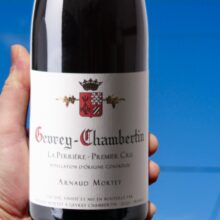
Arnaud Mortet Gevrey-Chambertin 1er Cru 'La Perrière' 2022

Product information

Arnaud Mortet Gevrey-Chambertin 1er Cru ‘La Perrière’ 2022

Pinot Noir from Gevrey-Chambertin, France, Côte-de-Nuits, Burgundy

$720

Closure: Cork

Description

Once again the nose is super-fresh and bright with its array of both red and dark berries, earth and a floral top note. The pliant, vibrant and utterly delicious middleweight flavors exude a subtle bead of minerality that adds lift to the dusty, sleek and youthfully austere finish that delivers very good length.

Allen Meadows, Burghound 91-93 Points


The 2022 Gevrey-Chambertin La Perrière ler Cru includes one-third whole bunches and 25% new oak. It has a stony, slightly more austere bouquet than Mortet’s other cuvée, though there is some lovely blackberry and raspberry fruit to enjoy. It’s just in the background at present. The palate is medium-bodied with fine tannins. It’s pure and elegant, offering mainly red berry fruit laced with orange rind and a dash of spice box on the finish. There’s a nice strictness here.

Neal Martin, Vinous 91-93 Points

In stock

Check out all of the wines by Arnaud Mortet

Why is this Wine so Yummy?

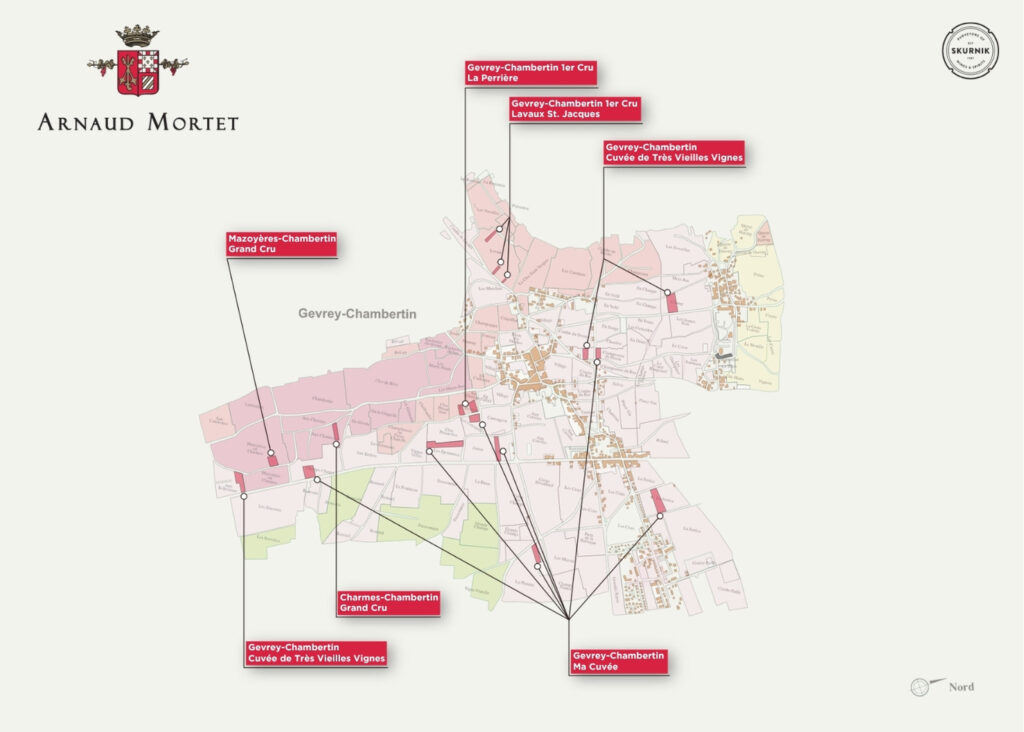
The wines labelled under Arnaud Mortet are simply under a different name. This side operation to Domaine Denis Mortet evolved from Arnaud Mortet having taken over 4 ha of vines from a vigneron that was retiring. The parcels included a number of villages-level vineyards as well as .45 ha in Mazoyères, .27 ha in Charmes-Chambertin plus a parcel in the 1er La Perrière. There are no material differences with the approach Arnaud uses for growing and making the wines.

About Domaine Denis Mortet

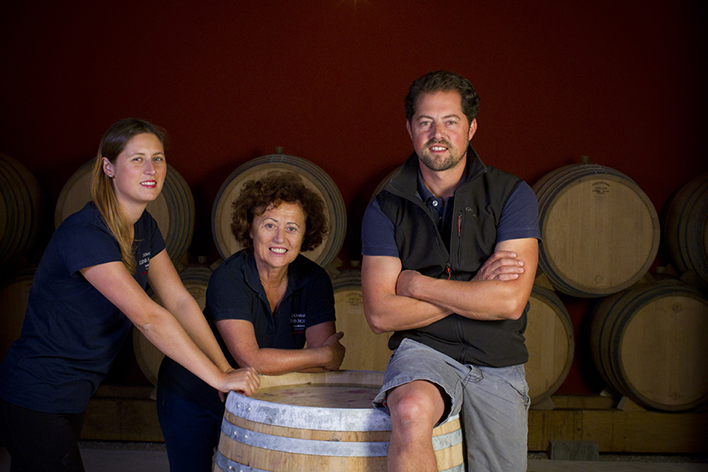
Charles Mortet set up his estate in 1956 with a single hectare of vines. True to the tradition in Burgundy, he sold most of his production to merchant houses. In 1978 Denis joined his father, along with his wife Laurence. They were respectively 22 and 20 years old at the time. As Laurence’s family were farmers, she quickly took to working in the vineyard to her great satisfaction. Little by little, Denis developed bottled wine sales.

He succeeded his father in 1993 and created Domaine Denis Mortet. At the time it represented some 4.5 hectares within the districts of Gevrey-Chambertin, Chambolle-Musigny and Vougeot – but this was just the start to the establishment’s vineyard. In 1993 the company acquired the parcels of the Premier Cru Lavaux Saint-Jacques in Gevrey-Chambertin, as well as vineyard plots in Motrot, in Vellé, in Champs, and La Côte des Longeroies in Marsannay. In 1997 it purchased the district area, La Combe du Dessus. This was followed in 1999 by the acquisition of the vineyard of Chambertin Grand Cru. And of Premier Cru parcels and the Derée locality in 2000. At present, the estate comprises 11.2 hectares. In 2000 Denis’ son, Arnaud entered the company. He and his mother have been in charge since his father’s sudden passing in 2006. They have since been joined by Arnaud’s sister Clémence.

A man of the vineyards, Arnaud’s “knack”, as critic David Schildknecht recently put it, is to be driven to produce perfect Pinot fruit from meticulously tended vineyards. He is without question one of the finest growers of the entire Côte (many of his colleagues acknowledge as much) and as great wines are the products of great fruit, it is no coincidence that he is producing some of the finest wines in Burgundy today. There is no doubt that the wines are more refined than those produced while his father was alive, yet they share the same intensity and potential longevity.

In the Vineyard

Horse is now used to plough all 1er and Grand Cru vineyards (in order to minimise soil compaction) and organic/biodynamic practice is now being trialed in these sites. Machines are no longer used in any sites and all the work, including spraying copper/sulphur which is done via backpack.

The yields remain very low (much lower than Rousseau for example) and, according to my understanding, the fruit selection (triage) is also much more severe. Lower yields and stricter triage will always result in richer, more intense wines, at least when the wines are young.

Mortet’s vineyards are things of beauty. Every vine is tended by hand and leaves are removed if damaged in any way. The Allen Meadows notes above comments on the renown that Arnaud Mortet enjoys amongst his peers for his vineyard work. Everyone who knows Arnaud is well aware that he is a perfectionist by nature and that he is driven by the desire to honour his father’s legacy. He has made a wonderful start. The continued evolution of Domaine Denis Mortet is certainly going to be very exciting to watch (and taste!)

In the Winery

Arnaud is continuing Denis’ dream of producing more refined wines: openly getting closer stylistically to the wines of his uncle, Charles Rousseau, without sacrificing depth and intensity or consistency across the range (which Rousseau has often lacked). Denis was already “backing off” the extraction in the pursuit of greater elegance but Arnaud is taking this even further, not only via shorter and gentler macerations, but also by reducing the percentage of new oak used. At the same time the vineyard work chez Mortet is at the very highest level.

After almost 20 years as a vigneron, Arnaud Mortet is still progressing like a man possessed. There is the same level of viticultural rigour for which he—and his father—have long been famous, but now there is also a new cellar, with large oak and new concrete fermenters. Significant portions of the grapes are hand-destemmed (with scissors, à la Leroy). This incredibly labour-intensive method—which requires the work of four people for one hour to fill a single barrel—involves cutting out the central axis of each bunch (known as the rachis) to ensure the berries are retained intact on their pedicels. The idea is that you get the value of whole-berry fermentation (the prettiness, fine tannins and perfume) but without the stems (which rob acidity and bring coarser tannins).

Everthing begins with natural yeasts. Vatting time lasts between 18 and 20 days, barely a fortnight for small quantity wines like Chambertin. I only carry out cap-punching 5 or 6 times. As for sulphur, I use three times less of it than during my father’s time. All of this means that the wine presents all the fine characteristics of Pinot Noir with elegance and it is pleasant to drink when young, whilst possessing good structure for ageing. This is the perfect equation for me!

I have changed quite a few aspects for maturation, using not much new wood these days. I adapt this in accordance with each vintage. I do not necessarily want to throw myself into choosing the grain of wood according to each wine, because I’m afraid I’ll lose my bearings with this; I have total faith in my coopers for carrying out this selection work. According to the wines and the vintage, maturation lasts between 16 and 18 months.

Arnaud Mortet

The 2022 Vintage at Domaine Denis Mortet

The highly talented Arnaud Mortet, who now manages 16 ha of vines, noted that the 2022 “growing season was easier than 2021 but not by much as a huge end of June storm dumped massive amounts of water and hail, particularly in our vines on and around the Combe de Lavaux. This of course caused a great deal of work to replace eroded soil and combat an attack of mildew, which was exceptionally difficult as we couldn’t get in the vineyards to treat. Otherwise, the season was hot and dry without disease pressure and ultimately I chose to begin picking on the 1st of September. Yields were variable depending on the degree of hail damage, but generally ranged from 30 to 40 hl/ha with relatively modest potential alcohols of around 12.5%. I used moderate amounts of whole clusters but mostly with berries that had the main stem cut out. Stylistically, I find 2022 to be hard to categorize as it has elements of 2019, 2020 and 2021. However it might be described, I confess to really like my 2022s.” As the ratings and reviews confirm, Mortet fashioned some wonderful wines in 2022 and I highly commend them to your attention.

Allen Meadows, Burghound

Where in the World are They?

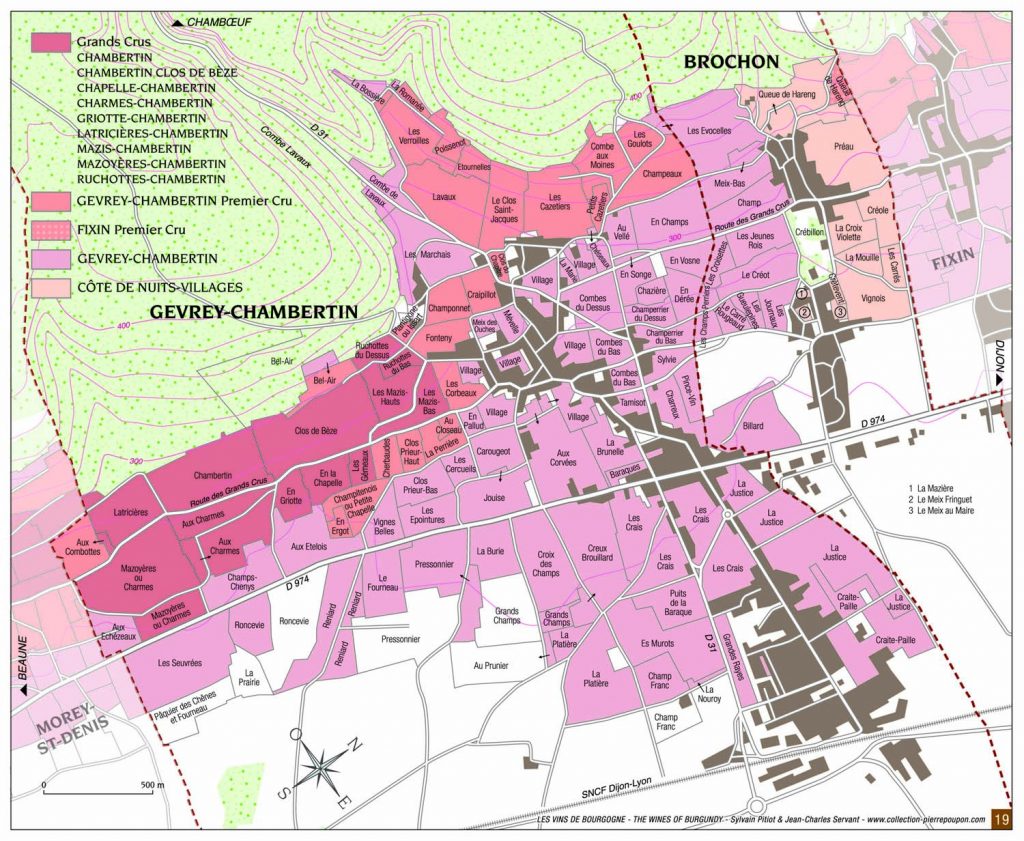
Denis Mortet now run by son Arnaud have plantings throughout the Côte de Nuits. This wine under the Arnaud Mortet label comes from the 1er Cru ‘La Perrière’ in the village of Gevrey-Chambertin.

Click to enlarge 🔎
Click to enlarge 🔎
91-93 Points

Once again the nose is super-fresh and bright with its array of both red and dark berries, earth and a floral top note. The pliant, vibrant and utterly delicious middleweight flavors exude a subtle bead of minerality that adds lift to the dusty, sleek and youthfully austere finish that delivers very good length.

Allen Meadows, Burghound

91-93 Points

The 2022 Gevrey-Chambertin La Perrière ler Cru includes one-third whole bunches and 25% new oak. It has a stony, slightly more austere bouquet than Mortet's other cuvée, though there is some lovely blackberry and raspberry fruit to enjoy. It's just in the background at present. The palate is medium-bodied with fine tannins. It's pure and elegant, offering mainly red berry fruit laced with orange rind and a dash of spice box on the finish. There's a nice strictness here.

Neal Martin, Vinous

Where in the world does the magic happen?

Domaine Denis Mortet, Rue de Lavaux, Gevrey-Chambertin, France

Gevrey-Chambertin
Côte-de-Nuits
Burgundy
France