Size & Type
Other

$464
Dagueneau’s dry Jurançon is a stunning, and hyper-rare wine from France’s southwest. Without being disrespectful to the region and its finest growers, this example is on another planet when it comes to quality. It is totally unique.
Unlike the moelleux wine, this is made from all five of Jurançon’s permitted white grape varieties: Petit Manseng and Gros Manseng, as well as the strictly local (and seldom grown) Courbu, Lauzet, and Camarelet. The rarest of these Jurançon varieties, Camarelet, dominates the blend. The winemaking mirrors that of the Loire wine: Dagueneau and Pautrat use both stainless steel and ‘cigar’ barrels for the maturation, before putting the final blend together.
Vagaries of vintage aside, the wine is always stunning: complex, enigmatic and totally unconventional (for the region) with Dagueneauesque transparency, precision and coolness, yet also that tender core of pulpy fruit and a driven, mineral finish. As these wines have some age you can expect some subtle secondary notes as well (think beeswax).
Out of stock
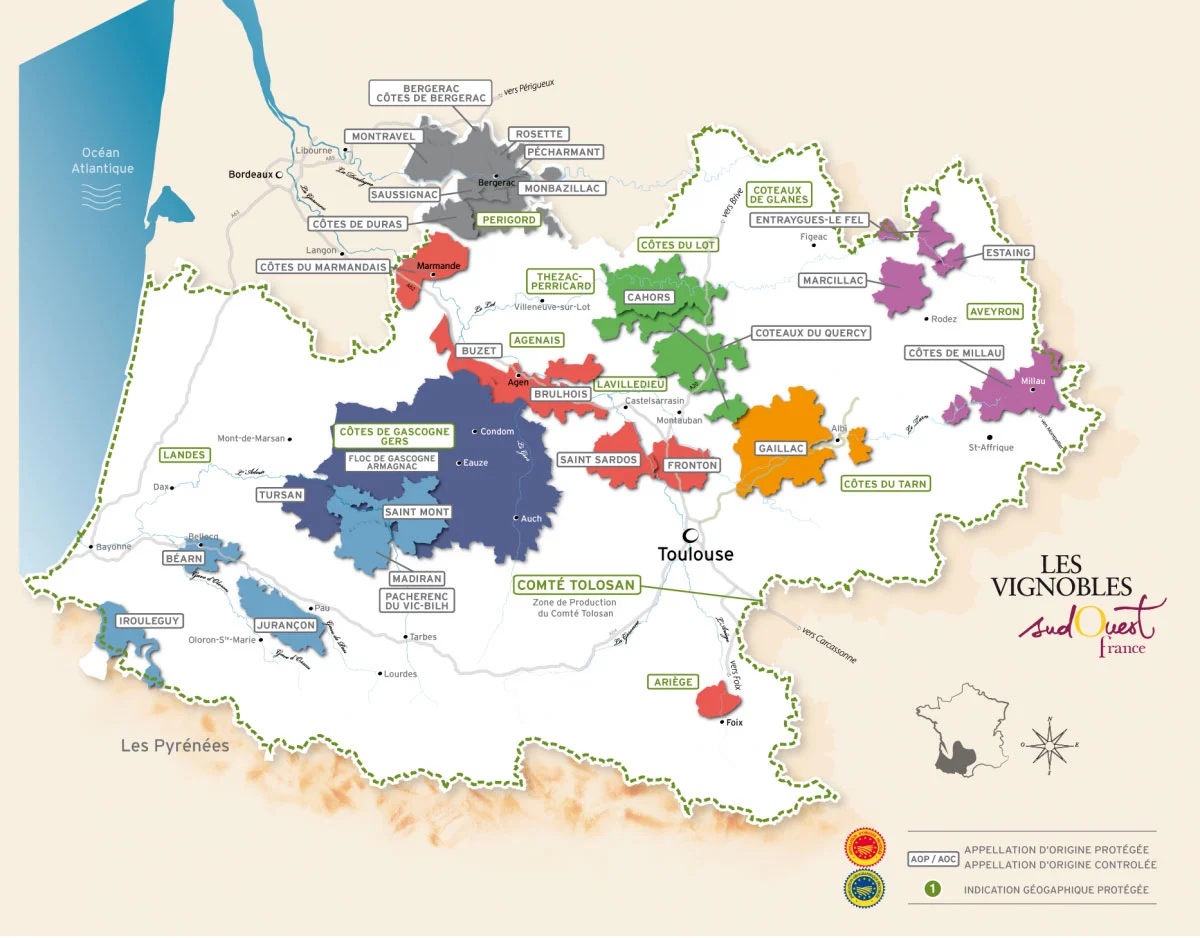
Didier Dagueneau had a genius for producing greatness where many thought it could not exist. In his later years, he turned his attention to producing great sweet and dry wine from Jurançon—an area he had long considered an underperformer. After a long search, in 2002, he found his perfect vineyard on Jurançon’s central coteaux in the foothills of the Pyrenees, just outside the village of Aubertin.
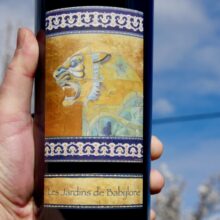
A “vignoble de rêve” (dream vineyard) as Dagueneau put it, the site was so picturesque that he ended up calling it Les Jardins de Babylone, in his typical tongue-in-cheek style. All of Didier Dagueneau’s labels have an element of satire, yet anyone who has visited this remarkable vineyard knows that this name is barely an exaggeration. It’s a steep, terraced site, only a few hectares in size, located in a natural amphitheatre that intensifies the sun’s heat and draws down the cool evening air from the surrounding mountains. The vines seem to hang on the side of the slope, another reason for referencing the legendary hanging gardens of Babylon.
With its own small cellar, the tiny domaine is run on a day-to-day basis by the Dagueneaus’ old friend, local vigneron Guy Pautrat.
Didier Dagueneau will forever be remembered as “The Wild Man of Saint-Andelain”. A true enfant terrible, he singlehandedly revolutionised viticulture and wine making in Pouilly-Fumé. Initially vilified by his peers, he was eventually revered for his success. Dagueneau tragically passed away in a light plane crash in September 2008. His son is now in charge of the Domaine and continues to uphold his father’s remarkable legacy.
If there were any doubts surrounding the succession of this remarkable Estate, they have been emphatically quashed by the recent releases under the stewardship of Louis-Benjamin. On a recent visit Benjamin spoke of the ‘well oiled’ Estate he had inherited. “We have been experimenting here for 25 years in every area—vineyard management, winemaking, types of oak, time on lees—every single detail has been closely looked at, to establish precisely how we could produce the greatest possible wines from our soils. Today we know what we are doing. We are still progressing, and every year is different, but now any changes are at the margins.”
Benjamin grew up in the vineyards and tasting great wines with his legendary father. He completed a degree in oenology and came back to work at the Domaine in 2004 after a year with François Chidaine in Montlouis and another year with Olivier Jullien at Mas Jullien in the Languedoc. He was about to launch his own Domaine when his father tragically passed away. He was ready.
We are often asked how the wines of Louis Benjamin differ from those of his father. The wines today have the same tension and vineyard expression that they did under Didier yet there is an added generosity and texture which certainly adds something to the equation. Our impression is that Louis Benjamin is little more relaxed at harvest time than his father was and perhaps picks a tad later, searching for his idea of perfectly ripened fruit. Regardless, no matter which wine you choose, each bottle from this avant-garde grower lives in a dimension beyond being merely outstanding Sauvignon Blanc and ranks amongst the great white wines of the world.
“When his father died in September of 2008, Louis Benjamin was only 26 years old. While some things have changed since then, much remains the same. The dogs are gone, and the house has a different flair, but the meticulous attention to detail in the vineyards and the precision in the cellar have, if anything, become even more perfectionist under his direction.”
Joel B Payne, Vinous
Postscripts In 2018 Benjamin Dagueneau pulled his family Domaine out of the Pouilly-Fumé appellation. Clearly, there is no love lost (if there was ever any to lose) between Dagueneau and the authorities. Last year Louis-Benjamin burnt the last vestige of the bridge by removing every reference to Pouilly-Fumé that remained on his labels—including Blanc Fumé de Pouilly, which is now labelled as Blanc Etc… It goes without saying that at no time in history has Domaine Didier Dagueneau relied on the appellation’s name to sell its wines. If anything, this latest change only serves to underline the non-conformity of one of France’s great Domaines.
Made from all five of Jurançon’s permitted white grape varieties: Petit Manseng and Gros Manseng, as well as the strictly local (and seldom grown) Courbu, Lauzet, and Camarelet. The rarest of these Jurançon varieties, Camarelet, dominates the blend. The winemaking mirrors that of the Loire wine: Dagueneau and Pautrat use both stainless steel and ‘cigar’ barrels for the maturation, before putting the final blend together.
Made in tiny quantities from ridiculously low yields of Petit Manseng, this offers all the purity and precision of Dagueneau’s most outstanding wines. The pricing reflects the costs of making the wine (via berry-by-berry selection even though no botrytis is involved). To arrive at this price per bottle, Didier previously claimed he simply totalled the project’s cost each year and divided it by the number of bottles made. Sounds logical enough!
The low yields and warmth of the site mean Les Jardins de Babylone can be picked in late October, a whole month before the grapes for conventional Jurançon Moelleux are typically picked. Even so, the wine usually ends up with approximately 125 g/L residual sugar, perfectly balanced by mouthwatering, tangy acidity to give a wine with fabulous verve and drive. As we have said before, this wine is Germanic in style, so it is less a dessert wine and more for drinking throughout the meal (the way you might consume a German Spätlese) or with cheese. Of course, it can work with carefully matched desserts (citrus- or apple-based).
The 2015 is simply outstanding: layered and pulpy with ripe stone fruit shot through with crystalline grapefruit and orange rind freshness. Deep and yet somehow delicate and fresh, it is a wonderful drink now and a wine that will live for decades! A release that easily justifies the claim, often made, that this is one of the world’s great sweet wines.
“The nobly-concentrated Dagueneau Jurancons are magnificent, with superb detail, magical levity, as well as irresistibility rather than over-the-top sweetness. ‘The idea is to have a balance with high acidity, not a confiture,’ remarks Benjamin Dagueneau. ‘Chateau d’Yquem is very good, but heavy. These wines aim at something a little more Germanic in style.’ I was already grinning before he said this!” David Schildknecht, RobertParker.com
“Madame Hégoburu [Domaine de Souch] told me that she thought her wine could hold its own against all comers in Jurançon, but that she had to make an exception in favour of Didier’s. The Les Jardins de Babylone has a beautiful balance between acid and sweet fruits, grapefruits and oranges balanced by mangoes and quince. The wine should keep forever. Delicate but long, subtle but rich, Dagueneau’s Jurançon will be fascinating to taste down the years. It will also be interesting to see what his impact will be on the style of other producers’ wines.” Paul Strang, South-West France: The Wines and Winemakers
Although based in the village of St Andelain in Pouilly-Fumé, this one is a collaboration with an old friend based in the Jurançon, South West France.

Where in the world does the magic happen?
Guy Pautrat Jurançon
You must be logged in to post a comment.