Size & Type
Other

$370
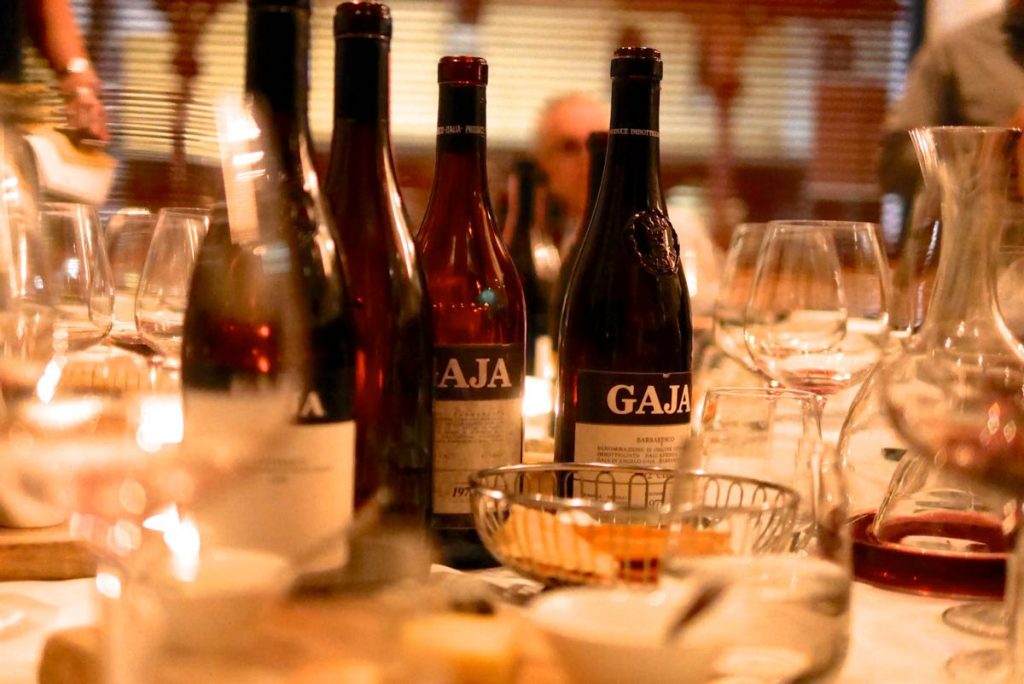
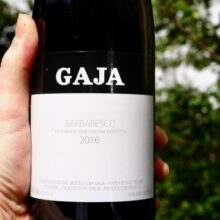
Gaja’s Barbaresco is a blend of 11 vineyards from Barbaresco and 3 from Treiso. Tasting through 5 decades of the Barbaresco from 1967 through to 2011 revealed 4 evolutions. The 1st the Old School – These were the rustic wines, wines that were often driven by searing acidity and refined natural grape tannin some fo the best wines of the night.
The 2nd evolution, the oaky ones! A regression for me, included the 1987, 1994, 1996, 1998 and 1999. The 3rd evolution 2004 & 2006. 2004 saw a shift to more restrained coffee / mocha oak. 2006 was an outlier, an overblown, OTT, oaf, clumsy, high alcohol wine with super ripe fruit, jammy almost porty fruit.
The lastest evolution, from the 2011 finally saw the balance I was looking for! The hallmark searing acidity, backed by a core of fresh fruit and balance oak & grape tannin. Finally the oak was just a layer, enhancing the wine, not, dominating it!
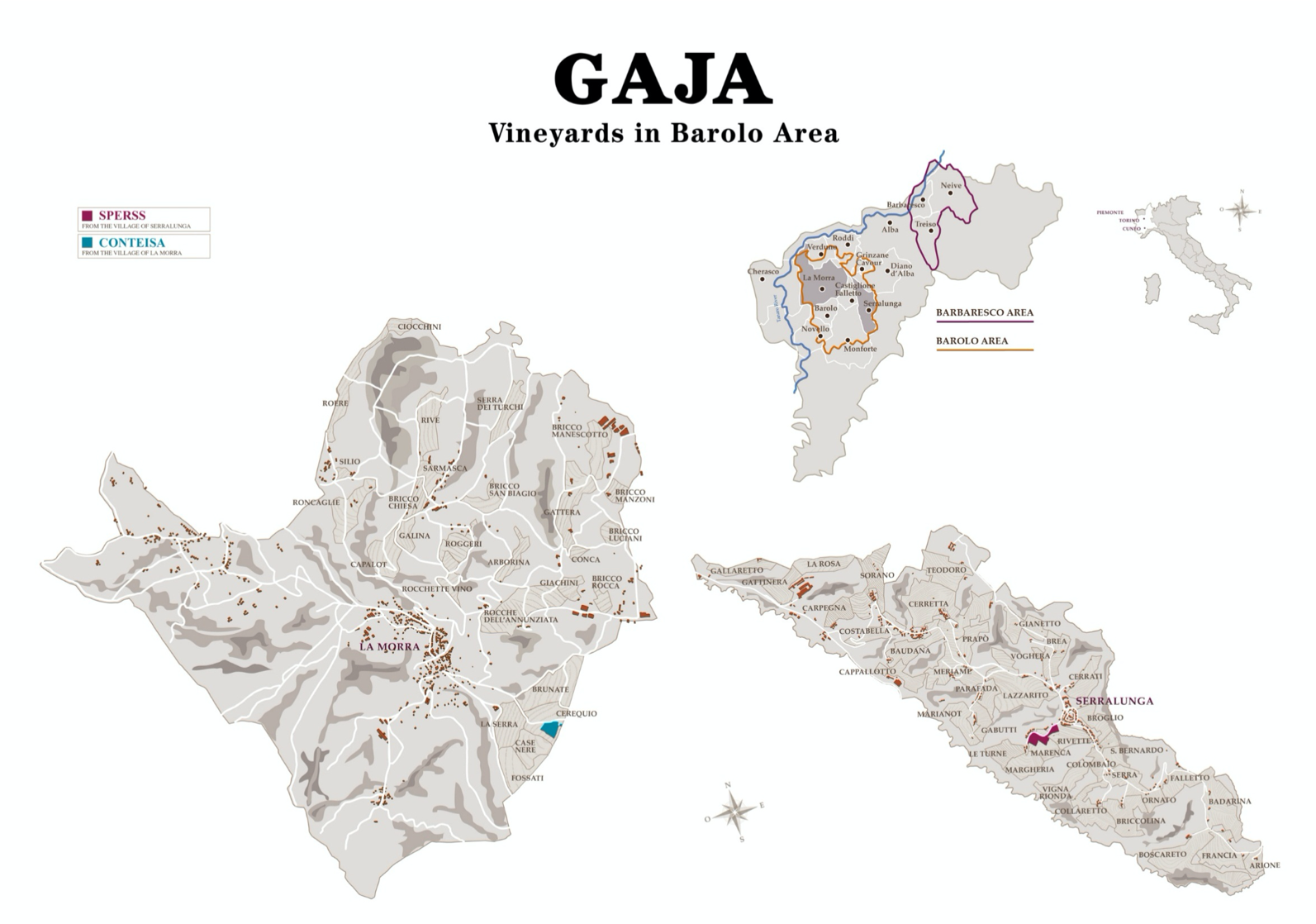
The Barbaresco Vineyards: Loreto, Castello, Masuè, Faset, Roncagliette, Roncaglie Vecchio, Rocaglie Nuovo, Valdrapp, Trifolera, Bricco, & Berino.
The Treiso Vineyards: Pajorè Sotto, Pajorè Sopra, Pajorè Univeristà.
Out of stock
*The following is an extract of an article published in the Wine Bites Mag “An Afternoon with Gaia Gaja” which included much more on Gaja than on this page.
Gaja is at once both one of the world’s wine icons and a controversial winery bucking “traditional wisdom” often being the trend setter rather than the follower. For me, it’s a sign that the Gaja’s have passion, focus, and, that they are pushing the boundaries.

I’ve been fortunate to devour Gaja’s wines from over 5 decades of production. One thing has been clear, they are evolving and pushing to make the best wines they can. This evolution has not been insulated from changes in the wine world. Historically, across the world’s greatest wine regions, think Barolo, Barbaresco, Burgundy, Tuscany, traditional winemaking has been interrupted by curiosity with the potential of new world winemaking techniques. Gaja has not been immune from this trend, use of high levels of new oak has being the most obvious example. Something I’m glad to say has been tempered in recent times.

Gaja has a long history stretching back to it’s very beginnings in 1859. The transformation from an largely unknown winery in a region, not valued by consumers to one of the worlds most famous wineries in a very special region certainly didn’t happen overnight.
Gaia Gaja shared with us the history of Barbaresco, the Gaja winery, the challenge of establishing recognition for the region and what the future holds. One thing is certain, the Gaja’s aren’t afraid of pushing against the rules, some rules are meant to be broken. They have had to declassify their Barbaresco from DOCG status simply because the rules don’t fit what they believe is the best way to make their wine. With a nifty slight of tongue, Gaia, refers to this as a reclassification. A simple example being that they tend to pick early before the permitted time for a DOCG to pick. Why because higher vine density, lower yield per vine, flavour ripeness earlier, better natural acid etc. If they waited they could have DOCG, but, they would not be giving their fruit the best opportunity to shine.
When you look at the great wine producers of the world they often have many things in common. Two of those being passion and continuity.
Passion just makes sense. Continuity well that’s a challenge. Good vignerons are always looking at their wines and vineyards, trying to make them yummier, healthier, more balanced, often by doing less, but, doing it better. Having the knowledge of the past, interrogating trends to find often simple ways to improve is critical. Seeing a vineyard in a cool years, hot years, observing the little patch of vineyard that is not performing and nurturing it. Some wineries employ precision agriculture with high tech imaging of vineyards, others, the eyes of trusted colleagues who have worked with them for decades. These eyes come to know each site, each vine and tend to them like they would a child. This philosophy has given them an intimate understanding of their terroir.
This is precisely the reason Gaja only employ permanent staff. Like many of the world’s great estates Gaja shifted from buying fruit to supplement production to buying and controlling great sites. In the early years as the Gaja Estate expanded, they were forced to purchase old run down houses with vineyards. Over time these have been restored and are now offered rent free to their staff.

2016 has come at just the right time. We have a number of winemakers with incredible experience and wine wisdom. The vineyards in Barbaresco & Barolo are in the best condition they’ve been in with incredible detail going into their care.
Combined we have a situation where vignerons are in the best possible position to make the most of the great fruit yielded by the 2016 harvest!
When you compare the 2015 & 2016 vintages you see the difference between a warmer vintage with a shorter ripening period and a cooler one with the longest ripening period in memory.
Nebbiolo responds beautifully to a cooler longer ripening. Once it reaches sugar level high enough to make a wine around 14-14.5% alcohol the sugar levels stop increasing, it tends to hold its acid and the tannins so important to the insane mouthfeel of Nebbiolo ripen and increase in depth.
Such vintages tend to offer wines with more perfume, energy, and, vitality.
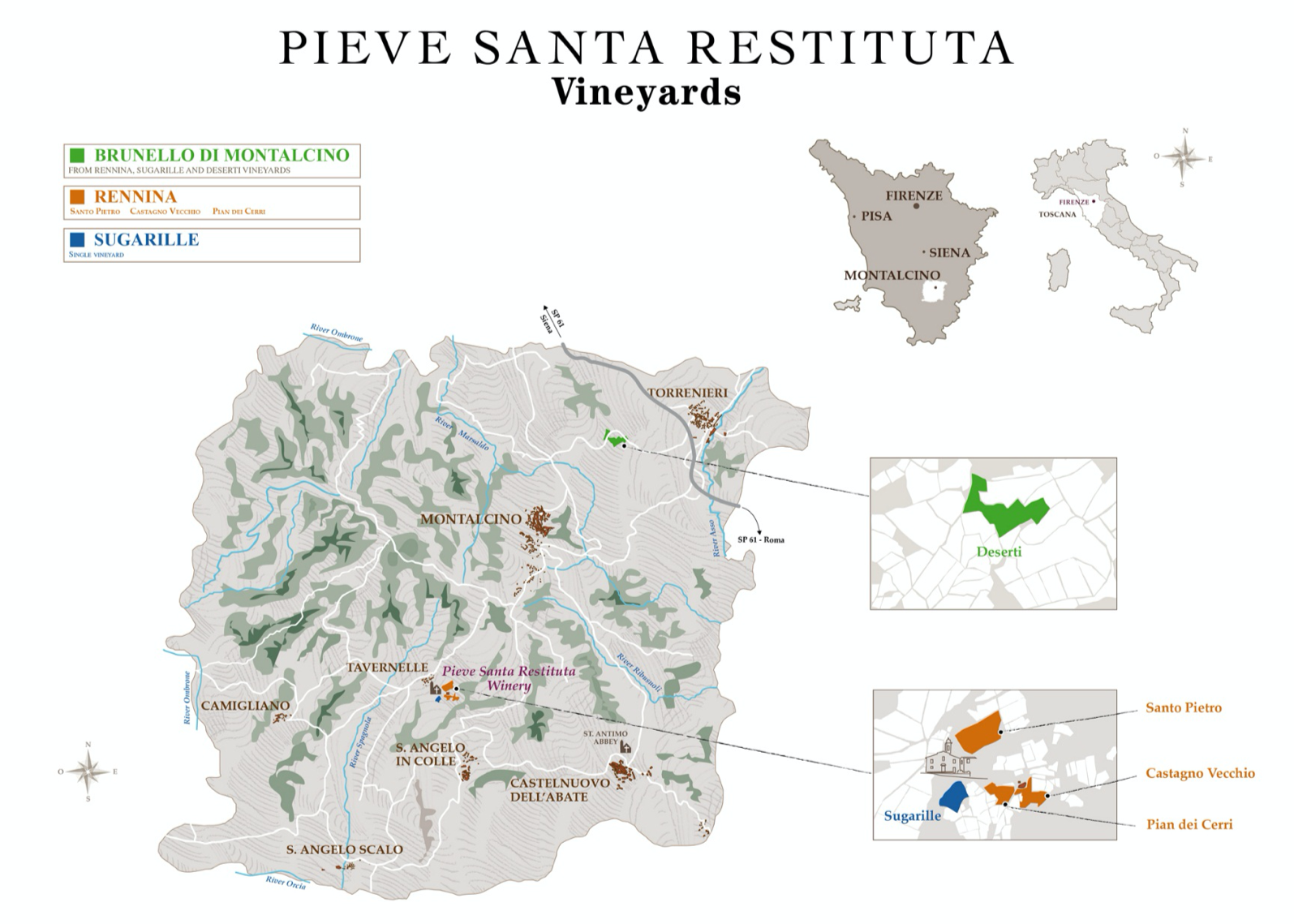
Gaja has holdings in Barbaresco with Cantina Gaja, Barolo, Brunello di Montalcino with Cantina Pieve S. Restituta, in Bolgheri with Cantina Ca’Marcanda, and, now on the slopes of Mount Etna in a JV with Graci. Their home will always be Barbaresco.


Gaja's 2016 Barbaresco is positively stellar. A wine of poise and grace, the 2016 has so much to offer. Expressive spice and floral notes open up first, but what really stands out is the wine's nuance and delineation. There is a sense of translucency to the 2016 that is impossible to miss. Sweet red cherry, mint, cinnamon and rose petal develop in the glass, adding further shades of nuance. Quite simply, the 2016 is one of the very finest Gaja Barbarescos in recent memory. This is such a gorgeous wine. Don't miss it. Drink 2026 - 2041
I tasted this wine over two sittings, one at the winery and one at my home office a few weeks later. Although I can't claim any extraordinary differences between the two sessions, I noticed a few minimal shifts that are essential to understanding the wine's future aging ability. The 2016 Barbaresco starts off slow at first, showing a small margin of aromatic evolution in the glass. But come back two hours later, and you can almost hear the soft sounds of the symphony playing just below the surface. The 2016 vintage is characterized by the solid intensity and firmness of its aromas, which transcend fruit and veer toward balsamic herb, licorice, tar and smoke instead. The tannins offer a moment of sweetness and softness, before you are aware of their undeniable firmness. In all, there is a certain glossiness or satiny quality to the mouthfeel that underlines the wine's carefully crafted integration. I would describe this as a classic and also a somewhat austere Barbaresco that fully deserves extra cellar time to stretch those tight muscles and grow in volume. This wine will award those who wait. Drink 2022-2045
Aromas of rose, red berry and eucalyptus mingle with whiffs of exotic spice on the gorgeous, fragrant red. Loaded with finesse and tension, the elegant, structured palate delivers crushed raspberry, white pepper and star anise set against fresh acidity and taut, lithe tannins. It's already compelling, but hold for even more complexity. Drink 2022–2036.
This is all about finesse with power. Such great length here with ever so refined tannins and precise strawberry, cedar, dried-rose and mineral character. Medium body. Fresh and vivid finish. Hard not to drink now, but wait until at least 2021.
Where in the world does the magic happen?
Gaja, Via Torino, Barbaresco, Piedmont, Province of Cuneo, Piedmont, Italy
You must be logged in to post a comment.