Size & Type
Other

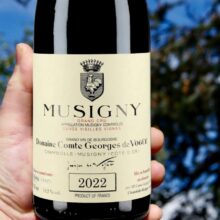
Pinot Noir from France, Côte-de-Nuits, Chambolle-Musigny, Burgundy
$4,988
Note: from an incredible 6.46 ha parcel, which doesn’t include the .67 ha section planted to chardonnay. This is aromatically quite similar to the 1er except that it is notably more restrained and requires considerable swirling to coax the nose to reveal its nuances. On the palate though there is noticeably more size, weight and mid-palate density thanks to the abundant sap that imparts a highly seductive mouthfeel while also buffering the firmer, though just as fine, tannic structure shaping the hugely long, youthfully austere and decidedly powerful finish that is akin to rolling tiny rocks around the mouth. This is also positively brilliant with the development potential to match. Don’t Miss! 1/2024
Allen Meadows, Burghound 94-97 Points
The 2022 Musigny Vieilles Vignes Grand Cru is very attractive, bursting with aromas of cherries, raspberries, blood orange, rose petals and vine smoke. Full-bodied, rich and concentrated, it’s layered and fleshy, with a deep and seamless core of fruit that conceals powdery structuring tannins, concluding with a broad, perfumed finish. If this fulfills all its promise in bottle, it may make my score look conservative. 01/2024
William Kelley, The Wine Advocate 94-96 Points
I tasted the 2023 Musigny Vieilles Vignes Grand Cru both as components from the seven different cuvées that make the final blend and as an approximation of the final blend itself. This has exquisite delineation on the nose: blackberry, raspberry, crushed stone and touches of undergrowth—very harmonious. The palate is medium-bodied, tightly wound and linear, with a sense of symmetry on the entry. But of all the Musigny tasted from barrel in 2023, this has perhaps the most nascent freshness, tension and complexity on the finish. A sense of completeness. Outstanding.
Neal Martin, Vinous 97-99 Points
JM 95-100 DC 98 JS 99
Only 1 left in stock
The renaissance at Domaine Comte Georges de Vogüé continues, underlined by a beautifully sensual and perfumed 2023 portfolio. As I wrote last year, Jean Lupatelli took the reins at Comte de Vogüé with the 2021 vintage. Under the previous direction, which began with the 1986 vintage, the de Vogüé wines could often be chunky and unyielding. Lupatelli has changed all that, revising every aspect of the winemaking process. The management of harvest itself seems to be a critical step, and in 2021, he abandoned the use of large gondolas to transport the grapes from the vineyard to the winery, replacing them with small cases. There’s not a new sorting table, but the domaine’s must pump has been banished in favor of filling tanks by gravity. All this means that the fruit is being handled much more gently. Cooperage choices are being refined, and a new racking tank has been acquired to permit proper blending before bottling so that there is one, consistent cuvée; and of course, the details of the bottling process itself are being revised. In the vineyards, a program of gradual replanting continues.
William Kelley, The Wine Advocate
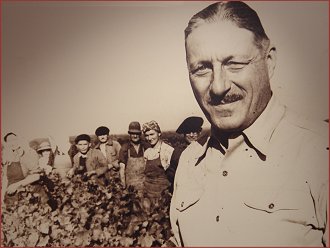
The de Vogüé family can lay claim to being the oldest winemaking family in Burgundy, with roots going back more than 500 years and with more than 20 generations having worked on the Domaine. The 20th century part of their tenure began with Georges de Vogüé who was in the driving seat from 1925, until his death in 1987. For the most part, these were good years for the Domaine, although in the latter part of his life aggressive chemical treatments applied to his vineyards drew criticism and led to weaker vintages overall through the 1970s and 1980s, which though criticised as too diluted, still had hefty price tags.

Upon Georges’ death he was succeeded by his only daughter, Elisabeth, who grabbed the bull by the horns and succeeded in turning things around through the hiring of a new winemaker, as well as sales and marketing team. In doing so, a new, gentler nature-led philosophy came to hold sway over the Domaine and this is continued today by the current owners – the granddaughters of Georges de Vogüé. They have continued their mother’s work in bringing the wines of this relatively small estate to global prominence.
The fascinating history and links with the Roumier family have been explored by Bill Nanson in his profile of the Domain.
Previous winemaker François Millet has been responsible for work in the winery from 1988 until 2020. He’s raised the bar to new levels. It is said that he had a crew of 60 using tweezers to remove damaged berries for the hail effected 1991 vintage. The end results proving the merit of the effort in the glass. Not content with making only Comte Georges de Vogüé, makes a suite of wines under François Millet & Fils covering Chambolle, Gevrey, Volnay and Beaune. Making his way to the southern hemisphere where he makes wine with Paul Pujol of Prophet’s Rock in Bendigo, Central Otago. I can help but think that this diversity of exposure can only help add to François’ wisdom as a vigneron, further cross-pollenation coming via his two sons working at Domaine Antonin Guyon and in the vineyard and Roumier.

The estate owns some 80 percent of grand cru Le Musigny, and a significant portion of grand cru Bonnes-Mares. Its premier cru Chambolle-Musigny is crafted exclusively from younger-vine fruit in Musigny; its Bourgogne Blanc is crafted from younger-vine Chardonnay grown also in Musigny (which may soon be born again as a Musigny Blanc).
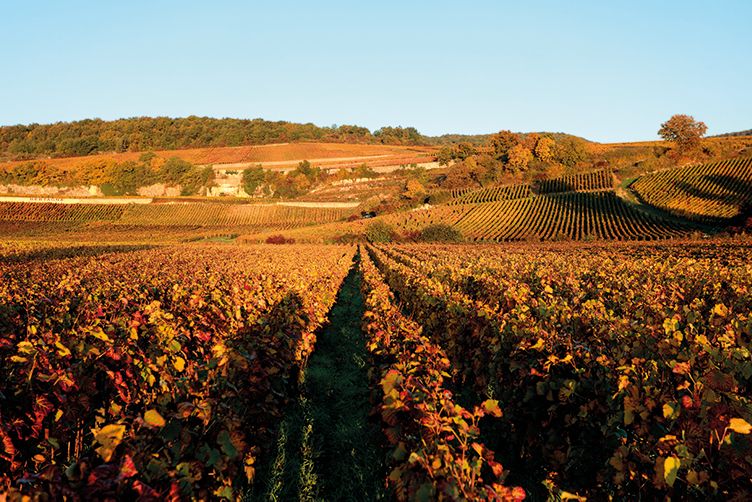
Vineyards are cared for essentially according to organic principles, although the estate is not certified. Beneficial herbs are planted between vineyard rows to control pests; vineyards are plowed by horse; the estate makes its own organic compost.

Historically, the Domaine’s previous winemaker François Millet did not follow a set formula in making his wines, preferring vintage conditions and the fruit of the vine to dictate what’s needed. Grapes more often than not are destemmed and then fermented on indigenous yeasts in large wooden vats. Very little sulfur was added during fermentation or at bottling.
In general, village wines were aged in 15 percent new French oak barrels, while grand cru wines see no more than 35 percent new oak. Wines are bottled unfined and unfiltered.
Jean Lupatelli, who replaced long-time technical director François Millet (who has started his own domaine) for the 2021 harvest, is not surprisingly instituting certain changes that include the use of whole clusters in the vinifications, extending the élevage period before the bottling and perhaps the most important of all, changing the barrel regime. He noted that the first two would be perceptible immediately, though modifying how, and what oak is used would be a longer process as he wants to be sure to not mark the wines with too much new wood all at once.

From Burghound:
With respect to the 2022 vintage, Lupatelli observed that “I honestly didn’t like the wines all that much at first. But it’s incredible how much they’ve changed from when we first barreled them down, and now, I’ve come full circle. We chose to begin picking on the 31st of August and the fruit was super-clean and very ripe without being too ripe. After how little volume we realized in 2021, it was a pleasure to bring in the highest yields we’ve had in 30 years, which is to say right at 35 hl/ha.
Potential alcohols were also excellent without being excessive at between 13 and 13.5%. I used on average 50% whole clusters and had no trouble with the primary fermentation and the malos were done by December. As to the wines, they’ve progressively become fresher and more vibrant and despite being the product of a very warm growing season, actually express the underlying terroir quite clearly.”
While it’s still early days, it seems to this observer that what Lupatelli is doing is working extremely well as there seems to be even more refinement.
In another minor but important change, as of 2022 the vintage is now printed on top of the cork as well as in the middle as a nod to helping prove authenticity. Speaking of the 2022s reviewed below, they were bottled between November 2023 and January 2024.
The best wines are modern classic Burgundies in the best sense of that term. They have something of everything in terms of a tantalising freshness as they are decidedly very Pinot in character followed by good, if not truly remarkable transparency on the palate. To obtain transparency, you usually have to sacrifice either richness or concentration and this is what is so special about the 22’s is that they have enough to each that it renders the mouthfeel to be particularly seductive while retaining the balance necessary such that a complete picture of a given terroir can be assessed and appreciated. With respect to agreeability 2022 really is one of those rare vintage where almost everyone can have their cake and eat it too, like them young, no problems, like them old no problems as well.
“All other things being equal, I would recommend going large in 2022, large in the sense of a broad range because there are so many really good wines at all levels.”
Jasper Morris MW
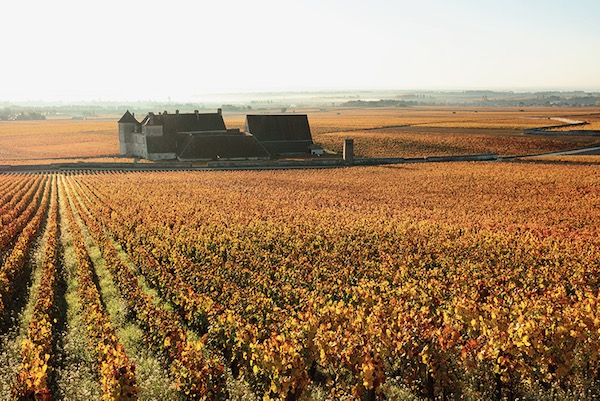
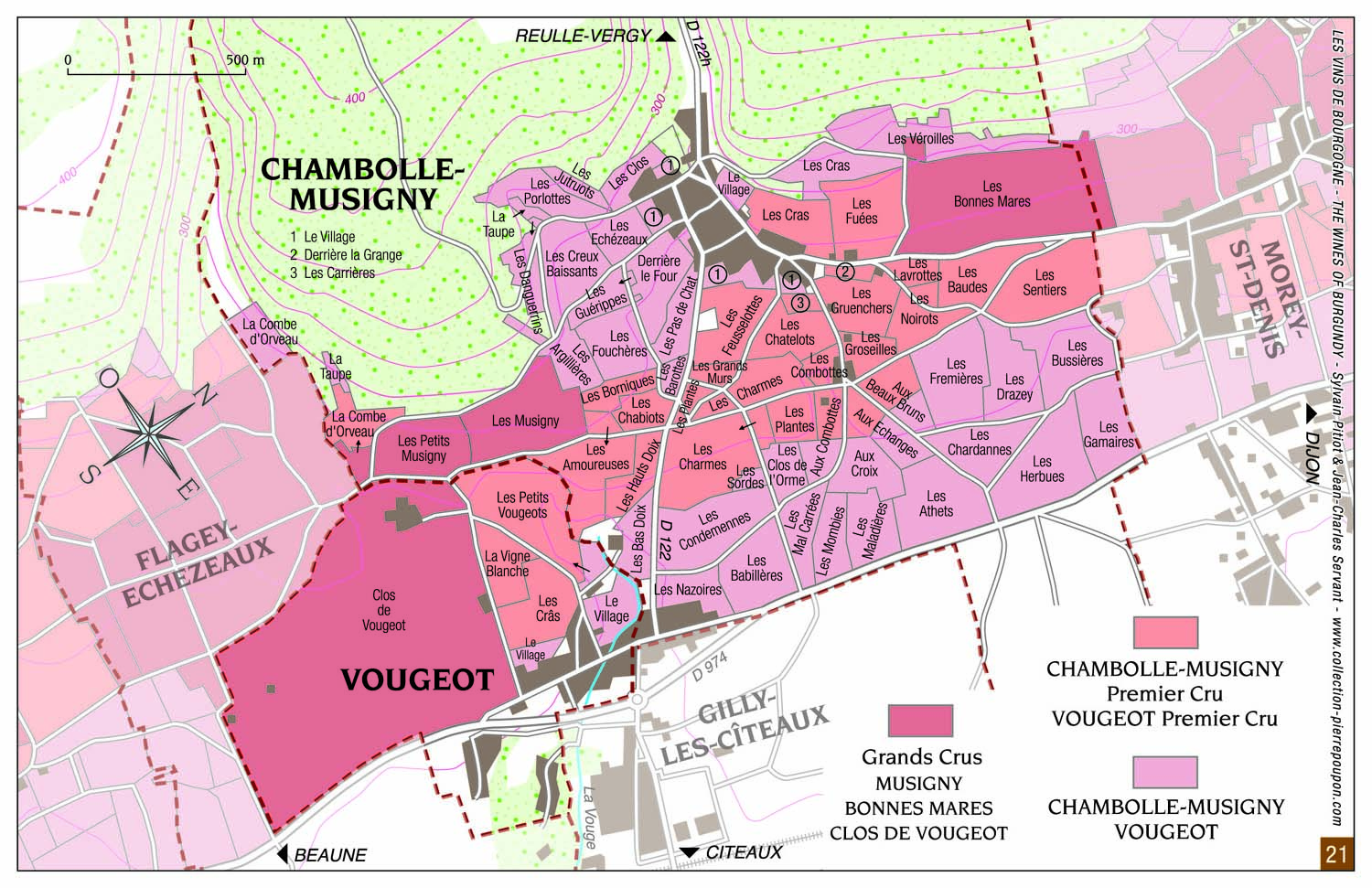
Comte Georges de Vogüé is one of the icons of Chambolle-Musigny with all of it’s vineyards in the Village. The Domaine holds 70% of the fabled Musigny vineyard!
The domaine today owns 12.6 ha of vineyards where the main part is located in the two Grand Cru vineyards Musigny and Bonnes Mares.
The vineyard holdings are as follows:

Note: from an incredible 6.46 ha parcel, which doesn't include the .67 ha section planted to chardonnay. This is aromatically quite similar to the 1er except that it is notably more restrained and requires considerable swirling to coax the nose to reveal its nuances. On the palate though there is noticeably more size, weight and mid-palate density thanks to the abundant sap that imparts a highly seductive mouthfeel while also buffering the firmer, though just as fine, tannic structure shaping the hugely long, youthfully austere and decidedly powerful finish that is akin to rolling tiny rocks around the mouth. This is also positively brilliant with the development potential to match. Don't Miss! 1/2024
The 2022 Musigny Vieilles Vignes Grand Cru is very attractive, bursting with aromas of cherries, raspberries, blood orange, rose petals and vine smoke. Full-bodied, rich and concentrated, it's layered and fleshy, with a deep and seamless core of fruit that conceals powdery structuring tannins, concluding with a broad, perfumed finish. If this fulfills all its promise in bottle, it may make my score look conservative. 01/2024
I tasted the 2023 Musigny Vieilles Vignes Grand Cru both as components from the seven different cuvées that make the final blend and as an approximation of the final blend itself. This has exquisite delineation on the nose: blackberry, raspberry, crushed stone and touches of undergrowth—very harmonious. The palate is medium-bodied, tightly wound and linear, with a sense of symmetry on the entry. But of all the Musigny tasted from barrel in 2023, this has perhaps the most nascent freshness, tension and complexity on the finish. A sense of completeness. Outstanding.
Where in the world does the magic happen?
Domaine Comte Georges de Vogüe, Rue Sainte-Barbe, Chambolle-Musigny, France
You must be logged in to post a comment.