Size & Type
Other

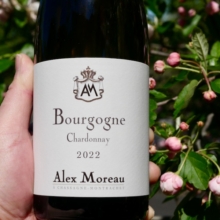
Chardonnay from France, Côte du Beaune, Chassagne-Montrachet, Burgundy
$115
100% Chassagne fruit. This is a delicious drink straight off the bat. Approachable young and good to go over the next few years. A level of generosity and immediate appeal while showing the freshness and hinting at the complexity and precision that comes as you move through Alex’s range.
The 2023 Bourgogne Blanc offers up aromas of white flowers, citrus zest and sourdough bread, followed by a medium-bodied, fleshy and vibrant palate.
William Kelley, The Wine Advocate 88-89 Points
Allen Meadows, Burghound 86-89 Points
In stock
… I do want to draw readers’ attention to two growers in Chassagne Montrachet who are “killing it” at the moment. Firstly, there is Alex Moreau at Domaine Bernard Moreau. This is a domaine whose wines have risen to a whole new level in recent years. Moreau’s portfolio is a veritable tour around Chassagne’s Premier Crus, showcasing the nuances between climats on the flatter lower sectors and more limestone-rich parcels located on higher contour…
Vinous – Neal Martin 2020
Full disclaimer – Domaine Bernard-Moreau et Fils has a sentimental place in my wine history. Alex came to work with us at Yering Station in 1999, I headed to Chassagne later that year working with him for the harvest. The hospitality of his family and the people of Chassagne was boundless! Since then the Domain’s portfolio has expanded to include a presence in Volnay and the addition of the two Grand Cru’s Bâtard-Montrachet and Chevalier-Montrachet. Under Alex’s leadership, the wines have continued to push to achieve excellence. It’s with a certain amount of pride that I offer his wines to the Wine Decoded community.
The landscape of runs from just south of Chassagne (left) across to Puligny. The Grand Cru’s are in the 2nd and 3rd photo from the right. Yes, these pic’s were taken pre-digital! Read an almost finished retrospective of the vintage in the Wine Bites Mag.

The winery’s roots go back to 1809 when Auguste Moreau built a cellar across from the Champs Gain vineyard and farmed his few hectares of Chardonnay and Pinot along the golden slope. The 1930s saw an expansion of the family’s vineyards under the guidance of Marcel Moreau.
Roughly 80% of the Domaine’s current vineyard holdings were acquired by Marcel. At age 14, Bernard Moreau took over the vineyards and cellar in the early 1960’s. In 1977 the reputation of this great estate was fully established under the leadership of Bernard and Françoise Moreau and the winery was named Domaine Bernard Moreau. In addition to the changes in equipment, farming and winemaking, they also purchased additional land bringing the vineyard total to 14 hectares. To help with winemaking, viticulture and sales, sons Alex and Benoît joined the Domaine after having worked in New Zealand, Australia and South Africa. Alex and Benoit loosely split the responsibilities of the operation with Benoit more focused on the vineyards and Alex more focused on the cellar.
In 2020 the Domaine was divided between brothers Alex and Benoit. After the division of Domaine Bernard Moreau between brothers Benoit and Alex, Alex was left with only 10.5 hectares of vines. This year, that shrinks to a mere 5.5 hectares after the loss of a five-hectare fermage. Readers will imagine how disruptive that must be to a domaine’s distribution when clients find their habitual allocations reduced not by one-half but to one-quarter of what they used to be. So to mark a clean break, Alex has rebranded with his own label, effective from the 2021 vintage. As was the case under the Bernard Moreau label, he’s also complementing his domaine holdings with a little négociant activity.
As with most all great Burgundian estates, the emphasis at Domaine Moreau is on terroir. Treat the vineyards right and they’ll reward you ith superior fruit. To maintain healthy, balanced soils the winery uses organic fertilizers and no pesticides. To ensure greater flavor intensity they farm the land for lower yields through pruning, debudding, green harvesting in August, leaf thinning for Pinot Noir (on the morning sun side), and the planting of cover crops in certain vineyards to encourage competition and soak up moisture.
Of course, if the size of the estate has changed, the approach has not—long pressing for white, followed by vinification in barrel (predominantly from François Frères) with indigenous yeasts, with élevage lasting a year in wood, followed by six months on the lees in tank before bottling under natural cork. Reds see an appreciable percentage of whole bunches.
The 1er Cru Chardonnays are barrel fermented and aged in French oak barrels (10%-30% new). The wine spends between 12 and 18 months in wood with a little lees stirring early on for added texture. Says Bernard, “The spirit of our winemaking is to not touch the wine too often. For Chardonnay, our aim is to produce very clean and precise wines which are not too austere. We like the minerality and purity.”
The red wines are aged in French oak barrels (10%-50% new) for 12 to 20 months depending on the vineyard and vintage. Bernard states, “For our Pinot Noirs we don’t do any racking, fining or filtration. We want to make the purest expression of the Pinot Noir from our vineyards.”
Levi Dalton spoke with Alex about his start and progression at Domaine Bernard Moreau.
As I have pointed out several times over the last few years, the domaine formerly called Bernard Moreau has been split between as brothers Alex and Benoît (see that section immediately below). In another important change, up through and including the 2022 vintage, the domaine Alex exploited was comprised by 10.5 ha, but it is losing a long-term lease so as of the 2023 vintage, the vines under its control will total 5.8 ha. He did hint though that he was on the verge of signing a long-term lease for more vines plus we know from the de Montille transaction (see above) that he picked up vines in Volnay Les Carelles and in Monthélie. How much all of them total I don’t know but it will certainly be interesting to see. With respect to the 2023 growing season, Moreau had an interesting take in that he described it as having “three growing seasons in one as we started out much like 2022 as it was precocious, hot and dry and then conditions turned cool and somewhat cloudy. Moreover, we had a huge fruit set and the bunches swelled rapidly. With that much fruit hanging in the vines and the less than ideal weather, we began to wonder if ripeness levels were going to be adequate, especially since the first half of August, which is normally very hot, wasn’t. Then, in seemingly the blink of an eye, temperatures rose to blazing in the second half of August and we were back to a vintage like 2003 where maturities exploded. We chose to begin picking a few parcels on the 31st of August and then really got rolling on September 2nd as I was afraid of having too much sugar and not enough acidity. Moreover, the inferno-like temperatures were causing the berries to dehydrate, and that’s not a good thing for wine quality. Oddly, the most exposed berries would dehydrate only to swell again the next morning from the abundant dew. Frankly, the harvest was incredibly fatiguing as you were constantly trying to be everywhere at once. At least the chardonnay was spotless, which was not the case for the pinot, so we were able to both pick and process it quickly. Yields were very good at between 50 to 55 hl/ha for the chardonnay with very reasonable potential alcohols of 12.7 to 13.1%. Another curious aspect is that despite the fruit being clean and with reasonable alcohols, the primary fermentations took forever to finish. As to the wines, in the same fashion as 2022, the growing season in and of itself, only provides a rough idea of what the wines themselves will resemble. One would reasonably expect a hot and relatively dry season to produce alcoholic and flabby whites but, again like 2022, not at all what they’re like. I quite like them as they’re fresh, transparent and vibrant plus they should both be reasonably approachable young but I see no reason why they should age well too at least over the medium-term.” And, as was the case in 2022, it’s worth pointing out that 2023 was a particularly good vintage for the domaine and these are wines to seek out.
Allen Meadows, Burghound
Nature is a tough taskmaster. Alex shares a depth of insight rarely explored. Just how do the best winemakers deal with tough vintages? What goes through their brains? How far ahead do they need to think?
You’ll hear Alex talk of the unknown, of thinking 3 years ahead in the vineyard, and, of the choices needed when your vineyard produces just two barrels instead of 12. The footage is ordinary, the words authentic.
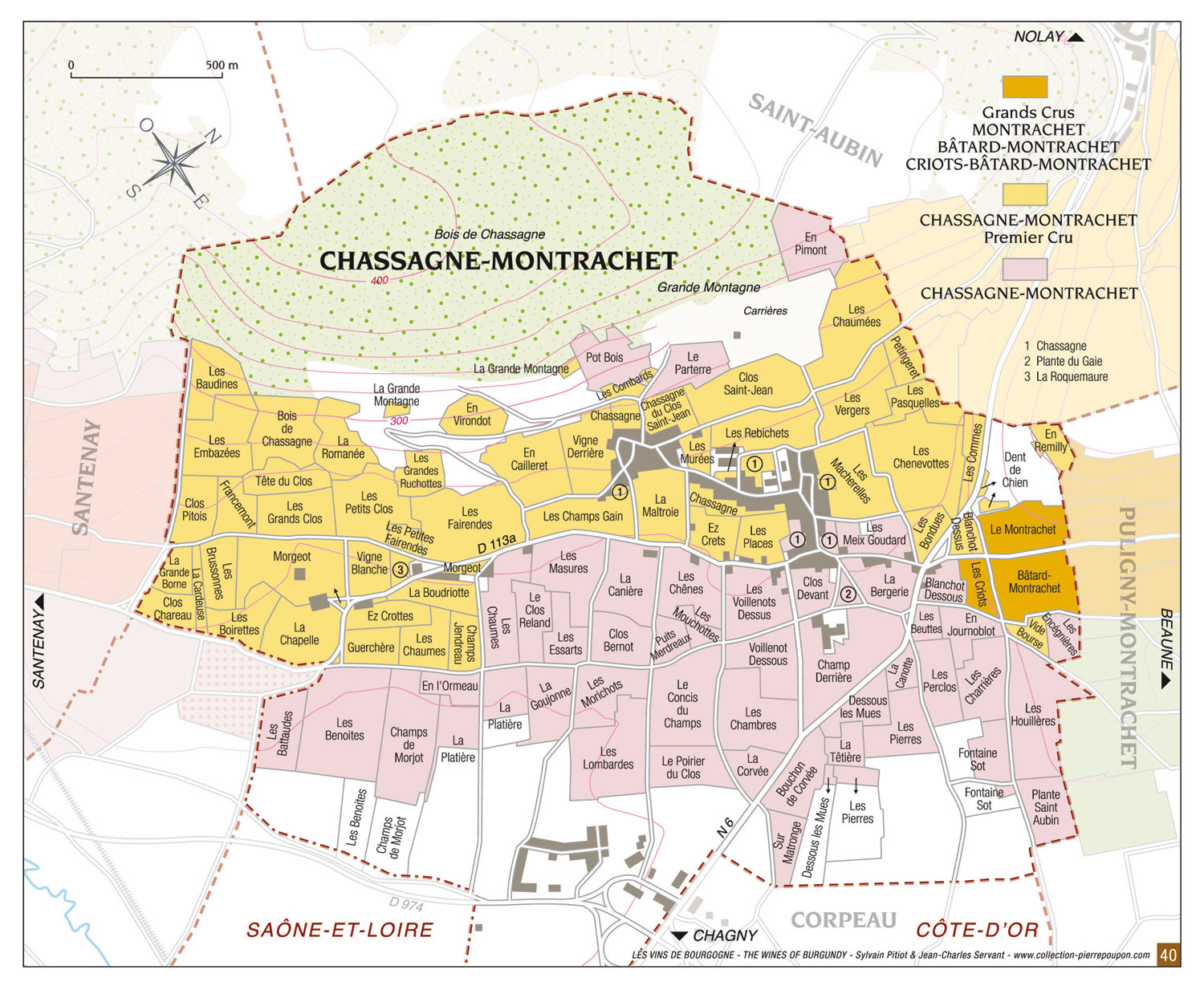
Domaine Alex Moreau is based in Chassagne-Montrachet, Côte du Beaune, Burgundy, France. This wine comes from Chassagne-Montrachets.


Where in the world does the magic happen?
3 Rue de Chagny, 21190 Chassagne-Montrachet, France
You must be logged in to post a comment.