Size & Type
Other

Viognier from Rhône Valley, Northern Rhône, France, Condrieu, Château Grillet
$1,560
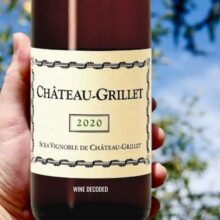
Château Grillet (pronounced Gree-yay) makes one of the world’s most sublime white wines from Viognier. It’s price is heading into the stratosphere.
I loved playing with the Viognier at Yarra Yering, may have been from Grillet cuttings, may not ….. and was fortunate to drink my fair share of Grillet. For years there was never enough Viognier at YY to make an individual white wine. It was always co-fermented with Shiraz to make the Dry Red No.2. Finally, when there was finally enough to make 200L, a pièce, we got to experience something incredible!
I devoured my last bottle a few years ago at 20 years old.
Tight, discreet, restrained and coiled are some of the epithets attached to young Château-Grillet, alongside finely spun texture, notes of pear, orange blossom and apricot, and a notable amertume (bitterness)– reminiscent of grapefruit–on the finish. With age, the palate gains richness, increasing the floral imprint and bringing truffle and honey, while the finish is always mineral with smoky, salty length.
The grapes are chilled before being pressed as whole bunches. The juice settles for 24 to 48 hours before fermenting wild (finished in barrel) and going through full malolactic conversion. It matures for approximately 12 months in barrel–sometimes more–before the wine rests another six to eight months in stainless still vats. In a departure from the previous regime, only one new 300-litre barrel is added to the cellar each year, which equates to roughly 20% new wood in the blend. The balance ages in second to fourth-use wood.
Grillet’s aging potential defies logic. Ten to 15 years seems to be the general view, and while this sounds inexplicable for Viognier, Château-Grillet is an enigma. William Kelley recently posted an image of a late 1970s Grillet that looked impossibly bright. But that is the magic of this terroir. It is famed for its uncanny ability to age and is remarkably distinct and unique. It is a wine of place rather than varietal expression from a terroir that delivers more restraint and minerality than we generally expect from Condrieu.
The 2022 Château-Grillet is a masterpiece of elegance, with crystalline aromas of jasmine, lemon flesh, cedar, verbena tea and white flowers. It dances on the palate with precision and nuanced detail. A phenolic kick adds freshness to the laser-focused, incredibly long finish. Ethereal and light on its feet, the 2022 defies the hot growing season, delivering a one-of-a-kind Viognier experience. Nov 2024
Nicolas Greinacher, Vinous 97 Points
Only 1 left in stock
From the 2011 vintage, the technical team decided on an even stricter selection for the wines going into the Château-Grillet blend. Analysis and comparative tasting of the different parcels showed that certain wines have not yet achieved the high level required for Château-Grillet. Nevertheless, this has allowed us to create an excellent Côtes-du-Rhône, made entirely from Viognier, which has much to offer with very good fruit and plenty of charm. This wine has simply been named “Côtes-du-Rhône”, like the appellation it belongs to.
The elegant fruity freshness of the Côtes-du-Rhône of Château Grillet can be appreciated in its youth, the perfect accompaniment for jellied ham with parsley, seared bass fillet, a salad of grilled vegetables marinated in olive oil, or even a platter of sushi and sashimi.
Minerality, tightness, elegance . . .
Purchased by the Pinault family in 2011 and managed by Frédéric Engerer (who also looks after the family’s other viticultural interests—Château Latour, Clos de Tart, Domaine Eugenie, Eisele Vineyard), the quality here is still on the upswing. Korean winemaker Jaeok Cramette arrived at the property, having moved down from Domaine Eugenie in the Côte de Nuits. She previously worked for an importer in South Korea but came to France in 2008 to pursue a winemaking degree and stayed in Burgundy afterward. Despite being a recent arrival, she was conversant with all the vineyard plots, saying of the property’s four hectares, “I feel like I’m doing gardening, not viticulture.” This minuscule estate recently added an adjacent parcel of Condrieu, so going forward there will be three wines released each year.
Château-Grillet has a rich history, illustrating perfectly the passion and devotion of many generations of men and women for this exceptional terroir.
The vineyards of Condrieu and Château-Grillet were planted by the emperor Probus in the 3rd century AD, from plants brought from Dalmatia. Numerous mosaics preserved at the archaeological site in Saint-Roman-en-Gal (around 12km away) confirm its origins and one of them shows a harvest scene including grape crushing. The early development of the vineyards in this region is probably linked to the Pax Romana. This allowed the ancient Gallic tribe the Allobroges, whose territory included part of the right bank of the Rhône facing Vienne, to acquire Roman citizenship and therefore have the right to plant vines.

Judging by her first two vintages in charge, Cramette is living out the rule that if you are good enough, you are old enough. In just her second vintage in charge at Château-Grillet, Cramatte received a perfect score from France’s leading wine guide, a tribute not just to her talents but also to the work of her predecessor, Alessandro Noli, and the many who laid the groundwork.
That Château-Grillet’s Lazarus-like return to the top of France’s wine hierarchy has happened faster than many expected will be no surprise to anyone who knows François Pinault and his driven technical director, Frédéric Engerer. Pinault’s Artémis Domaines is the current owner of Château Latour and Clos de Tart, and has previously revitalised some of France’s most historically important terroirs, even if Grillet needed more TLC than others.
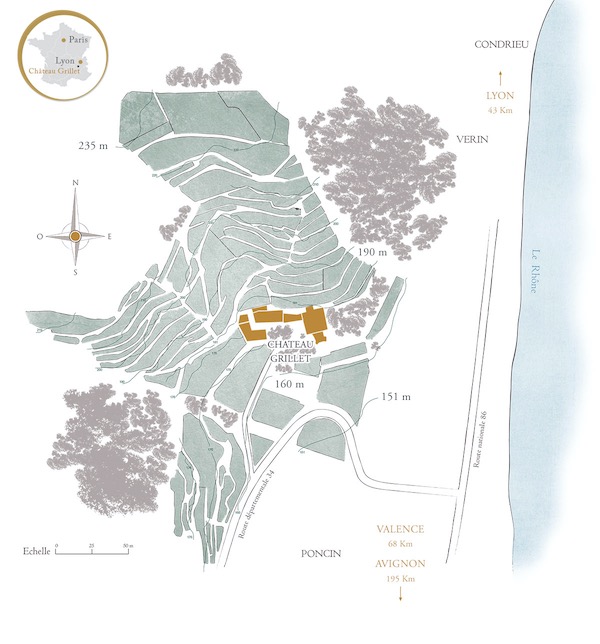
Today we see a shift to the leadership of Aloïs Houeto, Château-Grillet’s new technical director, grew up in Nantes. He was first introduced to the world of fine wine through his father, a passionate enthusiast of Loire Valley wines. While studying at Bordeaux’s agronomic engineering school, Houeto broadened his expertise with a three-month stint at Stellenbosch University, specializing in precision viticulture. After completing numerous internships, including one at Château Montrose, he finished his studies and pursued a precision-viticulture-related R&D project at Château Latour with the idea of doing a PhD afterwards. However, when the Artemis Group—owners of Château Latour and Château-Grillet—offered him a permanent role as R&D Manager, Houeto chose to forego his PhD. His profound knowledge of precision viticulture is proving invaluable in his new role. The tiny 4-hectare Château-Grillet is divided into 102 vineyard terraces from which 15 to 20 distinct lots are vinified separately, setting the base for the final Château-Grillet blend.
Just 3.5 hectares in the heart of the northern Rhône valley . . .
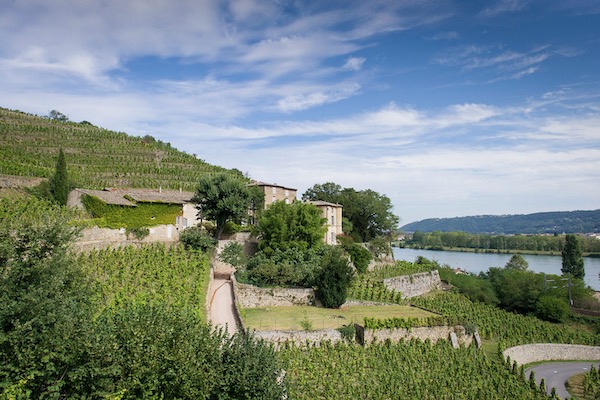
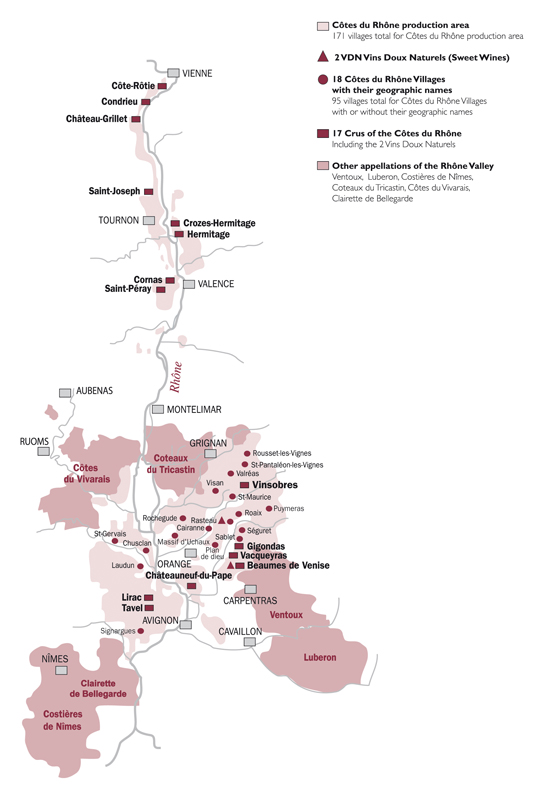
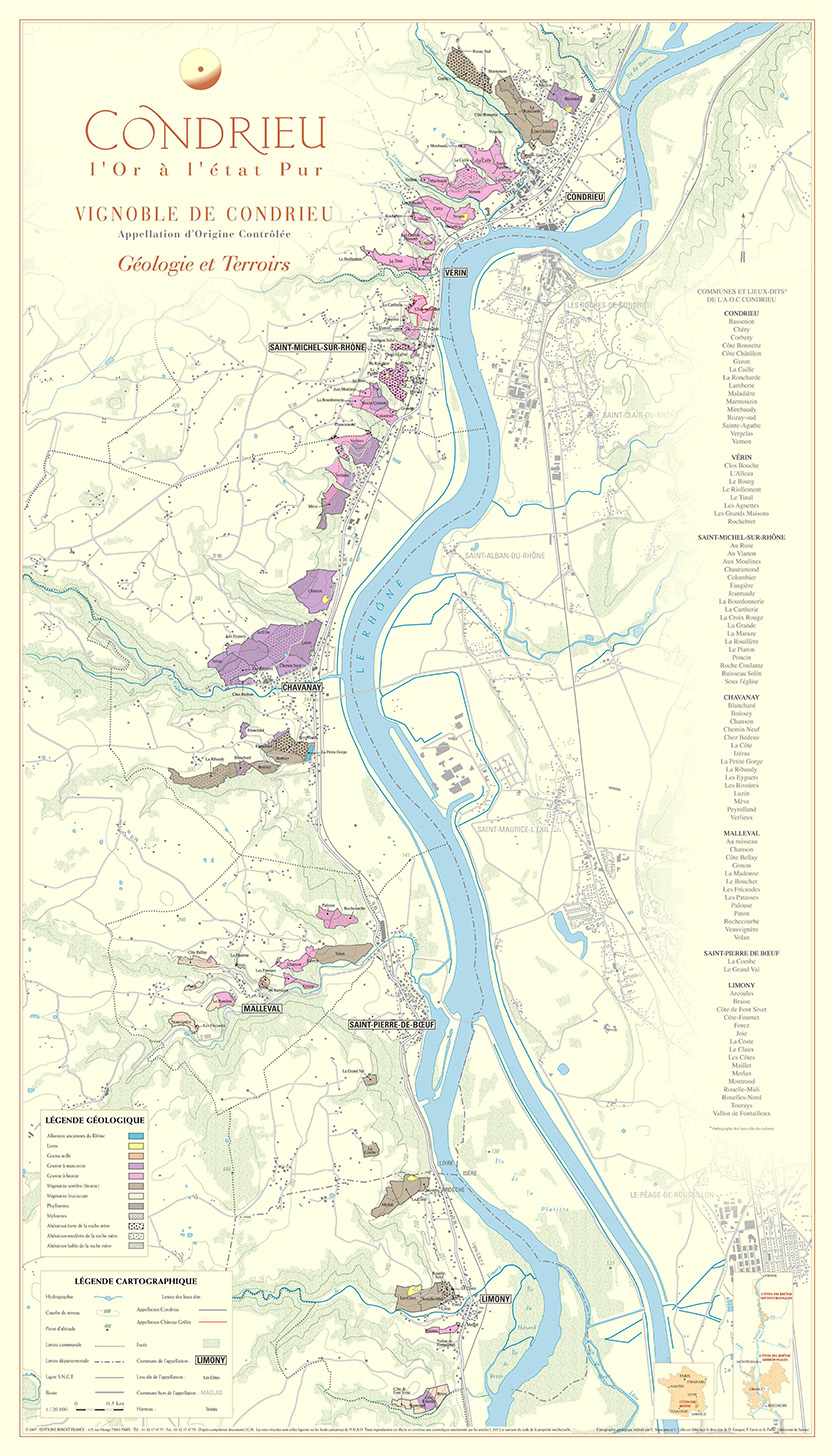
Château-Grillet is located between the villages of Vérin and Saint-Michel-sur-Rhône (Loire department), on the right bank of the Rhône to the south of the town of Vienne. Since 1936 this real jewel of Nature has been one of the smallest and most prestigious French appellations producing a single white wine, one of the greatest.

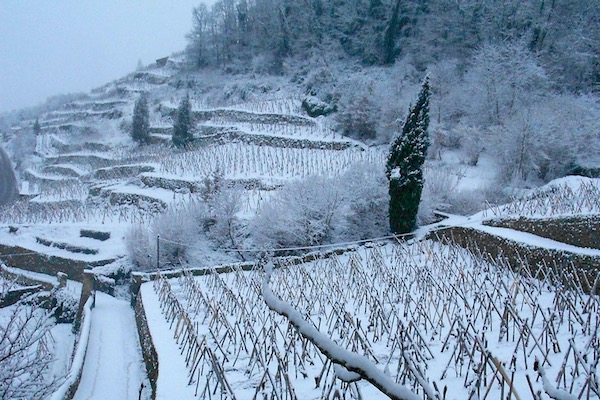
The vineyard of Château-Grillet is in the form of a southern-facing amphitheatre, enjoying an exceptionally hot and sunny microclimate, protected from the winds from the north. The name “Grillet” may refer to hillsides “grilled” or burnt by the sun. The vines have an average age of 45 years and are planted on sometimes breathtakingly steep slopes. They are at 150-250 metres above sea level and spread over 87 marvellous terraces, called “chaillées”, held up by dry stone walls which have been meticulously maintained and preserved over the centuries. Ever since the Roman times, the hand of man has been required continuously to maintain these terraces, giving a sense of purpose and identity to this magical place with its mind-blowing beauty.
Since the change of ownership in 2011, priority has been given by the team to doing everything necessary to glorify this unique viticultural heritage and to better understand the complexities of each parcel. Magnificent but demanding, the vineyard requires meticulous attention and a lot of patience.
Led by Alessandro Noli, the new regime immediately set about pushing this legendary terroir to its full potential. Organic and biodynamic farming led the way in revitalising the health of Grillet’s rocky, schist-dominated soils. At the same time, the 3.5-hectare vineyard was reorganised into 102 meticulously marked terraces, all worked by hand, hoe and horse-drawn plough. A second wine, a declassified Côtes du Rhône, was introduced to improve the quality of the first through rigorous selection. Importantly, the picking regime—so critical to temper Viognier’s capricious tendencies—is now overseen by Jean-Louis Chave to deliver a seamless balance between ripeness and fine acidity.
Understanding the complexity and diversity of all the different vineyard parcels is a fascinating task. Getting the best out of this veritable jewel of a vineyard requires humility, patience and also work, a lot of work. All the vineyard work is done manually, in the search of precision but also because some of the terraces are so narrow that only man can work them. Each year all the terraces need to be inspected carefully, to look after the stone walls which wear away over time.
The unique style of Château-Grillet derives from careful vinification techniques, respecting the greatness of the terroir. A fascinating adventure.
After the harvest, each selection of vineyard parcels is pressed separately.
The grapes are chilled before whole-bunch pressing. This is a crucial step which requires continued oversight and a lot of precision. A new tank room was installed before the 2012 vintage, with small stainless-steel, temperature-controlled tanks. This has given the team the chance to be able to vinify each different selection separately and with precision. The juice settles for 24 to 48 hours before wild fermentation, which finishes in barrel, where the wine always undergoes malolactic conversion. It ages for approximately 12 months in barrel, sometimes more, before the wine rests another six to eight months in stainless still vats. In a departure from the previous regime, only one new 300-litre barrel is added to the cellar each year, which equates to roughly 20% new wood in the blend. The rest of the wine ages in second- to fourth-use wood.
In Australia, as in Côte-Rôtie, we tend to see Viognier in blends co-fermented with Shiraz where it adds wonderful perfume, and texture to red wines like Yarray Yering’s Dry Red No.2, Clonakilla’s, and, Serrat’s Shiraz Viognier.
As a white wine, the spectrum of styles it can make is extreme. Guigal makes two of the boldest version with the Cuvées ‘La Doriane’ and the incredibly rare dessert wine ‘Luminescence’. La Doriane breaks all the rules. I used 20ml of a bottle to analyse it.
The pH was 4.0 the titratable acidity 4.0. Normally you’d expect a white wine to have a pH 3.0 & 3.5 with a titratable acidity between 5.5-7g/L acid. This is where the extremes of texture comes out to play, the high pH and low acidity combined with the high level of phenolics in La Doriane give it an oily, almost unctuous, yet still dry texture. The high pH renders any sulphur additions near useless, the fruit must have incredible depth and length of flavour, capacity to handle oxygen contact not to oxidise. It results in a wine so unique that it becomes, perhaps one of the easiest wines to name in a blind tasting.
Guigal have made a very specific set of winemaking choices.
At the other end of the spectrum, it’s possible to make a gently pressed, tank-fermented version that has fewer phenolics from the skins and returns higher acidity and freshness.
Then there’s everything in between.
One thing is certain, good Viognier will have an entrancing perfume, and, a wonderful texture!
Look out for Château Grillet, Goreges Vernay, Yves Cuilleron, André Perret and Guigal.
Château Grillet is the smallest AOC in France, owned by only one Domaine of its namesake. It is in the Northern Rhône within Condrieu.


The 2022 Château-Grillet is a masterpiece of elegance, with crystalline aromas of jasmine, lemon flesh, cedar, verbena tea and white flowers. It dances on the palate with precision and nuanced detail. A phenolic kick adds freshness to the laser-focused, incredibly long finish. Ethereal and light on its feet, the 2022 defies the hot growing season, delivering a one-of-a-kind Viognier experience. Nov 2024
“Patience will be required before tasting the monumental Château-Grillet 2022: from a warm vintage, it retains incredible freshness. While we are impressed by the frankness and power of its attack, it is in the length that it truly reveals itself: complex, with notes of tea, herbal infusions, yellow fruits, and candied citrus.”
Where in the world does the magic happen?
Château Grillet, Vérin, France
You must be logged in to post a comment.