Size & Type
Other

$154
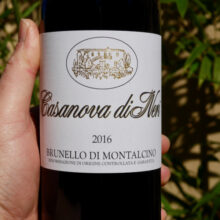
‘Casanova di Neri’s 2016 Brunello di Montalcino is a wine of pleasurable contrasts but also massive structure. Ripe dark fruits and autumnal spices offset savory herbs and hints of animal musk. It enters the mouth silky, cooling and lifted, with a noticeable inner sweetness to its polished cherry/berry flavors, but it then sways more toward inner earth, minerals and grippy tannins. The 2016 urges you to take another sip, as there’s so much upfront appeal; yet each time you do, it reminds you once again that it’s a painfully young Brunello in need of cellaring. That said, the potential here is incredibly high.’
Eric Guido
Out of stock
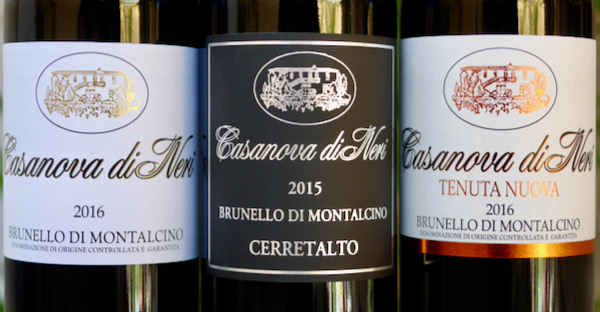
After devouring Casanova di Neri’s baseline IrRosso I was determined to try more from this producer.
The 2016’s are, by all account an excellent follow up to the 2015’s.

Founded in 1971 by Giovanni Neri who with his great vision and passion understood the huge potential of wine in the Montalcino territory, it was passed on to his son Giacomo in 1991.
Casanova di Neri does in fact stands for the Casanova Estate of the Neri Family.
The production started in the Eastern part of Montalcino and was extended later in other areas.
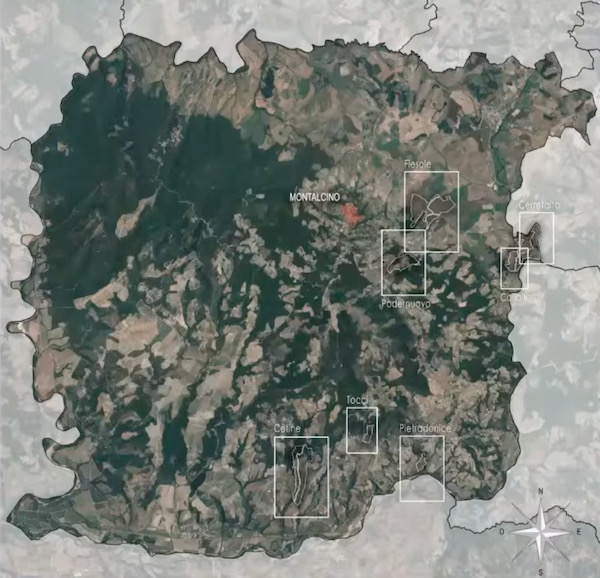
First came the Cerretalto vineyard, a unique terroir in a natural amphitheatre over the Asso river in which the old vines produced a Sangiovese different from the others, with small bunches of well distanced grapes, from which a selective variety was grown that was used in out other vineyards particularly in Tenuta Nuova.
The acquisition of Cerretalto was followed by that of Le Cetine, Pietradonice and then Podernovo. All this by researching the best soil and exposures so as to produce unique and recognizable wines.
The first Brunello harvest was 1978. This was followed by Cerretalto1981, Rosso di Montalcino 1982, Tenuta Nuova 1993, Pietradonice 2000, IrRosso di Casanova di Neri and the last one Ibbianco 2011.
Currently the estate covers a surface of around 500 hectares of which 63 are vineyards, 20 olive groves and the rest arable land and forest.
We believe that wines are the fruit of the vineyard and of man’s labour.
The care and passion in working the land has to take into account the characteristics of the land, the microclimate and the variety so as to produce a unique distinct wine able to express its territory. For over forty years our evolution has been marked by careful targeted choices that have distinguished our estate and the wines we produce creating their own style.
A constant search for particular soils that exalt the quality and uniqueness of our wines and farming practices that respect the land and the vines are followed by attentive care in the making of the wine. Our wines are the fruit of exceptional combinations of soils and microclimates together with passionate and meticulous work enabling us to obtain constant results and to enhance the distinct features of the grapes throughout the different vintages.
The family holds 63 hectares of vineyards across 7 sites in Fiesole, Poderuccio, Podernuovo, Le Cetine, Pietradonice, Cerretalto and Spereta, all of them in different parts of the territory of Montalcino.
The diversity of their soils, exposures, microclimates and of the ages of the vines creates the identity of our wines.
Casanova di Neri used selection massale to choose Sangiovese Grosso vines from their Cerretalto vineyard to reproduce and plant on the various sites.
Roughly 36-42 in barrel before 6 month minimum in bottle.
The winery is mostly underground, facing north and with a natural room temperature without having to resort to air conditioning.
It was planned following a rational design that supports our production principles of low impact and natural processes. The structure is on three levels so as to take advantage of gravity. The mission to respect the quality of the grapes and enhance the characteristics of the different grapes and above all of the different vineyards that they come from. Before the vinification the grapes are sorted out on a selection belt after which they are de-stemmed and passed on to a further selection belt where we choose the best grapes that fall by gravity into the vats.
A spontaneus fermentation without the addition of artificial yeast takes places in open conical stainless steel vats with controlled temperature and no pumps, which allows us to have a maximum regard for the quality of the grapes and enables the extraction of only the best tannins, preserving the colour and fragrance. The Brunello sees about 24 days on skins. This particular care and attention to quality is the least we can do after our meticulous work in the vineyards. This is followed by the aging for 36-42 months in two ample barrel rooms on two different levels again using gravity to our advantage.
After bottling, the wines are aged in bottles for at least 6months.
From Vinous ‘2016 Brunello di Montalcino: Radiance Personified’
Let’s consider how long we’ve all been looking forward to Montalcino’s next great vintage. I’m thinking back to the release of the 2010s, walking the aisles of Benvenuto Brunello and tasting from table to table. Aromatically, the wines made your eyes roll back in your head, followed by an assault on the palate of intense and complex primary fruit, which was quickly clenched and held firm by aggressive tannins. When the reviews finally hit, it was like nothing I had ever seen before. Suddenly, every retailer in the country was pumping out email after email to feed the unquenchable thirst that consumers had for Montalcino’s next great vintage.
However, after the dust settled, and 2011 arrived, people seemed to be satisfied. The 2011s were ripe and juicy, and consumers were happy to allow them to fill restaurant wine lists instead of their cellars. Next was 2012, just as warm as 2011, yet prettier and more balanced; but it still didn’t move the needle. Two thousand thirteen had some potential and quickened our pulses for a time, yet it wasn’t the next 2010. At this point, we all started to feel the hunger – when would Montalcino have its next great vintage? However, it was just around this time that the 2016 Rosso di Montalcinos began to arrive, giving us a peek into what producers were calling a perfect vintage. The wines were dark and effusive in how they excited the senses, full of energy yet also dense in their fruit profiles, and with structure that was unexpected from the Rosso category. Suddenly, there came a glimmer of hope; and since that time, we have all been waiting for 2016 Brunello di Montalcino.
But now the big question is: Do the 2016s live up to our expectations? Oh, yes; they certainly do.


There’s beauty and drinkability to this wine that really is enticing with blueberry and cherry aromas, as well as hints of hot stone and licorice. Medium to full body, integrated tannins and a fresh and polished finish. Shows focus and brightness. Very drinkable now, but better in a year or two. Try in 2021.
The Casanova di Neri 2016 Brunello di Montalcino (or the so-called "white label" Brunello) takes a minute or two to open, and like all these new releases from the Neri family, you're best off opening your bottle five hours before serving them. This classic expression displays raspberry, tar, hazelnut, dried fig, asphalt and some crushed chalk. The wine is streamlined and compact in terms of mouthfeel, giving us an accessible Brunello from a benchmark Montalcino estate.
Casanova di Neri's 2016 Brunello di Montalcino is a wine of pleasurable contrasts but also massive structure. Ripe dark fruits and autumnal spices offset savory herbs and hints of animal musk. It enters the mouth silky, cooling and lifted, with a noticeable inner sweetness to its polished cherry/berry flavors, but it then sways more toward inner earth, minerals and grippy tannins. The 2016 urges you to take another sip, as there’s so much upfront appeal; yet each time you do, it reminds you once again that it’s a painfully young Brunello in need of cellaring. That said, the potential here is incredibly high.
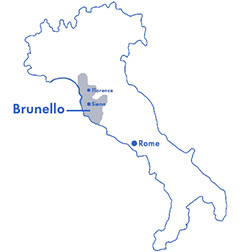
Where in the world does the magic happen?
Podere Fiesole, 53024 Montalcino SI, Italy
You must be logged in to post a comment.