Size & Type
Other

Cabernet Franc from Touraine, D'Anjou-Saumur, Loire Valley, France
$72
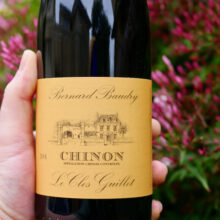
Matthieu Baudry describes Le Clos Guillot as a “very pure expression of Chinon.” The 2018 is large-boned but again, we are not complaining. Pouring crimson/ruby red, this combines the richness and power of the year with the vineyard’s trademark purity. At its core are dark berry fruits, floral nuances and a hint of complexing bay leaf. And, while this saturates the palate, the energy of the wine is palpable—sophisticated, silky tannins and bright acidity round out a wine that is balanced enough to enjoy now but will also go the distance.
Out of stock
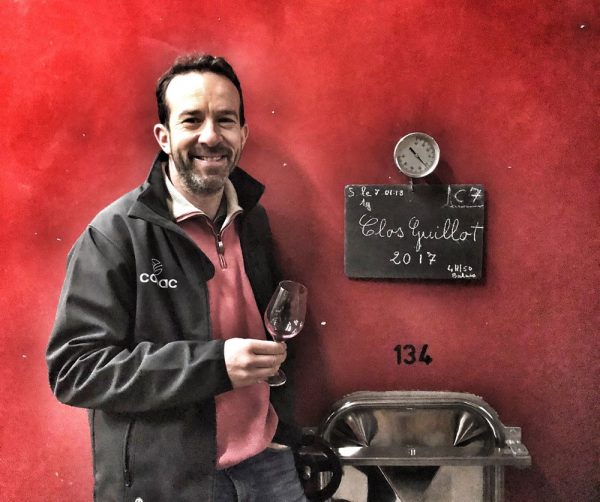
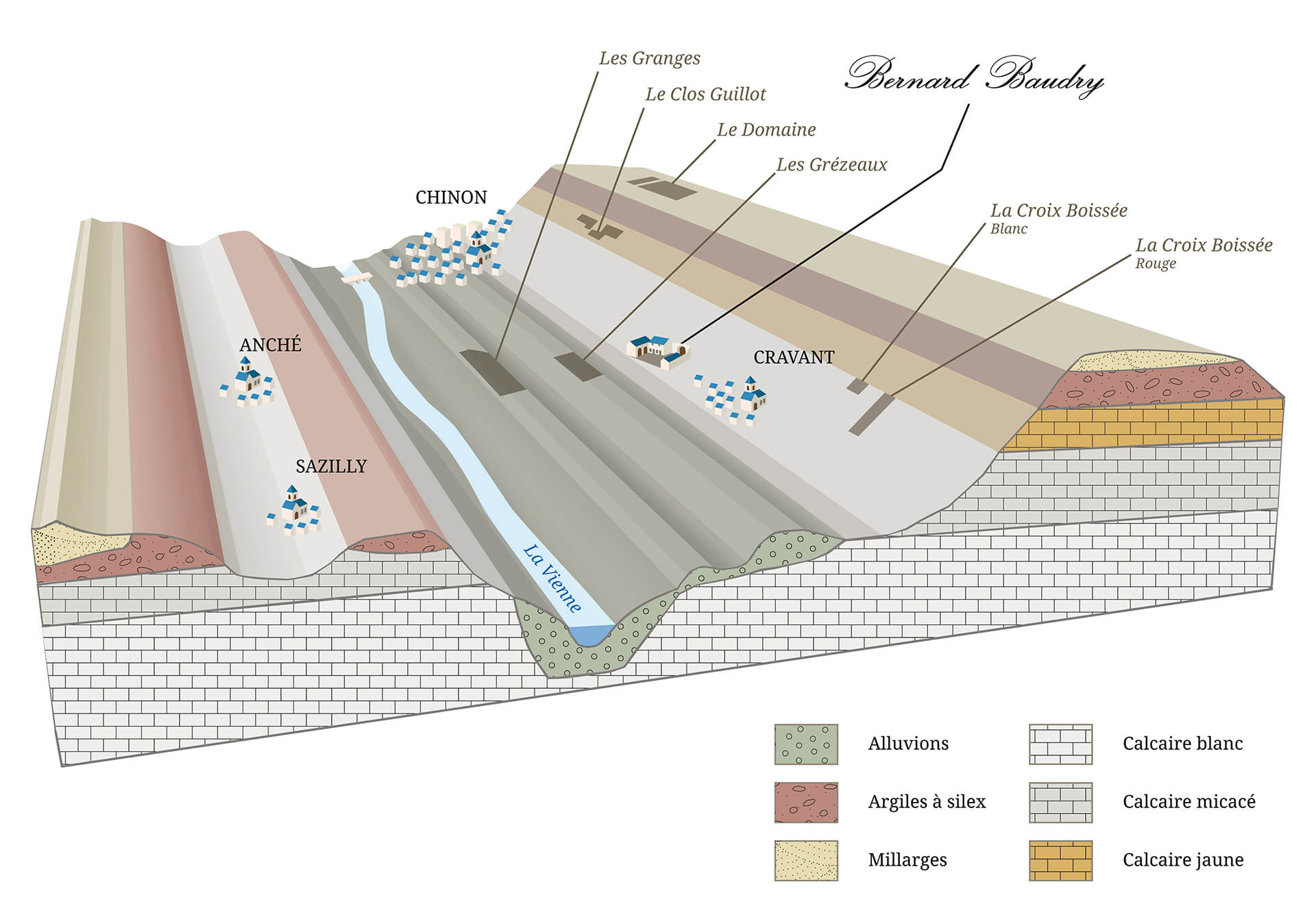
Offering up a very pure expression of Chinon, the Clos Guillot vineyard is situated on a southeast-facing slope in Chinon with soils of clay, chalk and yellow limestone (known locally as tuffeau). Harvesting is by hand and yields never exceed 40 hl/ha. Fermentation takes place in large wooden fermenters with regular pigéage (with the aim of providing gentle extraction of supple tannins). After maceration of about 20 days, the wine is pressed off and then matured for 12 months in oak barrels that have seen two or three vintages, followed by nine months in cement. Bottled without filtration.
Baudry makes some of Chinon’s finest wines: 100% Cabernet Franc from a range of superb, organically tended terroirs.
These wines are the perfect antidote to the oceans of homogenised wines that exist in the world today. They are the product of dedicated farming and humble winemaking, which seeks to faithfully express a unique sense of place.

Mattheiu Baudry, the winery’s second generation, believes that the quality of a wine is closely linked to the work taking place in the vineyard. Blessed by a great diversity of soils across their vineyard, Matthieu applies what he describes as ‘piecemeal winemaking’; that is to say that he harvests and vinifies grapes from each plot separately. This is complemented by minimal intervention winemaking – manual harvest, gravity transfers, natural fermentation, gentle elevage – in order to respect the origins and characteristics of each terroir
“While they are sometimes labelled traditionalists, I find them to be more naturalists. Everything here is organic, harvested by hand and bottled without fining or filtration. In any case, theirs is a style that I admire: they make cabernet franc taste as suave and succulent as pinot noir.” Joel B. Payne, Vinous
“Bernard Baudry is, here and now, one of the leading domaines of the appellation. Some would say the leading domaine of the appellation. The wines are of exceptionally high quality…” Chris Kissack, The Wine Doctor
In Australia Cabernet Franc is often referred to as a weed making green insipid wines. As always there are exceptions. Cabernet Franc from the Chinon is another beast altogether. More a beauty really. The wines can have incredible delicacy, perfume, and thirst-quenching character. Silky textures and layered complexity come from the best wines. They often have a slight pencil shaving character that sits wonderfully in the wines. For anyone who may not be aware of Cabernet Franc‘s wily charms or who believes that this grape incapable of producing fabulous wines, Chinon is the place to look!
The Domain has 32 hectares of vineyards spread across the AOC Chinon, in Cravant les Coteaux and Chinon. The grape is grown primarily Cabernet Franc (90%) plus a small production of Chenin Blanc (about 10%). The vineyards are located on very varied terroirs of gravel in the plain, limestone clay on coteau and sandy limestones plateaus. This diversity offers us the possibility of applying piecemeal winemaking.

The vineyard has always been maintained according to environmentally friendly methods (no chemical weed killers) guided by observation and common sense depending on the climatic conditions of the year.
The entire vineyard is now conducted in organic farming since 2006.
A compost that we maintain ourselves based on cow manure and straw helps rebalance the organic matter in our soils. Phytosanitary interventions are mainly limited to the use of copper, sulfur and natural plants such as horsetail and nettles.
They control the growth of the vine by partial disbudding but we are looking at what is the vine find itself its own production of balance according to the richness of the soil and climate of the year.
Vintage report from Bernard Baudry
“Magnifique!”
In 2018 winter and springtime were rather mild, with enough rainfall to recharge groundwater which was rather low after 2017. Unlike the two previous vintages there was no Spring frost which, from a financial point of view, was quite a relief.
Later on, from late May to early July, we had close to tropical weather. We had to treat repeatedly to prevent downy mildew, but unfortunately the disease destroyed a large proportion of bunches before véraison Blooming was early again, as in 2017, and budbreak was rather promising. From then on, the summer was warm and dry with only 40mm rainfall between 20 July and mid-September. The vines nourished the grapes throughout the summer despite a mild dry spell, particularly on alluvial deposits.
We had another very early harvest: the Chenins were picked as early as 12 September and the Cabernets around 18 September. Sugar levels were exceptionally high between 13 and 14.5 % by volume tartaric acid levels were also high. The 2018s are complete and expressive throughout the range, with magnificent balance, the richness in alcohol is contained by the wines’ freshness and a savoury lingering.
The volumes produced will also give many vignerons some breathing space after the frosts of 2016 and 2017. However, one thing is clear: the last 30 years (1988 -2018), have seen temperatures rise by 1°C between March and September, and grapes have gained 3% alcoholic content while acidity dropped by 4g/L (H2SO4). Global warming is undeniable, grape harvest takes place earlier (1 to 2 weeks), and we regularly make wines with over 13% alcohol. This still has a good side, and favours the expression of Cabernets Francs but may be cause for concern for the future and for our planet…
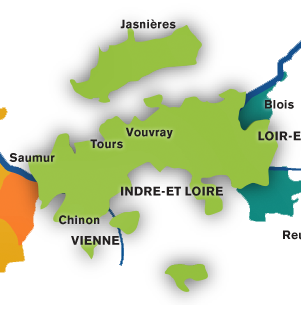
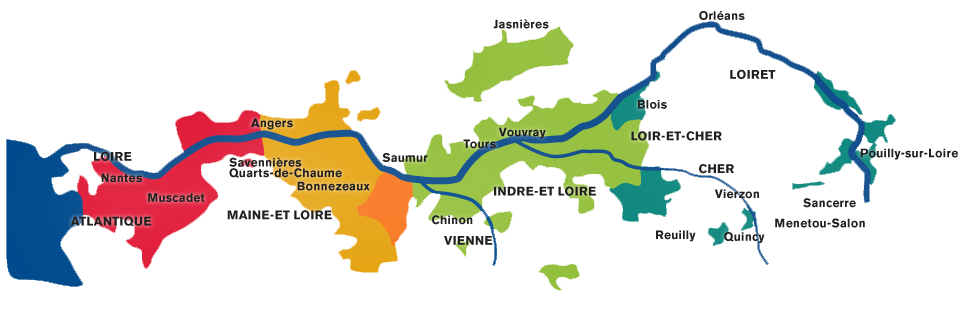
The Loire Valley is scattered over 175,000 acres stretching from the Atlantic Ocean across to central France. Cover such a large region it is natural that it’s been broken down into sub-regions that specialise in the growing of specific varieties. Baudry is in the middle-Loire in the village of Chinon.

The Loire Valley Wine Group produced a quirky little primer for the regions, varieties and styles produced across the Loire Valley.
Tasted from barrel with Matthieu, this will see out 12 months in barrel, then 12 months in cuve. It also displays an incredibly dense colour in the glass. The nose is smoky and expressive, wrapped in toasted elements from the barrels, with intertwined floral notes, violet and peony. A very tense and direct style on the palate, yet it remains supple and polished. Cool, with vibrant acidity, which seems to lift the fragrant floral elements, bringing to the fore scents of roses and violets. Behind this is the grip of the tannins, lush and long. This is incredible, so very complete, with silky harmony and such purity, but also depth and substance.
Where in the world does the magic happen?
9 Les Coteaux de Sonnay, 37500 Cravant-les-Côteaux, France
You must be logged in to post a comment.