Appellation d’Origine Contrôlée [AOC]


In France, the appellation d’origine contrôlée (“controlled designation of origin”), or AOC, is a certification of authenticity granted to certain geographical indications for agricultural products, including cheese, meats, butter and most importantly, wine!

« Back to Wine Words Index

In France, the appellation d’origine contrôlée (“controlled designation of origin”), or AOC, is a certification of authenticity and quality granted to certain geographical indications for agricultural products, including cheese, meats, butter and most importantly, wine. It is a system governed by the Institut national de l’origine et de la qualité (INAO), and is based upon ideas of terroir and a form of geographic and cultural protection.

France established the INAO in 1935 in an effort to control the reputation of wine and other cultural foods. Support for the creation of the AOC itself was in large part due to winemaker Baron Pierre Le Roy, which led to the first designated AOC: Châteauneuf-du-Pape.

By 1937, the establishment of the AOC for classic winemaking regions such as Bordeaux, Burgundy, and Champagne took place, setting about standards and rules that are still in effect today. For example, AOC laws ensure that if you buy a bottle of French wine labelled “Champagne,” you’re getting a sparkling wine made in the traditional method from the region of Champagne with Chardonnay, Meunier, and/or Pinot Noir.

There are currently over 300 French wines entitled to the designation AOC on their label, along with several potential designations within an AOC that reflect location and quality. For example:

  • Regional: This refers to the broadest sense of an AOC. Examples: Bordeaux, Burgundy.
  • Sub-Regional: Within those regions are smaller subregions known for more specific wine or terroir. Examples: Bordeaux’s Médoc sub-region, Burgundy’s Chablis sub-region.
  • Commune/Village: Narrowing further within a subregion, these areas are sometimes only a few miles in scope. Examples: Pauillac in Médoc, Côtes d’Auxerre in Chablis.
  • Special Classification: An AOC might be further specified for quality at this point, indicating a Cru, which refers to a specific vineyard or group of vineyards typically recognized for quality.

Similar systems exist in other European countires, such as the Denominazione di Origine Controllata in Italy.

« Back to Wine Words Index

Feeling Thirsty?

Bougros sits on a very steep slope, with a gradient of more than 30%, facing due south at the foot of the hill. The shallow soil, a mixture of clay and gravel, prevents excessive yields resulting in complex, robust wines.Note: from a 2.2 ha parcel at the bottom section of the vineyard; even so, the vineyard is so steep here that it must be worked entirely by hand as tractors would be dangerous to use.In a sense, the 2020 Chablis Grand Cru Bougros Côte Bouguerots offers a resumé of
$275
$265ea in any 3+
$255ea in any 6+

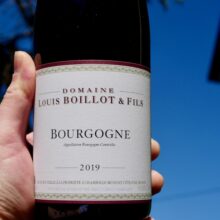
Domaine Louis Boillot Bougogne 2019

Pinot Noir | France, Burgundy

There is a level of sophistication that you typically only see at the next level up, the village wines! “Super-fresh aromas of cool and pretty red berries are laced with earth elements that are also reflected by the vibrant and nicely detailed middle weight flavors that possess fine depth and length for a wine at this level.” Allen Meadows, 86-89 Points ♥ Outstanding Top valueThe fruit for the Bourgogne comes largely from Gevrey-Chambertin with a splash from Brochon.
$117
$113ea in any 3+
$109ea in any 6+
Corvina , Corvinone and Cabernet , dark, meaty and ripe on the nose with cassis and earth tones . The palate is fresh with forrest berries and red plums . wonderful complete wine already .50% Corvina and Corvinone, 50% Cabernet Sauvignon and Cabernet Franc
$180
$173ea in any 3+
$166ea in any 6+

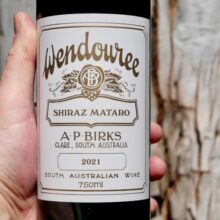
Wendouree Shiraz Mataro 2022

Red Blend | South Australia, Australia

AP Birks Wendouree Cellars produce some of the very few wines I’ll buy without tasting! The wines are something special. A celebration of an incredible old vineyard with plantings from the late 1800s. Tony & Lita are custodians of something truly special!Ranges from 80-60% Shiraz and 20-40% Mataro from 1893 Central, 1919 Eastern, and 1920 Eastern bush vines.His Shiraz Mataro is delicious, more ethereal than the straight Shiraz, with some structure evident from the Mataro. There's a