Size & Type
Other

$124
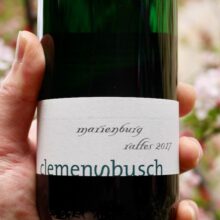
A tightly meshed white with structured acidity creating a mouthwatering frame for notes of yellow apple, pear, grapefruit pith, blanched almond, rosemary and spring blossoms. Long and salty, with mineral drive on the racy finish.
Wine Spectator 93 Points
In stock
From Marco
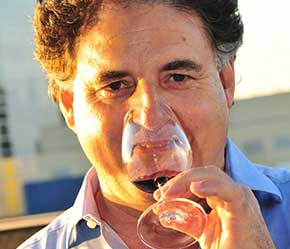
“I decided to produce it in 2007, after having been lucky enough to taste a 42-year-old Carricante on two separate occasions. This wine turned out to be so beautiful, so impeccable and vigorous despite its Friday age, that I was moved to try to produce something similar. I tried to imagine how an evidently talented winemaker had produced such a wine, moreover virtually without any technological help. And I tried to imitate what I had imagined. The “Vigne Niche” selection is the result. ” Marco de Grazia
Then came 2014. An important vintage: seven years earlier we had planted Carricante vineyards on our side, the north one, historically dedicated exclusively to great reds. The great quality of the grapes, combined with the vigorous age of the vines, has allowed us to broaden the spectrum of taste with the production of two white Crus: an opportunity that came at a very favorable moment, given the success of the Cuvée delle Niche vineyards 2013.
After all, as for the reds, arriving at the production of the white Cru is the culmination of a dream, however pursued in a scientific way: from separate vinification to the understanding of which grape was adequate, which soil and what work was necessary to arrive at long awaited production.
The two white Crus from the Northern area, denominated with the Contradas of origin, respectively Calderara Sottana and Santo Spirito, are composed of Carricante from old and young vines, as to find excellent Carricante in an area of the DOC mainly dedicated to reds it’s not easy.
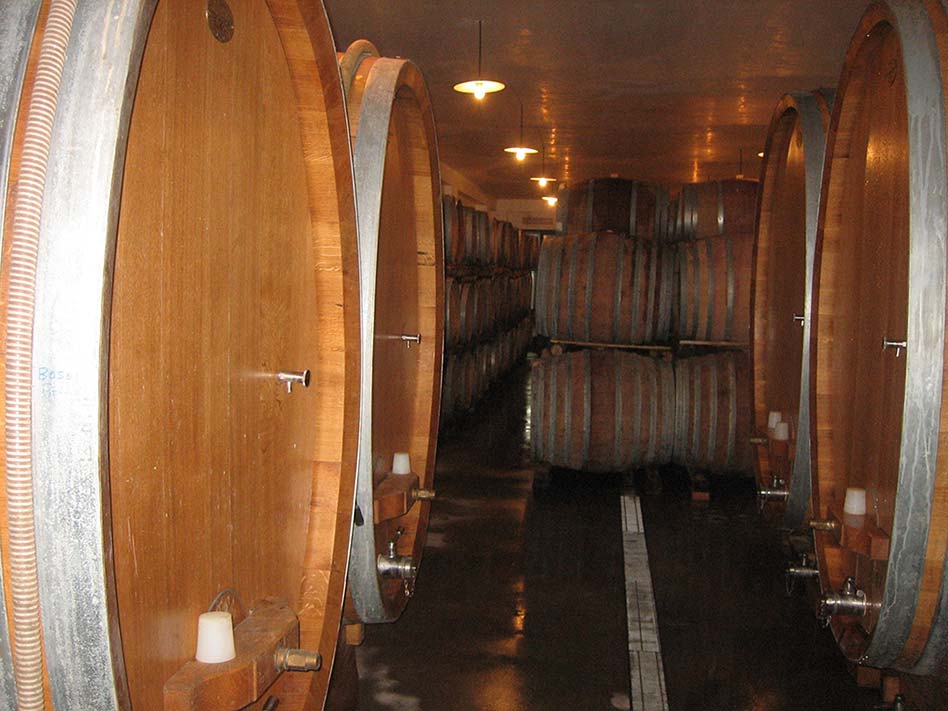
The wines are fermented and aged in 10-hectolitre barrels. They are wines whose rare complexity and structure bloom wonderfully over time. Of great longevity, they will reward your patience with a beauty of unusual nobility.
Unlike Calderara Sottana, this wine has a more open and exuberant nose – thanks to the generosity of the huge amount of volcanic ash characteristic of the Contrada. If the Calderara Sottana is a tenor, the Santo Spirito is more a soprano: the freshness is more accentuated, as is the spring vivacity, floral and rich expression of its very fine nature.
Appellation: Etna Bianco D.O.C.
Production area: Santo Spirito, Municipality of Castiglione di Sicilia
Grapes: 100% Carricante
Production: 6 tons per hectare.
Soil: volcanic, deep, mostly volcanic ash, very loose and dark.
Exposure: north side of Etna, from 700 to 800 meters above sea level
Age of the vineyards: from 10 to 40 years.
A difficult but very high-quality vintage where yields were back to almost normal for whites. No snow formed on the peaks of Mount Etna over winter in 23/24 leaving no reserves of water on the lead up tot the growing season. Higher than normal temperatures followed and drought stress was present for unestablished vineyards. Those boasting vine age fared very well. Where 70% of crops were lost in 23 due to peronospera/mildew – in 2024 approximately 20% of whites were lost due to drought. For older vineyard with deeper roots, quality was very high with lifted aromatics, concentration, and lively acidity a common thread. This is one of the more impressive vintages we have seen for Etna Bianco’s.
Apparently lightening never strikes twice. In Etna, with Passopiscaro and Terre Nere it has done so in emphatic style.
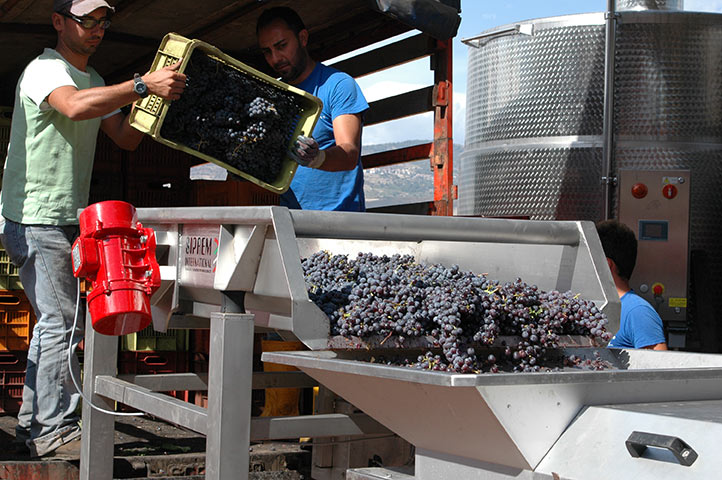
After devouring the 2015 Cru’s I’m salavating at the thought of ripping the lid of the 2016’s. These, Nerello Mascalese, dominant wines with a splash of Nerello Cappuccio exude an entrancing perfume with a delicacy, elegance, and, sophistication that carries through to the palate. With vineyards from 400-1000m in elevation the lower lying vineyards tend to yield bolder styles, while the higher sites offer greater restraint. Texturally the tannins often remind of a more supple Barolo.
Wines of Nerello Mascelese and Nerello Cappuccio have been called the Barolo of the South by some, Italy’s Burgundy by others. I prefer to call them, simply, great wines from Etna.

Whilst Nerello Mascelese’s enormous bunches, with there big berries, result in wines of a pale appearance, there is nothing insignificant about their aromas, flavours, and, textures.
Terre Nere’s wines have a balance and purity that goes head to head with and in some cases exceeds Passopisciaro. Put it this way, I was sold on the nose alone of the single vineyards.
All of the elements of success were there from the beginning, exceptional sites from 600m-1000m above sea level on the slopes of Mount Etna, vines of 50-140 years of age, a very clever conductor, ‘Barolo Boy’, Marco de Grazia, the desire to achieve excellence, and, the cash to make it happen.
More recently I tried the Pre-phylloxera wine. To taste wine from 140 year old vines that has not been influenced by growing on a rootstock is becoming a rare thing at a global level. Trying Capellano’s Barolo’s from vine grown on their own roots and American rootstocks, the ‘Pie Franco’ (French foot or rootstock) and ‘Pie Rupestris’ (Rupestris / American rootstock) is perhaps one of the better known opportunities to do so. The difference between the two is striking.
Terre Nere’s Pre-Phylloxera wine has such elegance, delicacy, yet concentration, stunning perfume and spice. The sophistication, line and length of tannin is incredible. Layered and enticing, one to age be I little more patient than I could be with it! Start trying from 2020, will drink for much longer. Heart racing stuff.

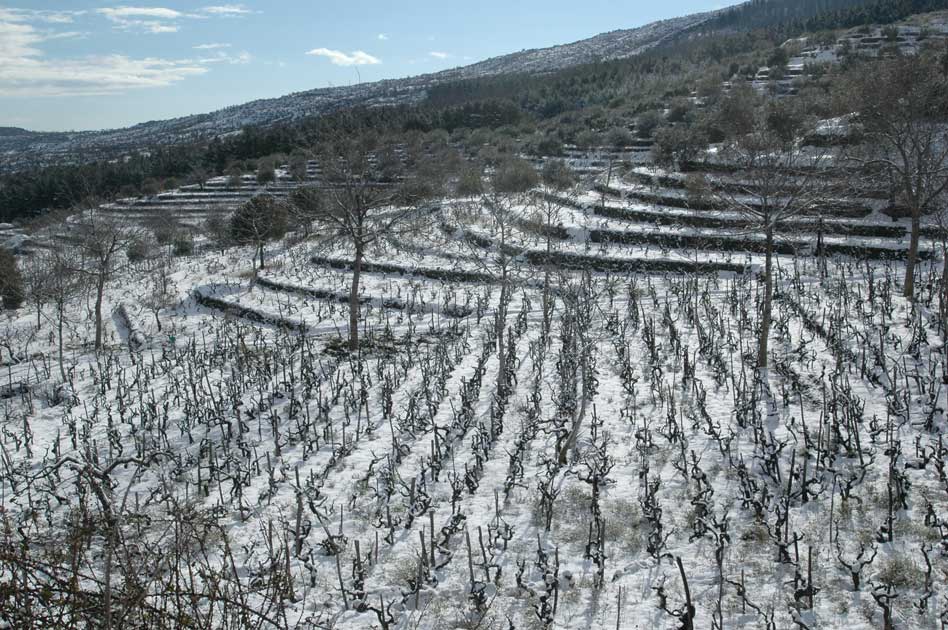
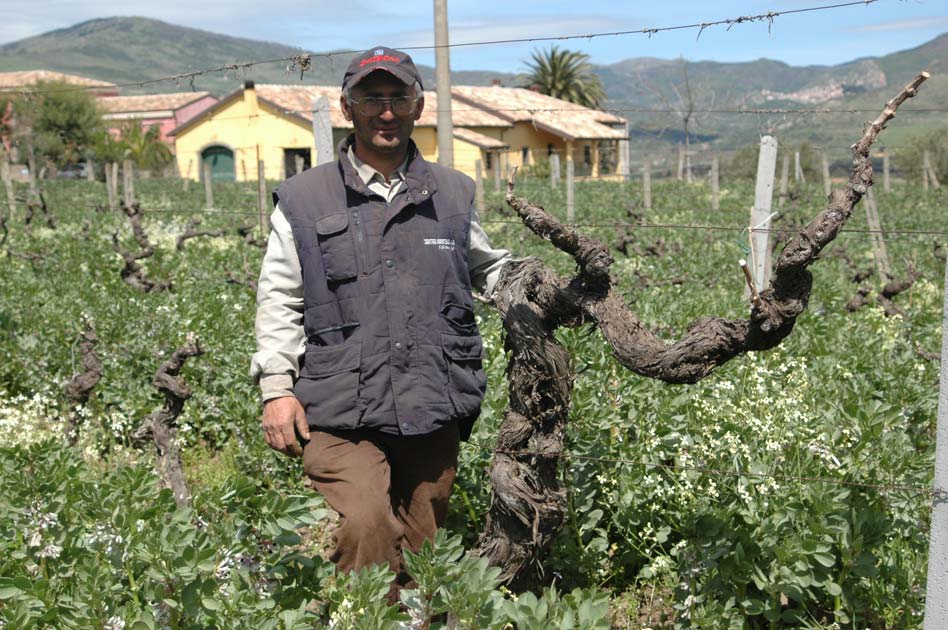
Such vineyards are a labour of love, the incredibly low yields placing them on the knife’s edge of being economically viable. Note the broad beans planted in the vineyard to introduce nitrogen and organic matter through a cycle of composting, helping to build the soil structure.
While you might think vineyard in Sicily would be hot, their elevation combined with planting on cooler North facing slopes can make it challenging to ripen fruit on the highest sites in a cool year.
Although de Grazia was one of the architects of the modern style of Barolo, the Terre Nere wines show no signs of those modern, often over-oaked wines, lacking harmony. Poise and restraint being the norm. The larger format oak in the winery, both botte and puncheons are clear sign that sophistication is the intent.

Perfectly articulated by Marco de Grazia himself:
“Tenuta delle Terre Nere is the fruit of over 30 years of passion and work in the world of fine wine.
And an extraordinary location, as well – this “island within an island” that is the Etna – that my brother and I chose. And that, I sometimes believe, actually chose us. A place where nature is prodigal but also severe. And here I try with all my heart to express as purely as possible the refined and multifaceted microcosm of this ancient volcanic land. With respect, care and hard farm work, always in organic balance.

The estate’s philosophy is simple. Given an extreme climate, in order to obtain the best and most consistent ripening, our attention must focus on vineyard management. The finest workmanship in all aspects of viticulture is the first thing that sets us apart. And what enables us, bringing home exceptionally fine grapes, not to be invasive in our cellar work. A work best described as aimed above all at expressing the character of our varieties in their specific terroir.
A great team, a delicate hand and a heightened sensibility, as well. And our ideals, that drive us to give the best of ourselves in quest, not of perfection, but of the ideal bond between what nature gives us and that which our sensitivity, experience and imagination suggests.
All this sets us apart.”
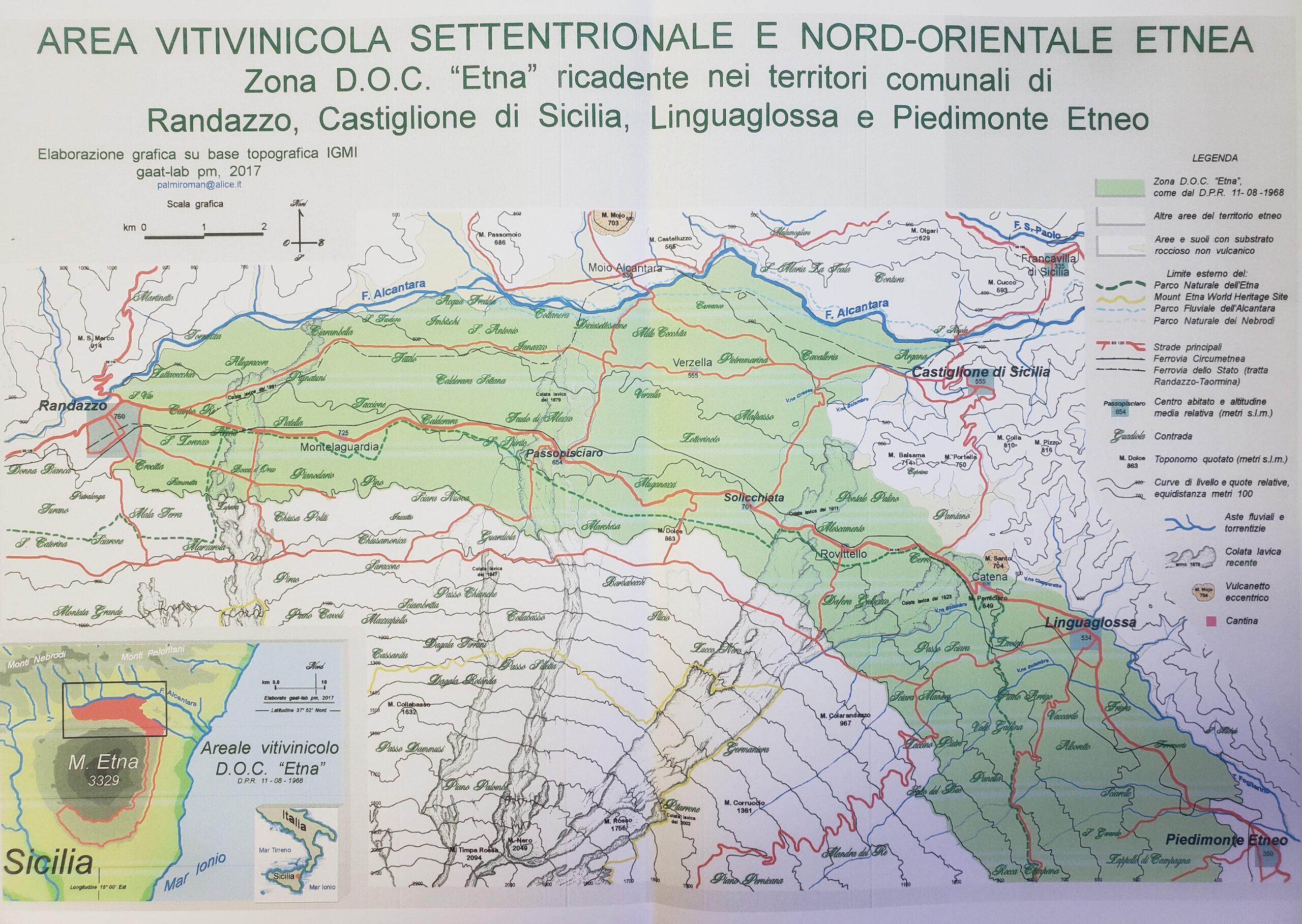
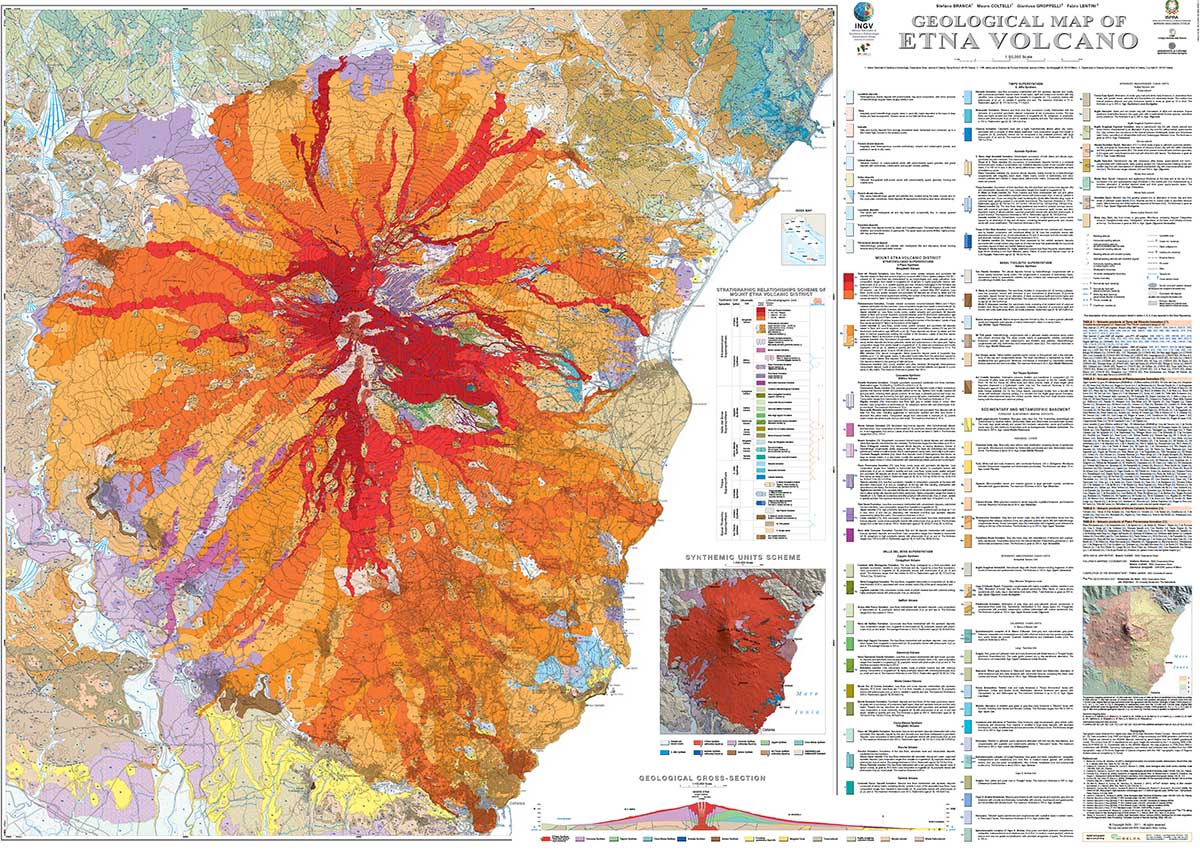
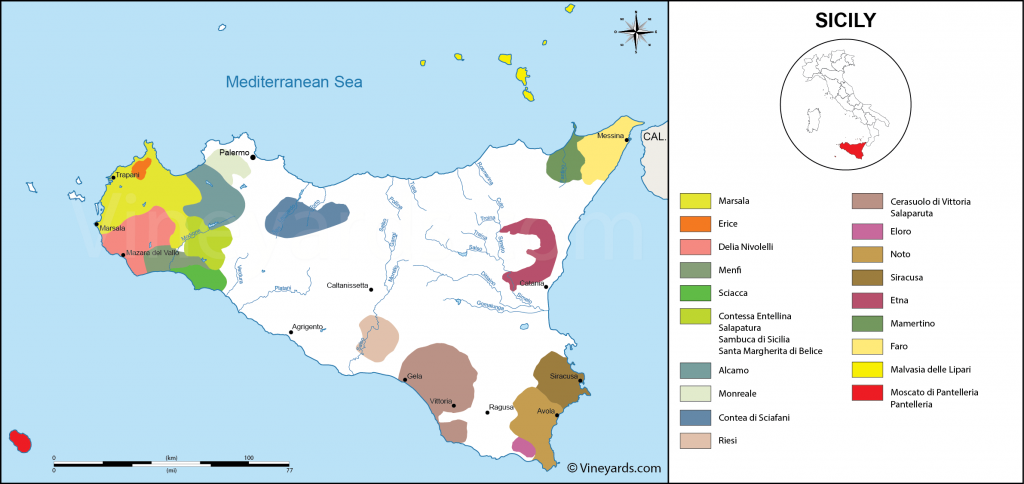
I thought I’d share these three maps to help you get your head around Etna and it’s place in Sicily. The first map gives you the big picture. The second highlights the general area planted on Etna, mostly South to South-East facing. The third shows most, but, not all of the Contrada (single vineyards) and their relative elevations.


A tightly meshed white with structured acidity creating a mouthwatering frame for notes of yellow apple, pear, grapefruit pith, blanched almond, rosemary and spring blossoms. Long and salty, with mineral drive on the racy finish.
Where in the world does the magic happen?
Tenuta delle Terre Nere Winery, Randazzo, Province of Catania, Italy
You must be logged in to post a comment.