Size & Type
Other

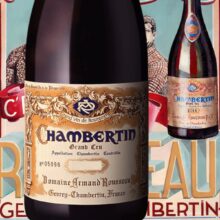
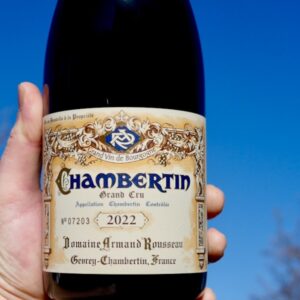
Pinot Noir from Gevrey-Chambertin, France, Côte-de-Nuits, Burgundy
Original price was: $11,985.$10,950Current price is: $10,950.
The 2023 Chambertin Grand Cru has an exquisite, graceful bouquet with pure black cherries, raspberry and violet scents that soar from the glass. It shows exceptional delineation and focus. The palate is medium-bodied with fine tannins and very good weight, more muscular than the Clos Saint-Jacques, with firm grip on the finish This will require time, but there is huge potential.
Neal Martin, The Wine Advocate 97 Points Tasted Nov 2017 Drink 2023-2055
There is enough wood to notice framing the exuberantly spicy red and dark currant aromas that display an abundance of sauvage and earth nuances. The cool and pure medium weight plus flavors are remarkably refined for a young Chambertin yet there is clearly plenty of power lurking beneath the refined veneer. This is a big but not massive vintage for the Rousseau Cham and I like the sense of proportion and particularly so on the harmonious, superbly long and seamlessly well-balanced finale. As is the case with the 2015 vintage, it’s going to be very interesting to see which of these two is the better wine in 15 to 20 years.
Allen Meadows, Burghound 97 Points Tasted Jan 2017 Drink: 2032+
The 2014 Domaine Rousseau Chambertin is every bit as magical as the Clos de Bèze this year, offering up a pure and utterly refined bouquet of black cherries, plums, black raspberries, grilled meats, cocoa, a gorgeous base of soil, woodsmoke, violets and cedary wood. On the palate the wine is deep, full-bodied, very pure on the attack and quite primary on the backend, with a sappy core of fruit, great transparency, ripe, suave tannins and simply stunning length and grip on the youthful and very, very complex finish. Brilliant wine. (Drink between 2025-2090)
John Gilman, 99 Points
Provenance: Purchased on Release ~ Official Australian Importer ~ Climate Controlled Cellar.
Only 1 left in stock
Eric Rousseau was away at the time of my visit so it was his daughter Cyrielle (at the domaine since 2012) who enthusiastically explained that 2015 “gave us a super growing season that was relatively easy though not without a few concerns. There was some early season oidium pressure and then due to the fact that the conditions were so hot and dry that there were several short periods of hydric stress. Otherwise though there really wasn’t much to cause anxiety and the fruit progressively ripened to a very high level. We chose to begin picking on the 3rd of September and brought in immaculately clean fruit that possessed potential alcohols that ranged between 12.2 to 13%. The skins were thick that there was a relatively high incidence of shot berries. As such yields, while still reasonable, were roughly 20% lower than what we realized in 2014. As to the wines they’re at once structured but inviting and refreshing and thus they should probably drink well for all their lives as the tannins are quite ripe yet there is good freshness and a fine sense of harmony.” While it’s hardly news, for the last 20 years the domaine has hardly put a foot wrong and it certainly didn’t in 2015 as the wines, especially at the grand cru level, are brilliant. However I strongly advise that you not ignore their 2014s as they too are absolutely worthy of your consideration.
Allen Meadows, Burghound
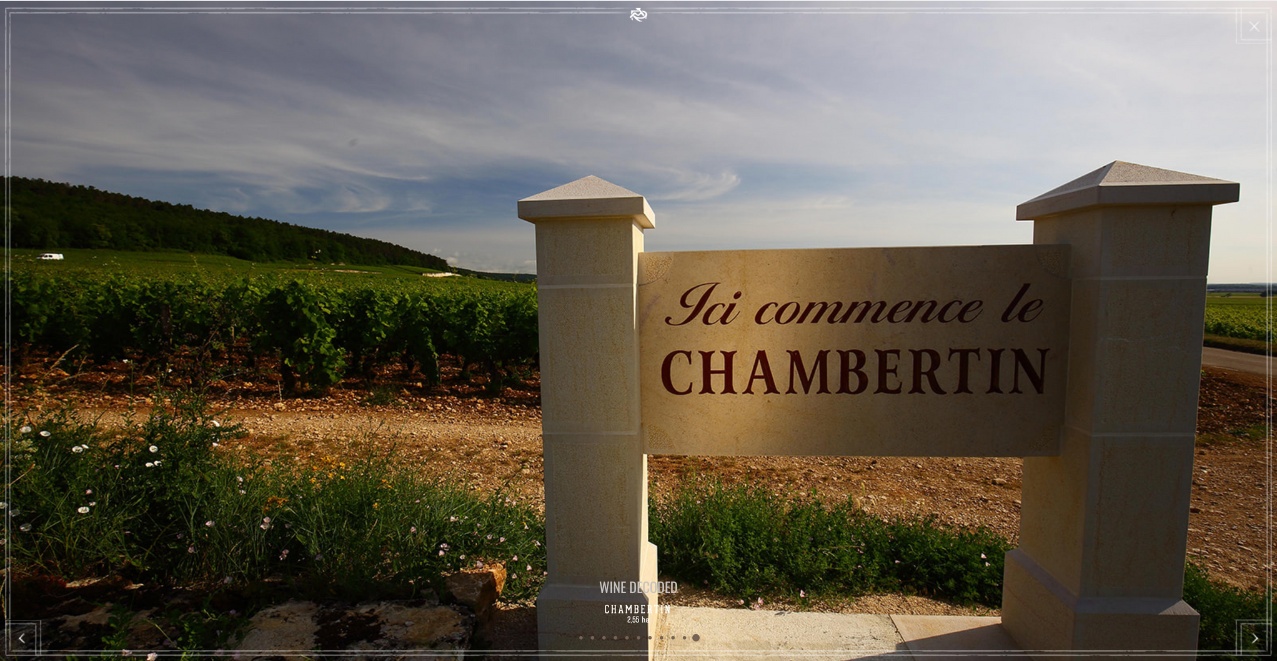
2HA55/12HA90 – EASTERN EXPOSURE
Long ago, a man named Bertin decided to cultivate the same vines in his field as those of the Bèze monks.
His wine was so exceptional that his vineyard came to be known solely in reference to him: Bertin’s field, or, in French, ‘Champ de Bertin’, which over the years became ‘Chambertin’.
The grapes for this Chambertin Grand Cru come from three vineyards in the east-facing Chambertin appellation, and from a fourth vineyard, ‘Larrey’, a north-south parcel at the edge of the woods. The layout of this vineyard is such that it can only be cultivated using a horse and plough.
The soil has a very high limestone content. At the top of the Clos it lies on Bathonien calcerous clay and halfway down on crinodial limestone and marl from the Bajocian age. The stones are spread out unevenly.
Chambertin is the wine of kings. Powerful, virile, concentrated with good structure. A wonderfully persistent mouthfeel with aromas of chocolate, liquorice and small red fruits.

For four generations, the Rousseau family has worked tirelessly and passionately on some of the finest terroirs of the Côte de Nuits.
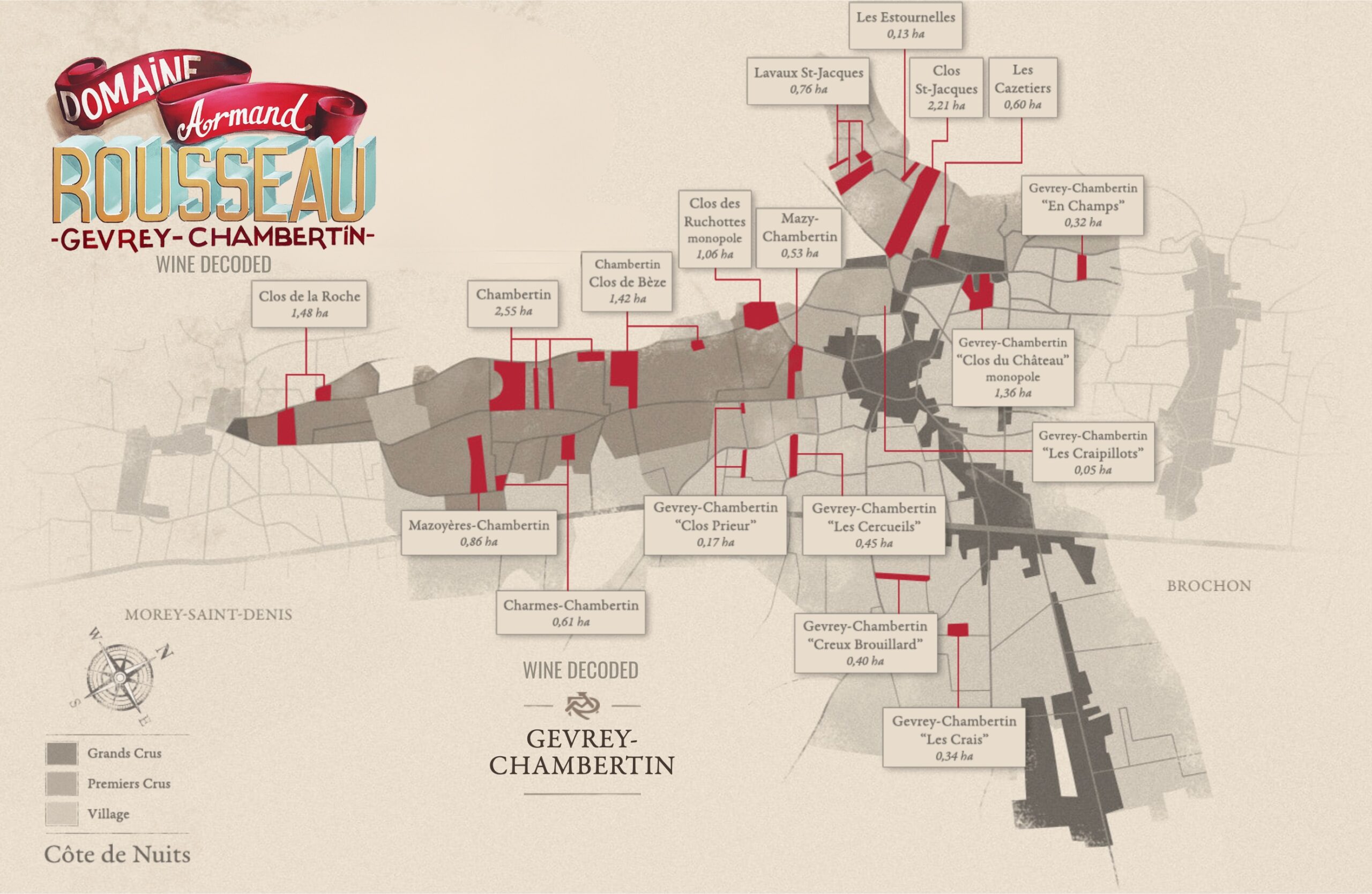
The domain is managed by Eric Rousseau, with the help of his daughter Cyrielle. It has expanded over the years and today covers 15 hectares and 3 ares. They own 3 hectares of Village appellation, 3 hectares 77 of Premier Crus and 8 hectares 52 of Grand Crus, situated in Gevrey Chambertin and Morey-Saint-Denis.

From the moment the domain was established, the family developed an enduring ritual: the elders teach the ways of the vine the next generation. Thus, they maintain the strong bond between man and vine, upholding the family values and strong work ethic through the years. In the Rousseau family, the heartfelt love of the vines is renewed with each generation; a profound respect of the terroir is anchored in the family values.
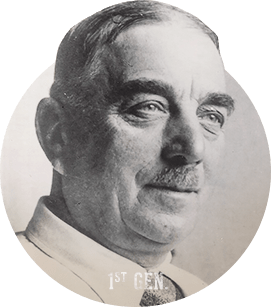
The Domaine was established at the beginning of the twentieth century by Armand Rousseau who, at the age of 18, inherited several plots of vineyards in Gevrey Chambertin. He came from a family of small landowners, composed mainly of winemakers, coopers and local wine merchants.
Armand’s marriage in 1909 provided him with additional vineyards, as well as the current Domaine premises. Situated near a thirteenth-century church in the oldest part of Gevrey Chambertin, the premises include a house, storage space, cellars and the winery.
Armand Rousseau first sold his wines in bulk to local wholesalers. Rapidly, he acquired the prestigious vineyards of Charmes Chambertin, Clos de la Roche, and Chambertin. He decided to start bottling his best wines himself, and with the help of Raymond Badouin, founder of the ‘revue des Vins de France’, he soon developed a clientèle of restaurants and private customers.
Over the years he has continued to expand the domain, notably by purchasing Mazy-Chambertin and Mazoyères Chambertin (sold under the appellation Charmes-Chambertin): Grand Cru appellations, classified as such in 1935 by the ‘Institut des Appellations d’Origine Contrôlée’. The Clos Saint Jacques was purchased his son’s name – Charles Rousseau joined the domain in 1945 after studying Law and Oenology at Dijon University.
In 1959, Armand Rousseau died in a car accident on his way back from hunting. Charles Rousseau found himself at the head of the domain. He continued to develop the family business, adding to the 6 hectares he had inherited by acquiring more vines in the 1990s, especially Grand Crus: several parcels of Chambertin Clos de Bèze, some Chambertin and the entire vineyard of Clos des Ruchottes.
Fluent in English and German, Charles decided to prioritize the export of the domain wines. His father had started selling to the United States right after the end of prohibition, at the end of the 1930s. Charles first exported to the United Kingdom, Germany and Switzerland, then expanded to the whole of Europe, then Canada, Australia, New Zealand, and finally Asia in the 1970s.
In 1982, Charles’ son Eric came on board after completing a degree at the Lycée Agricole et Viticole of Mâcon Davayé, specializing in oenology at Dijon University for a year, and working for a time with wine merchants and négociants in Burgundy.
Eric started in the vineyards, introducing new techniques such as green harvesting, leaf thinning and mechanical work of the soil without the use of insecticides or chemical additives. He steered the Domaine towards a more organic process, and became more involved with the winemaking, encouraging traditional methods and minimal intervention.
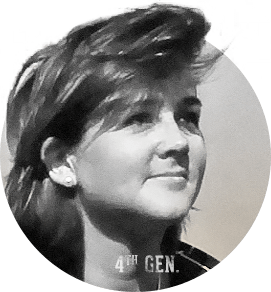
Cyrielle Rousseau returned to join her father at the domaine in 2014. After obtaining degrees in Geology and Viticulture and the DTO in Dijon, she left Europe to learn about winemaking abroad. She assisted with harvests and vinifications in Oregon, Australia and New Zealand, and gained experience on the commercial side by working with wine merchants and importers.
Today, she manages the domaine alongside her father, who hands down his knowledge of the work and the vineyards, ensuring that the philosophy of the domain and the values of the family are passed down to yet another generation.

This in-depth knowledge has led to a better understanding of the trade, which today enables the domain to concentrate on simplifying their approach, deepening their connection with their vineyards, their soils and their climate.
So that the varying needs of each individual vineyard can be tended to with utmost precision, work on the soils is carried out with as much adaptability as possible. Working the equilibrium of prevention and action, the aim is to respect the natural balance of the plant. A mostly organic integrated pest management is used across the vineyard.
Desuckering is systematically carried out, as well as green harvesting in high-yielding years, to optimise the ripeness of the grapes as well as their phenolic concentration. Quality is always placed above quantity at the domain.
The vines are on average fairly old, between 40 and 45 years for the most part, and exclusively of the Pinot Noir variety. They are planted at a density of 11,000 plants per hectare. The clones were selected for their low yield and high concentration.
‘True tradition does not mean reproducing what others have done, but finding the way of thinking behind the great achievements of the past, leading to different decisions as times change.’ — Paul Valéry
The wines are a testament to the simplicity of the Rousseau approach; they will hold their quality consistently throughout their lifespan.
The vinification methods at the domain have for the most part remained true to the very first harvest. The same rigorous monitoring of the stages of fermentation has been maintained.

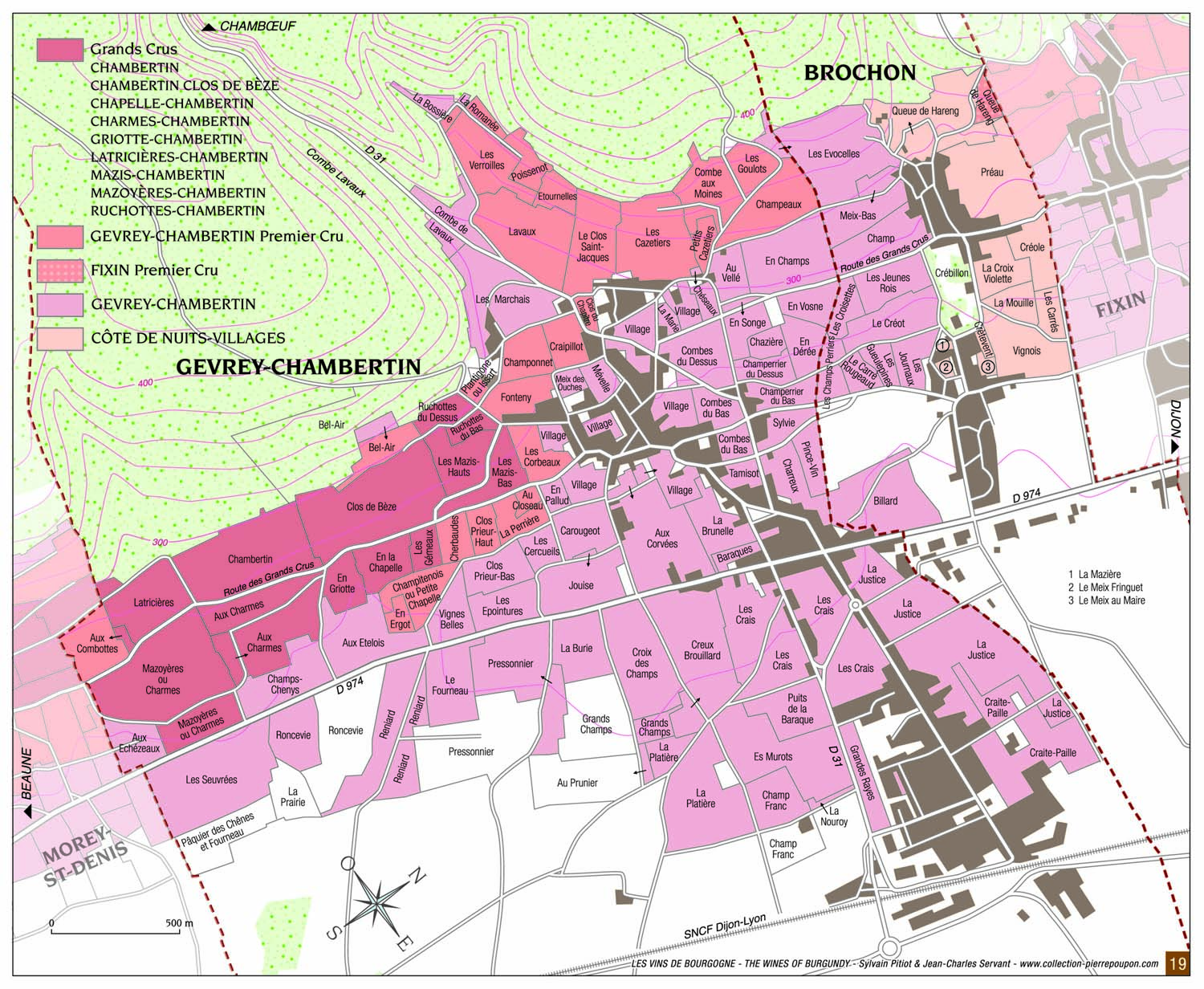
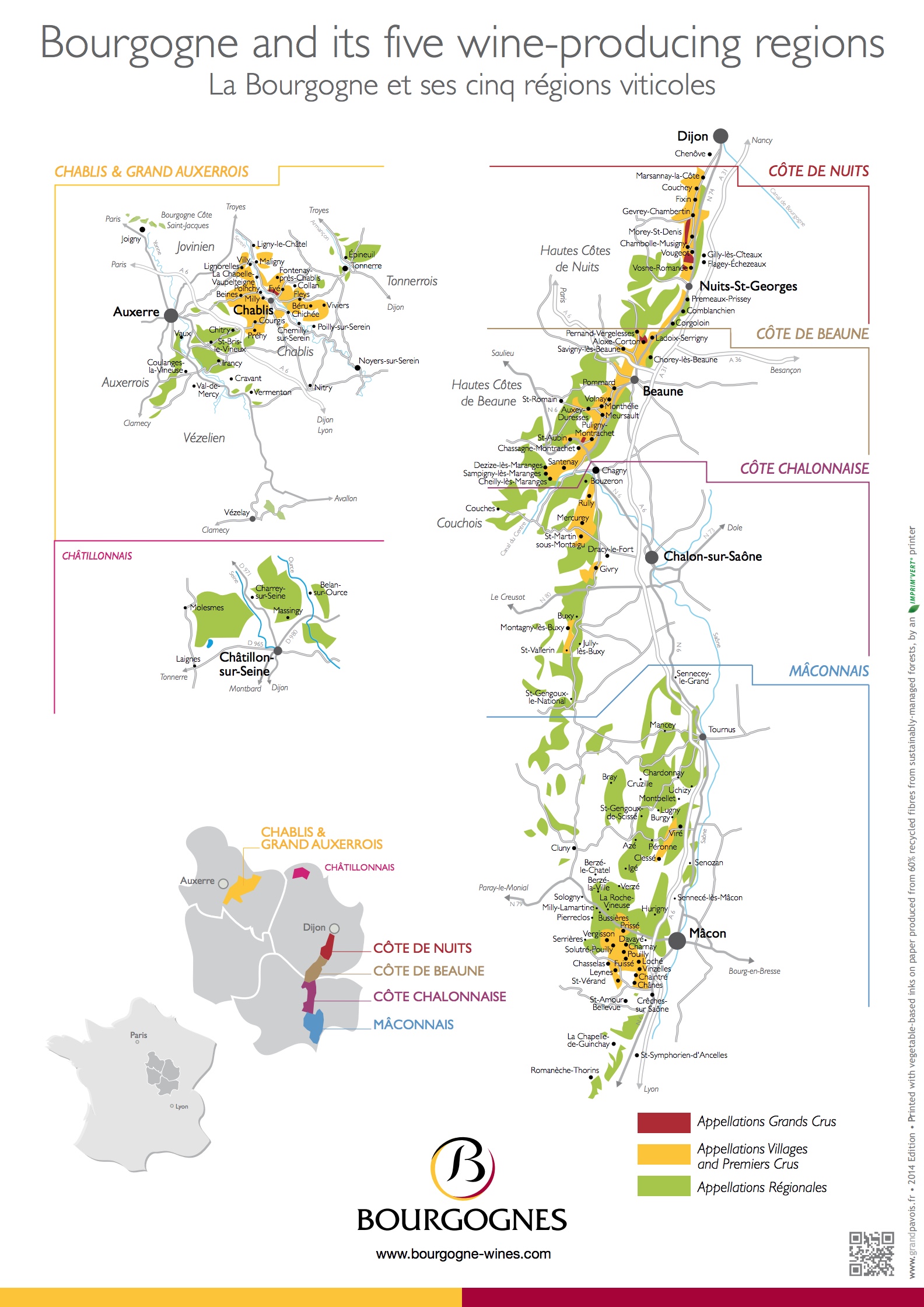
Domaine Armand Rousseau is based in Gevrey-Chambertin in the Côte-de-Nuits, Burgundy, France. Head to the Wine Bites Magazine for a deep dive in the article “Getting Your Head Around Burgundy Part 9.1 – The Village of Gevrey-Chambertin”.


In this video Jean-Pierre Renard takes an in-depth look at the geography, geology and climatic conditions of Gevrey-Chambertin.

Where in the world does the magic happen?
Domaine Armand Rousseau, Rue de l'Aumônerie, Gevrey-Chambertin, France
You must be logged in to post a comment.